Caring Together: How Animal Assisted Therapy Improves the Health of People and Animals
- 1. Department of Social and Healthcare Research and Development, Catholic University of Murcia, Spain
Abstract
Animal-assisted therapy is a practical example of the One Health approach, integrating human, animal, and environmental health. Our research group has studied the effects of dog-assisted therapy (DAT) on institutionalized elderly people with dementia, where significant improvements were observed in emotional, social, and behavioral well-being, a reduction in agitation and problematic behaviors, and less functional and cognitive decline compared to the control group. More recently, with horses and children with ASD, equine-assisted sessions favored communication, social interaction, adaptive behavior, and daily life skills. The One Health perspective is reflected in the design of the programs: animals receive specialized training, supervision, and care, while intervention environments are adapted to ensure safety and comfort for both humans and animals. This allows for shared well-being and promotes environmental quality. Existing evidence suggests these interventions are safe and effective, but emphasizes the need for additional multicenter studies, long term follow-up, and objective multidimensional measures to consolidate them as an integrated intervention model that generates shared benefits. All of this encourages us to continue this line of research, expanding to new sociosanitary contexts, animals, and groups to improve everyone’s quality of life.
Keywords
• Animal-Assisted Therapy
• One Health
• Shared Wellbeing
• Multidisciplinary Intervention
Citation
Vegue-Parra E, Sánchez-Hernández M (2026) Caring Together: How Animal-Assisted Therapy Improves the Health of People and Animals. Ann Neurodegener Dis 10(1): 1044.
INTRODUCTION
The One Health approach recognizes that human, animal, environmental health are closely interconnected. Interventions that integrate various disciplines and species, such as animal-assisted therapy (AAT), represent a practical example of this vision. By incorporating trained animals into human care contexts, these interventions simultaneously promote people’s well being, strengthen the human-animal bond, and generate healthier environments [1].
The justification for adopting this comprehensive approach is based on the following key points drawn from current evidence:
- Overcoming anthropocentric bias: Traditionally, research has focused almost exclusively on human benefit—especially in psychosocial areas—relegating animal welfare measures and environmental factors to a secondary or nonexistent role. The One Health model requires seeking *Corresponding author Eva Vegue-Parra, Department of Social and Healthcare Research and Development, Catholic University of Murcia, 30107 Murcia, Spain, Tel No: 628213984 Submitted: 04 February 2026 Accepted: 24 February 2026 Published: 25 February 2026 ISSN: 2476-2032 Copyright © 2026 Vegue-Parra E, et al. OPEN ACCESS Keywords • Animal-Assisted Therapy • One Health • Shared Wellbeing • Multidisciplinary Intervention synergy that generates shared well-being among all stakeholders [2].
- Interdependence of quality: There is evidence that the quality and effectiveness of an intervention depend directly on the care and selection of the animal (health, sociability, and impulse control), as well as the design and adaptation of the physical space where the interaction takes place [3].
- Rigor in measurement: An animal-assisted intervention (AAI) protocol under this approach must integrate objective and multidimensional measures. This includes the use of validated scales to assess clinical outcomes in humans (such as the reduction of agitation in people with dementia or autism spectrum disorder) and veterinary technical criteria to monitor the animal’s stress and health [4].
- Safety and Comfort: The environment is not a neutral setting; environmental suitability is an essential requirement to guarantee safety, hygiene, and comfort—critical elements for the harmonious functioning of the animal triad [5].
In conclusion, adopting the One Health approach in animal-assisted interventions (AAI) not only responds to an ethical need for animal protection but is also a methodological requirement to ensure the robustness of clinical results. Only through the integration of veterinary protocols, animal stress management, and adapted environmental design can we move from conventional interventions to high-quality programs that represent the true model of integrated health.
The need for holistic approaches is especially evident in vulnerable groups: institutionalized elderly people with dementia, children and adolescents with developmental or mental health disorders, and patients in neurological rehabilitation, among others. However, current literature still shows limitations in evidence, implementation, and transversality, with a shortage of high-quality studies and methodological heterogeneity [6,7]. Recent systematic reviews highlight this scarcity of high-quality studies. In this context, our research line centered on dog-assisted therapy (DAT) in centers for the elderly, disability, and mental health in Spain opens the door to reflecting more broadly on how these programs can be inserted into a One Health strategy [8].

The objective of this article is to disseminate the main findings of this research, show its meaning within the One Health framework, and point toward its application in other groups and fields. It aims to promote the responsible incorporation of animals into therapeutic interventions, contributing to collective human, animal, and environmental well-being through interdisciplinary dialogue [9].
OUR RESEARCH LINE
For several years, our group has focused on exploring the effects of DAT on elderly people with dementia living in specialized centers. The research arises from the need to offer complementary interventions that improve emotional, cognitive, and social well-being, while ensuring these interventions are safe, ethical, and evidence-based.
Our first study was conducted in a residential center in Toledo, Spain [10]. The intervention included regular sessions with trained dogs in a structured format designed to favor social interaction, motivation in daily activities, and the reduction of problematic behaviors. This pilot study laid the groundwork for a broader multicenter project that replicated findings across 18 residences in Spain
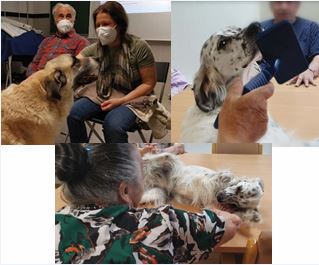
In this line of research, the One Health perspective is incorporated by considering not only the benefits for participants but also the welfare of the animals involved and responsible interaction with the environment. The dogs receive specialized training, continuous supervision, and care that guarantees their health and comfort, while the interventions take place in adapted environments that promote safety and quality of life [11].

Furthermore, our group has explored the application of AAT in other groups, such as children with developmental disorders or behavioral problems, patients in neurological rehabilitation, people with chronic stress or anxiety, and even healthcare professionals in clinical settings [12,13]. In our most recent study [14], we evaluated the effect of equine-assisted intervention (EAT) as a therapeutic strategy for children with Autism Spectrum Disorder (ASD). The sessions included horseback riding, grooming the animal, hygiene, and bonding work, resulting in significant improvements in global adaptive behavior, especially in communication and social skills.

WHAT WE HAVE FOUND
The results of our studies with institutionalized elderly people show that DAT generates significant improvements in emotional and behavioral well-being. In the first pilot study, a reduction in agitation, aggressiveness, and other problematic behavioral symptoms was observed in the intervention group compared to the control group [9,10].
In our multicenter trial with 334 participants, the intervention consisted of weekly 45-minute sessions for eight months, in groups of 10 people with a trained dog and a DAT professional. Activities were organized into four areas: affective (emotions and bond), behavioral (attention and adaptive behavior), functional (movement and coordination), and cognitive (memory, attention, and language). The results showed significant improvements in the affective and behavioral domains, while in the functional and cognitive domains, less deterioration was observed compared to the control group [9,10].
In the study with equines and children with ASD, interventions resulted in significant improvements in adaptive behavior, communication, social skills, and daily life skills. These results align with recent evidence, where meta-analyses show consistent effects of animal assisted interventions in psychosocial domains, such as reducing agitation and anxiety in dementia. In children with ASD, recent syntheses confirm improvements in communication and social interaction. However, reviews warn about methodological heterogeneity and the need for longer-term follow-up [14-16].
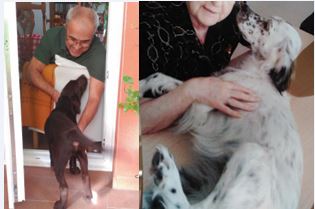
Furthermore, recent literature emphasizes that responsible implementation requires the integration of clear criteria for animal welfare and safety/infections (veterinary protocols, stress control, and hygiene measures), elements that are part of our One Health approach, as the quality of the intervention depends on both animal care and environmental design. Overall, the evidence supports the increasingly well-founded adoption of AAT as a therapeutic complement for various groups, but also calls for multicenter studies with larger sample sizes, active control groups, and multidimensional measures (human, animal, and environmental) to consolidate dosage, duration, and cost-benefit within a One Health perspective. This research agenda aligns with the directions indicated by recent reviews [17,18].
CONNECTION WITH ONE HEALTH
The One Health approach recognizes that human, animal, and environmental health are closely interrelated, and that health challenges must be addressed in a collaborative and interdisciplinary manner. Animal assisted therapy (AAT) constitutes a practical example of this vision: by integrating trained animals into human therapeutic interventions, the benefits are not limited to people but also encompass animal welfare and the quality of the environment in which interactions take place [11].
In our studies with institutionalized elderly people, we have observed that positive effects on mood, behavior, and social interaction occur only when animals receive adequate care, professional supervision, and specialized training. This ensures that the participating dogs do not suffer from stress or physical risk, promoting shared well-being: humans benefit from the interaction, and animals participate in a safe and enriching environment [19,20].
The environmental dimension is also relevant: the spaces where AAT is conducted must be adapted and designed to guarantee safety, comfort, and accessibility for both human participants and animals. From this perspective, the intervention becomes an integrated practice that promotes collective health and respect for the environment, a central principle of One Health [21].
Furthermore, AAT can be applied to other groups, such as children with developmental disorders, patients in neurological rehabilitation, or people with chronic stress, as well as in clinical and educational settings [2]. This transversality reinforces the idea that animal-assisted therapy transcends individual intervention, constituting an integrated health model that coordinates human, animal, and environmental well-being [11].
IMPLICATIONS AND FUTURE LINES
Our research findings suggest that animal-assisted therapy (AAT) is a safe, effective, and versatile intervention that can significantly improve the emotional and behavioral well-being of elderly people with dementia, as well as other vulnerable groups such as children with autism spectrum disorder, patients in neurological rehabilitation, or individuals with chronic stress. These results reinforce the importance of integrating AAT into evidence-based healthcare and social care programs as a complement to conventional treatments [22].
From the One Health perspective, AAT also highlights the need for a comprehensive approach that considers the welfare of the animals involved and the suitability of the environment. The responsible implementation of these programs requires collaboration among health, veterinary, psychology, education, and residential or therapeutic center management professionals, promoting shared benefits for all stakeholders involved [11].
In terms of future research, there are several promising areas:
- Expanding multicenter studies with larger sample sizes and active control groups to strengthen evidence on efficacy and safety. Our team is currently developing this line by replicating the multicenter study published in 2021 in other countries [6].
- Exploring other groups and contexts, including adolescents with anxiety, people with physical or mental disabilities, and healthcare professionals who could benefit from contact with animals in their daily work. We are currently conducting studies on anxiety reduction in children with ASD and in various other contexts [23].
- Evaluating different animal species (horses, cats, rabbits, birds) and types of intervention to determine which modalities are most effective according to the population and therapeutic objectives. In this framework, we are also exploring new research involving both dogs and horses to expand knowledge of their therapeutic effects on different groups [24].
- Analyzing long-term effects and program sustainability, including the impact on people’s quality of life, animal health, and environmental organization. Our team is beginning to address these issues by evaluating the impact on animal health and welfare and the adaptation of environments alongside human quality of life [19].
- Incorporating objective and multidimensional measures of human, animal, and environmental welfare to strengthen the One Health-AAT link. Our team is committed to using validated and widely used objective scales. Furthermore, we ensure data collection facilitates replication and incorporate strict dog selection criteria (health, sociability, impulse control), demonstrating our commitment to objective measures for both human and animal participants [25].

Taken together, these future directions indicate that AAT is not merely a therapeutic tool, but an integrated intervention model that contributes to collective health and demonstrates how responsible practices can generate shared benefits for people, animals, and environments.

Beyond our research endeavors, our team has prioritized scientific and educational outreach concerning animal-assisted therapy (AAT) and the One Health approach. We have conducted lectures and seminars for healthcare professionals, students, residential caregivers, and the general public, addressing topics such as:
- The emotional and behavioral benefits of AAT.
- The human-animal bond.
- The significance of animal welfare.
- The adaptation of environments where these interventions occur.
These initiatives aim not only to spread evidence-based knowledge but also to foster responsible, ethical, and safe practices, raising awareness about the integration of human, animal, and environmental health. Our experience with these lectures has shown that sharing scientific findings and best practices strengthens the perceived value of AAT and facilitates the adoption of these interventions across various educational, clinical, and community settings, thereby solidifying the connection between research, practical application, and outreach.
REFERENCES
- One Health High-Level Expert Panel (OHHLEP); Adisasmito WB, Almuhairi S, Behravesh CB, Bilivogui P, Bukachi SA, Casas N, et al. One Health: A new definition for a sustainable and healthy future. PLoS Pathog. 2022; 18: e1010537.
- Leth M. Centring Animals: Moments of Unlearning, the Pitfalls of Consent and Narrating the Nonhuman Lives in Multispecies Ethnographic Research. Animal Studies J. 2026; 14.
- Benneth EO. Introduction: Principles of Animal Behavior. In Principles of Animal Behaviour. CRC Press. 2026; 1-15.
- Warrilow E, Kinman G. The impact of dogs on human health in healthcarecontexts: a review. Br Med Bull. 2026; 157: ldag005.
- Rana T. Principios del comportamiento animal: Mecanismos, ecología y aplicaciones en la ciencia veterinaria. CRC Press. 2026.
- Mittly V, Farkas-Kirov C, Zana Á, Szabó K, Ónodi-Szabó V, Purebl G. The effect of animal-assisted interventions on the course of neurological diseases: a systematic review. Syst Rev. 2023; 12: 224.
- Brandão C, Sampaio M, Sousa-Gomes V, Fávero M, Moreira D. Effects of Animal-Assisted Therapy for Anxiety Reduction in Children and Adolescents: A Systematic Review. J Clin Med. 2025; 14: 287.
- Chang SJ, Lee J, An H, Hong WH, Lee JY. Animal-Assisted Therapy as an Intervention for Older Adults: A Systematic Review and Meta-Analysis to Guide Evidence-Based Practice. Worldviews Evid Based Nurs. 2021; 18: 60-67.
- Vegue Parra E, Hernández Garre JM, Echevarría Pérez P. Beneficios de la terapia asistida con perros en pacientes con demencia residentes en centros de atención para personas mayores en España. Int J Environ Res Public Health. 2021; 18: 1471.
- Parra EV, Hernández Garre JM, Pérez PE. Impact of Dog-Assisted Therapy for Institutionalized Patients with Dementia: A Controlled Clinical Trial. Altern Ther Health Med. 2022; 28: 26-31.
- Liguori G, Costagliola A, Lombardi R, Paciello O, Giordano A. Human- Animal Interaction in Animal-Assisted Interventions (AAI)s: Zoonosis Risks, Benefits, and Future Directions-A One Health Approach. Animals (Basel). 2023; 13: 1592.
- Kamioka H, Okada S, Tsutani K, Park H, Okuizumi H, Handa S, et al. Effectiveness of animal-assisted therapy: A systematic review of randomized controlled trials. Complement Ther Med. 2014; 22: 371-390.
- Cherniack EP, Cherniack AR. The benefit of pets and animal-assisted therapy to the health of older individuals. Curr Gerontol Geriatr Res. 2014; 2014: 623203.
- Martínez Moreno CM, Hernández Garre JM, Echevarría Pérez P, Morales Moreno I, Vegue Parra E, Valero Merlos E. Effectiveness of Equine-Assisted Intervention as a Therapeutic Strategy for Improving Adaptive Behaviour in Children with Autism Spectrum Disorder. Healthcare (Basel). 2025; 13: 2014.
- Chen H, Wang Y, Zhang M, Wang N, Li Y, Liu Y. Effects of animal-assisted therapy on patients with dementia: A systematic review and meta-analysis of randomized controlled trials. Psychiatry Res. 2022; 314: 114619.
- Zoccante L, Sabaini S, Bonatti SM, Rigotti E, Lintas C, Marconi M, et al. Effectiveness of Equine-Assisted Activities and Therapies for Children with Autism Spectrum Disorder: An Update. Children (Basel). 2024; 11: 1494.
- Ameli K, Braun TF, Krämer S. Animal-Assisted Interventions and Animal Welfare-An Exploratory Survey in Germany. Animals (Basel). 2023; 13: 1324.
- Pandey RP, Himanshu; Gunjan; Mukherjee R, Chang CM. The Role of Animal-Assisted Therapy in Enhancing Patients’ Well-Being: Systematic Study of the Qualitative and Quantitative Evidence. JMIRx Med. 2024; 5: e51787.
- Orr N, Abbott R, Bethel A, Paviour S, Whear R, Garside R, et al. What are the effects of animals on the health and wellbeing of residents in care homes? A systematic review of the qualitative and quantitative evidence. BMC Geriatr. 2023; 23: 170.
- Santaniello A, Garzillo S, Cristiano S, Fioretti A, Menna LF. The Research of Standardized Protocols for Dog Involvement in Animal-Assisted Therapy: A Systematic Review. Animals (Basel). 2021; 11: 2576.
- Galardi M, De Santis M, Moruzzo R, Mutinelli F, Contalbrigo L. Animal Assisted Interventions in the Green Care Framework: A Literature Review. Int J Environ Res Public Health. 2021; 18: 9431.
- Rehn AK, Caruso VR, Kumar S. The effectiveness of animal-assisted therapy for children and adolescents with autism spectrum disorder: A systematic review. Complement Ther Clin Pract. 2023; 50: 101719.
- Feng X, Zhao S, Zhang D, Yi Q, Chen Y, Zhang X. A bibliometric study for global hotspots and trends in animal-assisted interventions (1983-2023). Front Psychiatry. 2025; 16: 1490122.
- Suba-Bokodi É, Nagy I, Molnár M. Unconventional Animal Species Participation in Animal-Assisted Interventions and Methods for Measuring Their Experienced Stress. Animals (Basel). 2024; 14: 2935.
- De Santis M, Filugelli L, Mair A, Normando S, Mutinelli F, Contalbrigo L. How to Measure Human-Dog Interaction in Dog Assisted Interventions? A Scoping Review. Animals (Basel). 2024; 14: 410.