Full Neurological Recovery after Prolonged Out-of-Hospital Cardiac Arrest: Integrated ECMO and CRRT for Reversible Metabolic Causes
- #. These authors contributed equally to the work.
- 1. Department of Emergency, The Second Affiliated Hospital, Hengyang Medical School, University of South China, China
Abstract
Background: The management of Out-of-Hospital Cardiac Arrest (OHCA) remains challenging and controversial due to its poor prognosis. Once resuscitation efforts are initiated, determining whether to continue or terminate the process is difficult, even with established Termination of Resuscitation (TOR) guidelines. Additionally, managing Post-Cardiac Arrest Syndrome (PCAS) complicates care, as it involves addressing ischemic injury, organ dysfunction, and inflammatory responses. These challenges emphasize the need for tailored decision-making to optimize patient outcomes.
Case: We report a case of prolonged Out-of-Hospital Cardiac Arrest (OHCA) in a 60-year-old male with end-stage renal disease and diabetes mellitus. Despite a resuscitation time of 410 minutes, the patient achieved return of spontaneous circulation (ROSC) following timely intervention with extracorporeal membrane oxygenation (ECMO) and continuous renal replacement therapy (CRRT). Hyperkalemia and hyperglycemia were identified as contributing factors to the prolonged arrest. After successful resuscitation and management of Post-Cardiac Arrest Syndrome (PCAS), including inflammatory modulation and targeted therapies, the patient made a full neurological recovery (CPC 1) and was discharged without any organ dysfunction typically associated with cardiac arrest.
Conclusion: This case highlights the challenges of managing OHCA and offers key lessons. In cases with early bystander CPR, timely ECMO use can address reversible causes of cardiac arrest, showing that even with prolonged resuscitation, favorable outcomes are possible. Given the complex and often multifactorial nature of cardiac arrest, a comprehensive approach is essential. In managing PCAS, inflammatory modulation can be considered as a valuable complement to traditional supportive care. Finally, when standard treatments may introduce complications, a cautious approach is necessary. Further studies are needed to define optimal strategies for managing complex OHCA cases.
Keywords
• Out-of-hospital cardiac arrest
• Prolonged resuscitation
• Extracorporeal membrane oxygenation
• Post-cardiac arrest syndrome
• Termination of resuscitation
Citation
Wang Y, Liu S, Bai X, Li J, Yi S, et al. (2026) Full Neurological Recovery after Prolonged Out-of-Hospital Cardiac Arrest: Integrated ECMO and CRRT for Reversible Metabolic Causes. Arch Emerg Med Crit Care 10(1): 1075.
INTRODUCTION
Out-of-Hospital Cardiac Arrest (OHCA) remains a leading cause of global mortality, with approximately 4 million cases annually and survival rates consistently below 11%, despite advancements in resuscitation science [1,2]. This poor prognosis is driven by several challenges, including prolonged ischemic time, delayed initiation of cardiopulmonary resuscitation (CPR), pre-existing comorbidities, and limited access to timely advanced interventions [2]. Among these, resuscitation duration plays a critical role in determining outcomes, yet it raises significant ethical and clinical complexities in termination of resuscitation (TOR) decisions.
The 2020 International Liaison Committee on Resuscitation (ILCOR) guidelines recommend discontinuing advanced life support (ALS) after 14 minutes without a return of spontaneous circulation (ROSC). However, this time threshold remains controversial, as it is based on evidence of low-to-moderate certainty [3]. It fails to consider cases with reversible causes or those benefiting from extracorporeal cardiopulmonary resuscitation (ECPR). While conventional wisdom suggests that CPR durations exceeding 20–30 minutes are associated with poor neurological recovery, emerging reports challenge this view [4-7]. For instance, two cases showed patients receiving over 60 minutes of advanced cardiac life support (ACLS) who ultimately achieved ROSC and recovered with minimal or no neurological sequelae. Additionally, a 17-year-old girl received Extracorporeal Membrane Oxygenation (ECMO) treatment after undergoing 197 minutes of CPR and subsequently achieved ROSC, making a full recovery. These cases suggest that some patients with minimal or no no-flow time, even after prolonged low-flow durations, can still recover. They also highlight that recovery is possible beyond traditional resuscitation timelines, especially with advanced interventions like ECPR that help reduce ischemic injury.
As ECPR becomes more widely used in complex cases, the decision to terminate resuscitation remains controversial. While ECPR has shown promise in improving outcomes, particularly in patients with refractory cardiac arrest, current guidelines often fail to specifically address situations where reversible causes cannot be corrected in a short time frame, and patients who have not achieved ROSC despite ECPR support. In such cases, it remains unclear how to make the decision on whether to continue resuscitation.
Here, we present a paradigmatic case of prolonged resuscitation in a patient with refractory OHCA secondary to hyperkalemia and end-stage renal disease, where ECPR and sustained hemodynamic support were continued despite the absence of ROSC, challenging conventional TOR predictions. This case not only highlights the lifesaving potential of prolonged resuscitation under ECPR but also exposes critical gaps in existing guidelines, calling for a shift toward tailored resuscitation protocols.
CASE REPORT
A 60-year-old male patient had a medical history significant for diabetes mellitus, diabetic nephropathy (chronic kidney disease stage 5), coronary artery disease, and hypertension, managed with amlodipine, aspirin, and pitavastatin. He had been receiving maintenance hemodialysis twice weekly for five years.
Three days after his last dialysis session, the patient experienced acute dizziness and palpitations while ambulating. Emergency medical services (EMS) found him with worsening dizziness. He then collapsed during transfer to the ambulance. Immediate basic life support (BLS) was initiated, involving manual chest compressions and bag-valve-mask ventilation. Transport to the emergency department occurred within 15 minutes, where he was moved to the resuscitation unit. Advanced cardiovascular life support (ACLS) protocols were followed. Chest compressions were transitioned to an automated device (AutoPulse), and the patient was endotracheally intubated.
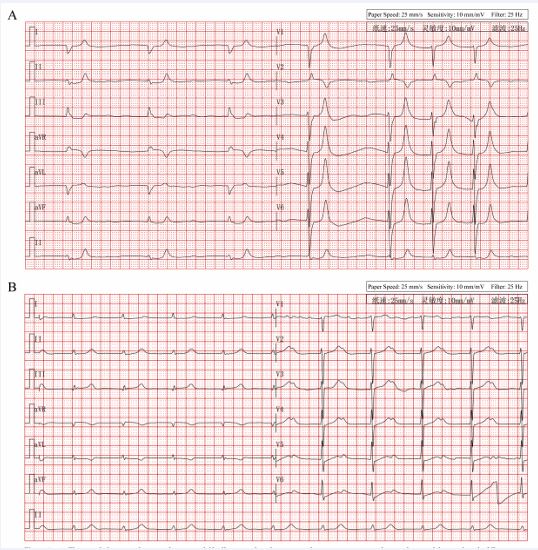
Figure 1 A) The initial electrocardiogram shows atrial fibrillation with a slow ventricular rate, intraventricular conduction delay, and peaked T-waves. B) The electrocardiogram obtained after successful resuscitation reveals a junctional (idioventricular) rhythm, characterized by low voltage complexes in the limb leads. Device calibration parameters are indicated in Chinese on the tracing, with English translations provided.
Epinephrine (1 mg) was administered intravenously every 3 minutes. The initial electrocardiogram (ECG) showed ventricular escape beats (Figure 1A); thus, defibrillation was not indicated. Point-of-care ultrasound (POCUS) demonstrated faint cardiac motion. Critical initial arterial blood gas (ABG) results included: pH 7.18, pCO2 27.7 mmHg, potassium 6.87 mmol/L, lactate 8.44 mmol/L, and blood glucose 38.8 mmol/L. Treatment with intravenous calcium gluconate (2g) and sodium bicarbonate (125 mL of 10%) was administered.
Despite these interventions, ROSC was not achieved after 30 minutes. The rhythm deteriorated to asystole, and POCUS showed a motionless heart. Pupils were fixed at 3 mm without light reflex (having been 2 mm with sluggish reflex on ED arrival). A subsequent venous blood gas revealed profound acidosis (pH 6.99) and severe hyperglycemia (glucose 41.8 mmol/L via separate testing).
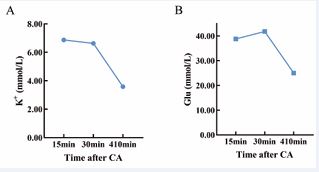
Figure 2 A) Dynamic changes in serum K+ levels from hospital admission to ROSC. B) Dynamic changes in blood glucose levels from hospital admission to ROSC.
Given therefractorycardiac arrest with identified, severe reversible metabolic derangements (hyperkalemia and hyperglycemia), veno-arterial extracorporeal membrane oxygenation (VA-ECMO) was initiated. Concurrently, CRRT in continuous venovenous hemodialysis (CVVHD) mode was started for urgent potassium correction. Ongoing resuscitation included automated chest compressions, mechanical ventilation, an insulin infusion (7 IU/h), and a continuous epinephrine infusion (5 mg/h). Following correction of electrolytes and glucose (potassium 3.58 mmol/L, glucose 25.0 mmol/L; Figure 2), the patient achieved ROSC after a total of 410 minutes of arrest (Figure 1B). Post-ROSC vital signs were: blood pressure 88/48 mmHg, heart rate 58 bpm. Pupils remained fixed at 2 mm. An ABG showed improving pH (7.338) and lactate (8.66 mmol/L).
Post-resuscitation management focused on mitigating PCAS. CRRT was changed to CVVH with hemoperfusion to address a significant inflammatory response (IL-6 1022 pg/mL). Hemodynamically stable by day 4, VA-ECMO and CRRT were discontinued. A favorable neurologic prognosis was supported by a neuron-specific enolase level of 18.47 ng/mL. Sedation was weaned from day 5, and the patient was extubated on day 7, demonstrating full neurological recovery (CPC 1).
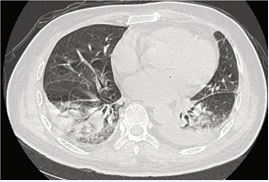
Figure 3 Axial chest CT scam on hospital day 17, demonstrating progression of bilateral pulmonary infiltrates and pleural effusions.
On hospital day 17, the patient developed hospital-acquired pneumonia. Chest CT showed bilateral infiltrates (Figure 3), and sputum culture grew hypervirulent *Klebsiella pneumoniae*. Treatment with cefepime/ avibactam led to clinical improvement. However, around day 22, following a CRRT session, he developed involuntary tremors, seizures, and progressive lethargy, culminating in coma by day 27. Evaluation with brain MRI https://www.jscimedcentral.com/public/assets/images/uploads/image-1776143558-1.JPG
By day 32, antibiotic-associated encephalopathy (AAE) was suspected in the context of persistent infection. Due to ongoing evidence of infection (elevated procalcitonin), antibiotics were continued, but adjunctive therapy with plasmapheresis was added to the intermittent CRRT and hemoperfusion regimen. After three sessions of this combined blood purification, his mental status began improving on day 36. Antibiotics were switched to meropenem on day 37 and ultimately discontinued on day 40. The patient transitioned back to regular hemodialysis on day 50 and was transferred to a general ward.
He was discharged after 60 total days of hospitalization with a CPC score of 1, indicating full neurological recovery. At one-month follow-up, he remained neurocognitively intact and independent in activities of daily living, consistent with his pre-arrest baseline.
DISCUSSION
We present a case of OHCA with a prolonged resuscitation (410 minutes). Despite the extended CPR and the risks of PCAS, the patient exhibited no neurological deficits (CPC 1) or organ dysfunction following WLST. Notably, the patient developed hospital-acquired pneumonia caused by hypervirulent Klebsiella pneumoniae and AAE, a complication particularly prevalent in CKD patients due to impaired drug clearance [8]. After comprehensive treatment, the patient achieved complete neurological recovery and was discharged without sequelae. This case challenges the current TOR guidelines, demonstrating that recovery is possible even after an exceptionally prolonged resuscitation period, and emphasizing the need for individualized decision-making in complex cases.
Current BLS and ALS protocols from the AHA and ERC outline TOR criteria for non-shockable rhythms or refractory arrest after ALS, but these guidelines remain controversial and inconsistently followed in practice [9]. Studies show only 44% compliance with TOR recommendations, reflecting variability in clinical decisions [10]. One major challenge is deciding whether to continue or terminate CPR, as the benefits of prolonged efforts must be weighed against the risks. While prolonged CPR is typically associated with poor outcomes, emerging evidence suggests that patients with shockable rhythms, witnessed arrests, reversible causes, and those receiving bystander CPR may still benefit from extended resuscitation [4]. In some regions, strict adherence to EMS protocols based on BLS and ALS TOR criteria can lead to the premature exclusion of patients, such as ours, from hospital transfer, limiting their access to advanced interventions like ECMO. Although ECPR has shown promise in improving outcomes for cardiac arrest patients, its efficacy in OHCA remains uncertain [11,12]. ILCOR emphasizes the need to identify specific patient phenotypes that would benefit from ECPR to optimize resource use and improve outcomes [4]. ECPR can help mitigate the duration of low-flow time, but its success depends on factors such as no-flow time, timely initiation, and the reversibility of the underlying cause [13]. Recent results from a meta-analysis support this concept, and in our case, all these conditions were met, contributing to the positive outcome. However, one limitation in this case is that due to equipment constraints, we were unable to measure End-Tidal Carbon Dioxide (ETCO2), which is now recommended as an important prognostic indicator during resuscitation efforts. This could have provided additional insights into the patient’s condition during resuscitation and potentially influenced our clinical decisions. Despite this, the patient’s pupils remained fixed but did not fully dilate throughout the resuscitation process, which suggested ongoing cerebral activity. This was an important factor in our decision to continue resuscitation rather than opting for termination, as it indicated the potential for recovery despite the prolonged arrest.
This case highlights the challenges of prolonged resuscitation and offers important lessons for managing complex cases. Our retrospective analysis suggests that the prolonged resuscitation before achieving ROSC was due not only to hyperkalemia but also to concurrent hyperglycemia, which was initially overlooked while focusing on correcting hyperkalemia. Upon review, it became clear that the patient faced a dual metabolic crisis, worsening electrical instability and myocardial dysfunction. Hyperkalemia destabilizes the heart’s electrical activity, leading to non-shockable rhythms or persistent asystole, while hyperglycemia increases myocardial workload, impairs vascular function, and hinders recovery post-ROSC [14]. The combined effects of elevated potassium and glucose likely prolonged the low flow state, delaying ROSC despite extensive efforts. ROSC was ultimately achieved after potassium levels decreased to 3.58 mmol/L. This case underscores the importance of identifying multiple causes of cardiac arrest, especially when the underlying factors cannot be explained by a single cause.
Additionally, this case offers insights into evolving strategies for managing PCAS, which contributed significantly to the patient’s unfavorable prognosis. PCAS is driven by a dysregulated immune response following cardiac arrest, leading to multiorgan dysfunction [15]. IL-6 has been strongly linked to shock and mortality in PCAS. To mitigate the inflammatory response, we augmented CRRT with hemoperfusion, aimed at removing inflammatory mediators like IL-6. This strategy likely helped prevent multiorgan dysfunction despite prolonged ischemic injury, aligning with studies showing that higher IL-6 levels correlate with increased mortality [15]. In one clinical trial, patients who received hemoperfusion were less likely to die from shock after cardiac arrest, suggesting HP’s potential benefit in improving PCAS outcomes [16].
Lastly, a late complication in this case—AAE— highlighted therapeutic challenges in managing CKD patients with uncontrolled Klebsiella pneumoniae infections. Although switching antibiotics is the commonly recommended approach for treating AAE [17], the infection could have further progressed, posing a potentially fatal risk to the patient. Given this dilemma, we took a cautious approach by using plasmapheresis to remove protein bound antibiotic remnants while maintaining antimicrobial coverage. Once the infection was better controlled, we transitioned to a more appropriate antibiotic regimen, ultimately discontinuing the previous one, allowing for effective treatment of both AAE and the infection, leading to a favorable outcome. This approach provides new insights into the management of AAE and may offer valuable guidance for future therapeutic strategies in similar clinical scenarios.
CONCLUSION
This case underscores the complexities of managing patients with prolonged OHCA and highlights several critical lessons. In OHCA cases with early bystander CPR, the timely use of ECMO can provide crucial time to address reversible causes of cardiac arrest. A multi factorial approach is essential, as the cause of arrest is rarely explained by a single factor. Second, managing PCAS requires not only traditional supportive care but also inflammatory modulation to improve patient outcomes. Third, when established treatments may introduce additional complications, a cautious approach is necessary to mitigate risks while addressing underlying conditions. Further studies are needed to explore optimal strategies for managing complex OHCA cases.
AUTHOR CONTRIBUTIONS
Yu Wang, Shan Liu, Xinghua Bai: conception and initial drafting. All authors: review and editing of serial drafts.
REFERENCES
- Brooks SC, Clegg GR, Bray J, Deakin CD, Perkins GD, Ringh M, et al.Optimizing outcomes after out-of-hospital cardiac arrest with innovative approaches to public-access defibrillation: A scientific statement from the International Liaison Committee on Resuscitation. Resuscitation. 2022; 172: 204-228.
- Chai J, Fordyce CB, Guan M, Humphries K, Hutton J, Christenson J, et al. The association of duration of resuscitation and long-term survival and functional outcomes after out-of-hospital cardiac arrest. Resuscitation. 2023; 182: 109654.
- Mentzelopoulos SD, Couper K, Voorde PV, Druwé P, Blom M, Perkins GD, et al. European Resuscitation Council Guidelines 2021: Ethics of resuscitation and end of life decisions. Resuscitation. 2021; 161: 408-432.
- Matsuyama T, Ohta B, Kiyohara K, Kitamura T. Cardiopulmonary resuscitation duration and favorable neurological outcome after out-of-hospital cardiac arrest: a nationwide multicenter observational study in Japan (the JAAM-OHCA registry). Crit Care. 2022; 26: 120.
- Pasierski J, Kleger GR, Imboden P. Do we need standardized management after termination-of-resuscitation attempts? Autoresuscitation in a 67-year-old woman. Scand J Trauma Resusc Emerg Med. 2023; 31: 62.
- Cooper S, Macnaughton P. Prolonged resuscitation: a case report. Resuscitation. 2001; 50: 349-351.
- Paciorkowski F, Nahban W, Jacques JM. Survival without Neurological Sequelae Following Massive Pulmonary Embolism and Prolonged Cardiac Arrest. Cureus. 2024; 16: e71898.
- Kim JH, Kim T, Kim W, Kim SH, Hong YJ, Lim E, et al. The incidence and predictors of antibiotic-associated encephalopathy: a multicenter hospital-based study. Sci Rep. 2024; 14: 8747.
- Shibahashi K, Kato T, Hikone M, Sugiyama K. Identifying individuals satisfying the termination of resuscitation rule but having potential to achieve favourable neurological outcome following out-of-hospital cardiac arrest. Resuscitation. 2023; 190: 109860.
- O’Brien E, Hendricks D, Cone DC. Field termination of resuscitation: analysis of a newly implemented protocol. Prehosp Emerg Care. 2008; 12: 57-61.
- Low CJW, Ramanathan K, Ling RR, Ho MJC, Chen Y, Lorusso R, et al. Extracorporeal cardiopulmonary resuscitation versus conventional cardiopulmonary resuscitation in adults with cardiac arrest: a comparative meta-analysis and trial sequential analysis. Lancet Respir Med. 2023; 11: 883-893.
- Suverein MM, Delnoij TSR, Lorusso R, Brandon Bravo Bruinsma GJ, Otterspoor L, Elzo Kraemer CV, et al. Early Extracorporeal CPR for Refractory Out-of-Hospital Cardiac Arrest. N Engl J Med. 2023; 388: 299-309.
- Low CJW, Ling RR, Ramanathan K, Chen Y, Rochwerg B, Kitamura T, et al. Extracorporeal cardiopulmonary resuscitation versus conventional CPR in cardiac arrest: an updated meta-analysis and trial sequential analysis. Crit Care. 2024; 28: 57.
- Marfella R, Federici M, Paolisso G. Editorial: Hyperglycemia and Coronary Artery Diseases: Physio-Pathological Findings and Therapeutic Implications. Front Pharmacol. 2022; 13: 901815.
- Cunningham CA, Coppler PJ, Skolnik AB. The immunology of the post-cardiac arrest syndrome. Resuscitation. 2022; 179: 116-123.
- Laurent I, Adrie C, Vinsonneau C, Cariou A, Chiche JD, Ohanessian A, et al. High-volume hemofiltration after out-of-hospital cardiac arrest: a randomized study. J Am Coll Cardiol. 2005; 46: 432-437.
- Bhattacharyya S, Darby RR, Raibagkar P, Gonzalez Castro LN, Berkowitz AL. Antibiotic-associated encephalopathy. Neurology. 2016; 86: 963-971.