Health-Related Quality of Life and Return to Work after Traumatic Spinal Fractures without Spinal Cord Injury after One Year: A Prospective, Longitudinal Follow-Up Study
- 1. Department of Orthopaedic Surgery, Elisabeth-TweeSteden Hospital, the Netherlands
- 2. Department of General Surgery, Elisabeth-TweeSteden Hospital, the Netherlands
- 3. Network Emergency Care Brabant, Elisabeth-TweeSteden Hospital, the Netherlands
- 4. Tranzo Scientific Center for Care and Well-Being, Tilburg School of Social and Behavioral Sciences, Tilburg University, the Netherlands
Abstract
Background and purpose: The incidence of traumatic spinal fractures without spinal cord injury (SCI) is rising, leading to considerable socioeconomic and medical burdens. The long-term impact on patients’ health and functioning, however, remains unclear. This study assesses health-related quality of life (HRQoL) and return to work (RtW) in the first year post-injury.
Methods: A prospective, longitudinal cohort study was conducted between 2015 and 2016. Patients aged ≥18 years with traumatic spinal fractures (type A or B) of the cervical, thoracic, or lumbar spine without SCI were included. Diagnoses were confirmed via imaging and neurological assessment. HRQoL was measured using the EuroQoL-5D-3L, and RtW (1 = yes, 0 = no) was defined as the first return to employment post-hospitalization. Data were self-reported pre-injury and during 12 months of follow-up. Statistical differences in HRQoL were analyzed using χ² tests (p < 0.05).
Results: A total of 138 patients were included: 56 with cervical, 43 thoracic, and 39 lumbar fractures; 79 had type A and 29 type B fractures. Significant declines in mobility, self-care, daily activities, and pain were observed in the first week and persisted over the year. Anxiety was highest shortly after injury but decreased over time. Of the 69 patients employed before injury, only 35 (51%) returned to work within 12 months.
Conclusion: Traumatic spinal fractures without SCI result in lasting impairments in HRQoL and low return-to-work rates. These findings underscore the need for early rehabilitation and supportive measures to improve recovery and reduce long-term burden.
Keywords
• Quality of Life
• Work
• Traumatic Spinal Fractures
• Spinal Cord Injury
• Rehabilitation
Citation
Suijkerbuijk MAM, Fijneman L, van Egmond PW, Joosen MCW, de Jongh MAC, et al. (2026) Health-Related Quality of Life and Return to Work after Traumatic Spinal Fractures without Spinal Cord Injury after One Year: A Prospective, Longitudinal Follow-Up Study. Arch Emerg Med Crit Care 10(1): 1077.
INTRODUCTION
Trauma, defined as physical injury from an accident, is the leading cause of death worldwide under the age of 45 [1]. However, most people survive with temporary or permanent morbidity, negatively impacting their quality of life (QoL) [2,3], and return to work (RtW) rates [4]. The incidence of spinal fractures is rising, estimated at 24 per 100,000 inhabitants and 10% of all patients at the Emergency Department are admitted due to such injuries [5]. In young individuals, spinal fractures are often due to high-energy mechanisms, like motor-vehicle accidents, leading to severe disability. Conversely, in older patients, spinal fractures typically result from low-energy incidents, causing prolonged hospital stays and lengthy rehabilitation processes. Consequently, traumatic spinal fractures are associated with high medical and socio-economic costs [6].
Return to work (RtW) is an important outcome for functional recovery after trauma. Besides individual suffering, the inability to RtW has large societal impact due to productivity losses, associated costs and social benefits expenses [7]. Yet, 40% of patients following major trauma is unable to return to work [8]. Pain, restricted activity and anxiety further impact long-term QoL [9]. However, RtW and QoL following spinal fractures without spinal cord injuries remain unknown.
Understanding these outcomes could identify at-risk patients, guide follow-up care, and reduce the socio economic burden. This study aims to explore QoL and RtW in the first year after spinal fractures without neurological deficits. In addition, it aims to describe how the QoL in patients with spinal fractures compares to that of other trauma patients.
METHODS
Study population
Between September 1st, 2015 and September 30st, 2016 patients were included in the Brabant Injury Outcome Surveillance (BIOS) study. This study is a prospective, longitudinal follow-up study of admitted adult trauma patients (age ≥ 18 years old) in the Noord-Brabant region (Netherlands) aimed at assessing the non-fatal burden of injury from the patient and societal perspectives. Previously, a detailed description and protocol of the BIOS study has been published [10]. For the current study, traumatic spinal fracture patients from the Elisabeth TweeSteden Hospital, a level 1 traumacenter, were identified. Participants without neurological deficits, who completed questionnaires on pre-injury functioning, as well as at 1 week, 1, 3, 6, or 12 months post-injury, were included in the study. Patients with pathological or osteoporotic fractures, or nonDutch speakers were excluded. If patients were unable to complete questionnaires due to cognitive impairments or other neurological conditions, proxy informants were requested for assistance.
Written informed consent was obtained from all included patients and the study was approved by the Medical Ethics Committee of Brabant (project number NL50258.028.14, 23th of October, 2014). This study was conducted in line with the STROBE guidelines.
Data collection
Patient characteristics, such as age and gender, were collected, along with the mechanism of injury and any additional injuries. These were extracted from the Brabant Trauma Register, Dutch Medical Registration and Electronic records. The Injury Severity Score (ISS) was calculated to assess the overall injury severity. Patients suspected of having a traumatic spinal fracture underwent conventional X-ray and/or computed tomography (CT) scan of the affected spinal region. Two investigators (MS, RG) independently classified the spinal fracture according to the AOSpine Trauma Classification System [11-13]. In cases of multiple traumatic spinal fractures, patients were categorized by the most severe fracture location (cervical, thoracic or lumbar) Disagreements were resolved by consensus.
Outcome measures
Health-related Quality of Life (HRQoL): The EuroQol 5D-3L (EQ-5D-3L) questionnaire is a standardized tool for assessing health-related quality of life (HRQoL), consisting of two components: a descriptive section and a visual analogue scale (VAS). The descriptive component covers five domains: mobility, self-care, usual activities, pain/ discomfort and anxiety/ depression. Each domain is rated on a three-level scale: no, moderate or severe problems. The VAS records the patient’s self-rated HRQoL on a scale from 0 (best imaginable health) to 100 (worst imaginable health).
EQ-5D-3L scores from spinal fracture patients were compared to other trauma patients with fractures included in the BIOS study. Additionally, scores from spinal fracture patients were compared to those of the general Dutch population, using data from the Longitudinal Internet Studies for the Social Sciences (LISS) panel that was administered by CentERdata, which includes 1,839 healthy Dutch individuals who completed the EQ-5D-3L questionnaire [14].
Return to work: The return to work (RtW) questionnaire gathered information on participants’ employment status, specifically whether they had a paid job and the timing of their RtW after the accident. RtW was determined from patient-reported questionnaires (1=yes, 0=no) and defined as the first time a patient resumed work after hospital admission. The time until RtW was calculated in months, and patients were categorized into five groups: RtW < 1 month, between 1-3 months, between 3-6 months, between 6-12 months, or no RtW.
Statistical analysis
All statistical analyses were performed using SPSS Statistics for Windows (version 21.0; Statistical Package for Social Sciences, Chicago, Illinois, USA). Descriptive statistics were used to describe baseline characteristics of the study population. For normally distributed data, the mean and standard deviation were calculated; for non-normally distributed data, the median and interquartile range were calculated. To compare patients with traumatic spinal fractures with the general Dutch population and patients no spinal fractures relative risks (RR) were calculated. Cumulative incidences on RtW were calculated at 1, 3, 6 and 12 months post-injury.
A χ² test was conducted to assess statistical differences in EQ-5D-3L scores between pre-injury and 1 week post injury, as well as between 1 week post-injury and 12 months post-injury with significance set at p < 0.05.
RESULTS
Study population
A total of 145 individuals with fractures of the cervical, thoracic or lumbar spine were recruited for the current study. The mean age ranged from 51,3 to 57,6 years, and were predominantly male. The fractures included cervical (n= 63), thoracic (n= 43) and lumbar fractures (n= 39), including 23 occipitocervical fractures, 79 type A fractures, 29 type B fractures, 7 type C fractures and 7 (unilateral) facet fractures. Patients with the most severe fracture classified in the cervical or thoracic segment most frequently had an associated thoracic spinal injury. Conversely, patients with the most severe classified fracture in the lumbar segment most frequently presented with an additional fracture of the lumbar spine (Table 1).
Table 1: Patient characteristics
|
|
Cervical fracture (n= 66) |
Thoracic fracture (n= 40) |
Lumbar fracture (n= 39) |
|
Age (mean (SD)) |
57,3 (18,4) |
51,3 (17,4) |
54,5 (18,9) |
|
Sex, male (%) |
40 (61) |
31 (78) |
21 (54) |
|
Admission days (mean (SD)) |
13,3 (16,0) |
14,2 (11,3) |
12,0 (14,2) |
|
ISS (median (IQR)) |
12,5 (6,0 – 18,3) |
16,5 (9,0 – 23,5) |
8,0 (4,0 – 17,0) |
|
Other spinal fractures (n) Cervical (n, %) Thoracic (n, %) Lumbar (n, %) |
67 17 (25,4) 43 (64,2) 7 (10,4) |
56 0 29 (51,8) 27 (48,2) |
35 0 4 (11,4) 31 (88,6) |
Of the 145 patients included, 80 (55%) sustained their spinal fracture from a fall, with 66% of these falls occuring from a height greater than 3.0 meters. Additionally, 38% of the patients sustained their fractures in a traffic accident (Table 2).
Table 2: Trauma mechanism
|
Trauma mechanism |
N (%) |
|
Traffic accident - Passenger vehicle - Motorcycle / mopeds - Bicycle - Pedestrian |
23 (15,9) 11 (7,6) 19 (13,1) 2 (1,4) |
|
Low energetic trauma |
27 (18,6) |
|
High energetic trauma |
53 (36,6) |
|
Other |
7 (4,8) |
|
Unknown |
3 (2,1) |
The green surface represents patients who successfully returned to work, while the red area represents those who did not.
In addition to the reported spinal fractures, 105 patients (72%) also had associated injuries in other areas. The frequency of these associated injuries varied according to spinal segment. Traumatic brain injury was most common among patients with cervical or thoracic spinal fractures, whereas thoracic injuries were most frequently reported in patients with fractures of the thoracic and lumbar vertebrae (Appendix 1).

Appendix 1: Concomitant injury per spinal segment
Health-related quality of life following spinal fracture
All enrolled patients completed the EuroQoL-5D-3L questionnaires at multiple time points during the first year after trauma to assess health-related quality of life (HRQoL) across various domains, including mobility, self care, usual activities, pain, and anxiety (Figure 1). The percentage of patients reporting problems with mobility, self-care, usual activities, and pain increased significantly in the first week after injury and remained elevated even one year later compared to pre-injury scores. Specifically, one year post-injury, 44.5% of patients reported mobility problems, 17.3% had self-care difficulties, 44.9% faced challenges with daily activities, and 63.6% experienced pain. While the percentage of patients experiencing these problems decreased over the course of the year, the levels remained higher than pre-injury. All comparisons between pre-injury vs. 1-week post-injury scores and 1-week post-injury vs. 12 months post-injury scores are given in Figure 1.
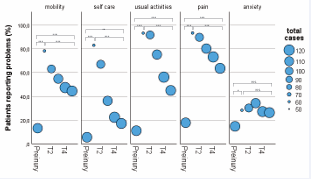
Figure 1: EQ-5D-3L subdomain scores in the first year after spinal fractures The percentage of patients reporting problems across the five domains at the following time points: T0 = pre-injury, T1 = 1 week post-injury, T2 = 1 month post injury, T3 = 3 months post-injury, T4 = 6 months post-injury, and T5 = 1 year post injury.
To improve readability, T1, T3, and T5 are not labeled on the X-axis, though these time points are displayed in the figure.
* p < 0.05
In contrast, the prevalence of anxiety increased significantly only during the first week post-injury and then remained stable throughout the first year.
The subdomain scores of the EQ-5D-3L reported by patients that sustained a type A or type B spinal fracture at 12 months post-injury were compared to both the general Dutch population and patients without spinal fractures from the BIOS study (Table 3).
Table 3: Relative risks of EQ-5D-3L subdomain scores
|
|
Dutch population1 (n= 1839) |
BIOS, fracture2 (n= 2284) |
Type A (n= 60) |
Type B (n= 20) |
||||
|
|
% |
% |
% |
RR1 |
RR2 |
% |
RR1 |
RR2 |
|
Mobility |
17,2 |
48,7 |
43,4 |
2,5 |
0,9 |
45,0 |
2,6 |
0,9 |
|
Self-care |
3,7 |
23,2 |
20,0 |
5,4 |
0,9 |
20,0 |
5,4 |
0,9 |
|
Usual activities |
15,4 |
47,3 |
50,0 |
3,2 |
1,1 |
50,0 |
3,2 |
1,1 |
|
Pain |
35,1 |
53,8 |
55,0 |
1,6 |
1,0 |
75,0 |
2,1 |
1,4 |
|
Anxiety |
14,8 |
24,1 |
23,4 |
1,6 |
1,0 |
40,0 |
2,7 |
1,7 |
The percentage of patients reporting problems one year post-injury across the five domains for Type A and B spinal fractures is presented. The relative risk (RR) of experiencing these problems is calculated for both the general Dutch population (RR1) and patients without spinal fractures from the BIOS study population (RR2).
Only 3,7% of the general Dutch population reported self-care difficulties, while both patients with a type A or type B fracture had a 5,4-fold increased risk of experiencing self-care-related problems. All other domains showed an increased risk varying between 1,6 and 3,2 for both type A and type B fractures.
Return to work
At the time of the accident, 69 patients (48%) were employed. During the first year following a spinal fracture, the number of patients returning to work gradually increased. By one month post-injury, approximately 11 patients (16%) had resumed work. Between 3 and 12 months, an additional 24 patients (35%) returned to work, bringing the cumulative percentage of patients back to work to 51% by the end of the first year (Figure 2).
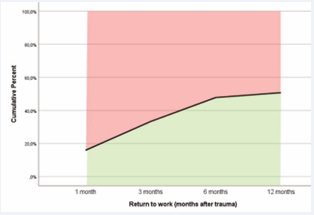
Figure 2: Cumulative incidence of return to work in months following spinal fracture.
The green surface represents patients who successfully returned to work, while the red area represents those who did not.
DISCUSSION
The results of this prospective observational study indicate that even one year after a spinal fracture, there remains a significant impact on various domains of patient’s lives. Between 18% and 40% of patients continue to experience limitations in daily life, including mobility, self-care, and usual activities. Furthermore, 60% of patients report persistent pain, and 20% experience psychological distress one year post-trauma. Although these rates are higher than those observed in the general Dutch population, they are comparable to the rates found among patients with non-spinal fractures. Additionally, only 50% of patients with a spinal fracture successfully returned to work within the first year post-trauma.
While the quality of life following traumatic spinal fractures without neurological injury has not been extensively studied, research on patients with osteoporotic compression fractures has shown a lasting reduction in health-related quality of life (HRQoL) [15,16], with effects measurable up to 19 years after the fracture [12]. Suzuki et al., demonstrated that approximately 80% of patients with osteoporotic spinal fractures reported a reduced quality of Figure 2 Cumulative incidence of return to work in months following spinal fracture. The green surface represents patients who successfully returned to work, while the red area represents those who did not. life one year post-injury, regardless of fracture level, type, or degree of sagittal imbalance [17]. These findings align with the current study, which show a significant impact on all EuroQoL-5D-3L subdomains one year after the spinal fracture. Additionally, the effect on quality of life appears similar for both type A and type B fractures. This suggests that spinal fractures have a significant impact on the QoL, regardless their severity.
Return to work (RtW) after a spinal fracture without neurological deficit is an important issue from both psychosocial and socioeconomic perspectives. Over the past decade, there have been no studies that focused on RtW as a primary outcome, with only six studies addressing this topic. Most studies reported that 59-71% of spinal fracture patients without neurological deficits returned to work, with follow-up periods ranging from 12 months to 15 years [18-21]. This aligns with the findings of the present study, where 51% of patients returned to work within 12 months (Figure 2). Two other studies noted that 86-100% of patients with conservatively treated type A spinal fractures returned to work within 3 to 6 months [22,23].
However, based on the current study and existing literature, it is not possible to determine whether patients had to adjust their work duties. Also, it is unclear whether patients with non-operative treatment returned to work faster than those who underwent surgical stabilization. Spinal fracture patients without neurological deficits returned to work at a lower rate compared to those undergoing other orthopedic procedures. For example, previous studies reported that 68% returned to work after total knee arthroplasty [24], and 91% after shoulder arthroplasty [25]. Horn et al., showed that approximately 89% of patients with major traumatic injuries (ISS > 16), returned to work after two years [8]. These findings suggest that spinal fractures may have a more significant impact on RtW than other orthopedic or traumatic injuries.
The strengths of this study include its prospective, longitudinal design and high response rates. To the best of our knowledge, it is the largest longitudinal study of traumatic spinal fracture patients without neurological deficits examining both QoL and RtW rates. However, this study has several limitations. Spinal fracture patients often suffer from polytrauma, with many having concomitant injuries. In this study, 72% had concomitant injuries, with traumatic brain injury and thoracic injury being the most common. Therefore, the EQ-5D-3L scores and RtW percentages cannot be solely attributed to the spinal fractures but rather reflect the overall impact of the trauma. Another limitation is the small sample size, which prevented a subanalysis between type A and type B fractures. Additionally, while there is a visible trend of improvement in the EQ-5D-3L subdomains during the first year post-trauma, these improvements were not statistically significant. A larger study group with more respondents at various time points might have produced statistically significant results. Lastly, the follow-up period was limited to one year, and the improvement in EQ-5D 3L scores had not yet reached a plateau, leaving the long term health-related quality of life after a spinal fracture uncertain.
This is the first study to explore health-related quality of life and return to work in traumatic spinal fracture patients classified using the AOSpine Trauma classification system. This classification system has contributed to uniform communication between physicians and researchers, enabling a consistent description of spinal injury severity internationally. Future research on HRQoL and RtW in spinal fractures should continue to use the AOSpine Trauma Classification to enhance comparability between studies and deepen our understanding of the impact of spinal fractures on patients’ lives.
The results of this study highlight the substantial impact spinal fracture have on patients’ lives spinal, both in terms of HRQoL and RtW. Future research should aim to identify factors that contribute to delayed or difficult recovery after a spinal fracture. This could help ensure that patients receive the best possible assistance or support at the right time to promote recovery. Additionally, more detailed investigations are needed into the differences in HRQoL and RtW between non-operative and operative treatments of spinal fractures without neurological deficits. This could provide valuable insights into optimizing treatment strategies for better patient outcomes.
CONCLUSIONS
In conclusion, this study demonstrates that spinal fractures significantly affect health-related quality of life, with 20-40% of patients still experiencing limitations in daily life and 60% reporting pain one year post-injury. In addition, only 51% of patients managed to return to work within the first year following trauma. Further research is needed to identify modifiable, patient-specific factors that impact quality of life after a spinal fracture. This knowledge will aid in the development of personalized treatments and rehabilitation programs, which could ultimately reduce the socio-economic and medical costs associated with spinal fractures.
Author Contributions
MS: conceptualization, formal analysis, writing (draft), methodology, visualization
LF: data curation, conceptualization
PE: methodology, visualization, writing (review)
MJ: writing (review)
MdJ: conceptualization, formal analysis, writing (review)
RG: conceptualization, methodology, formal analysis, writing (review)
REFERENCES
- Rossiter ND. Trauma-the forgotten pandemic?”. Int Orthop. 2022; 46: 3-11.
- Havermans RJM, de Jongh MAC, de Munter L, Lansink KWW. Longitudinal analysis of health status the first year after trauma in severely injured patients. Scand J Trauma Resusc Emerg Med. 2020; 28: 29.
- Kruithof N, Traa MJ, Karabatzakis M, Polinder S, de Vries J, de Jongh MAC. Perceived Changes in Quality of Life in Trauma Patients: A Focus Group Study. J Trauma Nurs. 2018; 25: 177-186.
- Horn L, de Munter L, Papageorgiou G, Lansink KWW, de Jongh MAC, Joosen MCW. Association of longitudinal changes in patient-reported health status with return to work in the first 2 years after traumatic injury: a prospective cohort study in the Netherlands. BMJ Open. 2021; 11: e055593.
- Smits AJ, Ouden LPD, Deunk J, Bloemers FW. Incidence of Traumatic Spinal Fractures in the Netherlands: Analysis of a Nationwide Database. Spine (Phila Pa 1976). 2020; 45: 1639-1648.
- Alhadhoud M, Alsiri N. The epidemiology of spinal fractures in a level 2 trauma center in Kuwait. SAGE Open Med. 2021; 9: 20503121211051932.
- de Munter L, Geraerds A, de Jongh MAC, van der Vlegel M, Steyerberg EW, Haagsma JA, Polinder S. Prognostic factors for medical and productivity costs, and return to work after trauma. PLoS One. 2020; 15: e0230641.
- Holtslag HR, Post MW, van der Werken C, Lindeman E. Return to work after major trauma. Clin Rehabil. 2007; 21: 373-383.
- Zidén L, Scherman MH, Wenestam CG. The break remains – elderly people’s experiences of a hip fracture 1 year after discharge. Disabil Rehabil. 2010; 32: 103-113.
- de Jongh MA, Kruithof N, Gosens T, van de Ree CL, de Munter L, Brouwers L, et al. Prevalence, recovery patterns and predictors of quality of life and costs after non-fatal injury: the Brabant Injury Outcome Surveillance (BIOS) study. Inj Prev. 2017; 23: 59.
- Canseco JA, Schroeder GD, Paziuk TM, Karamian BA, Kandziora F, Vialle EN, et al. The Subaxial Cervical AO Spine Injury Score. Global Spine J. 2022; 12: 1066-1073.
- Divi SN, Schroeder GD, Oner FC, Kandziora F, Schnake KJ, Dvorak MF, et al. AOSpine-Spine Trauma Classification System: The Value of Modifiers: A Narrative Review with Commentary on Evolving Descriptive Principles. Global Spine J. 2019; 9: 77s-88s.
- Vaccaro AR, Oner C, Kepler CK, Dvorak M, Schnake K, Bellabarba C, et al. AOSpine thoracolumbar spine injury classification system: fracture description, neurological status, and key modifiers. Spine (Phila Pa 1976). 2013; 38: 2028-2037.
- Scherpenzeel A. “True” longitudinal and probability-based internet panels: evidence from the Netherlands. Social and behavioral research and the Internet. Milton Park: Routledge; 2018; 77-104.
- Johansson L, Svensson HK, Karlsson J, Olsson LE, Mellström D, Lorentzon M, Sundh D. Decreased physical health-related quality of life-a persisting state for older women with clinical vertebral fracture. Osteoporos Int. 2019; 30: 1961-1971.
- Lips P, Cooper C, Agnusdei D, Caulin F, Egger P, Johnell O, et al. Quality of life in patients with vertebral fractures: validation of the Quality of Life Questionnaire of the European Foundation for Osteoporosis (QUALEFFO). Working Party for Quality of Life of the European Foundation for Osteoporosis. Osteoporos Int. 1999; 10: 150-160.
- Suzuki N, Ogikubo O, Hansson T. The prognosis for pain, disability, activities of daily living and quality of life after an acute osteoporotic vertebral body fracture: its relation to fracture level, type of fracture and grade of fracture deformation. Eur Spine J. 2009; 18: 77-88.
- Brandicourt P, Luby N, Djidjeli I, Cheng I, De Barros A, Brauge D, Roux FE. Clinical long-term consequences of thoraco-lumbar spine fracture and osteosynthesis. Orthop Traumatol Surg Res. 2021; 107: 102941.
- D’Oria S, Dibenedetto M, Squillante E, Somma C, Hannan CJ, Giraldi D, Fanelli V. Traumatic compression fractures in thoracic-lumbar junction: vertebroplasty vs conservative management in a prospective controlled trial. J Neurointerv Surg. 2022; 14: 202-206.
- De Gendt EEA, Kuperus JS, Foppen W, Oner FC, Verlaan JJ. Clinical, radiological, and patient-reported outcomes 13 years after pedicle screw fixation with balloon-assisted endplate reduction and cement injection. Eur Spine J. 2020; 29: 914-921.
- Wall BA, Moskowitz A, Whitaker MC, Jones TL, Stuckey RM, Carr-Maben CL, Chong AC. Functional Outcomes of Thoracolumbar Junction Spine Fractures. Kans J Med. 2017; 10: 30-34.
- Jaffray DC, Eisenstein SM, Balain B, Trivedi JM, Newton Ede M. Early mobilisation of thoracolumbar burst fractures without neurology: a natural history observation. Bone Joint J. 2016; 98-b: 97-101.
- Rava A, Fusini F, Cinnella P, Massè A, Girardo M. Is cast an option in the treatment of thoracolumbar vertebral fractures? J Craniovertebr Junction Spine. 2019; 10: 51-56.
- Kievit AJ, van Geenen RC, Kuijer PP, Pahlplatz TM, Blankevoort L, Schafroth MU. Total knee arthroplasty and the unforeseen impact on return to work: a cross-sectional multicenter survey. J Arthroplasty. 2014; 29: 1163-1168.
- Kuijpers TIM, Vossen RJM, Kuijer P, Alta TD, Sierevelt IN, Van Noort A. Return-to-work following shoulder arthroplasty in adults with osteoarthritis. Occup Med (Lond). 2023; 73: 339-345.