microRNAs in Cardiovascular Diseases
- 1. Department of Cardiology, The University of Firat, Turkey
Abstract
microRNAs [miRNAs] are well-known, potent regulators of gene expression. There has been a much late concern the role of miRNAs in the many disease (Figure 1). Countless pathways that are impressed by miRNA regulation, for examples lipid metabolism, glucose homeostasis, endothelial cell function, are highly involved in heart disease and, many cardiac miRNAs are determinable in circulation early after myocardial infarction, possibly reducing time to diagnosis [1]. Also, miRNAs can act as an important biomarker for platelet reactivity and can be impressed by the antiplatelet therapy [2]. In this review, we examine the clinical practicality of miRNAs in cardiac disease. We are giving an overview of miRNAs as biomarkers in many cardiac disease existences to show the variety of their potential clinical deployment. We illustrate the function of miRNAs in the care of single miRNA examples in cardiovascular disease.
Keywords
- Biomarker
- Cardiovascular disease
- microRNA
CITATION
Kivrak T, Karaca O, Balin M, Karaca I (2017) microRNAs in Cardiovascular Diseases. JSM Biomar 3(1): 1010.
INTRODUCTION
miRNAs are non-coding RNAs that bind messenger RNAs and consequentially regulate gene expression on a post- transcriptional level [3]. miRNAs are essential regulators of cellular pathways in proliferation as well as apoptosis, stress response, and tumorigenesis [4]. miRNAs secrete into various types of body fluid for example blood and urine [5,6]. It has caused their examination as emerging circulating biomarkers for a variety of diseases [7-9]. In cardiovascular disease, the use of miRNAs as diagnostic biomarkers for specific disease entities for examples myocardial infarction, coronary artery disease, and heart failure has discovered in various studies [10].
miRNAs in coronary artery disease
Atherosclerosis is contributor to coronary artery disease and myocardial infarction [MI]. There are many markers used in the diagnosis of the coronary artery disease. miRNAs can also be used as a marker. Dysregulated levels of specific miRNAs were identified by comparing with healthy controls in a trial [11]. While miR-1, miR-126, and miR-208 levels increased, miR-21, miR-133, and miR-195 levels decreased. Furthermore, miR-126 was found out up-regulated in non-infarcted areas of rat hearts after induced MI [12] and decreased survival rates were sighted in miR-126 knockout mice after coronary artery occlusion compared with wild-type mice [13]. Through, miR-126 is invented to play a significant role in myocardial recovery after MI [14]. Crucially, miR-208 is only stated in myocytes and thus variously released during cardiac cell death in MI [15].
miRNAs in heart failure
Farthest between cardiac fibrosis and heart failure [HF] remained levels of five miRNAs [miR-24, miR-125b, miR-195, miR-199a, and miR-214] sighted in failing hearts of mice and humans [16]. These miRNAs described as significant contributors to adverse cardiac remodeling, linking cardiac fibrosis, and heart failure on RNA level. Furthermore, 28 miRNAs described as raised in cardiac tissue of patients with HF and crucially, 20 of these miRNAs turned to near normal levels after cardiac recovery in patients with left ventricular assist device [17]. These results link the clinical phenotype of HF in general with dysregulated miRNAs in cardiac tissue. A more distinguished attitude in human biopsy samples found out dysregulations of miRNAs in significant HF disease presence such as ischemic cardiomyopathy and dilated cardiomyopathy [18]. New trial reports distinguished dysregulations of miRNAs in right ventricular heartfailure compared to left ventricular heart failure [19,20]. The differentiated practicality of miRNAs in anatomically spared structures of the heart underline by new data revealing chamber-specific expression of miR-208 and its target genes α-MHC and β-MHC in the human heart [21].
miRNAs in atrial fibrillation
The regulatory function of miRNAs and their effect of the gene have been utilized concerning their association with atrial fibrillation [AF]. There is proof for the inclusion of miRNAs in arrhythmogenesis [22]. In the first clinical trial, Liu et al. stated diminished miR-150 plasma levels in AF patients compared with control group and an important association of miR-150 with AF [23], indicating the potential use of miRNAs as circulating biomarkers for AF. Therefore, in the miRNA-based diagnosis of AF, more data from clinical trials evaluating circulating miRNAs are needed.
miRNAs in infective carditis
For infective carditis for examples myocarditis or pericarditis, there is no specific biomarker. Thus, its diagnosis is made via clinical evaluation and by combinatory approaches of known protein-based biomarkers that reflect myocardial damage. miRNAs have valued for their ability to be utilized as diagnostic biomarkers for infective carditis and cardiac myocyte associated miR-208b and miR-499 were stated to be increased in plasma of patients with diagnosed viral myocarditis [24]. Curiously, plasma levels of leucocyte-expressed microRNAs were not considerably increased, despite increased white blood cell counts [24]. These two miRNAs are perceptible in wide spread myocardial damage rather than particularly in carditis and were also described as dysregulated in MI [correlating with cTnI elevation] [24]. Nonetheless, the quantification of miR-208b and miR-499 in myocarditis can be used to confirm the severity of the disease.
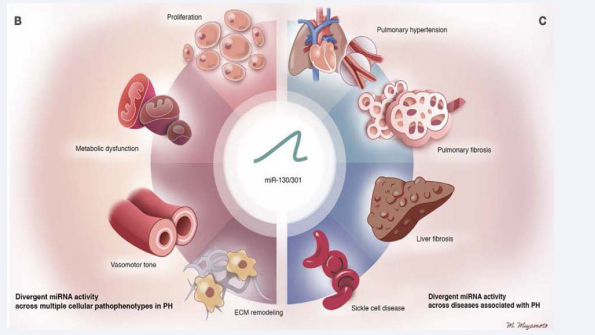
Figure 1 Schematic to categorize the activities of miRNAs in different diseases.Illustrated by Mao Miyamoto.
miRNAs in pulmonary embolism
The sensitiveness to chronic thrombo embolic pulmonary hypertension has been stated to be linked with genetic polymorphisms and in this regard with miR-759 [25]. These results cause for the examinationof miRNAs in the diagnosis of acute pulmonary embolism [APE] - a diagnosis for which there is no specific biomarker. In the first clinical approachment, plasma levels of 32 patients with APE, 32 healthy controls and 22 patients with non-APE with potentially APE-associated symptoms revealed miR-134 as an accurate diagnostic predictor of APE [26]. The authors reported the need for large-scale investigations to permit the clinical utilization of miRNAs in this diagnostic field of miRNA research.
miRNAs in tako-tsubo cardiomyopathy
Tako -Tsubo cardiomyopathy [TTC] is a rare disease jointly bear on acute MI. The diagnosis means base on morphological analyses comprising echocardiography and ventriculography, and there is no biomarker specific for TTC - particularly in the differentiation from MI. Jaguszewski and co-workers analyzed circulating miRNA levels in plasma of TTC and MI patients and found out a signature of miR-1, miR-16, miR-26a, and miR-133a not only up-regulated in TTC compared with healthy controls but also to differentiate between TTC and MI [27].
miRNAs in familial hypercholesterolemia
Familial hypercholesterolemia [FH] is the most common inherited form of dyslipidemia and a majör cause of prematüre cardiovascular disease. Management of FH mainly relies on the efficiency of treatments that reduce low-density plasma lipoprotein [LDL]. miRNAs have asserted as emerging regulators of plasma LDL levels. Mostly, there is evidence showing that miRNAs can organized pathogenesis of FH, including LDLR, APOB, PCSK9, and LDLRAP1 (Figure 2). Also, many miRNAs locate in genomic loci associated with abnormal levels of lipids in human plasma. The powerful organizer effects of miRNAs on the FH-associated genes that manipulation of miRNAs may serve as a new therapeutic attitude. Inclisiran [the siRNA-based cholesterol- lowering agent] has recently finalized a trial in 497 patients with a baseline LDL-C of ~130 mg/dL [28]. Patients receiving 300 mg of inclisiran succeeded mean LDL-C reductions of 51 and 45%, respectively [p<0.0001 compared to placebo] [28].
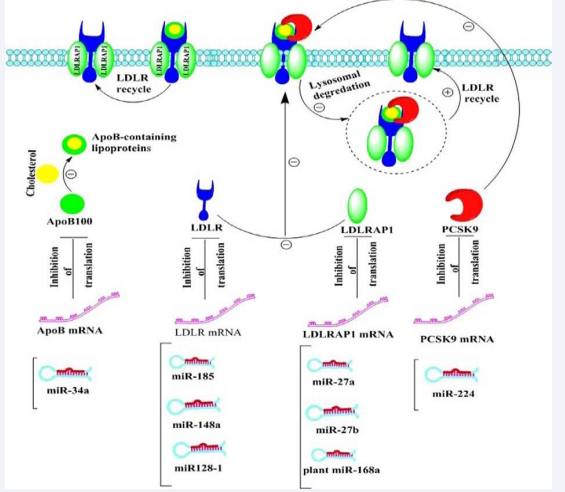
Figure 2 A schematic view of miR-mediated regulation of FH-related genes. Illustrated by Amir M.Momtazi [38].
miRNAs in hypertension
Hypertension, defined as systolic blood pressure above 140 mmHg or diastolic blood pressure above 90 mmHg, is a major public health concern worldwide [29]. Since Elevated blood pressure [EBP] results from a set of complex genetic, pathophysiological, and environmental factors [30], post- translational modifications are a natural candidate for biomarker studies of hypertension risk factors and early detection [31].
Post-translational modifications of gene expression include DNA methylation, histone modification, and miRNAs, and can all functionally alter gene expression without changing the underlying DNA sequence [31] miRNAs are small [20 ± 24 base] nucleotides that induce messenger RNA cleavage or reduce translation to regulate gene expression [32-33], thus having a potentially profound impact on diseases including HTN. Studies have connected handfuls of miRNAs such as the miRNA 130/301 family [34] to HTN via pathways such as promoting vasoconstriction and thus increasing pulmonary BP [35]. Due to these associations and the stability of miRNAs, researchers have previously suggested their potential use as biomarkers for HTN [36,37]. However, many of the specific biological mechanisms underlying the relationship between miRNAs and EBP or EBP- related risk factors have yet to be elucidated.
miRNAs in pulmonary hypertension
Pulmonary hypertension [PH] is a complex disease characterized by pulmonary vascular dysfunction, right ventricular failure, and death. Exogenous injury [ inflammation, infection] and various other illnesses link to PH development, and gene mutations [BMPR2, etc.] predispose to hereditary forms of PH [39]. WHO categories PH into five main groups [40]. Therapy of PH are restricted to three classes of drugs that all affect pulmonary vasodilation [only pulmonary arterial hypertension and chronic thromboembolic PH] [41], prevent, or cure the disease. Attempts to identify the underlying pathobiology of this disease, as well as effective targets for the next generation of PH drugs, but only recently appreciated, class of molecules called noncoding RNAs [ncRNAs], of which the most widely studied class involves miRNAs. ncRNAs and miRNAs carry transcriptional and post transcriptional regulatory actions relevant to human health and disease, including PH (Figure 3). As our appreciation of the decisions of these molecules has advanced, our conception of the complexity of PH has also grown, often causing more confusion, particularly about the various actions of miRNAs.

Figure 3 Biogenesis and functions of miRNAs and ncRNAs in Pulmonary Hypertension.Illustrated by Mao Miyamoto.
CONCLUSIONS
In cardiovascular disease, miRNAs imperial potential to serve asclinically available diagnostic as well as prognostic biomarkers.Their organ-and cell-specific regulation permit differential practicality in a diversity of disease essence within the cardiovascular disease. Meantime, validation of reported results are rare, and thus, large-scale clinical trials are needed, especially in respect of a potential clinical feasibility of miRNAs as therapeutic agents.
REFERENCES
- Wang GK, Zhu JQ, Zhang JT, Li Q, Li Y, He J, et al. Circulating microRNA: a novel potential biomarker for early diagnosis of acute myocardial infarction in humans. Eur Heart J. 2010; 31: 659-666.
- Landry P, Plante I, Ouellet DL, Perron MP, Rousseau G, Provost P. Existence of a microRNA pathway in anucleate platelets. Nat Struct Mol Biol. 2009; 16: 961-966.
- Bartel DP. MicroRNAs: genomics, biogenesis, mechanism, and function. Cell. 2004; 116: 281-297.
- da Costa Martins PA, Leptidis S, Salic K, De Windt LJ. MicroRNA regulation in cardiovascular disease. Curr Drug Targets. 2010; 11: 900-906.
- van Rooij E. The art of microRNA research. Circ Res. 2011; 108: 219-234.
- Iguchi H, Kosaka N, Ochiya T. Secretory microRNAs as a versatile communication tool. Commun Integr Biol. 2010; 3: 478-481.
- Reid G, Kirschner MB, van Zandwijk N. Circulating microRNAs: Association with disease and potential use as biomarkers. Crit Rev Oncol Hematol. 2011; 80: 193-208.
- Chandrasekaran K, Karolina DS, Sepramaniam S, ArumugamA, Wintour EM, Bertram JF, et al. Role of microRNAs in kidney homeostasis and disease. Kidney Int. 2012; 81: 617-627.
- Fan HM, Sun XY, Guo W, Zhong AF, Niu W, Zhao L, et al. Differential expression of microRNA in peripheral blood mononuclear cells as specific biomarker for major depressive disorder patients. J Psychiatr Res. 2014; 59: 45-52.
- Schulte C, Zeller T. microRNA-based diagnostics and therapy in cardiovascular disease-Summing up the facts. Cardiovasc Diagn Ther. 2015; 5: 17-36.
- Callis TE, Pandya K, Seok HY, Tang RH, Tatsuguchi M, Huang ZP, et al. MicroRNA-208a is a regulator of cardiac hypertrophy and conduction in mice. J Clin Invest. 2009;119: 2772-2786.
- Dong S, Cheng Y, Yang J, Li J, Liu X, Wang X, et al. Micro- RNA expression signature and the role of microRNA-21 in the early phase of acute myocardial infarction. J Biol Chem. 2009; 284: 29514-29525.
- Wang H, Garzon R, Sun H, Ladner KJ, Singh R, Dahlman J, et al. NF- kappaB-YY1-miR-29 regulatory circuitry in skeletal myogenesis and rhabdomyosarcoma. Cancer Cell. 2008;14: 369-381.
- Ye Y, Perez-Polo JR, Qian J, Birnbaum Y. The role of microRNA in modulating myocardial ischemia-reperfusion injury. Physiol Genomics. 2011; 43: 534-542.
- van Rooij E, Sutherland LB, Qi X, Richardson JA, Hill J, Olson EN. Control of stress-dependent cardiac growth and gene expression by a microRNA. Science. 2007; 316: 575-579.
- van Rooij E, Sutherland LB, Liu N, Williams AH, McAnally J, Gerard RD, et al. A signature pattern of stress-responsive micro- RNAs that can evoke cardiac hypertrophy and heart failure. Proc Natl Acad Sci U S A. 2006;103:18255-18260
- Matkovich SJ, Van Booven DJ, Youker KA, Torre-Amione G, Diwan A, Eschenbacher WH, et al. Reciprocal regulation of myocardial microRNAs and messenger RNA in human cardiomyopathy and reversal of the microRNA signature by thebiomechanical support. Circulation. 2009; 119: 1263-1271.
- Ikeda S, Kong SW, Lu J, Bisping E, Zhang H, Allen PD, et al. Altered microRNA expression in human heart disease. Physiol Genomics. 2007; 31: 367-373.
- Thum T, Batkai S. MicroRNAs in right ventricular dysfunction (2013 Grover Conference series). Pulm Circ. 2014; 4: 185-190.
- Paulin R, Sutendra G, Gurtu V, Dromparis P, Haromy A, Provencher S, et al. A miR-208-Mef2 axis drives the decompensation of right ventricular function in pulmonary hypertension. Circ Res. 2015;116: 56-69.
- Kakimoto Y, Tanaka M, Kamiguchi H, Hayashi H, Ochiai E, Osawa M. microRNA deep sequencing reveals chamber-specific miR- 208 family expression patterns in the human heart. Int J Cardiol 2016; 211: 43-48.
- Wang Z, Lu Y, Yang B. MicroRNAs and atrial fibrillation: new fundamentals. Cardiovasc Res. 2011; 89: 710-721.
- Liu Z, Zhou C, Liu Y, Wang S, Ye P, Miao X, et al. The expression levels of plasma micoRNAs in atrial fibrillation patients. PLoS One. 2012; 7.
- Corsten MF, Dennert R, Jochems S, Kuznetsova T, Devaux Y, Hofstra L, et al. Circulating MicroRNA-208b and MicroRNA-499 reflect myocardial damage in cardiovascular disease. Circ Cardiovasc Genet. 2010; 3: 499-506.
- Chen Z, Nakajima T, Tanabe N, Hinohara K, Sakao S, Kasahara Y, et al. Susceptibility to chronic thromboembolic pulmonary hypertension may be conferred by miR-759 via its targeted interaction with polymorphic fibrinogen alpha gene. Hum Genet. 2010; 128: 443-452.
- Xiao J, Jing ZC, Ellinor PT, Liang D, Zhang H, Liu Y, et al. MicroRNA-134 as a potential plasma biomarker for the diagnosis of acute pulmonary embolism. J Transl Med. 2011; 9.
- Jaguszewski M, Osipova J, Ghadri JR, Napp LC, Widera C, Franke J, et al. A signature of circulating microRNAs differentiates takotsubo cardiomyopathy from acute myocardial infarction. Eur Heart J. 2014; 35: 999–1006.
- Ray KK, Landmesser U, Leiter LU, Kallend D, Dufour R, Karakas M, et al. Inclisiran in patients at high cardiovascular risk with elevated LDL cholesterol. N Engl J Med. 2017.
- Mozaffarian D, Benjamin EJ, Go AS, Arnett DK, Blaha MJ, Cushman M, et al. Heart Disease and Stroke Statistics-2016 Update: A Report From the American Heart Association. Circulation. 2016; 133.
- Role of epigenetics in blood pressure regulation and development of hypertension. National Heart, Lung, and Blood Institue: National Institute of Health (NIH). 2012.
- Raftopoulos L, Katsi V, Makris T, Tousoulis D, Stefanadis C, KallikazarosI. Epigenetics, the missing link in hypertension. Life sciences. 2015; 129: 22-26.
- Fabian MR, Sonenberg N, Filipowicz W. Regulation of mRNA translation and stability by microRNAs. Annu Rev Biochem. 2010; 79: 351-379.
- Winter J, Jung S, Keller S, Gregory RI, Diederichs S. Many roads to maturity: microRNA biogenesis pathways and their regulation. Nat Cell Biol. 2009; 11: 228-234.
- Zhou G, Chen T, Raj JU. MicroRNAs in pulmonary arterial hypertension. Am J Respir Cell Mol Biol. 2015; 52: 139-151.
- Bertero T, Cottrill K, Krauszman A, Lu Y, Annis S, Hale A, et al. The microRNA-130/301 family controls vasoconstriction in pulmonary hypertension. J Biol Chem. 2015; 290: 2069-2085.
- Xu J, Zhao J, Evan G, Xiao C, Cheng Y, Xiao J. Circulating microRNAs: novel biomarkers for cardiovascular diseases. J Mol Med (Berl). 2012; 90: 865-875.
- Wei C, Henderson H, Spradley C, Li L, Kim IK, Kumar S, et al. Circulating miRNAs as a potential marker for pulmonary hypertension. PLoS One. 2013; 8.
- Amir A.Momtazi, Maciej Banach, Matteo Pirro, Evan A. Stein, Amirhossein Sahebkar, et al. MicroRNAs: New Therapeutic Targets for Familial Hypercholesterolemia?. Clinic Rev Allerg Immunol.
- Chan SY, Loscalzo J. Pathogenic mechanisms of pulmonary arterial hypertension. J Mol Cell Cardiol. 2008; 44: 14-30.
- Simonneau G, Gatzoulis MA, Adatia I, Celermajer D, Denton C, Ghofrani A, et al. Updated clinical classification of pulmonary hypertension. J Am Coll Cardiol. 2013; 62: 34-41.
- Perrin S, Chaumais MC, O’Connell C, Amar D, Savale L, Jaïs X et al. New pharmacotherapy options for pulmonary arterial hypertension. Expert Opin Pharmacother. 2015; 16: 2113–2131.