Bibliometric Analysis of Charcot Arthropathy (1995 2025): Current status and Emerging Trends
- 1. Renmin Hospital of Wuhan University, China
Abstract
Background: Charcot Arthropathy (CA) is a severe, progressive joint disorder, most commonly associated with diabetic neuropathy, that poses a significant global clinical challenge due to its destructive nature and potential for limb loss. Despite decades of research, a comprehensive, data-driven overview of the global research landscape, its intellectual structure, and evolving trends has been lacking. Objective: This study aimed to conduct the first systematic bibliometric analysis to map the scientific literature on CA from 1995 to 2025, delineating the field’s development, key contributors, research hotspots, and emerging frontiers. Methods: We retrieved 349 relevant articles and reviews from the Web of Science Core Collection. Using bibliometric tools including Cite Space and the R package bibliometrix, we performed quantitative analyses of annual publication trends, country/institution contributions, author and collaboration networks, core journals, co-cited references, and keyword co-occurrence and bursts. Results: The analysis revealed a consistent rise in annual publications, signaling growing research interest. The United States was the dominant contributor, producing the highest volume of publications (n=180) and citations (n=3,949), and acting as the central hub in international collaboration networks. Key influential authors (e.g., Dane K. Wukich) and institutions (e.g., University of Texas System) were identified, forming tightly-knit academic communities. Journal analysis confirmed a strong clinical-surgical focus. Research hotspots persistently centered on the foot/ankle region, pathogenesis, and surgical management. Analysis of keyword bursts and reference clusters indicated a shift towards emerging frontiers, including biomechanics, advanced reconstruction techniques, and the application of 3D imaging. Conclusion: This study provides the first macroscopic mapping of CA research over three decades, objectively identifying the United States as the field leader and highlighting a clear evolution towards technology-enhanced diagnosis and management. The findings offer an authoritative reference for clinicians and researchers to understand the field’s core structure and future directions, underscoring the need for broader global collaboration and the integration of novel technologies into clinical practice.
Keywords
• Charcot Arthropathy; Bibliometric Analysis; Charcot Neuroarthropathy; Charcot neuropathic Osteoarthropathy; Cite Space
Citation
Zhou JL, Peng H, Sun F (2025) Bibliometric Analysis of Charcot Arthropathy (1995-2025): Current status and Emerging Trends. JSM Bone and Joint Dis 5(1): 1017.
INTRODUCTION
Charcot Arthropathy (CA), also known as neurogenic arthropathy, is a progressive, non-infectious condition characterized by joint destruction [1]. It results from a loss of proprioception and protective pain reflexes due to central or peripheral sensory neuropathy [2]. First systematically described by Jean-Martin Charcot in 1868 in patients with tabes dorsalis, the disease manifests clinically as severe joint swelling, deformity, instability, and effusion [3,4]. A hallmark and diagnostic challenge of CA is the notable absence of pain relative to the degree of physical destruction, frequently leading to delayed diagnosis [5]. Ultimately, this process can cause profound joint dysfunction, severe deformity, and even amputation, severely compromising patient quality of life.
Historically, tabes dorsalis and syringomyelia were the primary causes of CA. With the evolution of global disease patterns, diabetic peripheral neuropathy has now emerged as the predominant etiology. Diabetic Charcot arthropathy, most commonly affecting the foot and ankle (Charcot foot), presents a major clinical challenge for endocrinologists and orthopedic surgeons. While its pathogenesis remains incompletely elucidated, the “neurotraumatic” and “neurovascular” theories represent the two predominant explanatory frameworks. The neurotraumatic theory, initially proposed by Volkmann and Virchow, indicates that joint destruction originates from recurrent, unperceived microtrauma in the insensate joint, leading to chronic inflammation, ligamentous laxity, and cumulative damage to bone and cartilage [6,7]. In contrast, the neurovascular theory, first suggested by Charcot himself, emphasizes autonomic dysfunction. This theory posits that impaired sympathetic tone causes peripheral vasodilation, increased blood flow, and subsequent activation of osteoclasts, resulting in bone resorption, localized osteopenia, and the characteristic clinical signs of warmth and swelling [8-10].
Substantial global research efforts have yielded considerable progress in understanding CA’s pathogenesis, early diagnosis, and staged treatment. However, the resulting expansion of literature has rendered traditional narrative reviews inadequate for objectively and quantitatively delineating the field’s knowledge structure, evolutionary trajectory, and research fronts. Consequently, a methodology capable of macro-level, quantitative analysis of large bibliographic datasets is essential to synthesize this complex information landscape.
Bibliometrics serves as precisely such a powerful tool. This quantitative approach is crucial for mapping a field’s development, identifying influential contributions, and revealing emerging trends, thereby enabling a comprehensive overview of research dynamics [11]. It involves measuring various bibliographic attributes— including publications, authors, institutions, countries, keywords, and citations—to uncover the status, trends, and underlying patterns of a scientific domain. Common techniques include co-occurrence analysis (e.g., of keywords) to identify research hotspots and intellectual structures; citation analysis to assess scholarly impact; and collaboration network analysis to illustrate partnership patterns. Compared to traditional qualitative reviews, bibliometrics provides a data-driven, macro-level, and objective perspective, often visualized through intuitive mappings [12].
Despite this utility, a formal bibliometric analysis specifically focused on the evolving research landscape of CA is currently lacking. We hypothesize that such an analysis will objectively delineate the intellectual structure and dynamic progress of the CA field over the past three decades. Therefore, this study aims to examine the global scientific output on CA from 1995 to 2025 using data from the Web of Science Core Collection. We seek to delineate the clinical and research landscape, summarize consensus on etiology, diagnosis, and treatment, and identify current research frontiers and challenges. Our goal is to provide clinicians and researchers with a scientific and intuitive reference to quickly grasp the field’s structure, pinpoint key research foci, and anticipate future directions.
MATERIALS AND METHODS
Literature Retrieval and Selection
The Web of Science Core Collection database was selected for literature retrieval. The search query was formulated as follows: TS= (“Charcot Arthropathy” OR “Charcot Neuroarthropathy” OR “Charcot neuropathic osteoarthropathy”) AND DT= (Article OR Review) AND LA=(English). The search timeframe spanned from January 1, 1995, to July 31, 2025. Case reports, conference abstracts, editorial materials, and other non-article/ review document types were excluded. The initial search yielded 753 publications, from which 349 were ultimately included for analysis following screening. The detailed literature selection process is schematically illustrated in Figure 1.
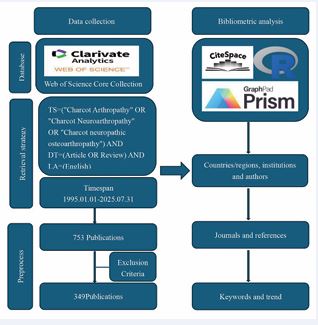
Figure 1 Literature Search Strategy and Workflow of This Study.
Bibliometric Analysis
Bibliometric analysis was performed using CiteSpace (version 6.3.1), the R package bibliometrix (version 5.1.1), and GraphPad Prism (version 8.0). CiteSpace was utilized to conduct co-citation and co-occurrence analyses, specifically examining journals, references, and keyword clusters [13]. It was also employed to assess the collaborative centrality of countries/regions, institutions, and authors, and to construct a timeline view of merged reference clusters, which aids in visualizing the emergence and evolution of specific research domains. Furthermore, Cite Space was used to identify keywords with strong citation bursts. The R package bibliometrix was employed to generate visualizations depicting annual publication trends and collaborative networks [14].
Identification of Research Frontiers
Based on the quantitative results from the bibliometric analysis, a comprehensive examination of highly cited publications and emerging thematic clusters was conducted to identify and summarize current research frontiers and future trends in Charcot Arthropathy.
RESULTS
Annual Publication Trend
The annual number of publications serves as a key indicator of research activity. Analysis of the publication trend from 1995 to 2025 reveals a consistent, spiraling upward trajectory, reflecting a steady increase in research focus on Charcot Arthropathy (Figure 2A). A minor peak in annual output is observed in 2021-2022, with the highest number of publications (n=35) recorded in 2022.
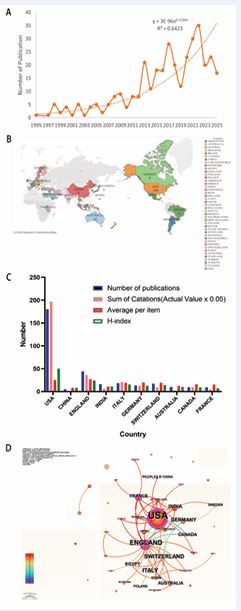
Figure 2 Annual Publication Numbers of CA, Publication Volume by Country, Citation Counts, Impact Factors, and Country Collaboration Network Diagram. (A)Annual Paper Publications. (B)Distribution of Publications by Country. (C) Paper Publications, Citation Counts, and H-Index of Major Countries Compared to China. (D)Country Collaboration Network Diagram.
Analysis of Countries/Regions
Analysis of publication output by country highlights the global distribution of research efforts. The United States leads with 180 publications, followed by the United Kingdom (44 publications) (Figure 2B). Publications from the United States also demonstrate superior academic influence, evidenced by the highest total citation count (3,949), alongside high average citations and H-index (Table 1, Figure 2C). Chronologically, the UK and US initiated research in this field earlier (1995 and 1998, respectively), while relevant publications from China first appeared in 2015. Larger circles indicate higher publication volumes, while connections between circles represent publication correlations among different countries—more connections signify stronger inter-country correlations. The collaboration network map (Figure 2D), indicates that research is predominantly concentrated in Western countries, with the United States serving as the central hub for international cooperation. Strong collaborative linkages are observed between the US, UK, and France, underscoring the role of international partnerships in advancing the field.
Contributions of Institutions and Authors
Institutional productivity aligns with national contributions. The top three most productive institutions are the UNIVERSITY OF TEXAS SYSTEM (USA), the PENNSYLVANIA COMMONWEALTH SYSTEM OF HIGHER EDUCATION (PCSHE, USA), and the UNIVERSITY OF PITTSBURGH (USA) (Figure 3A, Table 2). At the author level, WUKICH DK is the most prolific contributor with 20 publications (Figure 3B). The research timeline illustrates that authors ARMSTRONG DG and SINACORE DR (USA) were among the early pioneers in this field (Figure 3C). Figure 3D illustrates relationships among authors (left), keywords (center), and author nationalities. Rectangle size correlates with publication volume, revealing strong connections between authors from the US, UK, Italy, and others in the analyzed articles. Notably, Siddigui Na and Wurich DK from the US are particularly relevant to the keyword “Charcot Neuroarthropathy.” The co-authorship network utilizes co-authorship frequency to provide a clear view of collaboration patterns among authors. Co authorship and collaboration network analyses reveal dense and robust collaborative relationships among major contributing authors and institutions, particularly within the US and between the US and European countries such as the UK and Italy (Figure 3D, 3E, 3F, 3G). These findings collectively demonstrate the leadership of US-based researchers and institutions and the highly collaborative nature of this research domain.
Table 1: Ranking of Country Publications, Publication Timing, Citation, and H-Index.
|
Country |
Publications |
Date of initial publication |
Sum of Catations |
Average per item |
H-Index |
|
USA |
180 |
1998 |
3949 |
23 |
50 |
|
CHINA |
5 |
2015 |
15 |
3.8 |
8 |
|
UK |
44 |
1995 |
735 |
23.7 |
24 |
|
INDIA |
16 |
2013 |
139 |
11.60 |
11.00 |
|
ITALY |
18 |
2005 |
439 |
25.80 |
15.00 |
|
GERMANY |
13 |
2004 |
250 |
20.80 |
12.00 |
|
SWITZERLAND |
17 |
2010 |
192 |
16.00 |
14.00 |
|
AUSTRALIA |
10 |
2014 |
57 |
9.50 |
10.00 |
|
CANADA |
9 |
2000 |
188 |
31.30 |
9.00 |
|
FRANCE |
9 |
2012 |
5.45 |
15.60 |
7.00 |
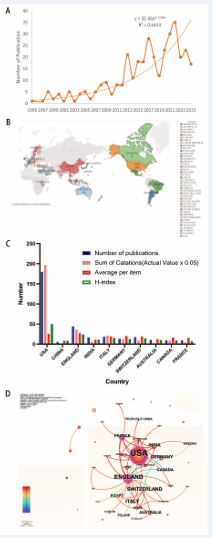
Figure 2 Annual Publication Numbers of CA, Publication Volume by Country, Citation Counts, Impact Factors, and Country Collaboration Network Diagram. (A)Annual Paper Publications. (B)Distribution of Publications by Country. (C) Paper Publications, Citation Counts, and H-Index of Major Countries Compared to China. (D)Country Collaboration Network Diagram.
Journal Sources and Co-cited References
Analysis of journal sources and co-citations helps identify the core knowledge base of the field. Publications on Charcot Arthropathy were distributed across 127 journals. The top three journals by publication volume are JOURNAL OF FOOT & ANKLE SURGERY, FOOT & ANKLE INTERNATIONAL, and CLINICS IN PODIATRIC MEDICINE AND SURGERY (Figure 4A, 4B). Bradford’s Law analysis confirms these journals as the core sources for the field. In terms of academic impact, FOOT & ANKLE INTERNATIONAL leads in total citations (1,300), followed by DIABETES CARE (905) and JOURNAL OF FOOT & ANKLE SURGERY (765) (Figure 4D). Co-citation analysis of references identifies the foundational literature, with the most cited works being RAJBHANDARI SM, 2002, DIABETOLOGIA (162 citations), JUDE EB, 2001, DIABETOLOGIA (153 citations), and SIMON SR, 2000, J BONE JOINT SURG AM (151 citations) (Figure 4E). Timeline analysis of cited reference clusters identified 14 distinct thematic clusters (Figure 4F). The most recent clusters to emerge, such as #0 (Charcot foot) and #11 (3D images), likely represent contemporary research foci.
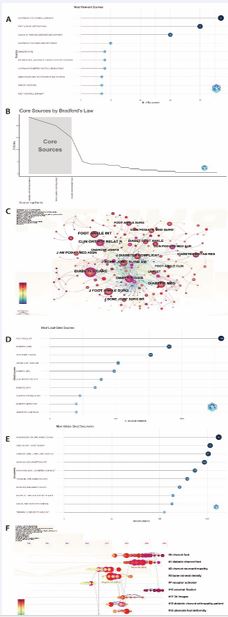
Figure 4 Analysis of Journal Sources and References. (A)Top 10 Journals by Publications. (B) Journals Analysis by Bradford’s Law. (C)Journal Co-citation Network Diagram. (D) Top 10 Journals by Citation Count. (E) Top 10 Articles by Citation Count. (F) Timeline of E Articles’ Total Citations.
Keyword Analysis and Research Frontiers
Keyword analysis reveals the thematic evolution and emerging trends. The top 20 keywords with the strongest citation bursts are shown in Figure 5A, where the red segments indicate periods of high frequency, signaling.
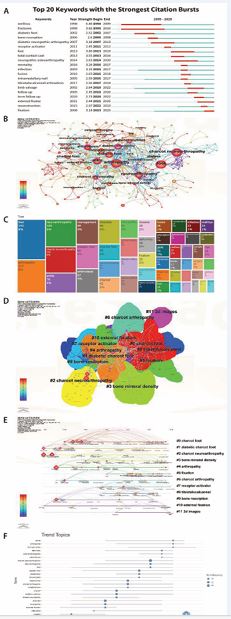
Figure 5 Analysis of Keywords. (A) Keyword of Strongest Citation Bursts. (B) Keyword Co-occurrence Analysis. (C)Keyword Co-occurrence Analysis Tree Dendrogram. (D) Keyword Cluster Analysis. (E)Keyword Timeline Analysis. (F) Keyword Trend Analysis.
Table 2: Top 10 Authors by Publications, Countries, Citation Counts, and H-Index.
|
Rank |
First author |
Country |
Publications |
Total Citations |
Average per item |
H-Index |
|
1 |
Dane K Wukich |
USA |
38 |
1285 |
33.82 |
20 |
|
2 |
Thomas Zgonis |
USA |
20 |
185 |
9.25 |
8 |
|
3 |
Raspovic, Katherine |
USA |
19 |
418 |
22 |
12 |
|
4 |
Pinzur, Michael S |
Canada |
19 |
1092 |
57.47 |
15 |
|
5 |
Lavery, L. A |
USA |
14 |
772 |
55.41 |
12 |
|
6 |
Sinacore, David R |
USA |
14 |
312 |
22.29 |
9 |
|
7 |
Boulton, Andrew J |
UK |
12 |
1184 |
98.67 |
11 |
|
8 |
Jude, Edward B |
UK |
12 |
450 |
37.5 |
10 |
|
9 |
Ramanujam, Crystal L |
USA |
11 |
82 |
7.45 |
6 |
|
10 |
Armstrong, David G |
USA |
11 |
1281 |
116.45 |
9 |
heightened research interest. Keyword co-occurrence network analysis demonstrates strong thematic correlations, with larger nodes representing higher frequency keywords and connecting lines indicating their co-occurrence within the literature (Figure 5B). The keyword tree dendrogram (Figure 5C), displays potential keyword combinations and their frequency proportions. Cluster analysis of keywords further delineates 11 distinct research themes, each represented by a uniquecolor in the network (Figure 5D). The evolution of these themes over time is visualized in the keyword timeline view (Figure 5E), which illustrates the emergence, duration, and interconnections of research topics. The keyword trend diagram (Figure 5F), synthesizes this information, indicating that keywords such as “FOOT,” “ARTHROPATHY,” and “NEUROARTHROPATHY” continue to define the central and evolving research fronts in this field.
DISCUSSION
This bibliometric analysis provides the first macroscopic overview of the global research landscape for CA over the past three decades. Our principal findings indicate a consistent and significant increase in both annual publications and citation rates, reflecting a growing scientific and clinical interest in this debilitating condition. Crucially, this study moves beyond merely documenting this growth; it objectively delineates the intellectual structure, current research focuses, and evolving frontiers of the field.
The analysis reveals a pronounced geographical disparity in research contributions. The United States dominates the field, exhibiting the highest productivity, academic influence, and the most extensive collaborative networks. In contrast, contributions from China remain limited, with a later entry into the field and markedly lower output and impact. Notably, scholars from Turkey found through bibliometric analysis that the United States holds the highest proportion of published literature on Charcot foot deformity, along with the highest citation counts. The number of international collaborations between American and British authors ranks among the highest [15]. Their findings align with our research results, indicating the United States’ leading position in research within this field. This pattern underscores a significant gap and suggests potential for greater international engagement and investment in CA research outside traditional Western hubs.
The leadership of the U.S. is further reinforced at the institutional and author levels. Seven of the top ten productive institutions are American, with the University of Texas System being the most prolific (Sections 1-3 of our results). At the author level, Dane K. Wukich emerges as a central figure, boasting the highest publication and citation counts and occupying a pivotal node in the co-authorship network [16,17]. This demonstrates the presence of established, influential research teams, primarily in North America and Europe, whose dense collaborations appear to be a key driver of scientific progress in this domain.
Journal analysis confirms that the field is anchored in specialized, clinically oriented literature [18]. Bradford’s Law is a highly regarded principle in bibliometrics that describes the distribution of scientific literature within a specific field [19]. Journal of Foot & Ankle Surgery, Foot & Ankle International, and Clinics in Podiatric Medicine and Surgery form the core dissemination channels, leading in both publication volume and citations. This highlights the strong clinical-surgical foundation of CA research. Our co-citation analysis successfully maps the field’s knowledge base, identifying the seminal works that have shaped its development [20,21]. The most cited reference, Rajbhandari et al.’s “Charcot Neuroarthropathy in Diabetes Mellitus”[22], along with other top-cited papers, predominantly focus on pathogenesis, diagnosis, and management, confirming these as perennial research priorities. The clustering of co-cited references through Cite Space offers a dynamic view of this evolution, with recently emerged clusters such as #0 charcot foot and #11 3D images indicating a contemporary research focus on pedal manifestations and advanced imaging techniques.
Keyword analysis provides a precise lens through which to view current and emerging trends [23,24]. The strongest citation bursts and central co-occurrence nodes are associated with terms like “FOOT,” “ARTHROPATHY,” and “NEUROARTHROPATHY,” cementing their status as the cornerstone themes of the field. Our findings indicate that foot and ankle joint pathology occupies a central position in the study of Charcot arthropathy. Other scholars have observed that the effects of Charcot arthropathy are primarily concentrated in the foot and ankle joints [25-27]. Our analysis results align with their conclusions [28-30]. Keyword timeline and trend views further indicate that future research will continue to advance in this clinical field, potentially integrating advanced technologies such as biomechanics and 3D printing to address complex reconstructive challenges.
Our study is the first systematic review of Charcot arthropathy conducted using bibliometric methods. The application of bibliometrics in this context yields several key insights. First, it quantitatively confirms the field’s sustained growth of Charcot Arthropathy. Second, it moves beyond subjective review by objectively identifying research fronts through keyword and reference cluster analysis. Third, it maps the social architecture of the field, highlighting key contributors and collaborative networks, which can guide future partnerships and trainee supervision. Finally, by tracing the co-citation network, it delineates the intellectual pathways and foundational literature that have guided the field’s development.
Despite these contributions, our study has several limitations. The literature source was restricted to the Web of Science Core Collection, which, while high-quality, may have excluded relevant studies from other databases. The search timeframe, ending in July 2025, inherently excludes very recent publications due to the indexing delay common in bibliometric studies. Furthermore, although we employed robust quantitative algorithms, certain analytical steps—such as the interpretation of cluster labels—involve an inherent degree of subjective judgment. However, the consistent patterns observed across multiple analytical dimensions suggest that these limitations do not undermine the core conclusions of this macroscopic assessment. Future updates incorporating broader data sources will further refine this evolving landscape.
CONCLUSION
This bibliometric analysis elucidates the evolving landscape of Charcot Arthropathy research, identifying the United States as the predominant contributor and revealing a clear shift toward technology-enhanced diagnosis and management. To advance the field, future efforts must foster global collaboration and accelerate the integration of novel technological solutions into clinical practice.
CONFLICT OF INTEREST
The authors declare that the research was conducted in the absence of any commercial or financial relationships that could be construed as a potential conflict of interest.
AUTHORS’ CONTRIBUTIONS
Fei Sun and Jian lin Zhou: the conception and design of the study. Fei Sun, Jian lin Zhou and Hao Peng: analysis and interpretation of data. Jian lin Zhou and Fei Sun: drafting the article and revising it critically for important intellectual content. Fei Sun: revise the manuscript and project administration. All authors approved the final manuscript.
FUNDING STATEMENT
This work was supported by the National Natural Science Foundation of China [grant numbers 81672154].
REFERENCES
- Cellier N. Management of hindfoot and ankle in Charcot arthropathy.EFORT Open Rev. 2025; 10: 327-335.
- Skinner WC, Pattisapu N, Yeoh J, Grear BJ, Richardson DR, Murphy GA, et al. Surgical outcomes in charcot arthropathy. Orthop Clin North Am. 2024; 55: 393-401.
- Kawamura M, Okamoto T, Kikuchi R. [From “Shaking Palsy” to “Parkinson’s Disease”: Was Charcot Correct?]. Brain Nerve. 2019; 71: 847-855.
- Gouveri E, Papanas N. Charcot osteoarthropathy in diabetes: A brief review with an emphasis on clinical practice. World J Diabetes. 2011; 2: 59-65.
- Rees H, Lyons M, Belich P, Brown N. Neuropathic (Charcot) Arthropathy of the Knee. J Am Acad Orthop Surg. 2021; 29: e1159-e1166.
- Baumhauer JF, O’Keefe RJ, Schon LC, Pinzur MS. Cytokine- induced osteoclastic bone resorption in charcot arthropathy: An immunohistochemical study. Foot Ankle Int. 2006; 27: 797-800.
- Pinzur MS. Republication of “An Evidence-Based Introduction to Charcot Foot Arthropathy”. Foot Ankle Orthop. 2023; 8: 24730114231188128.
- Hoché G, Sanders LJ. On some arthropathies apparently related to a lesion of the brain or spinal cord, by Dr J.-M. Charcot. January 1868. J Am Podiatr Med Assoc. 1992; 82: 403-411.
- Tsatsaris G, Rajamand Ekberg N, Fall T, Catrina SB. Risk factors for Charcot foot development in individuals with diabetes mellitus. Diabetologia. 2024; 67: 2702-2710.
- Nóbrega MB, Aras R, Netto EM, Couto RD, Marinho AM, da Silva JL, et al. Risk factors for Charcot foot. Arch Endocrinol Metab. 2015; 59: 226-230.
- Ninkov A, Frank JR, Maggio LA. Bibliometrics: Methods for studying academic publishing. Perspect Med Educ. 2022; 11: 173-176.
- Hassan W, Duarte AE. Bibliometric analysis: A few suggestions. Curr Probl Cardiol. 2024; 49: 102640.
- Wang S, Yu L. Visual analysis of research hot topics and trends of clinical decision support system based on CiteSpace. Langenbecks Arch Surg. 2025; 410: 261.
- Zhang L, Zheng H, Jiang ST, Liu YG, Zhang T, Zhang JW, et al. Worldwide research trends on tumor burden and immunotherapy: A bibliometric analysis. Int J Surg. 2024; 110: 1699-1710.
- Üzümcügil AO, Alkan S, Kurt M. A Bibliometric Study on Charcot FootDeformity. Int J Low Extrem Wounds. 2025; 24: 797-806.
- Wukich DK, Sung W. Charcot arthropathy of the foot and ankle: modern concepts and management review. J Diabetes Complications. 2009; 23: 409-426.
- Wukich DK, Schaper NC, Gooday C, Bal A, Bem R, Chhabra A, et al. Guidelines on the diagnosis and treatment of active Charcot neuro- osteoarthropathy in persons with diabetes mellitus (IWGDF 2023). Diabetes Metab Res Rev. 2024; 40: e3646.
- Yuan X, Lai Y. Bibliometric and visualized analysis of elite controllers based on Cite Space: landscapes, hotspots, and frontiers. Front Cell Infect Microbiol. 2023; 13: 1147265.
- Venable GT, Shepherd BA, Loftis CM, McClatchy SG, Roberts ML, Fillinger ME, et al. Bradford’s law: Identification of the core journals for neurosurgery and its subspecialties. J Neurosurg. 2016; 124: 569- 579.
- Trujillo CM, Long TM. Document co-citation analysis to enhancetransdisciplinary research. Sci Adv. 2018; 4: e1701130.
- Abdelwahab SI, Taha MME, Farasani A, Abdullah SM, Moshi JM, Alshahrani AF, et al. Bibliometric analysis: A few suggestions (Part Two). Curr Probl Cardiol. 2025; 50: 102982.
- Rajbhandari SM, Jenkins RC, Davies C, Tesfaye S. Charcotneuroarthropathy in diabetes mellitus. Diabetologia. 2002; 45: 1085-1096.
- Hassan W, Duarte AE. Bibliometric analysis: A few suggestions. Curr Probl Cardiol. 2024; 49: 102640.
- Hu Y, Yu Z, Cheng X, Luo Y, Wen C. A bibliometric analysis and visualization of medical data mining research. Medicine (Baltimore). 2020; 99: e20338.
- Schmidt BM. Clinical insights into Charcot foot. Best Pract Res Clin Rheumatol. 2020; 34: 101563.
- Dodd A, Daniels TR. Charcot neuroarthropathy of the foot and ankle. J Bone Joint Surg Am. 2018; 100: 696-711.
- Yammine K, Boulos K, Assi C, Hayek F. Amputation and mortality frequencies associated with diabetic Charcot foot arthropathy: A meta-analysis. Foot Ankle Surg. 2022; 28: 1170-1176.
- Wukich DK, Sung W. Charcot arthropathy of the foot and ankle: modern concepts and management review. J Diabetes Complications. 2009; 23: 409-426.
- Frykberg RG, Belczyk R. Epidemiology of the Charcot foot. ClinPodiatr Med Surg. 2008; 25: 17-28.
- Hester T, Kavarthapu V. Etiology, Epidemiology, and Outcomes of managing charcot arthropathy. Foot Ankle Clin. 2022; 27: 583-594.