Reading out Loud Increases Comprehension in Second Grade Children with Reading Disabilities
- 1. Center for Reading, Pittsburg State University, USA
Abstract
The present study examined the possibility that children with reading disabilities (RD) could increase their text comprehension by reading out loud. Eighteen second-grade children participated in this study: nine children with RD (5 males and 4 females) and nine children without RD (3 males and 6 females). A within-groups design was utilized in which the condition (reading out loud vs. silently) was counterbalanced between participants. Results indicated that reading out loud had no effect on children without RD but significantly improved the performance of children with RD. Results indicated that second- and third-grade children who are poor readers should be encouraged to read textual material out loud.
Keywords
• Dyslexia; Reading disabilities; Reading out loud; Comprehension.
Citation
Hurford DP, Fender AC & Dutta S (2026). Reading Out Loud Increases Comprehension in Second-Grade Children with Reading Disabilities. JSM Brain Sci 6(1): 1023.
READING OUT LOUD INCREASES COMPREHENSION IN SECOND-GRADE CHILDREN WITH READING DISABILITIES
Most children with learning disabilities have reading disabilities as their major deficiency [1-3]. Children with reading disabilities (RD) find it very difficult to learn to read. These children are at risk for dropping out of school [4,5], parental abuse, poor self-esteem [6], and may eventually find their way into the welfare and criminal justice systems [7]. The future of a child with reading difficulties can be bleak in our service-oriented society that requires its members know how to read and to read fairly well. It is estimated that 15-20% of our nation’s children experience dyslexia [8,9], and 40% of fourth grade students experience significant difficulties with basic reading skills and reading fluency such that they are unlikely capable of understanding what they are attempting to read [10-12]. Given this large number of students, it is quite likely that a vast human resource is being excluded from deriving the most benefit from our educational system due to reading problems. Students who do not graduate from high school and who have poor reading skills are likely to experience extremely poor economic realities. The eventual cost to society for what is a preventable difficulty for many is high. Purely from an economic standpoint, adult illiteracy is estimated to cost the U. S. Economy $2.2T [13]. The necessity of having beginning readers read out loud seems obvious. The beginning reader learns to read because of the interaction between the student’s ability to recognize letters, produce their sounds, synthesize the decoded sounds, and recognize the resulting word. Beginning readers require training in phonemic awareness, sound-letter correspondences (phonics), decoding, synthesis (blending), and vocabulary that is explicitly, systematically, and cumulatively provided for successful reading acquisition. It is equally essential that students are provided with considerable opportunities to practice their reading skills, which includes immediate corrective feedback from the instructor. So much cognitive effort is expended during these analysis and synthesis tasks that it is impressive when any resources are left for beginning readers to comprehend what they are reading. Cognitive resources refer to the mental energy required to perform tasks. The more mentally effortful the task, the more cognitive energy is required to execute it. As a task becomes highly practiced, fewer cognitive resources are needed to perform the task. Once a task has become so highly practiced that it requires very little cognitive resources, it is referred to as automatized. Once reading subskills become nearly automatized, cognitive resources can be reallocated for comprehension, which is the goal of reading. At this point, reading becomes more fluent, and comprehension generally increases.
Unfortunately, the converse is also true. Children who have difficulty with word recognition skills continue to devote a great deal of their cognitive energy to decoding, leaving relatively little capacity for comprehension. That is, children who have difficulty analyzing and synthesizing words require that more cognitive resources be allocated for these tasks and thus have fewer resources left for comprehension. As a result, children who have deficient skills will consume considerably more cognitive energy processing these foundational issues than children who do not have deficient skills. Consequently, their comprehension suffers from the lack of adequate processing of the initial skills and the drain on cognitive resources. Given the difficulty that some children with RD experience when encountering print and the anxiety that can go along with it, some will rigorously avoid reading situations. Thus, many children with RD spend less time on task reading than good readers, and the gap in reading ability widens [14], along with avoidance [15].
It has been contended for decades that reading out loud may strengthen the ability of young readers to comprehend. For example, [16] asserted that oral reading may be significantly better than silent reading in promoting comprehension for young readers. They argued that young students have more practice reading orally than silently, which may be aided by the aural feedback, and must attend to the task when reading orally. Interestingly, in a review of the oral reading literature, [17], discovered that oral reading, when compared to silent reading, produced better comprehension in students in the first through second grades.
Meta-analyses suggest that using read-aloud tools is beneficial for students with reading difficulties [18,19]. Words read out loud are more likely to be retained compared to those words that are read silently [20], and mouthing words as they are read has provided a benefit for retention [21]. MacLeod [20] suggested that reading out loud activates speech-related mechanisms that are not activated during silent reading, and reading out loud resulted in better retention than when someone else is reading the passage out loud, so the effect is not simply listening to speech. Reading out loud has also been linked to improved vocabulary, word recognition [22], immediate word recall, and fluent reading [23-25].
The ability to read textual information accurately with adequate speed and prosody (i.e., reading fluency; [26-28]) has been linked to comprehension [29-31]. When word recognition is automatic, cognitive resources are freed for comprehension [32,33]. Conversely, when reading is not fluent, and word recognition is effortful, these processes consume a considerable amount of the available cognitive resources. As a result, the remaining cognitive resources may be insufficient for children with RD to adequately comprehend the material. The present study examined the possibility that reading out loud could be used as a strategy to help increase the ability of children with RD to improve sentence comprehension. Young children with and without RD were asked to read several short sentences and to respond to a question regarding the comprehension of the material after each sentence. In the first condition, children read silently, and in the second, children read out loud.
METHOD
Participants
Eighteen second-grade children participated in this study: 9 children with RD and 9 children without RD. Seventeen of the children were White, and one child was Black. All were middle-class and were entering the third grade. The children with RD were selected from special education classrooms in which a school psychologist had evaluated the children due to reading deficiencies and identified a specific learning disability in reading: basic reading skills, reading fluency, and/or reading comprehension.
It was further required that the children with RD have mean composite standard scores of 85 or less in reading. The composite reading score was obtained by averaging the standard scores on the Word Identification and Word Attack subtests of the Woodcock Reading Mastery Tests III [34]. As a result, there were substantial differences in reading ability, t(16) = 8.5, p < .0001 (Table 1). There were no significant differences between the children with and without RD on intelligence (as measured by the Peabody Picture Vocabulary Test V; [35]; p> .88) or age (p > .94).
Table 1: Mean Age, Intelligence, and Composite Reading Scores for the Children with and without Reading Disabilities.
|
Variable |
Group |
|
|
RD |
ND |
|
|
Age (in months) |
101.6 (4.8) |
191,4 (5.4) |
|
Intelligence1 |
93.8 (13.8) |
94.2 (12.9) |
|
Composite Reading2 |
78.6 (14.6) |
103.3 (12.4) |
|
Males/Females |
5/4 |
3/6 |
Note: RD = children with RD, ND = children without RD, standard deviations are in parentheses, 1Measured with the Peabody Picture Vocabulary Test-V. 2Averaged standard scores from the Word Identification and Word Attack subtests of the Woodcock Reading Mastery Tests-III. Standard deviations are in parentheses.
Materials
Two sets of ten sentences were created to assess comprehension. These sentences were constructed by determining the appropriate age-level item for second grade in the Passage Comprehension subtest of the Woodcock Reading Mastery Tests-III and writing 20 sentences to resemble this item. These items were constructed to be consistent with the knowledge and interests of children in the second grade, in addition to the text structure with which they were familiar. The level of difficulty of the sentences never exceeded second-grade normal reading competency levels. Unlike the Woodcock Reading Mastery Tests-III, the correct answer for the passage and three distractors were located below each of the sentences in the present study (Table 2). The two sets of sentences were created by random assignment of the 20 items. Each passage was mounted on a 20.5 cm x 12.5 cm card and laminated. The sentences were 17 cm wide x 5 cm high, in which the letters were approximately 3 mm x 3 mm.
Procedure
Each child was assessed in a quiet room within the school in which they were attending. The first session consisted of the administration of the PPVT-V and the Word Identification and Word Attack subtests of the Woodcock Reading Mastery Test-III.
The second session was completed within a week of the first and consisted of the experimental trials. During the experimental trials, the children read one of the lists of sentences out loud, followed by a brief rest period, and then the other list of sentences silently. List presentation (List 1 or List 2) and condition (Out loud or Silent) were counterbalanced. Explicit and standardized directions were given to the child before each condition. Prior to the Silent condition, each child was instructed not to whisper or to move their lips (if possible) during silent reading. The child was then instructed to point at the appropriate answer among the alternatives after reading the sentence. No verbal communication was permitted during the Silent condition. During the out loud reading condition, the child read the sentences orally to the experimenter and then indicated their response in the same nonverbal fashion as with the Silent condition.
Table 2: Comprehension Sentences.
|
Set |
|
|
1 |
2 |
|
You with a pencil. READ WRITE POINT EAT |
Fish in water. SWIM PLAY TALK FLY |
|
A(n) is laid by a chicken. CHICK EGG ROCK FEATHER |
A looks like a box. CIRCLE TRIANGLE CHAIR SQUARE |
|
The is blue and grass is green. CLOUD SKY AIR TREE |
Birds build in trees. HOUSES NESTS HOLES EGGS |
|
Horses have legs. FOUR THREE FIVE TWO |
Cows give us to drink. WATER ORANGE JUICE SODA POP MILK |
|
A bicycle has two wheels and a car has wheels. FOUR TWO THREE SIX |
Stars look like lights I the that twinkle at night. SKY MOON AIR SUN |
|
The weather changes in the fall. lose their leaves. PLANTS TREES HOUSES BUILDINGS |
Fish swim in and birds fly in the sky. BOWLS AIR BUBBLES WATER |
|
All children love to play games. But, they should try to be a good sport even if they the game. WIN LOSE BEAT CAN’T PLAY |
At night it is fun to look into the sky. We look at the with a telescope. STARS BIRDS SPACEMEN MACHINES |
|
A lemon is a fruit. It sour. SMELLS FEELS TASTES SOUNDS |
Two kinds of are apples and oranges. FRUITS VEGETABLES MEATS BREAD |
|
Building a house takes a lot of tools. The carpenter will use a and nails to help. SAW MAN HAMMER DOG |
Mary’s birthday is today. She will try to all of the candles. EAT SMELL BLOW OUT CATCH |
|
Tommy’s is getting long. He needs to go to a barber. NOSE HAIR FOOT FINGERNAIL |
April showers bring may flowers. helps the flowers grow. RAIN WIND SNOW MOTHERS |
RESULTS AND DISCUSSION
The dependent variable in the following analyses was the number correct for each of the two conditions. The results of a 2 (Reader Group) x 2 (Condition) repeated measures analysis of variance with repeated measures on condition (Silent vs. Out loud) indicated that there was a main effect of reader group, F(1, 16) = 34.7, p < .0001. Student-Newman-Keuls post-hoc analyses indicated that there were significant differences between the children with and without RD for both of the conditions (ps < .0001 and .001, respectively). The most important finding was the interaction of reader group and condition, F(1, 16) = 10.5, p < .005. As can be seen in Figure 1 and substantiated by Student-Newman-Keuls post-hoc analyses, there were no differences in performance between the two conditions for the children without RD (p > .24), but the children with RD performed significantly better when they read the sentences out loud (p < .004).
The results of the present study indicated that reading sentences out loud significantly improved comprehension for children with RD. The extant literature suggests that asking children with RD to read out loud might strengthen their relatively weak comprehension, which is what the current study discovered as well. Reading out loud by children without RD had no impact on their comprehension of the material presented in the present study.
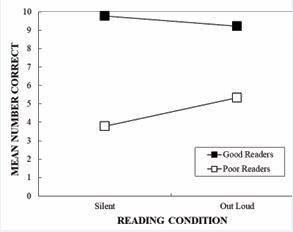
Figure 1 Mean Percentage Correct on the Sentence Comprehension Task by Reader Group and Reading Condition.
It is critical to note that children with RD still performed significantly worse than the children without RD of the same age, whether they read out loud or not. Reading out loud for children with RD is not a panacea for reading difficulties, nor was there any anticipation that it would be. Students with RD require explicit, systematic, cumulative, and research-aligned reading intervention to improve their reading skills to the extent required to close the gap between their performance and that of students without RD. Nonetheless, reading out loud improved comprehension for these students, which is useful theoretically and practically. The additional component of reading out loud during a reading task did not interfere with comprehension, which was possible given that any added task would be competing for finite cognitive resources [36].
The results of this study can be applied in the administration of remedial reading programs. During the first grade, when reading skills are first acquired, it is standard practice to have beginning readers read out loud during decoding and synthesizing. The child not only hears the product of these processes but receives immediate feedback regarding his or her performance. Traditionally, students spend much more time in silent reading as they become more proficient readers. In well-practiced and highly efficient readers, reading out loud reduces reading speed. By the end of second grade, most children will read silently. This practice may not be appropriate for children with RD. The results of the present study indicated that requiring children with RD to read text out loud increased their comprehension of the material; therefore, reading out loud should probably continue into at least the third grade, if not longer. Additionally, including the option to read out loud when tasked with answering comprehension questions may improve the performance of students with RD and should be considered as an accommodation. In summary, reading out loud improved reading comprehension for students with RD.
REFERENCE
- Learning Disabilities Association of America. New to LD. Learning Disabilities Association of America. 2018.
- Zavadenko NN. Dyslexia as the most prevalent form of specific learning disabilities. LO Badalyan Neurolo J. 2021; 2: 146-158.
- The Yale Center for Dyslexia and Creativity. Dyslexia FAQ. Yale Dyslexia. 2022.
- Mufti DS, Shahzadi N, Arshad DM, Zafar H. Screening of Children at Risk of Dyslexia in Primary Schools of Gujrat. ACADEMIA Int J Social Sci. 2025; 4: 3233-3245.
- Daniel SS, Walsh AK, Goldston DB, Arnold EM, Reboussin BA, Wood FB. Suicidality, school dropout, and reading problems among adolescents. J Learn Disabil. 2006; 39: 507-514.
- Zuppardo L, Serrano F, Pirrone C, Rodriguez-Fuentes, A. More than words: Anxiety, self-esteem, and behavioral problems in children and adolescents with dyslexia. Learning Disability Quarterly. 2021; 46: 77-91.
- Macdonald SJ. Biographical pathways into criminality: understanding the relationship between dyslexia and educational disengagement. Disability & Society. 2012; 27: 427-440.
- International Dyslexia Association. Dyslexia basics [Fact Sheet]. 2020.
- Yang L, Li C, Li X, Zhai M, An Q, Zhang Y, et al. Prevalence of Developmental Dyslexia in Primary School Children: A Systematic Review and Meta-Analysis. Brain Sci. 2022; 12: 240.
- National Center for Education Statistics. National trends and student skills. 2024.
- White TG, Sabatini JP, White S. What does “below basic” mean on NAEP reading? Educational Researcher. 2021; 50: 570-573.
- Nation K. Children’s reading difficulties, language, and reflections on the simple view of reading. Aus J Learning Difficulties. 2019; 24: 47- 73.
- Rothwell J. Assessing the economic gains of eradicating illiteracy nationally and regionally in the United States. Barbara Bush Foundation for Family Literacy. 2020; 9; 3-9.
- Stanovich Keith E. Matthew effects in reading: Some consequences of individual differences in the acquisition of literacy. Reading Res Quarterly. 1986; 22: 360-407.
- McArthur G. Poor reading and anxiety (PRAX): Building a theory and practice. Aus J Learning Difficulties 2022; 27: 169-180.
- Harris AJ, Sipay ER. How to increase reading ability: A guide to developmental and remedial methods. New York: Longman. 1990: 926.
- Buzick H, Stone E. A Meta-Analysis of Research on the Read Aloud Accommodation. Educational Measurement: Issues and Practice. 2014; 33: 17-30.
- Li H. The effects of read-aloud accommodations for students with and without disabilities: A Meta-Analysis. Educational Measurement: Issues and Practice. 2014; 33: 3-16.
- MacLeod CM, Gopie N, Hourihan KL, Neary KR, Ozubko JD. The production effect: delineation of a phenomenon. J Exp Psychol Learn Mem Cogn. 2010; 36: 671-685.
- Forrin ND, MacLeod CM. This time it’s personal: the memory benefit of hearing oneself. Memory. 2018; 26: 574-579.
- Stroh EN. The effect of repeated reading aloud on the speaking fluency of Russian language learners. Brigham Young University. 2012.
- Kuhn MR, Schwanenflugel PJ, Meisinger EB, Levy BA, Rasinski TV. Aligning Theory and Assessment of Reading Fluency: Automaticity, Prosody, and Definitions of Fluency. Reading Research Quarterly. 2010; 45: 230-251.
- Makebo TH, Bachore MM, Ayele ZA. Investigating the Correlation between Students’ Reading Fluency and Comprehension. J Language Teaching Res. 2022; 13: 229-242.
- Taguchi N, Iwasaki Y. Training effects on the development of oral fluency in L2 Japanese. Japanese Language and Literature. 2008; 42: 413-437.
- Mathes PG, Simmons DC, Davis BI. Assisted reading techniques for developing reading fluency. Reading Research and Instruction. 1992; 31: 70-77.
- Paige DD, Rasinski T, Magpuri-Lavell T, Smith GS. Interpreting theRelationships among Prosody, Automaticity, Accuracy, and Silent Reading Comprehension in Secondary Students. J Literacy Res. 2014; 46: 123-156.
- Veenendaal NJ, Groen MA, Verhoeven L. What oral text reading fluency can reveal about reading comprehension. J Research in Reading. 2014; 38: 213-225.
- Beck I. Five problems with children’s comprehension in the primary grades. In Osborn J, Wilson PT, Anderson RC (Eds.), Reading education: Foundations for a literate America. 1985: 238-253.
- Kim YG, Quinn JM, Petscher Y. What is text reading fluency and is it a predictor or an outcome of reading comprehension? A longitudinal investigation. Dev Psychol. 2021; 57: 718-732.
- Perfetti C. Language comprehension and fast decoding: Some psycholinguistic prerequisites for skilled reading comprehension. International Reading Association. 1977: 20-41.
- Samuels SJ. Automaticity and repeated reading. Reading education: Foundations for a literate America. Lexington Books. 1985: 215-230.
- Samuels SJ. Information processing abilities and reading. J Learn Disabil. 1987; 20: 18-22.
- Woodcock RW. Woodcock Reading Mastery Tests (3rd ed.). Pearson. 2011.
- Dunn DM. Peabody Picture Vocabulary Test (5th ed.). Pearson Assessments US. 2019.
- Tell PM, Ferguson AM. Influence of active and passive vocalization on short-term recall. J Exp Psychol. 1974; 102: 347-349.