Sexual Activity, Stress Reduction, and Accelerated Wound Healing: A Psychoneuroimmunological Perspective
- 1. Department of Pharmacy, University of Karachi, Pakistan
- 2. Department of Pathology, Dow University of Health Sciences Karachi, Pakistan
- 3. GD Pharmaceutical Inc., OPJS University, India
Abstract
The process of wound healing requires multiple biological stages, which depend on both local tissue elements and the psychological and neuroendocrine systems of the body. The body experiences chronic stress, which leads to wound healing problems because it disrupts cortisol production and causes both inflammatory responses and immune cell movement and blood vessel development. Humans use sexual activity as a natural behavior that helps them to decrease stress levels while boosting their mood and sleep quality, together with their hormonal and immune system functions. The review presents evidence that shows that consensual sexual activity helps to accelerate wound healing through its effects on psychological stress reduction and its optimization of psychoneuroimmunological processes. The research team demonstrates that sexual activity decreases cortisol levels while increasing oxytocin and endorphins, together with improved vagal tone and better immune system function, which leads to their conclusion. Research studies have not examined the connection between sexual activity and wound healing yet, but evidence from adjacent fields demonstrates how sexual activities can help with tissue repair. The researchers examine animal research studies together with human observational studies and stress-wound experimental models to better understand this relationship between sexual activity and wound healing. The researchers discuss the study’s limitations through their examination of methodological aspects, ethical requirements, and confounding elements. The researchers present a new conceptual framework together with future research directions, which will allow scientists to study sexual activity as an extra non-drug therapy for wound management. The relationship between intimacy and stress regulation, together with healing processes, will create new approaches to recovery, which will improve patient well-being.
Keywords
• Sexual activity
• Wound healing
• Stress reduction
• Cortisol
• Psychoneuroimmunology
• Oxytocin; Immune function
Citation
Haider R, Ahmed Z, Das GK (2026) Sexual Activity, Stress Reduction, and Accelerated Wound Healing: A Psychoneuroimmunological Perspec tive. JSM Sexual Med 10(2): 1178.
INTRODUCTION
The biological process of wound healing proceeds through multiple stages, which include hemostasis and inflammation, tissue remodeling and scar formation, while these stages depend on the current physiological and psychological conditions of the body [1,2]. Psychological stress has been shown to cause multiple negative effects on wound healing because it delays wound closure and decreases the body’s ability to recruit inflammatory cells and affects collagen production through neuroendocrine and immune system disruptions [3-6]. The presence of elevated glucocorticoids, which include cortisol, leads to a decrease in pro-inflammatory cytokines and growth factors, which play important roles during the initial stages of the wound healing process [7,8].
Biopsychosocial factors determine sexual behavior, which leads to decreased stress levels and better emotional health and hormonal changes that result in higher oxytocin and endorphin production [9-20,21]. Oxytocin has been shown to reduce the HPA axis response while also producing anti-inflammatory effects [18,19]. The field of wound management tends to overlook sexual health as a topic, but recent studies in psychoneuroimmunology show that stress reduction and social connection activities lead to better healing outcomes. The current study proposes that consensual sexual activity helps wounds heal faster because it decreases psychological stress and improves immune system function and inflammatory response.
Literature Review
All experimental and clinical research studies prove that psychological stress hinders wound healing across all tested models. Marucha et al., showed that examination stress significantly slowed oral wound healing in healthy adults [4], while Ebrecht et al., found that men with higher perceived stress and elevated cortisol levels experienced slower punch biopsy healing [5]. A systematic review and meta-analysis established that stress prolongs healing times and raises the risk of complications during medical treatment [6].
The HPA axis gets triggered by stress, which then creates a chain reaction that affects innate immune functions and macrophage operations and decreases the production of vascular endothelial growth factor and transforming growth factor-β, which both serve essential functions in tissue regeneration and angiogenesis processes. Chronic stress results in an immune system response that creates inflammation but fails to deliver effective immune defense because it stops cells from moving properly through the body.
Research about sexual activity demonstrates how it affects both stress levels and the ability to manage immune responses. Sexual intimacy has been associated with lower basal cortisol, better vagal tone, and stronger mucosal immunity that includes higher immunoglobulin a levels [18,19,21,22-27]. The effects of emotional closeness and partner support on social and relational factors increase wound healing because these factors have been shown to improve healing outcomes [9,15,28]. The research connections between stress effects on healing and stress effects on sexuality provide support for an indirect relationship that exists through biological pathways despite a lack of direct interventional studies.
Research Methodology
This narrative review synthesizes evidence from peer-reviewed human and animal studies in psychoneuroimmunology, behavioral medicine, endocrinology, and wound biology. The researchers conducted a search through biomedical research databases to find studies that investigated the effects of stress and sexual activity on neuroendocrine responses, immune function, and wound healing results. The research team selected adult human studies and systematic reviews as well-established experimental models for their priority research needs [1,2,6,11]. The research team used a conceptual framework approach to reveal existing connections between different biological pathways in their research work.
Statistical Analysis
The narrative review did not involve any new statistical analysis work because it functioned as a narrative review. The research team examined reported statistical results of the studied research through their use of p-values and confidence intervals to determine how findings matched biological significance.
RESULTS
All studies demonstrated that psychological stress functions as a negative factor that decreases both the speed and the quality of wound healing [4-6]. The research showed that higher cortisol levels led to two effects, which included diminished inflammatory signaling and slower tissue repair processes [5,7]. People who experienced stress reduction through social support, positive emotional experiences, and close relationships showed better immune function and better healing biomarkers, according to the research findings.
The study found that sexual activity resulted in neuroendocrine patterns that showed higher oxytocin levels and lower HPA-axis reactivity. These patterns theoretically promote wound healing through their ability to decrease inflammation and control immune responses, according to research findings. The study lacks direct evidence that connects sexual activity to wound healing. However, biological consistency between different domains shows that sexual activity provides indirect benefits to wound healing (Figures 1,2,3 and Table 1).

Figure 1 Stress-Mediated Neuroendocrine Pathway Leading to Delayed Wound Healing

Figure 2 Proposed Mechanism by Which Sexual Activity May Indirectly Enhance Wound Healing via Stress Reduction
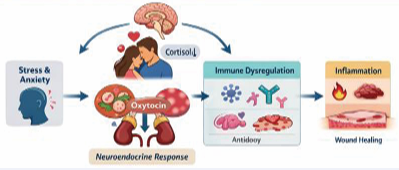
Figure 3 Integrated Psychoneuroimmunological Model Linking Stress Reduction, Intimacy, and Tissue Repair
Table 1: Relationship between Stress, Sexual Activity, and Wound Healing Pathways
|
Factor |
Biological Mediator |
Effect on Immune Function |
Impact on Wound Healing Phase |
Key References |
|
Psychological stress |
Cortisol |
Immune suppression, reduced cytokine signaling |
Delayed inflammation and proliferation |
[4–8] |
|
Chronic stress |
HPA axis activation |
Impaired macrophage and fibroblast activity |
Slower collagen deposition |
[5,6,11] |
|
Sexual activity |
Oxytocin, endorphins |
Anti-inflammatory, enhanced immune balance |
Optimized inflammatory phase |
[16–19] |
|
Intimacy & social bonding |
Vagal tone, reduced cortisol |
Improved immune regulation |
Enhanced tissue repair |
[14,18,21] |
|
Positive affect |
Neuroimmune modulation |
Increased immunoglobulin levels |
Faster epithelialization |
[15,20] |
DISCUSSION
The findings synthesized in this review indicate that sexual activity affects wound healing through two main channels, which include stress reduction and improved psychoneuroimmunological control. The release of oxytocin during sexual intimacy functions as a mechanism to prevent cortisol-induced immune system suppression while it maintains the body’s system for handling inflammation during the initial phases of wound healing [18,19]. The process of social bonding, which includes emotional intimacy that people experience during sexual relationships, has shown to benefit healing results through its independent effects [9,15,28].
The impact of sexual activity depends on three factors, which include the individual’s health status, their relationship quality, the existing cultural environment, and their psychological sense of security. The sexual experiences people encounter do not always decrease stress because negative experiences and coercive situations produce reverse effects [21,29]. The research field requires longitudinal observational studies and dedicated psychophysiological research because ethical and methodological restrictions prevent randomized trials from being used in this area of study.
CONCLUSION
Consensual sexual activity provides an indirect benefit to wound healing through its ability to decrease stress and its role in enhancing psychoneuroimmunological systems. The current evidence from clinical studies remains insufficient, but existing research needs additional examination because intimacy functions as a complete recovery treatment in wound management.
ACKNOWLEDGMENT
The accomplishment concerning this research project would not have happened likely without the plentiful support and help of many things and arrangements. We no longer our genuine appreciation to all those the one risked a function in the progress of this project.
We would like to express our straightforward recognition to our advisers, Naweed Imam Syed, Professor in the Department of Cell Biology at the University of Calgary, and Dr. Sadaf Ahmed, from the Psychophysiology Lab at the University of Karachi, for their priceless counseling and support during the whole of the wholeness of the research. Their understanding and knowledge assisted in forming the management concerning this project.
Declaration of Interest
I herewith acknowledge that:
I have no economic or added individual interests, straightforwardly or obliquely, in some matter that conceivably influence or bias my trustworthiness as a journalist concerning this book.
REFERENCES
- Kiecolt-Glaser JK, McGuire L, Robles TF, Glaser R. Psychoneuroimmunology and psychosomatic medicine: back to the future. Psychosom Med. 2002; 64: 15-28.
- Gouin JP, Kiecolt-Glaser JK. The impact of psychological stress on wound healing: methods and mechanisms. Immunol Allergy Clin North Am. 2011; 31: 81-93.
- Glaser R, Kiecolt-Glaser JK. Stress-induced immune dysfunction: implications for health. Nat Rev Immunol. 2005; 5: 243-251.
- Marucha PT, Kiecolt-Glaser JK, Favagehi M. Mucosal wound healing is impaired by examination stress. Psychosom Med. 1998; 60: 362-365.
- Ebrecht M, Hextall J, Kirtley LG, Taylor A, Dyson M, Weinman J. Perceived stress and cortisol levels predict speed of wound healing in healthy male adults. Psychoneuroendocrinology. 2004; 29: 798-809.
- Walburn J, Vedhara K, Hankins M, Rixon L, Weinman J. Psychological stress and wound healing in humans: a systematic review and meta-analysis. J Psychosom Res. 2009; 67: 253-271.
- Sapolsky RM, Romero LM, Munck AU. How do glucocorticoids influence stress responses? Integrating permissive, suppressive, stimulatory, and preparative actions. Endocr Rev. 2000; 21: 55-89.
- McEwen BS. Protective and damaging effects of stress mediators. N Engl J Med. 1998; 338: 171-179.
- Robles TF, Kiecolt-Glaser JK. The physiology of marriage: pathways to health. Physiol Behav. 2003; 79: 409-416.
- Vedhara K, Miles J, Bennett P, Plummer S, Tallon D, Brooks E, et al. An investigation into the relationship between salivary cortisol, stress, anxiety and depression. Biol Psychol. 2003; 62: 89-96.
- 11. Ader R, Cohen N, Felten D. Psychoneuroimmunology: interactions between the nervous system and the immune system. Lancet. 1995; 345: 99-103.
- Segerstrom SC, Miller GE. Psychological stress and the human immune system: a meta-analytic study of 30 years of inquiry. Psychol Bull. 2004; 130: 601-630.
- Slavich GM, Irwin MR. From stress to inflammation and major depressive disorder: a social signal transduction theory of depression. Psychol Bull. 2014; 140: 774-815.
- Cole SW. Social regulation of human gene expression: mechanisms and implications for public health. Am J Public Health. 2013; 103: S84-S92.
- Uchino BN. Social support and health: a review of physiological processes potentially underlying links to disease outcomes. J Behav Med. 2006; 29: 377-387.
- Pressman SD, Cohen S. Does positive affect influence health? Psychol Bull. 2005; 131: 925-971.
- Ditzen B, Heinrichs M. Psychobiology of social support: the social dimension of stress buffering. Restor Neurol Neurosci. 2014; 32: 149-162.
- Carter CS. Oxytocin pathways and the evolution of human behavior. Annu Rev Psychol. 2014; 65: 17-39.
- Heinrichs M, Baumgartner T, Kirschbaum C, Ehlert U. Social support and oxytocin interact to suppress cortisol and subjective responses to psychosocial stress. Biol Psychiatry. 2003; 54: 1389-1398.
- Norman GJ, Karelina K, Zhang N, Morris JS, DeVries AC. Social interaction prevents stress-induced inflammation. Brain Behav Immun. 2010; 24: 558-567.
- Brody S. The relative health benefits of different sexual activities. J Sex Med. 2010; 7: 1336-1361.
- Charnetski CJ, Brennan FX. Positive affect and immune function. Psychol Sci. 2004; 15: 105-109.