Addressing Ultra-Low Fertility in South Korea: Integrating Gender Equity Theory with Pronatalist Policy Analysis
- 1. Yeungnam University, South Korea
Abstract
South Korea confronts an unprecedented demographic crisis, with its total fertility rate (TFR) plummeting to 0.72 in 2023, the lowest in recorded global history. Despite substantial government investment exceeding 280 trillion won since 2006, conventional pronatalist policies have failed to reverse fertility decline. This study employs McDonald’s gender equity theory and the Second Demographic Transition framework to analyze the structural causes of policy ineffectiveness, demonstrating that ultra-low fertility persists due to institutional incoherence between individual-oriented and family-oriented gender equity. Through comparative analysis of six countries (South Korea, Sweden, France, Japan, Singapore, and Taiwan), this research reveals that effective fertility policy requires comprehensive institutional transformation rather than financial incentives alone. The findings indicate that South Korea’s failure stems from treating fertility as a resource shortage problem rather than addressing fundamental institutional gender inequities embedded in labor markets, workplace cultures, and family structures. This study provides evidence-based policy recommendations emphasizing institutional coherence, gender equity in both individual and family domains, workplace flexibility, affordable childcare infrastructure, and cultural transformation away from intensive mothering norms.
Keywords
• Ultra-Low Fertility
• Gender Equity Theory
• Second Demographic Transition
• Pronatalist Policies
• South Korea
• Institutional Coherence
• Work-Family Reconciliation
Citation
Honnon MJ (2026) Addressing Ultra-Low Fertility in South Korea: Integrating Gender Equity Theory with Pronatalist Policy Analysis. JSM Women’s Health 6(1): 1015.
CHAPTER 1: INTRODUCTION
Background and Context
South Korea’s demographic trajectory represents an extraordinary case in global population dynamics. The nation’s total fertility rate (TFR) declined from 6.0 births per woman in 1960 to a historic low of 0.72 in 2023, marking the most precipitous fertility decline ever documented [1].This rate is substantially below the replacement level of 2.1 children per woman needed to maintain population stability without immigration, and significantly lower than other low-fertility contexts such as Japan (1.26), Singapore (1.04), and Taiwan (0.87) [2]. The compressed nature of South Korea’s demographic transition—occurring within two generations rather than the century-long transitions observed in Western Europe—has created unprecedented social and economic challenges [3]. The consequences of this fertility collapse extend beyond demographic statistics to encompass profound economic, social, and political implications. Projections indicate that South Korea’s population will decline from 51.7 million in 2020 to 38.8 million by 2067, with the working-age population shrinking by 50% [1]. The old age dependency ratio—the number of people aged 65 and over per 100 working-age adults—is projected to increase from 22.6 in 2020 to 102.4 by 2067, creating severe strains on pension systems, healthcare infrastructure, and intergenerational economic transfers [2]. Labor force shortages are already constraining economic growth, while the sustainability of the national pension system faces existential threats [4]. The South Korean government has responded to this crisis with substantial policy interventions. Since 2006, five consecutive Basic Plans for Addressing Low Fertility and Aging Society have allocated approximately 280 trillion won [4] (approximately 210 billion USD) to pronatalist measures including cash transfers, parental leave subsidies, childcare infrastructure expansion, and housing support [5]. Despite this massive investment, the TFR has continued its downward trajectory, declining by 33% from 1.08 in 2006 to 0.72 in 2023 [1]. This policy failure raises fundamental questions about the theoretical assumptions underlying conventional pronatalist interventions and the structural barriers preventing fertility recovery. Table 1 presents the historical trajectory of South Korea’s total fertility rate alongside population growth and policy periods, illustrating the dramatic decline from 6.0 births per woman in 1960 to 0.72 in 2023 [1], despite the implementation of five consecutive Basic Plans for Addressing Low Fertility beginning in 2006. The persistent fertility decline despite unprecedented policy intervention necessitates a critical examination of the theoretical foundations and institutional mechanisms underlying South Korea’s demographic crisis. This examination reveals a fundamental disconnect between policy design and the structural determinants of fertility behavior in contemporary developed societies, particularly regarding the role of institutional gender equity in shaping reproductive decisions [6,7].
Problem Statement
The persistent decline of South Korea’s fertility rate despite substantial government investment represents a critical puzzle in demographic policy. Conventional economic theories of fertility—which emphasize the costs and benefits of childbearing—predict that financial incentives should increase fertility rates by reducing the economic burden of children [8]. However, South Korea’s experience contradicts this prediction: despite receiving some of the world’s most generous cash transfers for childbirth (up to 2 million won per child), parents continue to forgo or delay childbearing [4]. This policy-outcome disconnect suggests that ultra low fertility stems from structural factors not adequately addressed by financial incentives alone. McDonald [6-9] argues that fertility decisions in developed societies are fundamentally shaped by institutional gender equity— specifically, the coherence or incoherence between gender
Table 1: South Korea's Fertility Decline and Policy Periods, 1960-2023
|
Year |
Total Fertility Rate |
Population (millions) |
Policy Period |
|
1960 |
6.0 |
25.0 |
Family Planning Era |
|
1970 |
4.5 |
31.4 |
Family Planning Era |
|
1980 |
2.8 |
38.1 |
Family Planning Era |
|
1990 |
1.6 |
42.9 |
Policy Neutral Period |
|
2000 |
1.5 |
47.0 |
Pre-Pronatalist Period |
|
2006 |
1.08 |
48.4 |
First Basic Plan Begins |
|
2010 |
1.23 |
49.4 |
Second Basic Plan |
|
2015 |
1.24 |
50.6 |
Third Basic Plan |
|
2020 |
0.84 |
51.7 |
Fourth Basic Plan |
|
2023 |
0.72 |
51.6 |
Fourth Basic Plan |
Source: Statistics Korea (2024); United Nations (2022)
equity in individual-oriented institutions (education, employment) and family-oriented institutions (marriage, parenthood). When women achieve high levels of educational and career opportunities but face severe penalties for motherhood in the workplace and home, rational fertility decisions lead to delayed or foregone childbearing [7]. South Korea epitomizes this institutional incoherence [6-9]. Women’s educational attainment has surpassed men’s—58% of university graduates are now female—yet gender pay gaps remain among the highest in the OECD at 31.1%, and only 2.5% of corporate executives are women [1]. Workplace cultures demand extreme work hours averaging 52 hours per week, while childcare remains inadequately subsidized and culturally stigmatized for maternal employment [5]. This institutional contradiction creates what McDonald [6], terms a low fertility trap where educated women face a stark choice between career advancement and motherhood, with limited possibilities for combining the two. Table 2 demonstrates the institutional incoherence [6-9], in South Korea between high gender equity in individual-oriented institutions (education) and low gender equity in family-oriented institutions (workplace compensation, career advancement, work hours), illustrating the structural contradiction that McDonald [6], identifies as the primary driver of ultra-low fertility in developed societies. Given the theoretical significance of institutional gender equity in determining fertility outcomes [6-9], and the empirical puzzle of policy ineffectiveness despite massive financial investment, this study pursues a systematic investigation of South Korea’s ultra-low fertility through four interconnected research questions that bridge theoretical analysis, policy evaluation, and comparative assessment across diverse national contexts.
Table 2: Gender Equity Indicators in South Korea vs. OECD Average, 2023
|
Indicator |
South Korea |
OECD Average |
Ranking/Status |
|
Female Tertiary Graduates (%) |
58.0 |
49.2 |
1st (Highest) |
|
Gender Pay Gap (%) |
31.1 |
11.7 |
36th of 36 (Worst) |
|
Female Corporate Executives (%) |
2.5 |
22.7 |
37th of 38 |
|
Female Parliament Members (%) |
19.0 |
33.9 |
Below Average |
|
Annual Work Hours |
1,901 |
1,716 |
2nd Highest |
|
Part-time Employment (%) |
11.7 |
16.8 |
Low Flexibility |
Source: Statistics Korea (2024); OECD (2023)
Research Questions
This study addresses four interconnected research questions: First, how do established demographic theories— specifically McDonald’s gender equity framework and Second Demographic Transition [10,11], theory—explain South Korea’s ultra-low fertility in comparison to other developed nations? This question examines whether existing theoretical models adequately account for the East Asian fertility context or whether theoretical extensions are needed to explain the extreme fertility decline observed in South Korea, Japan, Singapore, and Taiwan. Second, what institutional mechanisms perpetuate gender inequity in family-oriented institutions despite high gender equity in individual-oriented institutions in South Korea? This question investigates the specific workplace practices, cultural norms, policy structures, and economic incentives that create and maintain institutional incoherence [6-9], with particular attention to how these mechanisms differ from Western European contexts where institutional coherence has been partially achieved. Third, why have conventional pronatalist policies failed to reverse fertility decline in South Korea, and how do South Korean policy outcomes compare to countries with more successful fertility interventions such as Sweden and France? This question evaluates the design, implementation, and effectiveness of South Korea’s five Basic Plans, examining whether policy failure stems from inadequate funding, poor policy design, or more fundamental misdiagnosis of the problem.
Fourth, what policy interventions could effectively address institutional gender inequity and promote sustainable fertility recovery in South Korea? This question synthesizes lessons from comparative analysis and theoretical frameworks [6-9], to develop evidence based policy recommendations that target structural causes [12], rather than merely alleviating symptoms of ultra-low fertility.
Research Objectives
This study pursues four primary objectives. First, it develops a comprehensive theoretical framework integrating McDonald’s gender equity theory with Second Demographic Transition [10,11], concepts to explain ultra low fertility in East Asian contexts. While McDonald’s theory provides powerful analytical tools, its application to East Asian societies requires extension to account for Confucian cultural legacies, educational credentialism, and rigid labor market structures that differentiate East Asian fertility regimes from Western European patterns [13]. Second, the study conducts rigorous evaluation of South Korea’s pronatalist policies from 2006 to 2024 [4,5], examining both policy design and implementation outcomes [8]. This evaluation employs a multi dimensional analytical framework assessing material support, institutional equity measures, work-family reconciliation [5], policies, and cultural transformation initiatives. By systematically documenting policy content and outcomes, this objective addresses the criticism that existing literature provides fragmented policy descriptions without comprehensive assessment [4]. Third, the research performs comparative case study analysis of six countries representing diverse fertility policy approaches: South Korea, Sweden, France, Japan, Singapore, and Taiwan. This comparison is theoretically motivated—Sweden and France represent cases of successful institutional coherence achievement, while Japan, Singapore, and Taiwan share South Korea’s ultra low fertility despite varying policy interventions [3]. The comparative design enables identification of necessary and sufficient conditions for fertility recovery, moving beyond single-country description to analytical generalization. Fourth, the study formulates evidence-based policy recommendations grounded in theoretical analysis [6-10], and comparative findings [8-14]. These recommendations prioritize institutional transformation over financial transfers [5-12], emphasizing workplace flexibility [15], affordable childcare infrastructure [8], shared parental responsibility [12], and cultural change [11-16]. By connecting specific policy mechanisms to theoretical predictions about institutional coherence [9], these recommendations provide actionable guidance for policymakers while contributing to scholarly debates about effective fertility intervention [17,18].
Significance of the Study
This research makes four significant contributions to demographic scholarship and policy. Theoretically, it extends McDonald’s gender equity framework to East Asian contexts [19,20], demonstrating how Confucian patriarchal legacies [13-20], interact with modern capitalist labor markets to create particularly severe institutional incoherence [6-9]. While McDonald [19], briefly addressed East Asia, systematic theoretical development applying gender equity concepts to explain variation within the East Asian ultra-low fertility regime [3-21], remains incomplete. This study fills that gap by specifying mechanisms linking cultural norms [22,23], educational systems [24], labor market rigidity [15], and family policies [4,5] to fertility outcomes.
Empirically, the research provides comprehensive documentation and analysis of South Korea’s pronatalist policies from 2006 to 2024 [1-4], addressing the fragmentation and descriptive focus criticized in existing literature [5]. By systematically coding policy content across four dimensions and linking policies to fertility outcomes through temporal analysis, this study enables more rigorous evaluation than previous assessments relying on policy descriptions without outcome analysis [8]. The comparative component further enhances empirical contribution by situating South Korea within the broader landscape of developed-country fertility policy [14,15].
Methodologically, the study demonstrates how to integrate quantitative demographic data [1,2] with qualitative policy analysis [5], and theoretical interpretation [6-10]. While demographic research often emphasizes statistical modeling [21], and policy studies focus on institutional description [12], this research shows how theoretical frameworks can guide case selection, structure comparative analysis, and interpret patterns in both demographic trends and policy outcomes. This integrated approach addresses calls for more theoretically informed demographic research [9].
Practically, the study provides actionable guidance for South Korean policymakers confronting demographic crisis [4,5]. By identifying specific institutional barriers [19,20], preventing fertility recovery and recommending evidence-based interventions [8], this research moves beyond academic critique to offer concrete solutions. Given the urgency of South Korea’s demographic situation [1]—with some projections indicating population collapse within this century [2]—practical policy contributions carry particular significance. The findings also have broader implications for other East Asian societies experiencing ultra-low fertility [3], including Japan, Singapore, Taiwan, and increasingly China [20]. Having established the research problem, questions, objectives, and significance, the analysis now turns to the theoretical and empirical literature that provides the conceptual foundation for this study. Chapter 2 develops an integrated analytical framework synthesizing McDonald’s gender equity theory with Second Demographic Transition [10,11], concepts and comparative policy research, thereby establishing the theoretical lens through which South Korea’s ultra-low fertility will be examined.
CHAPTER 2: LITERATURE REVIEW AND THEORETICAL FRAMEWORK
Demographic Transition Theories
Classical Demographic Transition Theory: Classical demographic transition theory, developed primarily through analysis of Western European fertility decline during the 19th and early 20th centuries, posits that societies progress through four stages as they modernize: high mortality and high fertility, declining mortality with sustained high fertility, declining fertility alongside low mortality, and finally low mortality with low fertility equilibrium [25]. The theory emphasizes structural modernization—urbanization, industrialization, education expansion, and declining infant mortality—as driving forces reducing both the economic value of children and parental fertility preferences. In pre-modern agrarian societies, high fertility served rational economic functions: children provided agricultural labor, old-age security, and insurance against high infant mortality. As societies modernized, these economic incentives diminished. Urban industrial employment reduced children’s labor contribution, while public education increased childrearing costs. Rising wages and employment opportunities for women increased the opportunity cost of childbearing. Meanwhile, declining infant mortality reduced the need for insurance births to ensure survival of desired family size [25]. While classical transition theory successfully explains the broad contours of fertility decline from high to low levels, it proves inadequate for understanding contemporary ultra-low fertility. The theory predicts fertility stabilization around replacement level (approximately 2.1 children per woman), not the sub replacement fertility observed across developed nations and extreme ultra-low fertility in East Asia [17]. Moreover, the theory’s emphasis on structural modernization cannot explain why similarly developed societies exhibit vastly different fertility levels—for example, Sweden’s TFR of 1.67 versus South Korea’s 0.72, despite comparable levels of economic development, urbanization, and education [2]. These limitations motivated development of Second Demographic Transition [10,11] theory.
Second Demographic Transition (Lesthaeghe, 2010, 2020) Theory: Second Demographic Transition [10,11] (SDT) theory, formulated by Lesthaeghe and van de Kaa [26], and refined by Lesthaeghe [10,11], argues that post-1960s fertility decline in developed societies reflects fundamental transformations in values, gender relations, and life course patterns rather than merely continued economic development. The theory identifies three interconnected drivers of sustained low fertility [10,11]: ideational change toward post-materialist values emphasizing individual autonomy and self-actualization [26], transformation of gender roles and family structures [10], and de-standardization of life course transitions [11]. Ideational change constitutes the SDT’s core mechanism [26]. As societies achieve material security, values shift from traditional emphases on duty, sacrifice, and collective welfare toward individual autonomy, self-expression, and quality of life [10]. This shift reduces normative pressure for marriage and childbearing [16], while elevating competing life goals such as career achievement, personal development, and lifestyle consumption [11]. Children become viewed less as social obligations and more as optional choices to be carefully planned around individual preferences and circumstances [11]. Gender role transformation represents a second crucial mechanism. SDT theory emphasizes women’s rising education and labor force participation as fundamentally altering the costs and benefits of childbearing. As women’s career opportunities expand, the opportunity costs of interrupted employment for childrearing increase substantially. Traditional family structures assuming male breadwinners and female homemakers become economically irrational when women can achieve financial independence through employment [12]. However, when workplace and family institutions fail to adapt to women’s dual roles, fertility declines as women face forced choices between career and motherhood. Life course de-standardization describes the breakdown of traditional sequencing of education, marriage, and childbearing. Whereas previous generations followed relatively uniform life trajectories—completing education, securing stable employment, marrying in early twenties, and having children soon after—contemporary young adults experience prolonged education, delayed labor market entry, partnership instability, and diverse living arrangements [10]. This de-standardization creates uncertainty about appropriate timing for parenthood, leading to postponement and ultimate reduction of completed fertility. Extended education and delayed economic independence push childbearing into later ages when biological fertility declines and career investment intensifies [21].
Limitations of SDT for East Asian Contexts
While SDT theory provides valuable insights into value-driven fertility decline, its application to East Asian societies reveals important limitations [3-20]. The theory was developed primarily from Western European experiences and may not fully capture distinctive East Asian institutional configurations [13]. Three specific limitations merit attention. First, SDT theory emphasizes individualistic value change and weakening family ties, yet East Asian societies maintain relatively strong familistic values despite ultra low fertility [3]. In South Korea, marriage remains nearly universal—only 7% of women aged 45-49 have never married—yet those who marry have very few children, with married women’s fertility declining from 2.2 in 1990 to 1.4 in 2020 [1]. This suggests that ultra-low fertility stems not from rejection of family formation but from within-marriage fertility decline, a pattern inconsistent with SDT’s emphasis on de-institutionalization of family life. Second, SDT theory inadequately addresses the role of educational credentialism and labor market rigidity distinctive to East Asian capitalist systems [19]. In South Korea, extreme educational competition creates intense pressure for intensive parenting investments that make children exceptionally costly. Parents invest enormous resources in private education (hakwon) to ensure children’s competitive advantage, with average monthly private education expenditures exceeding 400,000 won per child [1]. This educational arms race [24], creates rational incentives for low fertility that differ from Western European contexts where education systems are more egalitarian and less competitive.
Third, SDT theory underspecifies gender equity mechanisms linking women’s employment to fertility outcomes [6]. While the theory notes tension between women’s labor force participation and traditional family structures [10], it does not systematically analyze how institutional configurations shape this relationship [19]. McDonald’s gender equity framework addresses this limitation [6,7], by disaggregating institutions into individual-oriented and family-oriented categories [6], and theorizing conditions under which institutional incoherence [6-9], produces ultra-low fertility [19]. This framework provides more precise analytical tools for understanding East Asian fertility dynamics [19,20]. While demographic transition theories provide valuable insights into long-term fertility decline patterns [25], they offer limited guidance for explaining variation among similarly developed societies [14-18], or for understanding why some countries maintain moderate fertility while others experience ultra-low rates [17 21]. McDonald’s gender equity theory addresses these limitations by providing a framework specifically designed to explain fertility differences across developed nations through analysis of institutional configurations [6-9].
Gender Equity Theory of Fertility
Theoretical Framework: McDonald’s [6,7], gender equity theory provides a powerful framework for explaining variations in fertility across developed societies. The theory distinguishes between two types of social institutions [6]: individual-oriented institutions that primarily serve individuals regardless of family status (education systems, labor markets, political participation), and family-oriented institutions that support family formation and childrearing (family law, parental leave, childcare, workplace flexibility) [7]. Gender equity in these two institutional domains can vary independently, creating four possible configurations with distinct fertility implications [6-9]. When both individual-oriented and family-oriented institutions exhibit low gender equity (traditional patriarchal societies), fertility remains relatively high because women’s limited opportunities outside the family make motherhood the primary route to social status and economic security [6]. When both institutional domains achieve high gender equity (exemplified by Scandinavian countries) [14], fertility stabilizes at moderate levels because women can successfully combine career and family without severe penalties [8-12]. When individual oriented institutions provide high gender equity but family-oriented institutions maintain low gender equity— the configuration McDonald [6] identifies as characteristic of Southern European and East Asian societies [19,20]— fertility drops to very low levels [21]. This institutional incoherence creates what McDonald [7] terms a rational fertility response. Highly educated women face stark trade-offs: pursuing careers requires competing in labor markets designed for unencumbered workers, while motherhood demands intensive time investments in contexts of inadequate childcare and rigid workplace expectations. The rational response is fertility postponement and reduction. As McDonald [6], argues, very low fertility is the consequence of women having substantial freedom in individual-oriented institutions but facing substantial constraints in family-oriented institutions. This theory predicts that financial incentives alone cannot reverse [8], ultra-low fertility because they fail to address the fundamental institutional contradictions driving fertility decisions.
Empirical Evidence: Empirical research provides substantial support for gender equity theory’s predictions. Cross-national analyses demonstrate that countries with high gender equity in both individual and family institutions (Nordic countries, France) maintain fertility rates closer to replacement level, while countries with institutional incoherence [6-9] (Italy, Spain, Japan, South Korea) experience ultra-low fertility [14]. The correlation between gender equity and fertility has shifted from negative to positive as the highest-fertility developed nations are now those with greatest gender equity, reversing the historical pattern where women’s education and employment were negatively associated with childbearing [18]. Micro-level studies support these macro patterns. Research in South Korea demonstrates that women’s employment is negatively associated with fertility primarily because workplace and family institutions fail to support work-family combination [5]. Women employed in rigid labor markets with long work hours [15], and limited parental leave are significantly less likely to have second or third children compared to non-employed women or those in flexible employment [4]. This pattern contrasts with Nordic countries where employed women have higher fertility than unemployed women, suggesting that institutional support transforms the work-fertility relationship [14]. Qualitative research reinforces these findings by documenting women’s fertility decision-making processes. Korean women describe motherhood as incompatible with career advancement due to workplace discrimination against mothers, inadequate childcare support, and cultural expectations for intensive maternal involvement [27]. Many educated women report choosing between career and children rather than pursuing both, with career increasingly winning as women’s educational and employment opportunities expand [28]. This lived experience aligns with gender equity theory’s prediction that institutional incoherence [6-9], creates forced binary choices driving fertility decline.
East Asian Ultra-Low Fertility Patterns
Distinctive Characteristics: East Asian societies exhibit distinctive ultra-low fertility patterns that differentiate them from Southern European low-fertility contexts despite certain structural similarities. Jones et al. [3], identify several key characteristics. First, East Asian fertility decline occurred through marriage postponement and non-marriage rather than primarily within-marriage fertility reduction, though this pattern has shifted in recent decades as married fertility has also declined substantially. Second, non-marital childbearing remains extremely rare—less than 2% of Korean births occur outside marriage compared to over 40% in many Western European nations—meaning that marriage postponement directly translates to fertility decline [1]. Third, son preference persisted longer in East Asia than elsewhere, though it has now largely disappeared in South Korea following sex-selective abortion restrictions [29]. McDonald [19], argues that East Asian ultra-low fertility reflects particularly severe institutional incoherence stemming from three interrelated factors: Confucian patriarchal legacies emphasizing male family headship and female domesticity, hyper-competitive educational systems demanding intensive parental investment, and rigid labor markets with weak work-family reconciliation [5], policies. These factors combine to create exceptionally high perceived costs of children and severe motherhood penalties that exceed those in other low-fertility contexts. Raymo et al. [13], emphasize the role of marriage market dynamics in East Asian fertility decline. Traditional preferences for hypergamy [13]—women marrying men of equal or higher socioeconomic status—persist even as women’s educational and economic attainment increases. This creates marriage market mismatch: highly educated women find fewer acceptable partners, while less educated men struggle to meet women’s expectations for male provider capacity. The result is rising age at marriage, increasing non-marriage, and declining fertility. This pattern differs from Western contexts where assortative mating increasingly occurs among equals rather than emphasizing male status advantage.Gender equity theory’s explanatory power extends beyond general patterns to account for distinctive regional fertility regimes. East Asian societies exhibit particularly severe ultra-low fertility that reflects specific institutional configurations rooted in cultural legacies, educational systems, and labor market structures. Understanding these East Asian distinctiveness requires extending gender equity theory to account for factors less prominent in the Western European contexts where the theory was initially developed [3-19].
Cultural and Institutional Factors: Confucian cultural legacies shape contemporary East Asian fertility patterns in complex ways. Traditional Confucian ideology emphasized family continuity through patrilineal descent, sons’ duty to support elderly parents, and women’s primary role as mothers and family caregivers [3]. While modernization has eroded many explicit Confucian practices, subtle influences persist in expectations for intensive mothering [22,23], limited father involvement in childcare, and social stigma against maternal employment particularly during children’s early years. Educational credentialism represents another distinctive feature of East Asian fertility regimes. In South Korea, educational achievement determines life chances to an exceptional degree, with admission to elite universities essentially determining career trajectories and marriage market prospects. This creates intense parental pressure to invest heavily in children’s education through private tutoring, specialized programs, and intensive supervision. Average household expenditures on private education exceed 15% of income for families with school-age children [2]. This educational arms race [24], makes children extremely costly in both financial and time investments, creating rational incentives for low fertility. Labor market rigidity constitutes a third crucial factor. East Asian labor markets are characterized by long work hours, limited workplace flexibility, seniority-based promotion systems that penalize career interruptions, and weak enforcement of family-friendly policies. In South Korea, average annual work hours exceed 1,900 hours, among the highest in the OECD, and workplace cultures expect employees to demonstrate commitment through long hours and limited personal time [15]. These rigid structures are particularly incompatible with intensive mothering [22,23] expectations, creating severe work family conflict that drives fertility decline.
Fertility Policy Effectiveness
Policy Types and Mechanisms: Comparative research on fertility policy effectiveness identifies several policy categories with varying impacts on fertility outcomes. Thévenon and Gauthier [8], classify policies into four types: financial transfers (child allowances, birth grants, tax benefits), time policies (parental leave, flexible work arrangements), services (childcare, after-school programs), and employment support (job protection, return-to-work assistance). Their meta-analysis indicates that policy packages combining multiple instruments show stronger effects than single-instrument approaches, and that services and time policies demonstrate more consistent positive fertility effects than cash transfers alone. Financial transfer policies aim to offset the direct costs of childrearing through cash payments or tax reductions. Evidence on their fertility effects is mixed. Large one time birth grants can produce short-term tempo effects— accelerating childbearing timing for those already planning children—but show limited impact on completed fertility [8]. Sustained child allowances show somewhat stronger effects when generous and universal, though even substantial transfers produce modest fertility increases of 0.1-0.2 children per woman at most [14]. The limited effectiveness of financial transfers suggests that economic costs alone do not fully explain low fertility; opportunity costs and institutional barriers may be more important constraints. Parental leave policies enable parents to temporarily withdraw from employment for childrearing while maintaining job protection and income support. Leave policies show positive fertility effects, particularly when moderately generous (9-12 months), well-compensated (70-100% wage replacement), and gender-egalitarian (encouraging father participation through dedicated paternity leave or sharable quotas) [8]. Excessively long leave can paradoxically reduce fertility by creating employer discrimination against women of childbearing age and signaling that mothers should withdraw from employment for extended periods [12]. Childcare services—affordable, high-quality care for young children—demonstrate robust positive fertility effects by enabling mothers to maintain employment while having children. Countries with extensive childcare coverage (Nordic nations, France) maintain higher fertility than those with limited childcare availability (Southern Europe, East Asia) [14]. Critical factors include affordability (low parent fees), quality (trained staff, appropriate child to-staff ratios), availability (adequate capacity for under 3s), and flexible hours matching employment schedules. Childcare policy effectiveness depends not just on existence of programs but on their accessibility, affordability, and quality [8].
Comparative Policy Outcomes: Comparative analysis reveals substantial variation in fertility policy outcomes across developed nations. Nordic countries exemplify successful comprehensive policy approaches combining generous parental leave, extensive childcare services, flexible work arrangements, and gender-egalitarian norms [12]. Sweden’s TFR recovered from 1.5 in the mid-1980s to 1.9 by 1990 following introduction of the speed premium (higher parental benefit for closely-spaced births) and expansion of childcare, though fertility declined again to 1.67 in recent years as policies stagnated [1]. The Nordic model demonstrates that institutional coherence supporting work-family combination can sustain moderate fertility levels. France represents another relatively successful case, maintaining TFR around 1.8-1.9 through most of the 2000s and 2010s before recent decline to 1.79 [2]. French policies combine universal child allowances scaling with family size, extensive public childcare starting at age three with affordable infant care options, and cultural acceptance of maternal employment. The French approach differs from Nordic models in maintaining more traditional gender division of childcare—mothers reduce work hours more than fathers—but provides sufficient institutional support for dual-earner families to sustain moderate fertility [8]. In contrast, Southern European and East Asian countries demonstrate policy failure despite some pronatalist efforts. Italy’s TFR declined to 1.24 despite family support policies, while Spain reached 1.19, though both have recovered slightly to around 1.3 [2]. These countries share labor market rigidity, limited childcare for under-3s, and persistent traditional gender norms despite women’s high education [14]. East Asian nations show even lower fertility: Japan (1.26), Singapore (1.04), Taiwan (0.87), and South Korea (0.72) despite varying policy intensities (Statistics Korea, 2024). This suggests that policy design and comprehensiveness matter substantially [5-8]— fragmented or underfunded policies fail to overcome institutional barriers to fertility [9-12]. The comparative policy evidence reviewed above demonstrates substantial variation in fertility policy effectiveness across developed nations [8-14], with comprehensive institutional approaches proving more successful than fragmented or financially-focused interventions [12-18]. These findings inform the integrated analytical framework employed in this study, which synthesizes gender equity theory [6-9], policy effectiveness research [8], and East Asian contextual factors [3-20] to provide a comprehensive analytical apparatus for examining South Korea’s policy failures [4,5] and identifying paths toward fertility recovery.
Integrated Analytical Framework This study employs an integrated analytical framework synthesizing gender equity theory [6-9], Second Demographic Transition concepts [10,11], and fertility policy research [8]. The framework posits that ultra low fertility results from institutional incoherence [6-9], between individual and family-oriented gender equity, mediated by economic constraints [30], cultural norms [13-20], and policy interventions [5]. Four analytical dimensions structure the empirical analysis:
First, material support dimension examines economic factors affecting fertility costs and benefits: housing affordability [1], education expenses [24], income security [15], and direct financial transfers for children [4]. This dimension addresses classical cost-benefit theories [31] while recognizing that economic factors alone cannot explain fertility variation across similarly developed societies [14-18]. The analysis assesses whether South Korean policies adequately address material constraints on childbearing [5].
Second, institutional equity dimension analyzes gender equity in both individual and family-oriented institutions [6,7]. Individual-oriented equity includes educational access, labor market opportunities, and legal rights [15]. Family-oriented equity encompasses parental leave policies, childcare availability, workplace flexibility, and domestic labor division [1-15]. This dimension operationalizes McDonald’s theoretical framework [6-9], by measuring institutional coherence across domains.
Third, work-family reconciliation dimension [5], examines institutional mechanisms enabling or constraining combination of employment and parenthood: parental leave duration and compensation [15], childcare services coverage and affordability [1], workplace flexibility policies [15], and employer practices regarding work hours and career penalties for parents [32]. This dimension connects gender equity theory [9], to policy effectiveness literature [8-12].
Fourth, cultural context dimension analyzes normative frameworks shaping fertility behavior: gender role attitudes [16], marriage norms [13], parenting expectations [22-33], and fertility preferences. While difficult to measure precisely [20], cultural factors mediate how institutional structures translate into individual fertility decisions [19]. This dimension addresses Second Demographic Transition [10,11], theory’s emphasis on value change while recognizing East Asian distinctiveness in maintaining familistic values alongside ultra-low fertility [3-20]. The diagram (Figure 1) illustrates how cultural context mediates the effects of material support and work–family reconciliation on institutional coherence, which in turn shapes individual perceptions, actions, and fertility decision-making.
CHAPTER 3: METHODOLOGY
The preceding chapter established the theoretical foundation for this study by synthesizing gender equity theory [6-9], demographic transition concepts [10,11], and policy effectiveness research [8], into an integrated analytical framework. This chapter operationalizes that framework through specification of research design, data sources, and analytical procedures that enable rigorous empirical investigation of South Korea’s ultra-low fertility [2-4] and policy responses [5].
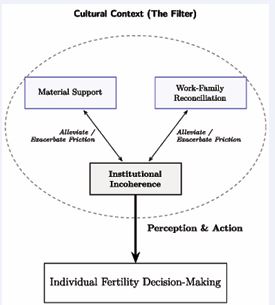
Figure 1 Cultural and Institutional Pathways Shaping Individual Fertility Decision-Making. Source: Figure created from the integrated Analytical Framework by the author.
Research Design
This study employs comparative case study methodology to analyze ultra-low fertility and policy responses across six countries: South Korea, Sweden, France, Japan, Singapore, and Taiwan [3-14]. Case study design enables in-depth examination of complex causal mechanisms linking institutional configurations to fertility outcomes [9-19], while comparative analysis facilitates identification of patterns, contrasts, and causal relationships across contexts [8]. The selection of cases follows theoretical sampling logic rather than random selection, choosing countries that enable testing of theoretical propositions about gender equity [6], institutional coherence [9], and policy effectiveness [8-12]. Table 3 below is the summary of comparative case countries rationale selection The six cases represent three analytically distinct categories. South Korea serves as the primary case of interest, exhibiting the world’s lowest fertility despite substantial policy interventions. Sweden and France represent positive comparison cases demonstrating successful achievement of institutional coherence and moderate fertility maintenance through comprehensive policy packages. Japan, Singapore, and Taiwan constitute parallel comparison cases sharing ultra-low fertility with South Korea but differing in policy approaches and institutional configurations. This case selection enables both most different systems and most similar systems comparative logic
Table 3: Comparative Case Study Countries - Selection Rationale
|
Country |
Category |
TFR (2023) |
Key Characteristics |
Analytical Purpose |
|
South Korea |
Primary Case |
0.72 |
Extreme ultra-low fertility, massive policy investment |
Main focus of study |
|
Sweden |
Positive Comparison |
1.67 |
Institutional coherence, gender-egalitarian |
Success model |
|
France |
Positive Comparison |
1.79 |
Moderate coherence, extensive services |
Alternative success model |
|
Japan |
Parallel Comparison |
1.26 |
Similar to SK, earlier policy intervention |
East Asian comparison |
|
Singapore |
Parallel Comparison |
1.04 |
State-led intervention, ultra-low fertility |
East Asian comparison |
|
Taiwan |
Parallel Comparison |
0.87 |
Cultural similarity to SK, policy efforts |
East Asian comparison |
Source: United Nations (2022); Jones et al. (2009); McDonald (2009).
[14]. Comparing South Korea with Sweden and France (most different systems) allows examination of how fundamentally different institutional configurations produce varying fertility outcomes [8], testing whether gender equity theory’s predictions hold across diverse contexts [9-19]. Comparing South Korea with Japan, Singapore, and Taiwan (most similar systems) enables identification of factors explaining fertility variation within the East Asian ultra-low fertility cluster [3-20], isolating effects of specific policy choices and institutional arrangements while controlling for shared cultural and economic characteristics [13].
The temporal scope extends from 2000 to 2024, capturing the period of intensive pronatalist policy implementation in South Korea [5] and enabling assessment of short and medium-term policy effects [4]. This timeframe encompasses South Korea’s five Basic Plans for Addressing Low Fertility and Aging Society (2006 2025) ([4], and allows comparison of pre-policy and policy period fertility trends [1]. While causal attribution requires caution given the observational nature of demographic data [21], the extended temporal scope and comparative design strengthen analytical capacity to identify patterns consistent with theoretical predictions [9].
Data Sources
The study synthesizes multiple data sources to construct comprehensive analysis of fertility trends, institutional configurations, and policy interventions. National statistical agencies provide primary demographic data: Statistics Korea (Korean Statistical Information Service), Statistics Sweden, INSEE (France), Statistics Bureau of Japan, Department of Statistics Singapore, and National Development Council Taiwan [1-15]. These sources offer high-quality vital statistics including total fertility rates, age-specific fertility rates, births by mother’s characteristics, marriage rates, and population projections. Data consistency and comparability are generally high across these advanced statistical systems, though minor definitional differences are noted where relevant. International databases supplement and enable cross-national comparison of demographic and social indicators. The United Nations World Population Prospects 2022 [2], provides standardized fertility estimates and projections. OECD Family Database [15], offers comprehensive cross national data on family policies, childcare enrollment, parental leave provisions, and family-related expenditures. World Bank Development Indicators supply economic and social development measures. These international sources enable consistent comparative analysis while acknowledging minor discrepancies with national statistics due to different estimation methods.
Policy documents constitute a third crucial data source. Analysis of South Korean policy draws extensively on official government planning documents including the five Basic Plans for Addressing Low Fertility and Aging Society (2006-2025) [4-5], Ministry of Health and Welfare policy reports, and presidential commission recommendations. These documents detail policy objectives, budgets, implementation mechanisms, and evaluation frameworks. Comparable policy documents from other countries enable comparative institutional analysis [8], though language barriers necessitate reliance on English-language summaries and academic translations for some non English sources. Academic literature provides theoretical frameworks, empirical findings, and analytical interpretations that contextualize quantitative data and policy content. Peer-reviewed publications in demographic journals (Population and Development Review, Demographic Research, Journal of Population Research), family policy journals (Community, Work and Family), and area studies outlets (Asian Survey) supply evidence on fertility determinants [6-10], policy effectiveness [5-8], and institutional mechanisms [12]. This literature base enables theoretically-informed analysis connecting descriptive patterns to causal explanations grounded in established scholarship.
Analytical Approach
The analytical approach operationalizes the four dimensional framework through both quantitative indicators and qualitative assessment [9]. Each dimension employs multiple indicators to enhance construct validity and enable triangulation across data sources. The material support dimension is assessed through housing price to-income ratios [1], private education expenditures as percentage of household income [24], unemployment rates for young adults [1], and levels of child allowances and birth grants [4]. These indicators capture economic constraints on childbearing and the extent to which policies offset material costs [30]. The institutional equity dimension requires disaggregated measurement of individual and family oriented institutions [6,7]. Individual-oriented equity indicators include female tertiary education enrollment rates [1], gender wage gaps [15], women’s labor force participation rates [15], and female representation in management and political positions [1]. Family-oriented equity indicators encompass parental leave coverage and compensation rates [15], childcare enrollment for under 3s [1], part-time employment availability and quality [15], and time-use data on domestic labor division [1]. Comparing these indicator sets across countries reveals patterns of institutional coherence or incoherence [6-9]. Work-family reconciliation assessment focuses on specific policy instruments and workplace practices [8]. Indicators include parental leave duration, wage replacement rates during leave, childcare costs as percentage of average wages, childcare availability for different age groups [15], average work hours [15], workplace flexibility measures (telework, flextime), and employer family-friendly practice adoption rates. These measures enable evaluation of whether institutional arrangements facilitate or constrain employment parenthood combination [5-12]. Cultural context analysis relies primarily on qualitative assessment supplemented by survey data where available [16]. Gender role attitude surveys, marriage and fertility preference data, and qualitative research on parenting norms [22-33], provide insights into normative frameworks. Given measurement challenges— attitudes are complex, context-dependent, and difficult to compare cross-culturally [13]—this dimension emphasizes interpretive analysis informed by area studies scholarship [20], rather than claiming precise quantitative measurement. Comparative analysis proceeds through systematic cross-case examination along each analytical dimension, identifying similarities, differences, and patterns [14]. The analysis employs analytical narrative approach combining temporal process tracing of fertility trends and policy evolution within cases with cross-case comparison of outcomes and institutional configurations. This approach enables identification of causal mechanisms linking policies and institutions to fertility outcomes [8,9], while acknowledging complexity and context-specificity that resist simple variable-based explanation.
Validity, Limitations, and Ethical Considerations
The analytical approach outlined above provides systematic procedures for investigating fertility determinants, policy effectiveness, and cross-national variation. However, methodological rigor requires explicit acknowledgment of validity enhancement strategies, inherent limitations, and ethical considerations that shape the research process and constrain the scope of valid inferences that can be drawn from the analysis [9].
Validity Enhancement Strategies: Several strategies enhance the validity and credibility of findings. Data triangulation across multiple sources—national statistics, international databases, policy documents, and academic literature—reduces reliance on single sources and enables verification of key facts. When sources conflict, discrepancies are noted and explained. Methodological triangulation combines quantitative demographic indicators with qualitative policy analysis and theoretical interpretation, providing multiple perspectives on complex phenomena. Theoretical grounding in established frameworks—gender equity theory [6-9], Second Demographic Transition [10,11]—provides analytical structure preventing purely descriptive accounts. Theory guides case selection, indicator choice, and interpretation of patterns [19]. The comparative design enables testing of theoretical predictions across multiple contexts [14], strengthening confidence in findings that emerge consistently. Temporal analysis tracking changes over time within cases provides additional analytical leverage, examining whether fertility and policy shifts correlate as theory predicts [17].
Methodological Limitations: Important limitations must be acknowledged. First, causal inference from observational demographic data faces inherent challenges [21]. Fertility outcomes result from complex interactions of economic, social, cultural, and policy factors that cannot be experimentally isolated. While comparative analysis and temporal sequencing provide suggestive evidence for causal relationships, definitive attribution remains elusive. The study emphasizes patterns consistent with theoretical predictions [9], rather than claiming proof of causation.
Second, endogeneity concerns complicate interpretation [8]. Fertility levels may influence policy choices rather than vice versa—governments adopt pronatalist policies in response to low fertility, creating reverse causation [5]. Cultural values may simultaneously shape both institutional configurations and fertility preferences [10-16], confounding institutional effects. While comparative design and theoretical frameworks partially address these concerns, endogeneity cannot be fully eliminated in observational research.
Third, measurement challenges affect certain constructs, particularly cultural variables [13-20]. Attitudes, norms, and values are difficult to measure precisely and compare across cultures. Survey questions may not capture equivalent meanings in different languages and contexts. This study acknowledges these limitations by treating cultural analysis as interpretive rather than claiming precise quantification, emphasizing patterns evident in multiple data sources rather than single indicators.
Fourth, the case study approach limits statistical generalization [14]. Findings emerge from six countries and cannot be mechanically applied to all contexts. However, analytical generalization to theoretical propositions remains valid [19]—the study tests whether gender equity theory and related frameworks explain observed patterns, with findings informing theoretical refinement and application to similar contexts [3].
Fifth, language barriers constrain access to some primary sources. While South Korean, Swedish, and French government documents are available in English or accessible through translation, some detailed policy materials and academic publications in East Asian languages remain inaccessible. The study relies on English language academic literature and official translations, potentially missing nuances available only in original languages.
Ethical Considerations: This research employs aggregate statistical data and publicly available documents, raising minimal direct ethical concerns. However, broader ethical issues merit consideration. Analysis of fertility policy requires sensitivity to reproductive autonomy [27]— the fundamental right of individuals to make childbearing decisions free from coercion. While recommending policies to support those who wish to have children, the study rejects coercive pronatalism and emphasizes expanding genuine choices rather than pressuring childbearing [9] Policy recommendations prioritize institutional changes enabling women to combine career and family if they choose, not mandating motherhood [12]. Additionally, the study recognizes that fertility analysis involves sensitive topics including gender, sexuality, family structure, and personal life choices, requiring respectful treatment that avoids stigmatizing any reproductive choice or family form [10].
CHAPTER 4: ANALYSIS AND FINDINGS
Having established the theoretical framework in Chapter 2 [6-10], and specified the methodological approach in Chapter 3, the analysis now turns to empirical investigation of South Korea’s fertility decline [1], its determinants [4,5], policy responses [4], and comparative context [3-14]. This chapter presents findings organized along the four analytical dimensions—material support, institutional equity, work-family reconciliation, and cultural context—while incorporating comparative evidence from the six case study countries.
South Korea’s Fertility Decline: Trends and Patterns
Historical Trajectory: South Korea’s fertility transition represents one of the most dramatic demographic changes in modern history. The TFR declined from 6.0 births per woman in 1960 to 4.5 in 1970, 2.8 in 1980, and reached replacement level (2.1) by 1983 [1]. The subsequent decline to below-replacement fertility by 1984 occurred over just 24 years—a transition that took Western European nations more than a century [3]. This initial decline occurred during intensive government family planning programs promoting small families as part of economic development strategy. Unlike contemporary pronatalism, the state actively discouraged high fertility through the 1960s-1980s with slogans such as Stop at Two and One Daughter Equals Ten Sons, combined with promotion of contraception and sterilization. The crucial turning point occurred after 1984 when family planning programs ended and fertility policy shifted toward neutrality. Rather than stabilizing around replacement level as classical demographic transition theory might predict, fertility continued declining: 1.6 in 1990, 1.5 in 1995, and crossing into lowest-low fertility [21], territory (below 1.3) by 2001 at 1.30 [1]. This persistent decline despite removal of anti-natalist policies demonstrated that fertility reduction had acquired self sustaining momentum driven by structural changes in economy, society, and gender relations rather than merely responding to government campaigns. The 2000s and 2010s witnessed accelerating decline to unprecedented levels. TFR fell from 1.30 in 2001 to 1.08 in 2006 (when the First Basic Plan commenced), then continued dropping to 0.92 in 2018, 0.84 in 2020, and 0.72 in 2023 [1]. This trajectory occurred during the period of most intensive pronatalist policy intervention, with government spending approaching 280 trillion won [4]. The complete failure of policies to even slow fertility decline—let alone reverse it—demands explanation beyond conventional economic theories of fertility.
Age-Specific Patterns and Marriage Linkages: Age specific fertility rate analysis reveals that declining fertility reflects both postponement (delayed childbearing) and quantum effects (reduced ultimate fertility). The mean age at first birth increased from 24.8 years in 1990 to 27.6 in 2010 and 32.6 in 2023, indicating substantial postponement [1]. Fertility rates for women aged 20-24 collapsed from 102 per 1,000 women in 1990 to fewer than 10 per 1,000 in 2023. For ages 25-29, rates declined from 152 per 1,000 in 1990 to 38 per 1,000 in 2023. While fertility at older ages increased modestly, these increases far from compensate for declines at younger ages. Table 4 illustrates the dramatic shift in South Korea’s age-specific fertility patterns, showing the collapse of fertility among younger women (ages 20-29) and the modest increase among older women (ages 35-39), demonstrating both postponement and quantum effects that together drive ultra-low completed fertility. The demographic patterns documented above— dramatic fertility decline [4], postponement [1], marriage decline [13], and within-marriage fertility reduction [5]— demand explanation through systematic examination of the underlying determinants driving these trends [9-19]. The analysis now investigates how economic constraints [24-30], institutional gender inequities [6-9], workplace rigidities [15-32], and cultural shifts [10-16] combine to generate the fertility outcomes observed in South Korea’s demographic data [1]. Given that non-marital childbearing remains rare in South Korea—only 2.3% of births occur outside marriage— marriage patterns directly determine fertility outcomes [1]. Marriage rates declined substantially: the crude marriage rate fell from 9.3 per 1,000 population in 1990 to 4.2 in 2023. Mean age at first marriage increased from 24.8 for women in 1990 to 31.3 in 2023. Among women aged 30-34, the never-married proportion increased from 6% in 1990 to 52% in 2020. Importantly, marital fertility also declined substantially from 2.2 in 1990 to 1.4 in 2020, indicating that ultra-low fertility stems not only from marriage postponement but also from declining fertility among those who marry.
Table 4: Age-Specific Fertility Rates in South Korea, 1990-2023.
|
Age Group |
1990 (per 1,000) |
2010 (per 1,000) |
2023 (per 1,000) |
Change 1990-2023 |
|
20-24 |
102 |
22 |
9 |
-91% |
|
25-29 |
152 |
81 |
38 |
-75% |
|
30-34 |
69 |
116 |
98 |
+42% |
|
35-39 |
6 |
22 |
28 |
+367% |
|
40-44 |
1 |
3 |
5 |
+400% |
|
Mean Age at First Birth |
24.8 |
30.1 |
32.6 |
+7.8 years |
Source: Statistics Korea (2024).
Determinants of Ultra-Low Fertility
Economic Constraints: Housing costs constitute a primary economic barrier to family formation and childbearing [5]. Housing price-to-income ratios in Seoul reached 12.8 in 2023, meaning that the median housing unit costs 12.8 times median household income [1]. The average age of first-time homebuyers increased to 39.7 years in 2023 [1], creating severe constraints on marriage and childbearing timing since couples typically delay these decisions until securing stable housing [13]. Education costs represent another crushing economic burden [24], with average monthly private education (hakwon) expenditures reaching 410,000 won per student in 2023 [1]. The educational arms race [25] creates powerful incentives for low fertility as parents choose quality over quantity.
Youth unemployment and employment insecurity compound economic barriers. The unemployment rate for ages 15-29 reached 7.2% in 2023, significantly above the overall rate of 2.6% [1]. More importantly, underemployment and precarious employment are widespread among young adults. Irregular workers comprised 36% of wage employees in 2023. This employment insecurity delays family formation as young adults wait for stable positions before considering marriage and childbearing, but stable employment often arrives too late for optimal fertility timing.
Institutional Gender Inequity: Severe institutional incoherence [6-9], between individual and family oriented gender equity drives ultra-low fertility through mechanisms precisely predicted by McDonald’s theory. In individual-oriented institutions, South Korea achieved remarkable gender equity: women’s university enrollment rates now exceed men’s at 74.0% versus 65.9%, and women comprise 58% of tertiary graduates [1]. However, family-oriented institutions display extreme gender inequity. The gender wage gap reached 31.1% in 2023, highest among OECD nations [15]. Women comprise only 2.5% of corporate executive positions. Women perform an average of 3.7 hours of unpaid domestic work daily compared to 0.6 hours for men—a six-fold difference [1].
Workplace cultures and labor market rigidity severely constrain work-family compatibility. South Korean workers averaged 1,901 annual hours in 2022, second highest among OECD nations [15]. Career interruption for childbearing carries severe and lasting penalties, particularly for women in professional and managerial positions. Women who interrupt careers for motherhood face wage penalties averaging 15-20% permanently, with further penalties for each additional child [4]. Part-time employment remains underdeveloped at only 11.7% of employed persons, and typically offers low wages with minimal benefits [1].
Cultural Norms and Shifting Values: Intensive mothering [22,23], norms create expectations for maternal investment incompatible with career demands. South Korean culture emphasizes mothers’ primary responsibility for children’s educational success, emotional development, and social advancement [33,34]. This intensive involvement requires enormous time commitments incompatible with career demands [22,23]. Meanwhile, fathers remain largely exempt from childcare expectations despite gradual attitude changes [23]. Value shifts toward individualism and self-actualization also contribute to fertility decline [10,11], through mechanisms linking institutional constraints to individual preferences [16-19]. Surveys indicate that younger Koreans increasingly prioritize personal fulfillment [16], career achievement, and lifestyle quality over traditional obligations to family continuity [16].
South Korean Policy Interventions
Policy Evolution and Expenditure: South Korea’s pronatalist policy commenced with the First Basic Plan for Addressing Low Fertility and Aging Society (2006 2010), which allocated 42.2 trillion won [5]. The Second Basic Plan (2011-2015) increased investment to 60.5 trillion won. The Third Basic Plan (2016-2020) allocated 108.4 trillion won. The Fourth Basic Plan (2021-2025) committed 196.4 trillion won (Jeon et al., 2022). Cumulative expenditure from 2006 to 2023 exceeded 280 trillion won (approximately 210 billion USD). However, TFR declined from 1.08 in 2006 to 0.72 in 2023 [1]—a 33% reduction despite massive spending increases. Table 5 demonstrates the paradoxical relationship between South Korea’s escalating policy investment and continued fertility decline, illustrating the fundamental policy failure that motivates this study’s focus on institutional incentives.
Policy Components and Effectiveness: Cash transfer policies constituted a major component, with birth grants increasing from 200,000 won in 2006 to 2 million won in 2023, with additional payments for second and third births. Monthly child allowances of 100,000 won were introduced in 2018. Despite these incentives, fertility continued declining. Research indicates that cash transfers produce small short-term tempo effects but negligible impact on completed fertility [4]. A 2 million won birth grant represents less than 5% of estimated total childrearing costs exceeding 40 million won per child.
Table 5: South Korea's Basic Plans - Policy Expenditure and TFR Outcomes
|
Basic Plan |
Period |
Expenditure (trillion won) |
TFR at Start |
TFR at End |
Change (%) |
|
First |
2006-2010 |
42.2 |
1.08 |
1.23 |
+13.9% |
|
Second |
2011-2015 |
60.5 |
1.23 |
1.24 |
+0.8% |
|
Third |
2016-2020 |
108.4 |
1.24 |
0.84 |
-32.3% |
|
Fourth |
2021-2025* |
196.4 |
0.84 |
0.72** |
-14.3% |
|
TOTAL |
2006-2023 |
280+ |
1.08 |
0.72 |
-33.3% |
Source: Lee & Choi (2015); Jeon et al. (2022); Statistics Korea (2024). Note *Ongoing
**2023 data
Parental leave policies expanded substantially. Paid maternity leave extended from 60 days in 2000 to 90 days in 2006. Parental leave extended to 12 months per parent by 2023 with 40-50% wage replacement. However, utilization remains limited and highly gendered: only 4.3% of employed fathers took parental leave compared to 72% of eligible mothers in 2023 [1]. Workplace stigma persists, particularly for men and women in professional positions. Childcare infrastructure expanded dramatically [4,5]. Publicly subsidized childcare capacity increased from 700,000 slots in 2006 to 1.4 million in 2023, with enrollment rates for ages 0-2 reaching 54% and ages 3-5 approaching universal coverage at 93% [1]. Despite expansion, childcare quality and availability concerns persist [5], particularly for infant care. Cultural stigma against institutional care for infants remains strong [23 33].
Policy Effectiveness Assessment: Comprehensive assessment indicates that South Korean policies failed to achieve their primary objective of fertility increase [4,5]. This failure stems from fundamental misdiagnosis of the problem [9]. Policies treated ultra-low fertility primarily as a resource shortage problem addressable through financial transfers [8], rather than as an institutional coherence problem requiring structural transformation of work family institutions [6-12]. Cash transfers fail to address opportunity costs and institutional barriers driving fertility decisions [5-14]. Birth grants pale compared to childrearing costs and maternal lifetime earnings losses approaching 100 million won due to career penalties [4]. Parental leave and childcare policies represent more promising interventions consistent with gender equity theory [8,9], yet suffer from implementation failures [5]. Leave policies exist but face limited utilization due to workplace stigma and career penalties [1-32]. Childcare expanded but quality concerns and cultural stigma limit effectiveness [23-33]. Most critically, policies failed to create institutional coherence [6-9]. Individual-oriented institutions continue providing women with educational and employment opportunities [1-15] while family oriented institutions maintain severe penalties for utilizing these opportunities after having children [3-19]. Without fundamental transformation of workplace cultures, labor market structures, and gender norms [12-20], fertility will likely remain depressed regardless of financial incentive levels [8].
Comparative Analysis
Sweden: Institutional Coherence Achievement: Sweden exemplifies successful institutional coherence achievement through comprehensive policy packages and cultural transformation [12-14]. TFR recovered from 1.5 in the mid-1980s to peak at 2.1 in 1990, though declining to 1.67 by 2023 [2]. Swedish success stems from achieving gender equity in both individual and family-oriented institutions [14-19]. Women’s labor force participation reaches 80%, gender wage gap is only 9.8%, and women comprise 47% of parliamentary representatives. Parental leave provides 480 days per child with 390 days at 80% wage replacement, of which 90 days are reserved for each parent. This design encourages father participation, with 90% of Swedish fathers taking parental leave compared to 4.3% in South Korea [15]. Childcare is nearly universal for ages 1-5 at 92% enrollment, highly subsidized with parent fees capped at 3% of income, and high quality with low child-to-staff ratios [14]. Work hours average 1,452 annually, nearly 500 hours less than South Korea [15], and workplace flexibility including telework and flextime is common [8]. Part-time employment provides a viable option at 23% of total employment with minimal wage penalties [15]. Cultural norms support dual-earner families and shared parental responsibility [12-14], facilitated by generous parental leave policies with high wage replacement rates and strong uptake by both mothers and fathers [8]. This institutional coherence [6-9] enables women to combine career and family without severe penalties, sustaining moderate fertility despite women’s high education and employment [14-18].
France: Alternative Path to Moderate Fertility: France maintains TFR around 1.79 through a different institutional configuration than Sweden [2]. French policies combine universal benefits scaling with family size, extensive early childhood education serving 98% of children aged 3-5 free of charge, and cultural acceptance of maternal employment despite more traditional gender divisions than Nordic countries [8]. Family allowances provide substantial ongoing support scaling with child number. Labor markets maintain 35-hour work week regulations reducing work-family conflict. Gender wage gaps at 15.8% remain moderate [15]. France demonstrates that multiple institutional configurations can support moderate fertility if providing adequate work-family reconciliation [5] support.
Japan, Singapore, Taiwan: Persistent Ultra-Low Fertility: Japan shares many characteristics with South Korea yet maintains somewhat higher fertility at TFR 1.26 [2]. Japanese pronatalist policies commenced earlier, beginning in the 1990s and continuing through multiple iterations. Despite three decades of policy intervention, Japanese fertility remained depressed due to persistent institutional incoherence [6-9]. Gender wage gaps remain at 22.1%, workplace cultures emphasize extreme commitment, and parental leave utilization by fathers remains minimal at 7.6% [15]. Traditional gender norms remain influential despite women’s rising education. Singapore represents an extreme case of state-led pronatalist intervention, yet TFR declined to 1.04 in 2023 [1]. Despite intensive intervention including baby bonuses up to SGD 10,000 per child, subsidized childcare, and priority housing allocation, fertility remains depressed. Labor market rigidity, long work hours averaging 2,238 annually, and limited workplace flexibility create severe work-family conflicts [15]. Taiwan similarly demonstrates policy failure with TFR of 0.87 despite government initiatives. These cases demonstrate that without addressing fundamental institutional incoherence, even intensive policy interventions fail to achieve fertility recovery.
CHAPTER 5: DISCUSSION,POLICY RECOMMENDATIONS, AND CONCLUSION
The empirical analysis presented in Chapter 4 documented South Korea’s fertility decline [1-4], identified its structural determinants [5-19], evaluated policy interventions [4-8], and situated South Korean experience within comparative context [3-14]. This final chapter synthesizes these findings to develop theoretical insights, policy recommendations, and conclusions about the causes of and solutions to South Korea’s ultra-low fertility crisis [5].
Discussion of Findings
This study’s findings strongly support McDonald’s gender equity theory as the most powerful framework for explaining South Korea’s ultra-low fertility [6-19]. The empirical evidence demonstrates that ultra-low fertility persists despite substantial government investment [4], precisely because policies fail to address the fundamental problem: institutional incoherence [6-9], between high gender equity in individual-oriented institutions [1-15], and low gender equity in family-oriented institutions [5-32]. South Korea exhibits the extreme version of this configuration that McDonald [6], predicted would generate very low fertility [19-21]. The comparative analysis reveals that institutional coherence proves decisive for fertility outcomes [9-14]. Sweden and France, despite different approaches, both achieved sufficient institutional coherence to sustain moderate fertility levels [8-14]. Sweden accomplished this through comprehensive gender-egalitarian policies enabling shared parental responsibility and work family combination [12-14]. France achieved moderate fertility through extensive childcare services and cultural acceptance of maternal employment [8], though maintaining more traditional gender divisions [31]. Both approaches contrast sharply with South Korea’s institutional incoherence [6-9]. Table 6 provides a systematic comparison of institutional indicators across the six case study countries, enabling direct assessment of how institutional configurations correlate with fertility outcomes and thereby testing McDonald’s [6-9], gender equity theory empirically. South Korea’s policy experience demonstrates clear failure despite massive investment, raising the question of whether alternative policy approaches might achieve better outcomes. Comparative analysis of countries with varying fertility levels and policy configurations provides empirical leverage for identifying effective policy designs
Table 6: Comparative Institutional Indicators Across Six Countries
|
Indicator |
S. Korea |
Sweden |
France |
Japan |
Singapore |
Taiwan |
|
TFR (2023) |
0.72 |
1.67 |
1.79 |
1.26 |
1.04 |
0.87 |
|
Gender Pay Gap (%) |
31.1 |
9.8 |
15.8 |
22.1 |
16.3 |
14.2 |
|
Annual Work Hours |
1,901 |
1,452 |
1,511 |
1,607 |
2,238 |
2,034 |
|
Childcare Enrollment 0-2 (%) |
54 |
92 |
63 |
44 |
47 |
28 |
|
Father Leave Take- up (%) |
4.3 |
90 |
28 |
7.6 |
5.2 |
8.1 |
|
Part-time Employment (%) |
11.7 |
23.1 |
18.4 |
25.1 |
8.3 |
9.8 |
Source: OECD (2023); Statistics Korea (2024); United Nations (2022)
and institutional configurations that enable or constrain fertility recovery in developed societies. The failure of cash transfer policies deserves particular emphasis. South Korea’s experience demonstrates definitively that financial incentives alone cannot reverse [8], ultra-low fertility when institutional barriers remain intact. Birth grants of 2-5 million won represent generous payments by international standards [4-15], yet fertility declined throughout the period of increasing financial support [1-5]. This finding challenges conventional economic theories emphasizing childrearing costs [31], and confirms that opportunity costs—particularly maternal earnings losses due to career penalties [4-12]— matter more than direct costs for fertility decisions among educated women [6-14]. The East Asian comparison reveals both similarities and differences within the ultra-low fertility cluster [3 20]. Japan, South Korea, Singapore, and Taiwan all share institutional incoherence [6-9], yet fertility levels vary from Japan’s 1.26 to South Korea’s 0.72 [1,2]. This variation suggests that while institutional incoherence explains the ultra-low fertility regime generally [19], specific configurations of workplace rigidity [15], cultural norms [13-20], and policy implementation [5] create variation within the cluster. South Korea’s extreme fertility reflects the combination of all negative factors: highest gender pay gaps [15], longest work hours [15], most intensive education competition [24], strongest intensive mothering norms [23-33], and weakest policy implementation [4,5]. Table 7 synthesizes comparative evidence on fertility policy effectiveness across different policy types, demonstrating that comprehensive institutional transformation (services + time policies + cultural change) proves more effective than financial transfers alone, thereby informing the evidence-based recommendations that follow.
Policy Recommendations
Based on theoretical analysis [6-10], and comparative findings [8-14], this study recommends a comprehensive policy package addressing institutional coherence [9-12], rather than merely increasing financial transfers [5]. Five priority interventions emerge:
Mandate Shared Parental Leave: Transform parental leave from a mother-focused benefit to a family policy promoting shared responsibility [8-12]. Implement non- transferable parental leave quotas for fathers, with at least 6 months reserved exclusively for fathers at 80-100% wage replacement [14]. Current policies allow fathers to transfer
Table 7: Policy Typology and Effectiveness - Comparative Evidence
|
Policy Type |
Examples |
South Korea Implementation |
Sweden Implementation |
Effectiveness Rating |
|
Cash Transfers |
Birth grants, child allowances |
Generous (2-5M won) |
Moderate (scaling with family size) |
Low (tempo effects only) |
|
Parental Leave |
Paid leave, job protection |
Extensive on paper (12 months) |
Well-utilized (480 days, shared) |
Medium-High (if enforced) |
|
Childcare Services |
Public childcare, subsidies |
Expanded (54% for 0-2) |
Universal (92% for 0-2) |
High (enables work-family) |
|
Work Hour Reduction |
Mandated limits, flexibility |
Limited enforcement (52 hrs avg) |
Strict (37 hrs avg) |
High (reduces conflict) |
|
Cultural Transformation |
Gender norms, father involvement |
Minimal (4.3% father leave) |
Successful (90% father leave) |
High (long-term necessity) |
Source: Thévenon & Gauthier (2011); OECD (2023); Anderson & Kohler (2015)
their leave to mothers [15], perpetuating traditional divisions and maternal career penalties [4]. Mandatory father leave, as implemented in Nordic countries [8-14], fundamentally alters gender norms by normalizing father involvement in infant care while preventing employers from discriminating against women based on assumptions that only mothers will take leave [12]. This policy requires strict enforcement of anti-discrimination provisions protecting leave-takers from career penalties [5].
Reduce Standard Work Hours: Implement mandatory reduction of standard work week from current 52 hours to 40 hours maximum [15], with target of 35 hours as in France [8]. Long work hours directly conflict with intensive parenting demands [32], forcing couples to choose between career commitment and childrearing [19]. Strict enforcement requires penalties for employers exceeding limits and prohibition of unpaid overtime culture [15]. Reduced work hours must apply equally to men and women to prevent further gender segregation [6]. This intervention challenges fundamental workplace cultures [13-20] but represents essential structural change for work-family compatibility [5-12].
Expand High-Quality Childcare: Expand childcare infrastructure with emphasis on affordability, quality, and availability for under-3s [8-15]. Cap parent fees at 5% of household income for all age groups [8]. Improve childcare quality through higher staff wages, better training, and appropriate child-to-staff ratios (1:3 for infants, 1:5 for toddlers) [15] Extend operating hours to accommodate employment schedules [5]. Most critically, conduct public education campaigns to reduce cultural stigma against institutional childcare [23-33], framing quality childcare as beneficial for children’s development rather than maternal failure [22]. Address cultural barriers through gradual normalization and quality assurance [8].
Reform Housing and Education Policies: Address material constraints through housing market intervention and education reform [5]. Expand public housing supply targeting young families, with priority allocation for couples with children [1]. Provide substantial housing subsidies or low-interest mortgages for first-time buyers under age 35
[30]. These interventions enable earlier family formation by removing housing constraints [13]. Simultaneously, reform education system to reduce private education dependence and educational competition intensity [24- 34]. Implement policies restricting hakwon hours and standardizing curriculum to reduce parental investments required for competitive success [24]. While politically challenging given entrenched interests [29], educational reform proves essential for reducing childrearing costs [4- 24].
Promote Cultural Transformation: Implement public education campaigns challenging intensive mothering [22,23], norms and promoting shared parental responsibility [12]. Use government media, public service announcements, and educational programs to normalize dual-earner families, father involvement in childcare, and balanced work-family priorities for both genders [11-16]. Target employers with incentives for adopting family- friendly practices including flexible work arrangements, telework options, and elimination of career penalties for parental leave [8-15]. Create awards and public recognition for companies achieving gender equity and work-family balance [14]. While cultural change operates slowly [10], sustained government effort can accelerate normative shifts as occurred in Nordic countries [12-14].
Table 8 presents the comprehensive policy package recommendedfor South Korea based on theoretical analysis, comparative evidence, and identification of institutional barriers, prioritizing structural transformation over financial incentives and emphasizing both individual and family-oriented institutional gender equity.
Theoretical Contributions
This research makes three theoretical contributions to demographic scholarship. First, it demonstrates the explanatory power of McDonald’s gender equity theory for East Asian ultra-low fertility, extending the framework’s geographic application beyond its original European focus. The study specifies how institutional incoherence [6-9], operates in East Asian contexts [19,20], identifying distinctive mechanisms including Confucian cultural legacies [13-20], educational credentialism [24-34], and labor market rigidity [15] that intensify incoherence beyond Southern European levels [21].
Table 8: Recommended Policy Package for South Korea
|
Policy Domain |
Specific Intervention |
Target Outcome |
Implementation Timeline |
Evidence Base |
|
Parental Leave |
Mandatory 6-month father-only quota at 100% wage |
Father participation >50% |
2-3 years |
Sweden (90% uptake) |
|
Work Hours |
Enforce 40-hour maximum, target 35 hours |
Reduce work-family conflict |
3-5 years |
France (35-hour week) |
|
Childcare |
Universal 0-3 care, fees <5% income |
Enable maternal employment |
5-7 years |
Sweden (92% coverage) |
|
Housing |
Public housing priority for families <35 |
Earlier family formation |
3-5 years |
Singapore model (adapted) |
|
Education Reform |
Restrict hakwon hours, standardize curriculum |
Reduce child costs |
5-10 years |
Nordic education equality |
|
Cultural Change |
Public campaigns, employer incentives |
Normalize dual-earner families |
Ongoing (10+ years) |
Nordic gender norms |
Source: McDonald (2013); Thévenon & Gauthier (2011); Esping-Andersen (2009)
Second, the research clarifies relationships between Second Demographic Transition theory [10,11] and gender equity theory [6-9]. While SDT theory emphasizes value change and individualism [10], gender equity theory provides more precise mechanisms linking institutional configurations to fertility outcomes [9-19]. The study suggests that value change toward individualism and self- actualization [16] operates as a mediating factor rather than fundamental cause: when institutional coherence enables work-family combination [12-14], individualistic values prove compatible with moderate fertility [18], but when institutional incoherence [6-9] creates forced binary choices, individualistic values reinforce low fertility preferences [19].
Third, the comparative analysis refines understanding of policy effectiveness [8], demonstrating that comprehensive institutional transformation proves necessary for fertility recovery [12-14] while financial transfers show limited effects [4-5]. This finding challenges economic theories emphasizing childrearing costs [31] and confirms that opportunity costs, institutional barriers, and cultural norms matter more than direct costs for fertility decisions in developed societies [6-14]. The study provides theoretical foundation for shifting policy emphasis from financial compensation to institutional reform [9].
LIMITATIONS AND FUTURE RESEARCH
This study’s limitations suggest directions for future research. First, the case study methodology limits statistical generalization, though enabling analytical generalization to theoretical propositions [19]. Future research could employ multilevel quantitative modeling using cross-national panel data to test gender equity theory predictions statistically [17-21], while controlling for confounding factors. Such analysis could quantify relationships between specific institutional configurations and fertility outcomes more precisely than qualitative comparison allows [8].
Second, the study’s temporal scope focuses on 2000- 2024 [1-4], potentially missing longer-term historical dynamics. Future research could extend analysis backward to the 1960s-1990s period of South Korea’s initial fertility decline [29], examining how institutional configurations evolved and shaped fertility transitions [25]. Longitudinal analysis tracking birth cohorts’ educational, employment, and fertility trajectories would provide insights into life course mechanisms linking institutional experiences to fertility outcomes [9].
Third, cultural factors remain difficult to measure precisely through quantitative indicators [13-20]. Future research could employ qualitative methods including in-depth interviews with Korean women about fertility decision-making, workplace experiences, and family negotiations [32]. Ethnographic research on workplace cultures, parenting practices, and gender dynamics [23- 33], would enrich understanding of mechanisms operating between institutions and individual decisions. Mixed methods approaches combining qualitative depth with quantitative breadth would provide most comprehensive analysis [9].
Fourth, this study does not directly address policy implementation challenges and political feasibility constraints. Future research could analyze political economy of fertility policy [27], examining why governments adopt certain policies over others, how interest groups shape policy debates, and what political conditions enable comprehensive institutional reform versus incremental adjustments [5]. Such research would inform realistic policy advocacy strategies [8].
Practical Implications
This research carries urgent practical implications for South Korean policymakers [4-5]. The findings indicate that current policy approaches will fail to reverse fertility decline regardless of funding increases [8]. Continuing on the current trajectory—emphasizing financial transfers while leaving institutional incoherence intact—wastes resources without addressing fundamental problems [5-9]. Policymakers must recognize ultra-low fertility as an institutional problem requiring structural transformation [6-12], not merely a resource shortage problem solvable through cash payments [31].
The recommended policy package requires political will to challenge entrenched interests and cultural norms [20]. Reducing work hours faces employer resistance [15]. Expanding childcare requires substantial public investment [8]. Promoting shared parental responsibility threatens patriarchal privileges [13-20]. Educational reform challenges parents invested in current competitive systems [24]. These obstacles explain why governments often prefer politically easier options like cash transfers despite evidence of ineffectiveness [4,5]. However, the demographic crisis facing South Korea demands bold action [1]. Population projections indicate potential collapse within this century absent dramatic fertility increase [2].
The comparative evidence from Sweden and France demonstrates that institutional transformation is possible and effective [8-14]. Both countries achieved fertility recovery through comprehensive policy packages addressing institutional coherence [12]. While cultural differences between Nordic societies and East Asia create challenges for direct policy transfer [3-20], the underlying principles of institutional coherence, work-family reconciliation [5], and gender equity [6-9], apply universally. South Korea can develop culturally- appropriate policies reflecting these principles while adapting specific mechanisms to local context [19].
CONCLUSION
South Korea confronts a stark demographic choice: continue current trajectory toward population collapse [2], or undertake fundamental institutional transformation to achieve fertility recovery [9-12]. This study demonstrates that ultra-low fertility stems from institutional incoherence [6-9], between high gender equity in individual-oriented institutions [1-15], and low gender equity in family- oriented institutions [5]. Despite 280 trillion won investment in pronatalist policies [4], fertility declined from 1.08 in 2006 to 0.72 in 2023 [1], because policies addressed symptoms rather than structural causes [9-19].
Comparative analysis reveals that institutional coherence proves decisive for fertility outcomes [9- 14]. Sweden and France sustain moderate fertility through different approaches—Sweden emphasizes gender-egalitarian shared responsibility [12-14], France provides extensive childcare services [8-31]—but both achieve sufficient institutional coherence for work-family combination [19]. Japan, Singapore, and Taiwan demonstrate that without addressing institutional incoherence [6-9], intensive policy intervention fails to reverse ultra-low fertility [3-20].
The policy implications are clear: South Korea must shift from financial transfers to institutional transformation [5-9]. Mandatory shared parental leave [8-12], reduced work hours [15], expanded high-quality childcare [8], housing and education reforms [24-30], and cultural transformation toward shared parental responsibility [16-23], represent essential interventions. These policies challenge entrenched interests and cultural norms [13- 20], requiring political will and sustained commitment. However, the urgency of demographic crisis demands bold action [1,2].
This research contributes to demographic scholarship by extending gender equity theory to East Asian contexts [19,20], demonstrating relationships between institutional configurations and fertility outcomes [9-14], and clarifying policy effectiveness patterns [8]. The findings indicate that fertility recovery requires comprehensive institutional transformation rather than incremental adjustments or financial incentives [5-12]. South Korea’s extreme ultra- low fertility represents both a crisis and an opportunity: a crisis demanding urgent response [1], but an opportunity to pioneer institutional innovations that could benefit other societies confronting similar demographic challenges [3- 20].
The fundamental question facing South Korea is not whether to act—demographic collapse absent intervention appears certain [2]—but whether to act decisively enough to address root causes [9]. Half measures and politically convenient but ineffective policies merely delay the inevitable while wasting resources and time [4,5]. Only comprehensive institutional transformation addressing gender equity incoherence offers realistic prospects for fertility recovery [6-12]. The choice between demographic collapse and institutional transformation will define South Korea’s future.
REFERENCES
- Statistics Korea. Korean Statistical Information Service (KOSIS). 2024.
- United Nations, Department of Economic and Social Affairs, Population Division. World Population Prospects 2022: Summary of results. 2022.
- Jones GW, Straughan PT, Chan A. Ultra-low fertility in Pacific Asia:Trends, causes and policy issues. Routledge. 2009.
- Jeon S, Yum Y, Kim J, Lee E, Kim H. The total fertility rate, policy measures, and socio-economic factors in Korea: The past, present, and future. BMC Public Health. 2022; 22: 2298.
- Lee S, Choi H. Lowest-Low Fertility and Policy Responses in South Korea. In: Rindfuss, R., Choe, M. (eds) Low and Lower Fertility. Springer, Cham. 2015: 107-123.
- McDonald P. Gender equity in theories of fertility transition.Population and Development Review. 2000a; 26: 427-439.
- McDonald P. Gender equity, social institutions and the future offertility. J Population Res. 2000b; 17: 1-16.
- Thévenon O, Gauthier AH. Family policies in developed countries: A ‘fertility-booster’ with side-effects. Community, Work & Family. 2011; 14: 197-216.
- McDonald P. Societal foundations for explaining low fertility: Genderequity. Demographic Res. 2013; 28: 981-994.
- Lesthaeghe R. The unfolding story of the second demographic transition. Popul Dev Rev. 2010; 36: 211-251.
- Lesthaeghe R. The second demographic transition, 1986–2020: sub-replacement fertility and rising cohabitation—a global update. Genus. 2020; 76: 10.
- Esping-Andersen G. The incomplete revolution: Adapting to women’s new roles. Polity Press. 2009.
- Raymo JM, Park H, Xie Y, Yeung WJ. Marriage and family in East Asia: Continuity and change. Annual Review of Sociology. 2015; 41: 471- 492.
- Anderson T, Kohler HP. Low Fertility, Socioeconomic Development, and Gender Equity. Popul Dev Rev. 2015; 41: 381-407.
- Organisation for Economic Co-operation and Development. OECD Family Database. OECD Publishing. 2023.
- Yoon SJ, Chung HS. Value change and fertility decline in contemporary South Korea. Korean Sociological Review. 2023; 57: 89-112.
- Goldstein JR, Sobotka T, Jasilioniene A. The end of ‘lowest-low’ fertility? Population and Development Review. 2009; 35: 663-699.
- Myrskylä M, Kohler HP, Billari FC. Advances in development reversefertility declines. Nature. 2009; 460: 741-743.
- McDonald P. Explanations of low fertility in East Asia: A comparative perspective. In G. W. Jones, P. T. Straughan, & A. Chan (Eds.), Ultra-low fertility in Pacific Asia: Trends, causes and policy issues. Routledge. 2009: 23-39.
- Cheng YH. Ultra-low fertility in East Asia (Jones et al., 2009): Confucianism and its discontents. Population and Development Review. 2016; 42: 485-509.
- Kohler HP, Billari FC, Ortega JA. The emergence of lowest-low fertility(Kohler et al., 2002) in Europe during the 1990s. Population and Development Review. 2002; 28: 641-680.
- Hays S. The cultural contradictions of motherhood. Yale University Press. 1996.
- De Nicola GHalma-shock: The shadow of Korean familism and the ideology of intensive mothering. Korean Anthropology Review. 2022; 31: 33-57.
- Lee JK. Educational fever and credentialism in South Korea. Journal of Higher Education. 2025; 96: 112-135.
- Coale AJ, Watkins SC. The decline of fertility in Europe: The revised proceedings of a conference on the Princeton European Fertility Project. Princeton University Press. 1986.
- Lesthaeghe R, van de Kaa DJ. Twee demografische transities? [Two demographic transitions?]. In D. J. van de Kaa & R. Lesthaeghe (Eds.), Bevolking: Groei en krimp. Van Loghum Slaterus. 1986: 9-24.
- Kim S. Reproductive technologies as population control: how pronatalist policies harm reproductive health in South Korea. Sex Reprod Health Matters. 2019; 27: 1610278.
- Corxet Solé L. South Korea’s 4B movement (Corxet Solé, 2023): How patriarchy undermines demographic security. The Security Distillery. 2023.
- Chung W, Das Gupta M. The decline of son preference (Chung & Das Gupta, 2007) in South Korea: The roles of development and public policy. Population and Development Review. 2007; 33: 757-783.
- Salehi-Isfahani D. Labor market flexibility and investment in humancapital. Economics of Education Review. 2008; 27: 432-446.
- Chesnais JC. Fertility, family, and social policy in contemporary Western Europe. Population and Development Review. 1996; 22: 729-739.
- Oh S, Mun K. Juggling acts: How South Korean new moms balance work and family in a culture of overwork. Journal of Gender Studies. 2023; 48: 156-179.
- Jung G, Yim SS, Jang SH. When home becomes classroom: The shifting roles of Korean immigrant mothers in the management of children’s education during COVID-19 in the US. Womens Stud Int Forum. 2022; 92: 102598.
- Park MS. The immigrant mother’s dilemma: Cultural reproduction, parenting practices, and institutional constraints. In A. Lareau & D. Conley (Eds.), Social class: How does it work?. Russell Sage Foundation. 2007: 157-191.