Factors Influencing Farmers’ Participation in Water Resource Conservation in Mazandaran Province, Iran
- 1. Professor of Environmental Sociology, Department of Development Sociology, University of Mazandaran, Iran
- 2. Postdoctoral Researcher in Environmental Sociology, Department of Development Sociology, University of Mazandaran, Iran
Abstract
The escalating scarcity of water resources necessitates targeted conservation efforts, particularly in rural communities where water access is critical to livelihoods. This study investigates factors influencing farmers’ participation in water resource conservation and balancing plans in eastern Mazandaran, Iran. A researcher-designed questionnaire, validated through face validity and Cronbach’s alpha, was completed by 159 farmers selected using judgmental sampling. Results revealed a positive relationship between participation and the number of dependents, while education and socio-economic status were negatively correlated. Among the studied variables, effectiveness and self-efficacy significantly influenced participation. Farmers demonstrated a willingness to adopt recommended practices to mitigate water scarcity threats and adapt to changing conditions. Their comprehension, adaptability, and capacity highlight their potential to support policies aimed at managing underground water resources in the forbidden plain. This study underscores the importance of engaging rural communities in sustainable water resource management strategies.
Keywords
• Response Effectiveness
• Self-efficacy
• Conservation and Balancing Plan
• Farmers’ Participation
Citation
Salehi S, Bonyad L (2025) Factors Influencing Farmers’ Participation in Water Resource Conservation in Mazandaran Province, Iran. J Behav 8(1): 1027.
ABBREVIATIONS
PMT: Protection Motivation Theory; COR: Conservation of Resources;
INTRODUCTION
Water resources are fundamental for human survival, supporting essential aspects of daily life globally, including drinking, sanitation, agriculture, industry, and ecosystem health. Effective water management is crucial to ensure the security and sustainability of these resources in light of the escalating global water scarcity crisis. This crisis, driven by factors such as population growth, urbanization, climate change, and unsustainable consumption, profoundly affects numerous countries across various continents. Particularly impacted regions encompass the Middle East, Southwest United States, Australia, and parts of Africa [1]. Projections indicate a worsening scenario, with estimates suggesting that over 50% of the global population will experience high water stress and acute shortages by 2050 [2]. This alarming situation emphasizes that almost all critical water indicators are in a perilous state, especially in both developing and developed countries. Therefore, effective water management is crucial for mitigating water scarcity and ensuring sustainable utilization of available resources.Groundwater, a critical and dependable water source in arid and semi-arid areas, has historically played a significant role in water supply. But it faces significant depletion in both quality and quantity due to unregulated exploitation and recurring droughts. Population growth, escalating demand for water, and climate change impacts exacerbate this situation [3]. Changing rainfall patterns disrupt agricultural practices, underscoring the pivotal role of groundwater management [4]. Due to increasing demand and climate change impacts, proper management of groundwater resources has become imperative to prevent depletion and maintain water availability for various uses. Additionally, effective groundwater management strategies are urgently needed, especially in regions facing heightened water scarcity [5]. Community involvement, particularly in groundwater management, is paramount for effective water resource management. Participatory approaches significantly enhance the sustainability and success of water management initiatives, emphasizing the importance of community engagement [6]. Involving local communities directly in development projects not only deepens understanding of rural challenges but also increases the likelihood of successful outcomes [7]. However, achieving meaningful involvement is hindered by various challenges, including inadequate information, lack of stakeholder input, and weak interaction between planners and the local populace, underscoring the need to address these obstacles [8]. Overcoming these barriers is crucial for fostering community participation and ensuring the success of water resource conservation plans. Understanding the specific characteristics of a community is pivotal for developing effective water resource conservation strategies. Cultural and social factors, deeply ingrained within a community, significantly influence attitudes and behaviours towards water conservation [9]. It is crucial to recognize that each community may have its unique set of values, traditions, and social norms that shape its approach to environmental issues, including water conservation. Rural communities, for instance, may have diverse financial capabilities and varying degrees of economic development, impacting their ability to invest in water-saving technologies and practices. Their cultural values may prioritize sustainability and harmony with nature, making them more receptive to conservation efforts. Understanding these nuances is key to tailoring conservation plans that align with the community’s existing beliefs and practices. Furthermore, perceptions of environmental protection within a community can greatly influence their willingness to actively engage in conservation efforts. If a community places a high value on preserving their natural surroundings and resources, they are more likely to embrace water conservation initiatives and work towards their success [10]. By assessing and integrating these community-specific factors, policymakers and water resource managers can design strategies that resonate with the community, maximizing their participation and the effectiveness of conservation plans. Extensive research aimed at unraveling the factors that drive farmers to actively support water resources conservation and balancing plans is of paramount importance [11,12]. Gathering concrete empirical evidence is imperative to grasp the intricate dynamics of farmers’ intentions, their perception of vulnerability, levels of self-efficacy, and how these elements affect their active engagement in water resource management initiatives. Furthermore, delving into the distinct cultural, social, and economic factors that characterize each region is critical. These insights serve as a foundation for tailoring precise interventions that can not only encourage participation but also significantly enhance the effectiveness of conservation efforts within the specific context of each region. Comprehending individuals’ perceptions and responses to the threat of water scarcity is essential for fostering engagement and designing impactful policies in water resource management. Protection Motivation Theory (PMT) is a well-established psychological framework focusing on individuals’ motivation for engaging in protective behaviors when faced with threats. PMT centers on perceived severity and vulnerability as key factors influencing protective motivation. Perceived severity relates to the perceived seriousness of the threat, while perceived vulnerability involves the belief in personal risk [13]. Moreover, PMT considers coping appraisal factors like perceived response efficacy (belief in the effectiveness of protective behaviors) and perceived self-efficacy (belief in one’s capability to perform protective behaviors) as vital contributors to protective motivation. Farmers’ participation in water conservation and balancing plans can be understood through PMT, especially concerning water scarcity as a severe threat and their belief in the efficacy of proposed solutions. Several factors influence farmers’ perceptions, including economic, social, institutional, and personal factors. Economic hardship may deter participation, even when farmers perceive water scarcity as severe. Social support and trust in institutions, along with personal attributes like age and education level, also impact participation. Utilizing PMT in interventions can enhance farmers’ participation by raising awareness of threat severity, educating on the efficacy of plans, fostering social networks, and building trust with governing bodies. The Conservation of Resources (COR) Theory, rooted in stress and coping theories, delineates individuals’ responses to threats targeting their valued resources [14]. It elucidates the motivation individuals possess to safeguard their resources, with coping responses shaped by threat perceptions and coping abilities. This well-established psychological framework encapsulates motivation to conserve and protect resources, spanning tangible facets like time and money, alongside intangible components such as well-being, self-esteem, and social support. Individuals are driven by the desire to amass and sustain resources, propelling efforts to either gain, prevent loss, or recover these resources.
In the realm of analyzing factors influencing farmers’ engagement in supporting water resources conservation and balancing plans, the COR Theory offers profound insights. Farmers, akin to individuals in various domains, are propelled to conserve their crucial resources— water, land, economic stability, and community support. Active involvement in water conservation initiatives is tantamount to an endeavor to conserve and safeguard these pivotal resources. The COR Theory seamlessly aligns with this analysis in several ways:
- Resource Gain through Conservation Initiatives: Farmers partake in water conservation initiatives to secure a sustainable water supply, an essential resource for their agricultural activities. This mirrors the COR Theory’s emphasis on resource acquisition and accumulation [14].
- Preventing Resource Loss: Inefficient water management and water scarcity result in substantial resource loss for farmers. Actively engaging in water conservation plans serves to mitigate these losses, in harmony with the COR Theory’s emphasis on averting resource depletion [14].
- Community Support as a Resource: Participation in water conservation programs frequently involves collaboration and support from the community, constituting an intangible resource for farmers. This echoes the COR Theory’s recognition of social resources as pivotal for well-being [14].
Understanding farmers’ motivations for participating in water conservation initiatives through the COR Theory provides a comprehensive analytical framework, shedding light on their behaviors and decision-making processes. It underscores the critical role of resource conservation and management in their involvement, paving the way for strategies to enhance participation and ensure sustainable water utilization.
Iran, situated in an arid and semi-arid region with an average annual rainfall of merely 250 mm, grapples with persistent water shortages [15]. Therefore, water resources conservation and balancing are a critical challenge in Iran, particularly in the face of climate change and population growth. In this context, farmers play a vital role in water management, and their participation in conservation programs is essential. A number of factors have been identified as influencing farmers’ participation in water conservation programs:
- Economic Factors: Farmers are more likely to participate in programs that offer financial incentives, such as subsidies for water-efficient irrigation systems or payments for ecosystem services.
- Social Factors: Farmers are more likely to participate in programs that are supported by their community and that offer opportunities for social learning and collaboration.
- Institutional Factors: Farmers are more likely to participate in programs that are well-organized and managed, and that have clear and transparent rules and procedures.
- Personal Factors: Farmers’ age, education level, and risk perception can also influence their participation in water conservation programs.
Research on factors influencing farmers’ participation in water conservation programs in Iran is limited. However, some studies have identified similar factors to those found in other countries. For example, a study by [16]. found that economic factors, such as subsidies for water-efficient irrigation systems, were important in influencing farmers’ participation in a water conservation program in Iran. Other studies such as [17-20]. found that social factors, such as farmers’ trust in government agencies and their participation in farmer cooperatives, were important in influencing their participation in a water conservation program in Iran. These studies highlight the importance of both economic and social factors, as well as institutional and personal factors, in influencing farmers’ participation in water conservation programs.
This research adopts an integrated approach, melding the insights of the Protection Motivation Theory (PMT) and the Conservation of Resources (COR) Theory. This methodological fusion aims to comprehensively grasp how farmers respond to water scarcity threats and actively engage in water resource protection plans, focusing on the agricultural communities in the eastern region of Mazandaran province in Iran.
- Understanding Threat Perceptions and Resource Protection via PMT: PMT helps decode the psychological aspects of farmers’ responses to water scarcity threats. It assesses perceived severity and vulnerability, shaping farmers’ intentions to participate in conservation plans. The perceived severity of the threat and their vulnerability guide their motivation to engage. Additionally, PMT sheds light on the efficacy of their protective actions, a vital aspect influencing their drive to partake in conservation endeavors.
- Resource Conservation and Adaptation through COR Theory: On the other hand, COR Theory allows us to comprehend how farmers, as resource-conscious individuals, strive to protect their critical resources. This includes tangible resources like water and land, as well as intangible ones like social support and well-being. Understanding how farmers perceive and aim to conserve these resources is paramount for effective conservation strategy design. The theory guides us in understanding farmers’ adaptive responses in the face of resource depletion threats, especially regarding water.
This amalgamated framework aims to yield a comprehensive understanding of how farmers perceive
water scarcity threats in the east of Mazandaran province, Iran, and subsequently engage in conservation and balancing plans. By employing this integrated approach, we seek to analyze farmers’ motivations, behaviors, and coping mechanisms in the context of an increasingly water- scarce environment. This methodological enhancement aims to provide valuable insights to inform policy and interventions geared towards sustainable water resource management in the region.
The amalgamation of PMT and COR Theory offers a holistic exploration of farmers’ responses, integrating psychological and resource-based perspectives. By employing this integrated framework, we endeavor to contribute to a nuanced understanding of farmers’ participation, facilitating the development of targeted and effective water conservation and balancing plans. The case study in the east of Mazandaran province acts as a microcosm, reflecting broader challenges and opportunities faced in water resource management across various agricultural communities in Iran. The insights gained from this study could potentially pave the way for scalable and impactful solutions, mitigating water scarcity issues and ensuring a sustainable future for the region.
However, further investigation is warranted to comprehensively understand the factors affecting farmers’ participation in water conservation programs in Iran. Based on the theoretical models, the research examines the following hypotheses:
- Background variables of villagers (age, gender, education level, land quantity, well count, and water access) are related to farmers’ behavior in supporting the water resources protection and balancing plan in the forbidden plain.
- The intention variable is related to farmers’ behavior in supporting the water resources protection and balancing plan in the forbidden plain.
- Perceived vulnerability level is related to farmers’ behavior in supporting the water resources protection and balancing plan in the forbidden plain.
- Severity of perceived vulnerability is related to farmers’ behavior in supporting the water resources protection and balancing plan in the forbidden plain.
- Self-efficacy is related to farmers’ behavior in supporting the water resources protection and balancing plan in the forbidden plain.
- Effectiveness of response is related to farmers’behavior in supporting the water resources protection and balancing plan in the forbidden plain.
- Response costs are related to farmers’ behavior in supporting the water resources protection and balancing plan in the forbidden plain.
MATERIALS AND METHODS
This research adopts an integrated approach, melding the insights of the Protection Motivation Theory (PMT) and the Conservation of Resources (COR) Theory. This methodological fusion aims to comprehensively grasp how farmers respond to water scarcity threats and actively engage in water resource protection plans, focusing on the agricultural communities in the eastern region of Mazandaran province in Iran.
Study Area
The investigation is focused on the region of the east of Mazandaran province in Iran, delving into the intricate factors that influence farmers’ commitment to supporting water resource protection and balancing plans. The study’s geographic focus is Mazandaran province, situated in northern Iran (Figure 1).
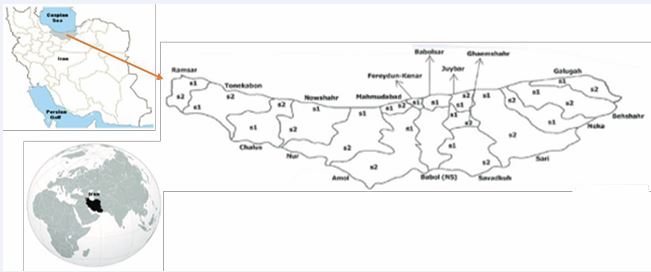
Figure 1 Overview of the study area. (a) Location of Mazandaran Province -Northern Iran (b) Various cities in Mazandaran province
Spanning over 24,000 square kilometers, the province lies within the latitude range of 35 degrees and 47 minutes to 36 degrees and 58 minutes north, and the longitude range of 50 degrees and 34 minutes to 54 degrees and 14 minutes east. The province’s elevation varies significantly, ranging from 9.17 meters on the Caspian Sea shores to 5595 meters on Damavand peak. The west of Mazandaran province receives abundant rainfall, with an average exceeding 1000 mm, rendering it suitable for agricultural activities. Conversely, the eastern part receives approximately 300 mm of rainfall [21].
Research Design
The research utilized a survey method to gather data, employing a researcher-developed questionnaire as the primary data collection tool. The statistical population comprised all residents of rural areas in the east of Mazandaran province. The sampled group consisted of 159 farmers situated in the forbidden plain in the east of Mazandaran who cooperatively participated in completing the research questionnaire. To facilitate sampling, a judgmental (expert) sampling approach was utilized due to the vastness and dispersion of the target population, making it impractical to compile a comprehensive list of all members of the society under investigation (Figure 2).
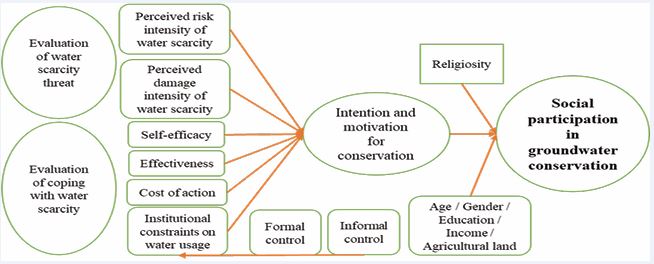
Figure 2 Theoretical Model of the Study for Farmers’ Participation in Supporting Policies for Groundwater Management
Mazandaran is considered the country’s most water-rich province, with an average annual rainfall of over 700 mm. However, due to excessive harvesting, eastern Mazandaran was officially declared a forbidden plain.The reason the questionnaire was given to 159 people was because only this number were willing to cooperate and were concerned about the response. According to water resource protection policies, water should not be harvested in the forbidden plain, but farmers do not comply with this issue, and when the interviewer approached them to fill out the questionnaire, they thought we were approaching them for a violation.
Questionnaire Development and Validity
The research tool, a researcher-created questionnaire,underwent face validity assessment by a panel of 5 professors and experts. Their evaluation and subsequent feedback enabled refinement and finalization of the questionnaire, ensuring its appropriateness and relevance to the research objectives.
RESULTS
Table 1: Correlation of the variables of the research.
|
Age |
Marital status |
Educational Level |
Income Level |
Social economic status |
Main Job |
||||||
|
20-30 |
3 |
Single |
9 |
Illiterate |
5 |
Very Low |
1 |
Very low |
9 |
Private |
0 |
|
31-40 |
17 |
Married |
81 |
> Diploma |
16 |
Low |
82 |
Low |
22 |
Governmental |
131 |
|
41-50 |
37 |
|
Diploma |
28 |
Middle |
57 |
Middle |
18 |
Free |
48 |
|
|
51-60 |
25 |
Associate |
8 |
High |
14 |
High |
23 |
Farmer |
154 |
||
|
61-70 |
8 |
Bachelor |
21 |
Very High 0 |
Very High |
9 |
Retired |
21 |
|||
|
71-80 |
1 |
Master |
9 |
|
Unemployed |
72 |
|||||
|
|
Age |
Number of dependents |
Educational Level |
|
Income Level |
Residence |
|
|
|
||
|
Correlation |
0.418** |
0.386** |
-0.140** |
-0.088 |
0.123* |
||||||
|
Sig |
0 |
0 |
0.004 |
0.069 |
0.011 |
||||||
Table 1 provides an overview of farmers’ characteristics across various parameters, detailed as percentages. Moreover, it outlines the conditions of wells, indicating that the average number of wells used by respondents in this study was 16.9 rings, with the highest number of wells reported by one respondent being 400 rings. On average, respondents reported 4.7 dry wells, with the maximum number reported by one respondent being 20 wells. Similarly, the average count of low-water wells among respondents was 6.06 rings, while the highest reported count by one respondent was 150 wells. The average number of blocked wells was 5.6 rings, with the highest number reported by one respondent being 470 rings. Additionally, descriptive findings indicate that a majority (14.8%), of individuals have resided in the surveyed village for the last 50 years, with an average residence duration of 39.93 years. Among the surveyed community of 426 farmers, 133 individuals (31.2%) are responsible for three family members as dependents.Furthermore, the inferential statistical analysis reveals significant associations between certain variables and farmers’ engagement in water resource conservation plans. Notably, a significant relationship exists between the number of wells used (sig=0.302**), the count of dry wells (sig=0.192**), and the number of blocked wells (sig=0.192**) with farmers’ participation. However, no significant relationship was found between the count of low-water wells (sig=-0.78), agricultural land area (sig=0.064), and the number of agricultural tools (sig=0.89). Moreover, the analysis examining the correlation between farmers’ occupations and their involvement in water resource protection policies (based on F-test statistics, F=29.731, sig=0.000) indicates a significant association. Retirees exhibit a higher level of participation in conservation policies compared to other occupational groups. Additionally, an investigation into the relationship between farmers’ socioeconomic status and their participation reveals a significant negative correlation (sig = -0.229). Marital status analysis reveals that married farmers have a higher mean participation value (M = 41.6953) in water conservation policies compared to unmarried individuals, as supported by the significance of Levene’s test (Sig = 0.034).
Table 2 presents a correlation analysis of the primary research variables, followed by multiple regression results aimed at elucidating the variance of independent variables
Table 2: Correlation coefficients between variables.
|
Variable |
Intention |
Response Cost |
Efficacy |
Effectiveness |
Severity of Injury |
Risk Severity |
|
Correlation |
-0.198** |
-0.111* |
0.261** |
0.464** |
0.050 |
0.137 |
|
sig |
0.000 |
0.023 |
0.000 |
0.000 |
0.304 |
0.005 |
Figure 3 shows how factors affect the elements of social participation in groundwater conservation based on study results. The model highlights how parameters such as threat assessment, motivation (fear), coping assessment, perception of vulnerability, vulnerability intensity, response costs, intrinsic rewards, extrinsic rewards, incompatible responses, and compatible responses influence the dynamics of social participation in groundwater conservation.
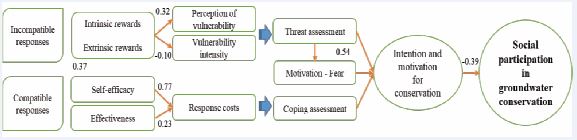
Figure 3 Figure shows how factors affect the elements of social participation in groundwater conservation based on study results. The model highlights how parameters such as threat assessment, motivation (fear), coping assessment, perception of vulnerability, vulnerability intensity, response costs, intrinsic rewards, extrinsic rewards, incompatible responses, and compatible responses influence the dynamics of social participation in groundwater conservation.
DISCUSSION
The present study aimed to investigate the factors influencing social participation in water resource management policies in the forbidden plain villages of the eastern region of Mazandaran Province, Iran. The research addressed two primary inquiries: the extent of farmers’ participation in safeguarding water resource management policies based on water balancing plans and the significant factors impacting this participation.
1- Factors Influencing Farmers’ Participation: The findings revealed several noteworthy factors influencing farmers’ engagement in safeguarding water resource management policies. Among the key determinants were the condition of wells, occupational status, job satisfaction, socioeconomic status, age, educational level, number of dependents, duration of residence in the village, coping assessment, perceived self-efficacy, response cost, intention, risk assessment, and perceived vulnerability intensity.
2- Condition of Wells and Farmers’ Engagement: The condition of wells, encompassing the number of wells used, dry wells, and blocked wells, showed a significant relationship with farmers’ participation. Farmers whose wells were in critical conditions exhibited a deeper understanding of water scarcity, perceiving it as a threat to their livelihood. This highlights the importance of infrastructure condition in shaping farmers’ awareness and motivation to participate in water resource management policies.
3- Occupational Status and Job Satisfaction: Occupational status significantly impacted participation, with retirees exhibiting higher engagement, possibly due to having more leisure time to focus on policy related matters. Conversely, job satisfaction emerged as a demotivating factor, particularly concerning the workload in agriculture and the challenging working environment.Clear task delineation, rewards assessment, professional recognition, and creating a motivating work atmosphere were identified as elements fostering satisfaction and potentially encouraging participation.
4- Socioeconomic Status and Age: The study revealed a negative correlation between socioeconomic status and farmers’ participation, indicating that higher socioeconomic status corresponded to lower engagement in water policy conservation. Similarly, age played a significant role, with older and more experienced farmers showing a greater inclination towards participating in water policy conservation. This could be attributed to evolving perceptions of water from a sacred entity to a consumable commodity in the modern world, influencing farmers’ views and actions regarding water resource management.
5- Education and Dependents: Contrary to some expectations, increased education levels among farmers displayed an inverse and negative relationship with their participation. Higher education levels led to an awareness that participation should entail mutual collaboration with the government, emphasizing the need for supportive government initiatives to enhance engagement. Moreover, an increase in the number of dependents positively influenced farmers’ participation, potentially due to heightened responsibilities towards family needs.
6- Income Level and Residence Duration: Surprisingly, the income level did not exhibit a significant correlation with farmers’ participation in water policies. However, the duration of residence in the village demonstrated a positive relationship, indicating that longer residency strengthened farmers’ sense of belonging and attachment to the community and its resources, potentially fostering greater participation in conservation efforts.
7- Coping Assessment and Risk Perception: Coping assessment factors—perceived self-efficacy, response cost, and response effectiveness—significantly affected farmers’ participation. Farmers’ understanding of their adaptive abilities and perceived effectiveness in responding to water scarcity influenced their engagement. Meanwhile, perceived risk intensity and vulnerability, despite their critical role in other studies, did not exhibit a statistically significant relationship with farmers’ participation in this context.
8- Intention and Motivations for Participation: Intention, reflecting farmers’ mental inclination to employ protective actions, displayed a negative and significant relationship with participation. This reluctance might stem from the government’s historical paternalistic role in water-related policies, focusing on resource provision rather than encouraging farmers’ proactive engagement in conservation practices.
9- Discussion of Implications and Future Research: The multifaceted nature of factors influencing farmers’ participation in water resource management policies necessitates a comprehensive approach. Policies should aim to address infrastructure issues, job satisfaction, educational needs, and incentivize participation, particularly among younger and more educated farmers. Additionally, government interventions should focus on creating mutual collaboration, minimizing perceived response costs, and emphasizing effective coping strategies to enhance farmers’ engagement While this study provides critical insights, further research is warranted to explore nuanced aspects of participation, considering evolving socio-environmental dynamics and the interplay of various determinants in water resource management policies. Such investigations can contribute significantly to the development of targeted interventions and policy frameworks conducive to sustainable water resource management in agricultural settings.
CONCLUSIONS
The study’s findings underscore several strategic approaches that could effectively bolster farmers’ engagement in water conservation programs within villages in the East of Mazandaran Province:
1. Provide Financial Incentives: Offering financial incentives could serve as a potent motivator for farmers to adopt water-efficient irrigation systems and embrace various water conservation practices. Such incentives could significantly influence behavioral changes toward more sustainable water usage.
2. Build Trust and Collaboration: Fostering trust and collaboration between farmers and government agencies responsible for water resource management is imperative. Establishing transparent communication channels and collaborative frameworks can cultivate mutual understanding, enhancing farmers’ willingness to actively participate in conservation initiatives.
3. Promote Community Engagement: Encouraging farmers to engage in farmer cooperatives and other social networks dedicated to water conservation can be pivotal. These platforms offer opportunities for knowledge exchange, support mechanisms, and information sharing about effective water conservation methods.
4. Tailor Programs to Local Context: Customizing water conservation programs based on an in-depth comprehension of the local context is paramount. This necessitates a meticulous approach that considers the specific needs and challenges of the communities in the East of Mazandaran Province. Active involvement of community members in the design and decision making processes of these programs can foster a sense of ownership and commitment, ensuring their relevance and effectiveness.
Implementing these strategies demands a concerted effort, engaging stakeholders at various levels and considering the socio-cultural dynamics prevalent in the targeted communities. By employing these multifaceted approaches, it is plausible to enhance farmers’ involvement and drive sustainable water conservation practices in the region
PATENTS
Author Contributions
The authors contributed to this work. Their individual contributions were as follows: conceptualization, SS and MK; data curation, SS; formal analysis, LB; writing— original draft preparation, SS, LB, and MK; reviewing and editing, MK; All authors have read and agreed to the published version of the manuscript. All authors have read and agreed to the published version of the manuscript.
Funding
This study was funded by the National Science Foundation of Iran (No. 4003270).
Institutional Review Board Statement
The study was conducted in accordance with the Declaration of Helsinki, and approved by the Institutional Review Board (or Ethics Commit-tee) of Iran National Science Foundation (INSF) (Code. No. 4003270).”
Informed Consent Statement
“Informed consent was obtained from all subjects involved in the study”.
Data Availability Statement: On reasonable request, data may be provided by the corresponding author.
Acknowledgments
The content of this article is derived from the outcomes of a research project titled “Sociological Survey of Farmers’ Behavior Supporting the Plan for Water Resource Protection and Balancing in the Forbidden Plain,” conducted with the generous support of the Iran National Science Foundation (No. 4003270). Heartfelt appreciation is extended to the esteemed Foundation for their invaluable support, as well as to all the participants involved in this significant project.
REFERENCES
- Wang H, Wang T, Zhang B, Li F, Toure B, Omosa IB, et al. Water and Wastewater Treatment in Africa _ Current Practices and Challenges. J Clean Soil, Air, Water. 2014; 42: 1029-1035.
- National Health and Medical Research Council (NHMRC).
- Priyan K. Issues and Challenges of Groundwater and Surface Water Management in Semi-Arid Regions. In Groundwater Resources Development and Planning in the Semi-Arid Region Pande, C.B., Moharir, KN. (Eds) Springer, Cham. 2021; 154-196.
- Saikanth DRK, Kumar S, Rani M, Sharma A, Srivastava S, Vyas D, et al. A Comprehensive Review on Climate Change Adaptation Strategiesand Challenges in Agriculture. Int J Env Climate Change. 2023; 13: 10-19.
- Tzanakakis VA, Paranychianakis NV, Angelakis AN. Water supply and water scarcity. Water. 2020; 12: 23-47.
- Adham Maleki M, Khosravipour M, Soltani F. Inhibiting and promoting factors of cooperative management of underground water resources in the agricultural sector (case study: Dasht Marghab, Khuzestan province). Geography and Human Relations. 2021; 3: 423-419.
- Salehi S, Ebrahim Khani F. The relationship between social capital and farmers’ behavior in groundwater protection (case study: Qazvin Plain). Rural Development Strategies. 2017; 5: 363-382.
- Mohammadi Dinani M, Moulai Y, Bani Habib MA. The principle of reasonable exploitation of water resources, international water law in international water law and the practice in Iran, Public Law Studies. 2014; 48: 581-569.
- Aghoubi Farani Y, Karimi S, Izadi N, Ataei P. Effect of virtual social networks on entrepreneurial behaviour of agriculture students in Iran. Applied Economics. 2019; 51: 2326-2335.
- Kremen C, Merenlender AM. Landscapes that work for biodiversity and people. Sci. 2018; 362: eaau6020.
- Savari M, Damaneh HE, Damaneh HE. Drought vulnerability assessment: Solution for risk alleviation and drought management among Iranian farmers. Int J Disaster Risk Reduction. 2022; 67: 102654.
- Bogdan AM, Kulshreshtha SN. Canadian horticultural growers’ perceptions of beneficial management practices for improved on- farm water management. J Rural Studies. 2021; 87: 77-87.
- Rogers RW. A Protection Motivation Theory of Fear Appeals and Attitude Change1. J Psychol. 1975; 91: 93-114.
- Hobfoll SE. The influence of culture, community, and the nested-self in the stress process: Advancing conservation of resources theory. Applied Psychol. 2001; 50: 337-421.
- Kolahi M, Sakai T, Moriya K, Makhdoum MF. Challenges to the future development of Iran’s protected areas system. Environmental Manag. 2012; 50: 750-765.
- Nazari B, Liaghat A, Akbari MR, Keshavarz M. Irrigation water management in Iran: Implications for water use efficiency improvement. Agricultural Water Manag. 2018; 208: 7-18.
- Golmohammadi, F. Farmer Cooperatives as an Agricultural Innovation System for Organizing and Changing Rural Land Use from Peasantry to Collective Action among Villagers in Iran. Black Sea J Agriculture. 2018; 1: 44-59.
- Nabavi E. Failed Policies, Falling Aquifers: Unpacking Groundwater Overabstraction in Iran. Water Alternatives. 2018; 11: 699-724.
- Ataei P, Sadighi H, Chizari M, Abbasi E. Analysis of Farmers’ Social Interactions to Apply Principles of Conservation Agriculture in Iran: Application of Social Network Analysis. J Agricultural Sci Technol. 2019; 21: 1657-1671.
- Savari M, Eskandari Damaneh H, Eskandari Damaneh H. Factors influencing local people’s participation in sustainable forest management. Arabian J Geosci. 2020; 13: 1-13.
- Farsadnia F, Rostami Kamroud M, Moghadamnia A. Analysis of the rainfall trend in Mazandaran province using regional Mann-Kendall method. Water Resources Research Quarterly. 2012; 2: 60-70