Understanding the role of social media Among Young Adults in Western Province, Sri Lanka; Key Findings from Webinar
- 1. Fahim Aslam, university of Bedfordshire, UK
INTRODUCTION
Social media is popularly used among youth in the last two decades, according to the most recent global statistics nearly 4.48 billion users are currently active on social media platforms which is nearly 60% of the entire human population. Platforms such as Facebook, WhatsApp, Instagram and Twitter have shown major gains where Facebook is the most popular of all with nearly 2.85 billion users. According to [1] majority of the teen and young adults use social media to network and make connections across the global arena. This allows them to talk to people with similar interests and ideologies allowing them to increase their knowledge and simultaneously make “online friends”. However, as illustrated by [2] and [3] social media can also influence the behaviors and lifestyle of youth which can impact their overall day-to-day activities and education. In Sri Lanka, a reported 7.9 million users are active on social media platforms which is nearly 40% of the population in the country. Although this number is lower than the global average, the internet speed and availability in the country is relatively higher than other countries [4,5]. According to [6], “Sri Lanka is handicapped by the paucity of research relating to the mental health impact of social media” as most studies only highlight the positive effects of social media while the negative impacts are overlooked. With the emergence of the pandemic, majority of the youth have been pushed towards online interaction where the use of social media has increased drastically. However, this could impact the future generation educational standards as currently Sri Lanka has the second highest adult literacy rate among all South Asian countries [7].
With technology advancing at an unprecedented rate there is an urgent requirement for fellow researchers to understand both the positive and negative impacts of social media. This study focuses on gathering responses through a questionnaire from participants attending the webinar on mental health to understand their perceptions and thoughts on social media impact them. The initial round of findings will then be used to develop future webinar topics to address the need and requirements of students.
METHODOLOGY
A week before the session on “Mental Health Awareness” a questionnaire was shared among the webinar participants. As indicated by [8] although webinar-based approaches can be “biased” it also helps communities understand areas which needs to be addressed which helps plan future programs. We used a snowball sampling approach to distribute questionnaires online among Rotaract/Rotary club members who had shown interest to register for the event. The event focused on three major topics: general mental health related issues, anxiety and depression caused by social media and impact of cyberbullying and ragging on social media spaces. The questionnaire was developed by using previously conducted studies during the times of COVID-19 and before the pandemic [9-12]. 14 questions were selected from four studies where 5 of them focused on understanding the demographics of the participants to understand their perception towards mental health.
PARTICIPANTS
To understand the level of interest among participants a registration link was provided to the participants where over 100 individuals registered for the event. Furthermore, to get more participants for the events the invite link was shared across multiple social media platforms, groups to gather information. The participants of this survey were mainly young adults aged 18–30 who could complete the questionnaires, approximately 120 questionnaires were completed. After deleting incomplete and random answers, a total of 81 valid questionnaires were analyzed in this study with a response rate of 67.5%.
RESULTS
Participants Characteristics:
82.7% of the participants (67 of the respondents) were under the age of 25 where the majority were between the age group of 20-25 as indicated in the below. The gender segregation was almost equal where 54% males (n= 44) and 44% females (n = 36) responded to the questionnaire. 3/4th of the participants were from the Western Province of the country which is the most ensely populated region in the country and main target group for this study. More than half the participants (50.4%) .were still studying, and all participants had successfully completed high school with majority of them being undergraduates (77.8%) (Figure 1, 2, 3 and 4).
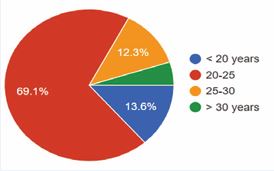
Figure 1 Age distribution among participants indicated that majority of the participants were between 20-25 years on average.
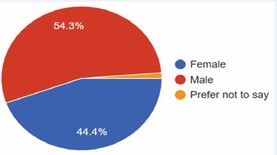
Figure 2 44 male and 36 female participants completed the questionnaire.
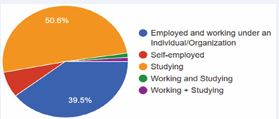
Figure 3 Occupation of Participants were mainly students.
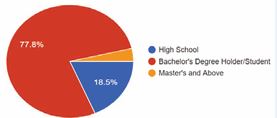
Figure 4 Educational level of participants indicated that majority of the participants were bachelor’s degree holder with only a small proportion from high school.
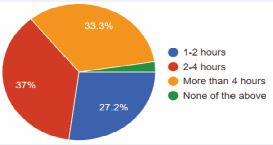
Figure 5 Social media usage in hours indicated that majority of the participants like using social media more than 2 hours on average.
Measures of social media and personal well-being:
The main purpose of using social media among youth was for entertainment purpose followed closely by socialization and meeting new people (71% had responded to one of these options), while only 17% used social media for academic/job seeking purposes. On average most participants indicated they use social media more than 2 hours on average with 1/3rd of the participants using it beyond 4 hours. Participants indicated that social media as a positive impact towards their lifestyle and majority of them being neutral/unsure about how social media has influenced their careers. Facebook, Instagram and Messenger were the main platforms used by nearly 80% of the participants with only 20% using other platforms (Figures 5, 6 and 7).
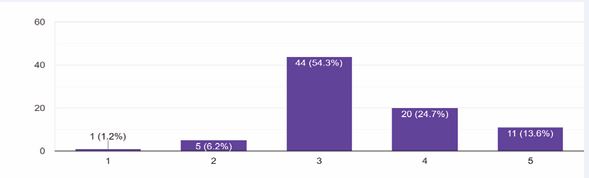
Figure 6 Social media influence towards life habits indicated that the audience have a general middle ground frame.
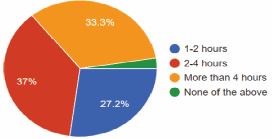
Figure 7 Number of social media applications used daily indicated on average 3 social medias are used on average.
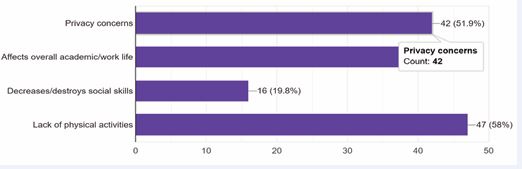
Figure 8 Disadvantages of using social media highlighted that privacy concerns and lack of physical activities can be major problems faced by individuals.
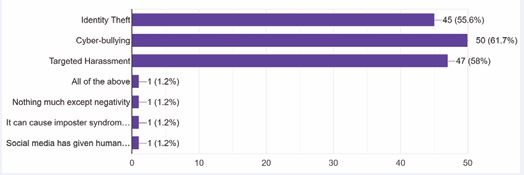
Figure 9 Dangers/Threats of social media indicate that cyber-bullying has been the major problem online.
Negative Impact of social media
Almost every participant indicated they use social media to either post pictures/stories about themselves or interesting facts/statements/memes from others. Lack of physical activities and privacy were the two main areas of concern among youth using social media platforms with cyber-bullying, targeted harassment and identity theft were the main threats/dangers identified ( Figure 8,9).
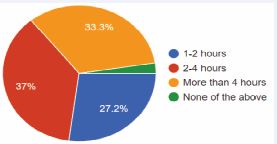
Figure 10 Cutting back on social media.
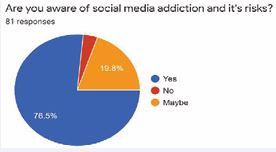
Figure 11 Social media addiction and its risks.
DISCUSSION
In this study, we investigated the influence of social media and its negative impact among youth participants. Approximately 61.7% of the participants reported that cyber-bullying is major threat on social media spaces and closely followed by targeted harassment 58% and identify theft 55.6%. As highlighted by [13] cyberbullying and cyberstalking are common college-age students via comments/posts on social media platforms where random people channel their aggression towards each other. [14] stated in his study that there is a significant correlation between number of posts uploaded/shared with targeted harassment/ bullying on social media platforms as there will be more people seeing the content. Although participants understood the threats of using social media for prolonged periods, they also indicated that social media has a positive influence towards their lives. According to our survey findings 54.3% indicated there is no change in their lifestyle, however 38.3% indicated social media has influenced their lives significantly. This is an underwhelming number as majority of the studies conducted previously have indicated more than 50% of the youth thinks social media has changed their lives significantly [15-16].
It was found that 67.9% of the participants tried to cut back on social media usage to focus better on their day-to-day activities with over 76.5% aware of social media addiction and its risks. However, despite being aware of the problems nearly 30% of the participants use social media more for than 4 hours for their personal use. This can lead to problems such as excessive internet consumption, academic procrastination and social anxiety resulting in lowered standards of performances delivered by youth [17]. Moreover, there is a significantly high possibility of having psychological distress and increases chances of stress and anxiety as more time is being spent online to kill time [18-19]. In terms of professionalism, almost all participants had basic educational qualifications where they had completed high school with nearly 80% either studying at the university or completing their degree. Around 10-15% of the participants indicated that COVID-19 has impacted their academic performance significantly where the online learning modality has affected their style of learning, whilst majority of the working participants indicated that working from home has been a challenge adapting to the new normal. This is common in countries across South Asia, as indicated by [20] the change in working style has resulted in millions of daily wage workers losing their jobs and professions ((Figure 10, 11)
CONCLUSION
In summary, this study found that social media has a positive influence towards youth, however the challenges of mental health remain a concern as the dangers and threats of social media overpowers the positive impact. Cyberbullying, targeted harassment and identity theft were all identified as major concerns among the participants from the Western Province of Sri Lanka. These results highlight the need to establish appropriate mental health interventions/services on social media platforms to help the youth in need. Future research should explore other factors affecting mental health and compare both the positive and negative impacts of social media.
LIMITATIONS
The main limitation of the study is our study is based on individual responses gathered through a webinar which cannot provide strong evidence as a webinar is a one-time event. Secondly this research combines multiple questions from various questionnaires to highlight the negative aspects and threats of social media rather than the positive impact. Thirdly limitations in sample size using snowballing approach, these findings may not represent the perspective of the entire population therefore a large sample size with diverse audience from various provinces are required to understand this topic further.
ACKNOWLEDGEMENTS
I would like to thank all the participants for their participation in this event. I would like to also extend my wishes to the Rotaract Club of Colombo Mid Town and the President for the 2021/2022 board Ahmed Hibshi Mowlana for providing support to carry out this event. A special thanks to the panelists Ms. Rasini Ayanthi Bandara, Ms. Hasna Luthufi, Ms. Gangulali de Silva Dayarathna and Mr. Minul Muhandiramge for making the event interactive and providing their valuable insights in the session. Special mentions to rotaractors’ Ibrahim, Kaizer, Krishanth, Uvindu and Haaziq for providing support throughout the whole implementation of this campaign.
REFERENCES
- Plaisime M , Robertson-James C, Mejia L, Núñez A, Wolf J and Reels S. Social media and teens: a needs assessment exploring the potential role of social media in promoting health. Social Media+ Society. 2020; 6.
- Siddiqui S and Singh T. Social media its impact with positive andnegative aspects. Int. J. Comput. Appl. Research. 2016; 5: 71-75.
- Kitsantas, A, Dabbagh N, Chirinos D S and Fake H. College students’ perceptions of positive and negative effects of social networking. In Social networking and education. 2016; 225-238.
- Signal O. Mobile Network Experience. Open Signal.
- Ookla S. Sri Lanka’s Mobile and Broadband Internet Speeds - Speedtest Global Index. Speedtest Global Index.
- Weerasundera R. The impact of social media in Sri Lanka: issues and challenges in mental health. Sri Lanka Journal of Psychiatry. 2014; 5: 1-2.
- Jinadasa M. Developmental Impact of the Use of Social Media in Sri Lanka. In International Conference on Chinese Studies ICCS. 2016.
- Nagy J T and Bernschütz M. The impact of webinar-webcast system on learning performance. Education and Information Technologies. 2015; 21: 1837-1845.
- Swarnam S. Effect of Social Media Use on Mental Health during Lockdown in India. arXiv preprint. 2021.
- Mehareen J, Rahman M A, Dhira T A and Sarker A R. Prevalenceand socio-demographic correlates of depression, anxiety, and co- morbidity during COVID-19: A cross-sectional study among public and private university students of Bangladesh. Journal of affective disorders. 2021; DOI:10.1016/j.jadr.2021.100179.
- Alsaif A. Investigate the impact of social media on students (Doctoral dissertation, Cardiff Metropolitan University).2016.
- Uma Rani P, Padmalosani. Impact of Social Media on Youth. 2019; 8.
- Whittaker E and Kowalski RM. Cyberbullying via social media. J Sch Violence. 2014; 14: 11-29.
- Santesteban-Echarri O. Rice S, Wadley G, Lederman R, D’Alfonso S, Russon P, et al. A next-generation social media-based relapse prevention intervention for youth depression: qualitative data on user experience outcomes for social networking, safety, and clinical benefit. Internet Interv. 2017; 9: 65-73.
- Rantai A, Hamdan M D and Hamid S S A. Influence of Social Media in Enhancing Positive Relationship among Youth. Journal ISBN. 978-967.
- Singh M M, Amiri M and Sabbarwal S. Social media usage positive andnegative effects on the lifestyle of Indian youth. Iranian Journal of Social Sciences and Humanities Research. 2017; 5.
- Durak H Y.2020. Modeling of variables related to problematic internet usage and problematic social media usage in adolescents. Current Psychology. 2020; 39: 1375-1387.
- Aydogan D and Buyukyilmaz O. The effect of social media usage on students’ stress and anxiety: A Research in Karabuk University Faculty of Business. International Journal of Multidisciplinary Thought. 2017; 6: 253-260.
- Asibong U, Okafor C J, Asibong I, Ayi E, Omoronyia O, Owoidoho U. Psychological distress and social media usage: A survey among undergraduates of a university in Calabar, Nigeria. Niger Postgrad Med J. 2020; 27: 115-121.
- Lee J N, Mahmud M, Morduch J, Ravindran S, Shonchoy A S. Migration, externalities, and the diffusion of COVID-19 in South Asia .J. Public Econ. 2020; 193; 104312.