Silvery White Hair in a Newborn: A Case of Griscelli Syndrome from Paternal Uniparental Disomy
- 1. General Medical Officer for the 3rd Radio Battalion, Marine Corps Base Hawaii, USA
- 2. Department of Dermatology, Naval Hospital Okinawa, Japan
- 3. Department of Family Practice, Naval Hospital Okinawa, Japan
Abstract
Griscelli Syndrome (GS) is a rare autosomal recessive disorder characterized by partial albinism and variable cellular immunodeficiency. Dermatological findings are often limited to the hair with a silvery sheen due to abnormal melanosomal transport. We describe a case of a term female infant with congenital silvery white hair who tested positive for a RAB27A gene mutation on chromosome 15 consistent with Griscelli syndrome type 2. Further investigation including array Comparative Genomic Hybridization (CGH) and Methylation-Specific Multiplex Ligation-Dependent Probe Amplification (MS-MLPA) together indicated the presence of paternal uniparental isodisomy of chromosome 15, which is also associated with Angelman syndrome. The patient received a bone marrow transplant at seven months of age and started exhibiting developmental delays by twelve months. GS should be considered in all infants with a silvery sheen to their hair. Early diagnosis is essential to facilitate life-saving treatment with a bone marrow transplant. Rare cases of suspected uniparental disomy should be explored with further genetic testing due to the risk of concurrent genetic diagnoses including Angelman syndrome. We present the first reported case of a patient with both Griscelli and Angelman syndrome.
Keywords
Griscelli syndrome, Bone marrow transplant, Angelman syndrome, Developmental delay
Citation
Meunier N, Zaleski L, Laird J (2014) Silvery White Hair in a Newborn: A Case of Griscelli Syndrome from Paternal Uniparental Disomy. J Dermatolog Clin Res 2(4): 1028.
ABBREVIATIONS
GS: Griscelli Syndrome; CGH: Comparative Genomic Hybridization; MS-MLPA: Methylation-Specific Multiplex Ligation-dependent Probe Amplification; HLH: Hemophagocytic Lymphohistiocytosis; NK: Natural Killer; VUR: Vesicoureteral Reflux; BMT: Bone Marrow Transplantation; UPD: Uniparental Disomy; AS: Angelman Syndrome
INTRODUCTION
Griscelli Syndrome (GS) is a rare autosomal recessive disorder characterized by partial albinism and variable cellular immunodeficiency [1]. Dermatological findings are often limited to the hair, which has a silvery sheen thought to be due to abnormal melanosomal transport. GS is classified into three types based on genetic and molecular features with different clinical manifestations [2]. GS type 2, the most common, is frequently complicated by Hemophagocytic Lymphohistiocytosis (HLH), a lymphohistiocytic infiltration of organs that can lead to hepatosplenomegaly, lymphadenopathy, pancytopenia, neurological impairment and death [3]. Bone marrow transplantation is the only cure for HLH that occurs in genetic cases [4,5]. We describe a rare case of a female infant with a confirmed diagnosis of Griscelli syndrome type 2 transmitted by paternal uniparental disomy who was also diagnosed with Angelman syndrome.
CASE PRESENTATION
A term female infant was born at 40+1 weeks gestational age by normal spontaneous vaginal delivery to a non-consanguinous Asian mother and Caucasian father. Apgar scores were 8 and 9 at 1 and 5 minutes, respectively. The pregnancy was uncomplicated, prenatal labs were unremarkable, and ultrasound examinations were normal. The patient weighed 9 pounds, 2 ounces and was 21 inches long. On examination, white hair with a silvery sheen was observed (Figure 1).

Figure 1 White hair with silvery sheen.
The infant did not have any dysmorphic features, hepatosplenomegaly or neurological abnormalities. There was no known family history of hypopigmented phenotypic features, early or unexpected childhood deaths, recognized immune deficiencies or cognitive impairment. A four generation family history showed no evidence of consanguinity. The patient’s parents also had a six year old son who was healthy and developmentally normal.
A hair specimen from the infant was sent to pathology for review (Figure 2).
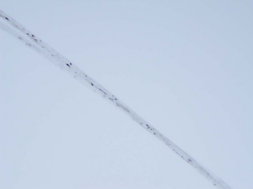
Figure 2 Light microscopy with large, irregular clumps of pigment throughout the hair shaft.
Examination of the patient’s hair under light microscopy revealed large, irregular clumps of pigment distributed through the hair shaft. The patient’s complete blood count was normal. There was no evidence of giant granules in the patient’s leukocytes. T and Natural Killer (NK) cell flow cytometry and functional assays confirmed decreased NK cell function.
Genetic testing revealed that the patient was homozygous in the RAB27A gene for a missense sequence defined as c.37T>G, consistent with Griscelli syndrome type 2. Genetic analysis was also performed on the patient’s parents. Her father was heterozygous for the RAB27A mutation while the mutation was absent in her mother. Deletion and duplication analysis of the RAB27A gene through Comparative Genomic Hybridization (CGH) was negative, indicating that this patient was not hemizygous. The possibility of uniparental disomy was explored through Methylation-Specific Multiplex Ligation-Depedent Probe Amplification (MS-MLPA). The patient was found to carry chromosome 15 homologs that share identical sequence throughout the entire long arm of the chromosome. Specifically, there was abnormal methylation within 15q11.2, consistent with the lack of maternal chromosome 15 contribution. The results of the array CGH and MS-MLPA together indicated the presence of uniparental isodisomy, likely due to monosomy rescue or meiosis II non disjunction and subsequent trisomy rescue.
The patient remained relatively healthy immediately after birth. She had difficulty with feeding and weight gain in the first month of life, but this gradually resolved with parent education and training. She was referred to Neurology where a baseline exam was normal. Magnetic resonance imaging of the brain was recommended only in the event of seizures or developmental delay. At two months of age the patient was evaluated in the Emergency Room for a fever and elevated white count. She was diagnosed with a urinary tract infection and was hospitalized for four days while receiving treatment. She responded well to antibiotic therapy and her fever resolved within two days. Subsequent renal ultrasound demonstrated pelviectasis and a voiding cysto-urethrogram was positive for grade 2 Vesicoureteral Reflux (VUR). Given the patient’s underlying immunodeficiency, prophylaxis for VUR was recommended and the patient started daily trimethoprim/sulfamethoxazole therapy without further complications.
At five and a half months of age the patient was transferred to a hospital with Bone Marrow Transplantation (BMT) capabilities. Her physical exam was unchanged. She continued to meet all developmental milestones. Lab results now revealed a mild neutropenia with a white count of 6.7 x10³ /mcL. The comprehensive metabolic panel and serum ferritin were normal. Soluble IL-2 receptor testing was elevated at 2607 units/mL (normal between 406 and 1100 units/mL). This result had unclear clinical significance as the patient appeared well and had no other objective signs of HLH. Due to her diagnosis of GS type 2, however, the patient had a high likelihood of developing lifethreatening HLH in the future. The patient’s parents and brother were all 50% HLA matches and therefore not candidates to be donors. Unrelated BMT was consequently highly recommended pending the identification of a suitable donor.
When the patient returned for a follow up visit at six and a half months of age, her white count continued to decrease with an absolute neutrophil count of 400 cells/µL. There was no evidence of cytopenia in other cell lines, however, and the patient had no signs or symptoms of active infection. At seven months of age, an acceptable donor was identified and the BMT was performed. Following the BMT the patient had respiratory complications and an acute renal injury that required ventilator support and dialysis, respectively. The patient was stabilized over a two to three week period. At discharge she continued treatment for ganciclovir-resistant cytomegalovirus infection but remained in stable condition as an outpatient.
At 12 months of age the patient started to exhibit developmental delays in communication and gross motor skills. She was unable to perform the following tasks: point out objects, wave bye-bye, imitate simple daily tasks, say mama or dada specifically or three additional words walk holding onto furniture or stand well alone. The patient is currently attending physical and occupational therapy sessions to address these delays.
DISCUSSION
Griscelli Syndrome (GS) is a rare autosomal recessive disorder first described by Griscelli et al in 1978 [6]. Two patients presented with silvery gray hair and a history of recurrent pyogenic infections, however, the giant leukocytic granules characteristic of Chediak-Higashi Syndrome were not seen6 . GS is characterized by partial albinism, variable cellular and humoral immunodeficiency, and silvery gray sheen to hair due to abnormal melanosomal transport [1]. Most patients are diagnosed between 4 months and 7 years of age [7]. There have been less than 100 reported cases of GS to date [8].
Dermatological findings in GS are often limited to the hair, with less frequent changes in skin and retinal pigmentation [5]. Microscopic examination of the hair shaft reveals large, clumped aggregates of melanin pigments found primarily in the medullary area [9]. Skin biopsy shows hyperpigmented oval melanocytes with poorly pigmented keratinocytes. Skin specimens demonstrate epidermal melanocytes filled with stage IV melanosomes under electron microscopy.
There are three types of GS classified based on genetic and molecular features with different clinical manifestations [1,10]. Type 1 presents with severe neurological impairment in the absence of immunodeficiency. It is linked to mutations in MYO5A, a motor molecule on chromosome 15 that is involved in melanosome movement and neurosecretory vesicles [2]. Type 2 presents with immunodeficiency and hemophagocytosis resulting from mutations in RAB27A [11]. RAB27A is also located on chromosome 15 and is thought to play a role in the regulation of membrane trafficking, including melanosome transport. Type 3 is linked to mutations in the gene that encodes melanophilin and manifests with hair and skin changes only [2].
GS type 2 is the most common and is often complicated by life-threatening HLH [3,12]. HLH manifests as episodes of uncontrolled T lymphocyte and macrophage activation with subsequent secretion of high amounts of inflammatory cytokines. Low or absent NK cell and CD8+ cytotoxic T lymphocyte cytotoxicity leads to impaired regulation of the immune response [13]. The initial clinical findings can resemble common infections, malignancy, fever of unknown origin or autoimmune and autoinflammatory disorders [14]. Clinical hallmarks later in the course include prolonged fever, cytopenias, hepatosplenomegaly and neurological symptoms. A panel of 8 criteria proposed by the Histiocyte Society is the current standard for diagnosis (Table 1).
Table 1: Diagnostic criteria of Hemophagocytic Lymphohistiocytosis (HLH). Either A or B have to be fulfilled for a diagnosis of HLH.
| A | B (five out of eight criteria have to be fulfilled) |
| Molecular diagnosis consistent with HLH |
Fever Splenomegaly Cytopenias in two out of three cell lines: Hemoglobin < 9g/100ml (<10g/100ml in infants <4 weeks old), platelets <100,000 x 103 /ml, neutrophils < 1 x 10³ /ml Hypertriglyceridemia (fasting triglycerides >265 mg/100ml) and/or hypofibrinogenemia (fibrinogen <150mg/100ml) Hemophagocytosis in bone marrow, spleen or lymph nodes Ferritin > 500 ng/ml Soluble CD25 (soluble IL-2 receptor) > 2,4000 U/ml Low or absent NK cell cytotoxicity |
Abbreviations: HLH: Hemophagocytic Lymphohistiocytosis; IL: Interleukin; NK: Natural Killer
If left untreated, HLH can become rapidly fatal within weeks [3,4]. Hematopoetic stem cell transplantation is recommended in genetic cases such as GS type 2 because it is the only curative option [3,4,9]. Active HLH and central nervous system involvement at the time of transplant are associated with worse outcomes [9].
Our case presents a rare example of a RAB27A mutation consistent with GS type 2 that was transmitted by paternal Uniparental Disomy (UPD) of chromosome 15. Our patient received a life-saving BMT at seven months of age due to her early diagnosis. Her prognosis entering the BMT was significantly improved due to the absence of active HLH and no neurological impairment. While the patient’s clinical course immediately following the BMT was complicated, she remains stable as an outpatient.
Paternal UPD of chromosome 15 is also associated with Angelman Syndrome (AS). Angelman syndrome is a neurogenetic imprinting disorder clinically characterized by ataxia and tremor, epilepsy, craniofacial abnormalities, unusually happy and sociable behavior with easily provoked laughter, and cognitive impairment with limited speech [15-18]. AS is often not suspected prior to the age of two as the earliest clinical features tend to be non-specific [19]. There are four primary genotypic mechanisms currently known to lead to the AS phenotype: microdeletion or mutation of the maternal UBE3A gene, paternal uniparental disomy, and an imprinting defect [17]. The majority of cases (70%) are the result of a small deletion in the 11-13 region of maternal chromosome 15; five percent result from UPD [18].
The phenotypes of AS patients with different underlying genotypic mechanisms vary significantly [18]. Multiple case reports suggest that patients with AS resulting from paternal UPD have less severe symptoms [20-24]. In one study, 49 patients with different deletions were compared with 9 patients with UPD [25]. Patients with UPD were less likely to have hypotonia and swallowing disorders and more likely to have better physical growth, fewer or no seizures, decreased incidence of microcephaly, less ataxia and higher cognitive skills [25]. The authors consequently suggested that AS patients with UPD have a milder or less typical phenotype and therefore may remain undiagnosed [25]. Another study including two cases argued, however, that the phenotypes of UPD patients can be as severe as those reported in deletion cases [19].
Our patient started exhibiting developmental delays by the age of 12 months. Her clinical manifestations of AS are mild, which correlates with the majority of reported UPD cases to date. Management of patients with AS typically involves various therapeutic modalities for the associated physical and neurological problems, in addition to special education needs. There is no data, however, suggesting long term benefit with these interventions [15].
CONCLUSIONS
Griscelli syndrome is a rare autosomal recessive disorder that is often complicated by HLH. GS should be considered in the differential of all newborns with a silver sheen to their hair. Early diagnosis followed by bone marrow transplantation provides not only a significantly better prognosis but is the only curative treatment option. Rare cases of uniparental disomy should be explored with further genetic testing due to the risk of concurrent genetic diagnoses including Angelman syndrome. Early diagnosis of AS allows for the possibility of early interventional therapy.