Comparative Clinical Outcomes of Three Itraconazole Regimens in Tinea Corporis: A Real-World Observational Study from Bangladesh
- 1. Department of Dermatology & Venereology, Evercare Hospital Dhaka, Bangladesh
Abstract
Background: Tinea corporis is a common dermatophytic infection in Bangladesh. Increasing chronicity, treatment failure, recurrence, and reduced responsiveness to conventional antifungal regimens have created important therapeutic challenges.
Objective: To compare clinical cure and relapse rates associated with three itraconazole regimens used for tinea corporis in routine dermatological practice.
Methods: This prospective, real-world observational study was conducted in private dermatology practices in Dhaka and Mymensingh, Bangladesh. Patients aged 15–50 years with clinically diagnosed tinea corporis were enrolled consecutively when they met the predefined eligibility criteria. Seventy-two patients were initially enrolled; 12 were excluded because of adverse effects, clinically relevant drug interactions, non-adherence, or loss to follow-up. The final per-protocol analysis included 60 patients, with 20 in each non-randomized treatment group. Group A received itraconazole capsules 200 mg twice daily for 2 weeks followed by 100 mg twice daily for 6 weeks; Group B received itraconazole capsules 100 mg twice daily for 8 weeks; and Group C received itraconazole tablets 200 mg once daily for 8 weeks. All groups also received topical luliconazole once daily, a 6% salicylic acid preparation at night, and daily ciclopirox shampoo wash. Clinical cure was assessed at treatment completion, and cured patients were followed for 6 months to assess relapse.
Results: Clinical cure was achieved in 19/20 patients in Group A (95%; 95% confidence interval [CI], 76.4%–99.1%), 16/20 in Group B (80%; 95% CI, 58.4%–91.9%), and 9/20 in Group C (45%; 95% CI, 25.8%–65.8%) (χ²=13.47; p=0.001). Relapse occurred in 2/19 cured patients in Group A (10.5%; 95% CI, 2.9%–31.4%), 5/16 in Group B (31.3%; 95% CI, 14.2%–55.6%), and 7/9 in Group C (77.8%; 95% CI, 45.3%–93.7%) (χ²=12.74; p=0.002). Among the 72 enrolled patients, exclusions included leg oedema in 6, clinically relevant drug interactions in 3, headache in 2, and suspected cardiac toxicity in 1.
Conclusion: The Group A regimen was associated with the most favourable clinical outcome, whereas the once-daily tablet regimen showed comparatively lower effectiveness in this cohort. However, the non-randomized design, small sample, per-protocol analysis, potential confounding, adjunctive therapy, and absence of mycological confirmation preclude definitive conclusions regarding comparative superiority. Larger prospective randomized studies incorporating standardized clinical assessment and mycological evaluation are required
Keywords
• Tinea Corporis
• Dermatophytosis
• Itraconazole
• Clinical Cure
• Relapse
• Bangladesh
Citation
Rahman MH (2026) Comparative Clinical Outcomes of Three Itraconazole Regimens in Tinea Corporis: A Real-World Observational Study from Bangladesh. J Dermatolog Clin Res 14(1): 1172.
INTRODUCTION
Dermatophytosis has become an increasingly important clinical problem in South Asia. Chronic, recurrent, extensive, and treatment-refractory infections are being reported with increasing frequency. Changes in the predominant dermatophyte species, antifungal resistance, inappropriate use of topical corticosteroid containing combinations, poor adherence, reinfection, and inadequate treatment duration may contribute to these clinical challenges [1,2].
Tinea corporis is commonly treated with topical antifungal therapy. However, systemic treatment may be required in patients with extensive, recurrent, chronic, follicular, or treatment-resistant disease. Itraconazole is frequently prescribed because of its broad antifungal activity and favourable distribution into keratinised tissues.
Itraconazole absorption may be affected by formulation, gastric acidity, food intake, gastrointestinal function, concomitant medications, and interpatient pharmacokinetic variability. Consequently, patients receiving apparently similar total doses may experience different systemic exposure and clinical response.
Although several itraconazole regimens are used in routine practice, comparative real-world evidence regarding their effectiveness and durability remains limited. This study compared the clinical cure and relapse rates associated with three itraconazole regimens used in patients with tinea corporis in Bangladesh [3].
MATERIALS AND METHODS
Study Design and Setting
This was a prospective, real-world observational study conducted in private dermatology practices in Dhaka and Mymensingh, Bangladesh.
Patient Selection
Patients aged 15–50 years with clinically diagnosed tinea corporis involving the trunk and/or extremities were evaluated for inclusion. Patients were enrolled consecutively during routine clinical practice when they fulfilled the predefined eligibility criteria. Diagnosis was based predominantly on characteristic clinical morphology; routine potassium hydroxide microscopy, fungal culture, polymerase chain reaction, and antifungal susceptibility testing were not performed.
Study Population and Analysis Set
A total of 72 patients were initially enrolled. Twelve patients were excluded from the final efficacy analysis because of adverse effects, clinically relevant drug interactions, non-adherence, or loss to follow-up. The final per-protocol population consisted of 60 patients, with 20 patients in each treatment group.
A per-protocol analysis was used because complete treatment and follow-up data were required to assess clinical cure and subsequent relapse. Excluding patients who discontinued therapy or were lost to follow-up may, however, introduce attrition bias and overestimate treatment effectiveness. A formal intention-to-treat analysis could not be reliably performed because complete outcome data were unavailable for several excluded patients and treatment allocation was not randomized.
Treatment Allocation
Treatment allocation was non-randomized and was determined as part of routine clinical decision-making. The selected regimen was influenced by clinical judgment, disease severity, previous treatment history, tolerability,formulation availability, patient preference, and practical considerations. Consequently, baseline differences between groups and clinician-related treatment selection may have introduced selection bias and confounding [4,5].
Treatment Regimens
Group A—induction–maintenance capsule regimen:
• Itraconazole capsules 200 mg twice daily for 2 weeks, followed by
• Itraconazole capsules 100 mg twice daily for an additional 6 weeks.
The total treatment duration was 8 weeks.
Group B—conventional capsule regimen: Itraconazole capsules 100 mg twice daily for 8 weeks.
Group C—once-daily tablet regimen: Itraconazole tablets 200 mg once daily for 8 weeks.
Adjunctive Treatment
All patients additionally received:
- Topical luliconazole once daily;
- A 6% salicylic acid preparation at night; and
- Daily ciclopirox shampoo wash.
Outcome Measures
The primary outcome was clinical cure at completion of treatment. Clinical cure was defined as complete disappearance of erythema, scaling, pruritus, and active or advancing lesion borders.
The secondary outcome was clinical relapse during the 6-month follow-up period after treatment completion. Relapse was assessed only among patients who had initially achieved clinical cure.
Safety Assessment
Reported adverse effects, possible itraconazole-related complications, and clinically relevant drug interactions were recorded. Patients requiring treatment discontinuation or exclusion were removed from the per-protocol efficacy analysis.
Statistical Analysis
Categorical variables were summarized as frequencies and percentages. Clinical cure and relapse proportions are presented with two-sided 95% Wilson confidence intervals
to indicate precision. Differences among the three groups were explored using the Pearson chi-square test, with a two-sided p-value below 0.05 considered statistically significant.
Because of the small sample size, non-randomized treatment allocation, and exploratory real-world design, the findings should primarily be interpreted descriptively. Statistical comparisons cannot fully account for potential confounders, including disease severity, duration of infection, previous antifungal exposure, adherence, formulation differences, comorbidities, concomitant medications, environmental exposure, and interindividual pharmacokinetic variability.
Ethical Considerations
The study was conducted in accordance with the ethical principles of the Declaration of Helsinki. Patient confidentiality was maintained throughout the study. Written informed consent was obtained from adult participants for treatment, clinical documentation, follow-up, and use of anonymized clinical data for scientific analysis and publication. For participants younger than 18 years, written permission was obtained from a parent or legal guardian together with age-appropriate assent from the participant.
The study protocol was reviewed and approved by the Institutional Ethics Committee of Nexus Hospital Mymensingh (Approval No. NCHRL/ERC/2026/D-068).
RESULTS
Study Population
|
Parameter |
Value |
|
Initially enrolled |
72 |
|
Excluded |
12 |
|
Included in final analysis |
60 |
|
Patients per treatment group |
20 |
|
Male |
30 |
|
Female |
30 |
|
Age range |
15–50 years |
Clinical Cure
Clinical cure was achieved in 19 of 20 patients in Group A, 16 of 20 patients in Group B, and 9 of 20 patients in Group C.
|
Treatment group |
Clinically cured |
Not cured |
Cure rate |
95% CI |
|
Group A |
19 |
1 |
95.0% |
76.4%–99.1% |
|
Group B |
16 |
4 |
80.0% |
58.4%–91.9% |
|
Group C |
9 |
11 |
45.0% |
25.8%–65.8% |
The difference in cure rates among the three groups was statistically significant (χ²=13.47; degrees of freedom=2;p=0.001). Group A had the highest observed cure rate, whereas Group C had the lowest.
Relapse During Follow-Up
Relapse was calculated among patients who had achieved clinical cure at the end of treatment.
|
Treatment group |
Initially cured |
Relapsed |
Relapse rate |
95% CI |
|
Group A |
19 |
2 |
10.5% |
2.9%–31.4% |
|
Group B |
16 |
5 |
31.3% |
14.2%–55.6% |
|
Group C |
9 |
7 |
77.8% |
45.3%–93.7% |
The difference in relapse rates among the groups was statistically significant (χ²=12.74; degrees of freedom=2; p=0.002). Group A had the lowest observed relapse rate, whereas Group C had both the lowest initial cure rate and the highest relapse rate.
Exclusions and Safety Observations
The 12 excluded patients represented 16.7% of the initially enrolled population.
|
Reason for exclusion |
Number |
Percentage of 72 enrolled |
|
Leg oedema |
6 |
8.3% |
|
Clinically relevant drug interactions |
3 |
4.2% |
|
Headache |
2 |
2.8% |
|
Suspected cardiac toxicity |
1 |
1.4% |
|
Total |
12 |
16.7% |
Clinically relevant drug interactions were classified as safety-related reasons for exclusion rather than as itraconazole-induced adverse reactions.
DISCUSSION
This real-world observational study found differences in clinical cure and relapse rates among three itraconazole regimens used for tinea corporis. The induction–maintenance capsule regimen used in Group A was associated with the highest observed cure rate and the lowest observed relapse rate. The conventional capsule regimen in Group B produced an intermediate outcome, whereas the once-daily tablet regimen in Group C showed the least favourable clinical outcome (Figure 1).
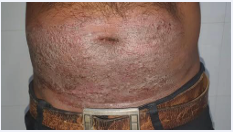
Figure 1: Before treatment—Male
The observed differences should be interpreted cautiously. Treatment assignment was not randomized, and the selected regimen was influenced by clinical and practical considerations. Patients in the groups may therefore have differed in baseline disease severity, duration of disease, previous antifungal exposure, adherence, comorbidities, concomitant medicines, environmental exposure, or other unmeasured characteristics. These factors may have confounded the relationship between regimen and outcome.
Itraconazole has complex and variable pharmacokinetic properties. Absorption of conventional capsules is influenced by gastric acidity and food intake, while formulation characteristics and product quality may also affect exposure. Acid-suppressive medicines and other interacting drugs may reduce systemic exposure. Differences observed between the study groups should therefore not be attributed solely to whether a product was labelled as a capsule or tablet without formal pharmacokinetic and bioequivalence assessment.
followed by continued treatment intended to maintain tissue concentrations. However, the present study cannot establish a causal relationship or prove superiority of this regimen (Figure 2).
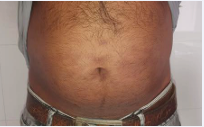
Figure 2: After treatment-Male
All three groups received the same adjunctive topical regimen. Accordingly, the results reflect the effectiveness of the complete treatment strategies rather than the isolated efficacy of oral itraconazole. The relapse analysis used only clinically cured patients as the denominator, thereby distinguishing failure to achieve initial cure from recurrence after apparently successful treatment.
Safety findings also require cautious interpretation. Leg oedema and suspected cardiac toxicity are clinically important because itraconazole has negative inotropic potential and may aggravate or precipitate heart failure in susceptible individuals. Drug interactions are relevant because itraconazole inhibits cytochrome P450 3A4 and may increase the exposure of several concomitant medicines (Figure 3).
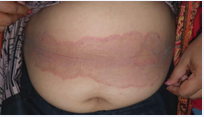
Figure 3: Before treatment-Female
The absence of routine mycological confirmation is an important limitation. Although clinical morphology was considered characteristic of dermatophytosis, reliance on clinical assessment creates the possibility of diagnostic misclassification and does not permit identification of the causative dermatophyte species or evaluation of antifungal resistance. Future studies should incorporate baseline and post-treatment potassium hydroxide microscopy, fungal culture, and molecular identification where feasible.
The 95% confidence intervals were wide, particularly for relapse estimates, reflecting the small denominators and limited precision. The findings should therefore be considered exploratory and hypothesis-generating rather than definitive evidence of comparative efficacy (Figure 4).
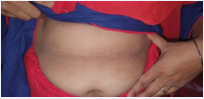
Figure 4: After treatment-Female
LIMITATIONS
- This was a real-world, observational, non-randomized study with a relatively small sample size; treatment selection was influenced by clinical and practical factors, creating a risk of selection bias and confounding.
- The study used a per-protocol analysis. Exclusion of patients who discontinued treatment or were lost to follow-up may have introduced attrition bias and may overestimate treatment effectiveness.
- Tinea corporis was diagnosed predominantly on clinical grounds without routine confirmation by potassium hydroxide microscopy, fungal culture, polymerase chain reaction, or antifungal susceptibility testing; diagnostic misclassification cannot be excluded.
- Potentially relevant confounders—including disease severity, duration, previous antifungal exposure, adherence, comorbidities, concomitant medications, environmental exposure, and individual drug absorption—were not fully controlled.
- Baseline disease severity was not quantified using a validated scoring system.
- Serum itraconazole concentrations were not measured, and manufacturer, formulation, and bioequivalence characteristics were not evaluated.
- Adherence was not measured objectively by pill count or another validated method.
- The contribution of the adjunctive topical regimen could not be separated from that of systemic itraconazole.
- The study was conducted in private practices in two Bangladeshi cities, which may limit generalizability.
- The small group sizes produced wide confidence intervals and limited statistical power
CONCLUSION
In this real-world observational study, differences in clinical cure and relapse rates were observed among three itraconazole regimens used for tinea corporis. The regimen used in Group A was associated with the most favourable clinical outcome, whereas the once-daily tablet regimen showed comparatively lower effectiveness in this cohort.
However, because of the non-randomized observational design, small sample size, per-protocol analysis, potential selection bias and confounding, adjunctive topical treatment, and absence of mycological confirmation, these findings should not be interpreted as definitive evidence that one regimen is superior to another.
Larger prospective randomized controlled studies incorporating standardized products, validated severity assessment, baseline and post-treatment mycological confirmation, antifungal susceptibility testing, pharmacokinetic evaluation, therapeutic drug monitoring, intention-to-treat analysis, and longer follow-up are warranted to validate these observations.
DECLARATIONS
Ethics approval and consent to participate
The study protocol was reviewed and approved by the Institutional Ethics Committee of Nexus Hospital Mymensingh (Approval No. NCHRL/ERC/2026/D-068). The study was conducted in accordance with the Declaration of Helsinki. Written informed consent was obtained from adult participants. For participants younger than 18 years, written permission was obtained from a parent or legal guardian together with age-appropriate assent.
Consent for publication
Written informed consent included permission to use anonymized clinical information for scientific analysis and publication. Patient confidentiality was maintained.
Data availability
De-identified data supporting the findings may be made available by the corresponding author upon reasonable request, subject to ethical and confidentiality requirements.
REFERENCES
- Verma S, Madhu R. The Great Indian Epidemic of Superficial Dermatophytosis: An Appraisal. Indian J Dermatol. 2017; 62: 227-236.
- Nenoff P, Verma SB, Vasani R, Burmester A, Hipler UC, Wittig F, et al. The current Indian epidemic of superficial dermatophytosis due to Trichophyton mentagrophytes-A molecular study. Mycoses. 2019; 62: 336-356.
- Rajagopalan M, Inamadar A, Mittal A, Miskeen AK, Srinivas CR, Sardana K, et al. Expert Consensus on The Management of Dermatophytosis in India (ECTODERM India). BMC Dermatol. 2018; 18: 6.
- Saunte DML, Hare RK, Jørgensen KM, Jørgensen R, Deleuran M, Zachariae CO, et al. Emerging Terbinafine Resistance in Trichophyton: Clinical Characteristics, Squalene Epoxidase Gene Mutations, and a Reliable EUCAST Method for Detection. Antimicrob Agents Chemother. 2019; 63: e01126-e01219.
- Uhrlaß S, Verma SB, Gräser Y, Rezaei-Matehkolaei A, Hatami M, Schaller M, et al. Trichophyton indotineae-An Emerging Pathogen Causing Recalcitrant Dermatophytoses in India and Worldwide-A Multidimensional Perspective. J Fungi (Basel). 2022; 8: 757.