Formaldehyde in Health Care Facilities
- 1. National Center for Working Conditions (CNCT), National Institute for Occupational Safety and Hygiene at Work (INSHT), Spain
Citation
Guardino X (2017) Formaldehyde in Health Care Facilities. J Drug Des Res 4(5): 1053.
GENERAL COMMENTS
Formaldehyde is a colorless, corrosive, flammable gas with a pungent, suffocating odor. It is produced in large quantities industrially and it is predominantly used commercially as a solution in water and methanol. It is a common constituent used in the manufacture of many complex materials and it is used in the production of resins, polymers for permanent adhesives such as those used in fiberboard, particle board, plywood and carpeting. It is also used in foam insulation and as paper and textile finishing treatments.
It can be found formaldehyde in the atmosphere, coming from the combustion of organic materials, in smoke from wood fires, automobile emissions and tobacco smoke [1,2]. Formaldehyde is very toxic to humans [3,4]. The most common routes of exposure toformaldehyde gas are either inhalation or skin contact. Inhalation of formaldehyde gas will cause nose, mouth and throat irritation and in severe cases may cause respiratory distress and swelling of the larynx and lungs; also it may cause theonset of asthma in sensitive individuals. Exposure of the skin toformalin(see later) causes irritation with burns,and repeated or prolonged skin contact withsolutions of formaldehyde can give rise toskin sensitization (allergic contact dermatitis)in some individuals, with symptoms such asredness, itching, rash and swelling.And the last but not the least important, formaldehyde has been classified by theInternational Agency for Research on Cancer(IARC) as carcinogenic to humans category 1, because it can produce nasal tumors following prolonged inhalation exposureby inhalation to levels producing chronic irritant effects [5]. IARC say: There is sufficient evidence in humans for the carcinogenicity of formaldehyde. Formaldehyde causes cancer of the nasopharynx track and leukemia.Also, a positive association has been observed between exposure to formaldehyde and sinonasal cancer. There is sufficient evidence in experimental animals for the carcinogenicity of formaldehyde
FORMALDEHYDE IN THE HEALTH CARE FACILITIES
Formaldehyde remains one of the most widely used substances in health facilities [6]. Its aqueous solution, normally 37 to 50% formaldehyde and 10-15% methanol, is known as formalin. However, because it is a gas and passes quickly into the environment, there is a wide tendency to eliminate its use, replacing it with other substances. But, it is possible to reduce exposure to the minimum by developing new systems to carry out the correct exposure control, aimed mainly to achieve a reduction of their environmental levels.
Formaldehyde solutions are widely used in Anatomy and Pathology units [7], but also in other areas, as Autopsy Room and the Morgue,and in many cleaning operations. There is an important emission of formaldehyde in a series of typical operations of pathological anatomy, such as biopsies, manipulation of anatomical samples (especially large pieces or cadavers), washes, perfusions, transfers, dosages and other manipulations, Respiratory zone has also been observed, which is a significant emission of the gas from poorly sealed containers. In summary, the possible causes of contamination by formaldehyde in the working environment are the following.
• The manipulation or study of preserved anatomical pieces.
• Conservation tasks.
• Improper sealing of containers or packaging.
• The absence of an adequate air exhaust and renewal systems.
• Improper handling as a general way.
EXPOSURE PREVENTION TO FORMALDEHYDE. GENERAL RULES AND RECOMMENDATIONS
In order to prevent exposure to formaldehyde, it is necessary both, to minimize its presence in the work place, to protect the worker against splashes and direct contact with the skin and to establish a training and information plan of the work place staff [8]. The main instructions to be considered will be:
• Formaldehyde (formalin) should not be widely used as an element of disinfection, restricting its use to situations in which it is considered essential for reasons of sepsis.
• Unnecessary sources of contamination, such as open containers, should be avoided and spills promptly eliminated.
• Adequate working procedures must be provided.This should form and inform about how to avoidevaporation, aerosolformation and how to keepcontainers closed.
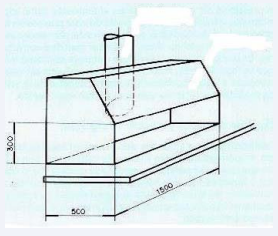
Figure 1: Local exhaust using a safety cabinet.
• The use of enclosures and forced suction (see Figure 1) reduces the presence of formaldehyde very effectively. This type of cabin is preferable to the desktop cabin with filter (Figure 2).

Figure 2: Desktop cabin with filter
• The use of suction tables like (Figures 3) also provides good results, although they should be used in areas with little air movement and following working procedures, to ensure the minimum generation of formaldehyde from the manipulated samples.

Figure 3: Suction table.
• There are also portable extraction units that draw the air through filters impregnated with potassium permanganate that chemically bind formaldehyde. These units are especially useful to eliminate formaldehyde in the stores of small pieces fixed with formalin.
• Adequate general air renewal is essential to minimize residual gas concentrations.
CONTROL OF SPECIFIC OPERATIONS
Biopsies
Biopsies of anatomical parts preserved in formaldehyde should be performed under localized extraction to eliminate the presence of formaldehyde from the operator’s breathing zone and to avoid contamination of the area [9]. The suitable system is generally the installation of local exhaust equipment, preferably a display cabinet designed according to the required work surface, a table with perimetric or lower extraction or, preferably, a dissecting table, with double extraction, as shown in (Figure 4).

Figure 4: Dissecting table with double extraction.
Open containers and all contaminated or impregnated material should be placed inside the enclosure in the work place in order not only to avoid exposure to personnel but also the contamination of adjacent areas.
Washing and perfusion
These techniques also require work place equipped with extraction systems. The criteria can be the same as those described in the previous point, with the only difference that they are located in a work area that includes an installation or a system for sample collection and disposal [10].
On the other hand, it should be considered that in works of washing and perfusion, splashes and projections are frequent. Therefore, the personnel responsible for these tasks should wear face shields, gloves and, if necessary, an apron or breastplate.
Containers and packaging
Containers or packaging containing anatomical parts must be able to ensure their tightness, discarding those that by their structure can easily be turned over. Heavy containers must incorporate handles that facilitate their movement, has to be transported in trolleys to avoid incidents resulting that spills of large volumes of formalin [11].
A special case is the fixed tanks in which bodies or large pieces are kept, which are usually found in units dedicated to teaching. Technical measures for pollution control shall include collection points arranged perimetrically to the tanks (see Figure 5).

Figure 5: Perimeter extraction scheme.
The collection speed provided by the extraction equipment should reach 0.3 meters per second in the center of the container surface.
There is also a risk of splashing - these tasks are carried out even with the help of lifts – and therefor the individual protection equipment proposed in the previous section must be used.
Transfers
The reception of formalin in packages of high capacity implies their transfer, a task that causes the contribution of the contaminant to the working atmosphere. For this reason, the transfers must always be carried out under local extraction. A suitable system consists in to putslits suction immediately next to the emission source [12].
Manipulation of formalin
Other tasks, such as dosages, preparation of new solutions, pipetting, etc., require a series of precautions and, in some cases, new systems of local exhaust. Of course, free pipetting and other improper operations should be banned, such as abandoning unopened or unlabeled containers, stored in height, etc. Specific reference should be made to the cleaning of glassware or containers contaminated with formalin [13]. The work area must be treated by local gases exhaust, and the personnel carrying out the cleaning work, often from external cleaning companies, must be informed of the agent’s danger and not conduct them as any routine cleaning. They must be equipped with the corresponding PPE and located as close as possible to the working place, to focus their work into the specific containers area.
Treatment and disposal of spills
Spills and splashes in small quantities can be absorbed by paper, evaporated in a hood or safety cabinet and then burnthe paper. If they are produced in large quantities, the affected area will be covered with sodium bisulfite, mixed with a small amount of water. The mixture may be placed in a suitable packageand after aninterval of one hour, can bepoured into the drain with plenty of flowing water. The contaminated area can then be treated with soapy water [9].
At this point, the waste must be managed within the hospital’s waste management plan.
Application of formalin in working areas
The treatment of working areas or surfaces with formalin requires adequategeneral ventilation. The ventilation flow depends on whether there are (and they are used) localized extractions and on the working way (good practices) [14].
In rooms designed to accommodate storage containers where large pieces of work may be carried out, a system must be provided to provide additional extractions and air supplies, which will significantly increase ventilation, since considerable emission of formaldehyde will occasionally occur and must be evacuated quickly to avoid residual contamination nearby areas. Always keep in mind the criterion of not recycling the air extracted from a laboratory and, of course, always keep it in depression. This is applicable also to those small areas or even cabinets destined to the packaging of stock containing small samples.
Personal protective equipment (PPE)
The use of PPE involves the establishment of a program for its proper management, from the decision of its use, to training and information to users, never forgetting the character of “last protection” of it. PPE generally recommended to work with formaldehyde are those that protect against skin contact and splashes, such as gloves, aprons, goggles and face mask [15]. If vapors are to be completely avoided, use respiratory protective equipment.