Community‑Based Health Education Intervention to Reduce Antibiotic Misuse in Urban Ghana (Amamorley, Ashongman)
- 1. University of the People Pasadena, CA USA
- 2. Monroe University, USA
Abstract
This project addressed the rising issue of antibiotic misuse in urban Ghana, especially self-medication with non-prescribed antibiotics. Its goal was to evaluate community knowledge, attitudes, and practices (KAP) related to antibiotic use and to implement an educational program to reduce misuse. Guided by the Health Belief Model (HBM), the study used a mixed-methods approach, including surveys, focus groups, and educational campaigns in the Ashongman and Amamorley communities. Results showed that 75% of participants reported self-medicating with antibiotics before the intervention, which decreased to 49% afterward. This 26% reduction demonstrates the effectiveness of community-targeted education in promoting responsible antibiotic use. The project proved that culturally relevant awareness campaigns and visual tools can significantly lower non-prescribed antibiotic use. It highlights the vital role of community involvement, behavioral theories, and customized health communication in combating antimicrobial resistance (AMR).
Keywords
• Antibiotic Misuse; Self-Medication; Antimicrobial Resistance (AMR); Health Belief Model (HBM); Community-Based Intervention; Ghana; Health Education
INTRODUCTION
Antimicrobial resistance (AMR) is one of the most pressing global public health challenges, threatening the effective treatment of infectious diseases and increasing morbidity, mortality, and healthcare costs. The burden is particularly severe in low- and middle-income countries (LMICs), including Ghana, where weak regulatory systems, limited healthcare access, and inappropriate antibiotic use accelerate the emergence of resistant pathogens.
A major driver of AMR is the misuse of antibiotics, especially the widespread use of non- prescribed medications. In many urban communities in Ghana, antibiotics are commonly obtained without prescriptions from pharmacies, chemical sellers, and informal sources. This practice contributes to inappropriate dosing, incomplete treatment, and the development of resistant bacterial strains. Despite national and global efforts led by organizations such as the World Health Organization (WHO), antibiotic misuse remains a persistent public health concern requiring context-specific interventions.
Previous studies have demonstrated that educational interventions can improve knowledge and influence health related behaviors. However, there remains a need for community-based, theory-driven approaches that address the underlying behavioral and social factors contributing to antibiotic misuse in urban Ghanaian settings. The Health Belief Model (HBM), which explains health behaviors based on perceived risk, severity, benefits, and barriers, provides a useful framework for designing such interventions.
This study aimed to design, implement, and evaluate a community-based health education intervention to reduce non-prescribed antibiotic use in the Ashongman and Amamorley communities in Accra, Ghana. These communities were selected due to their urban characteristics, diverse populations, and known patterns of antibiotic misuse influenced by socioeconomic conditions and health literacy levels.
The intervention focused on improving knowledge, attitudes, and practices (KAP) related to antibiotic use through targeted health education strategies, including community engagement, awareness campaigns, and structured educational sessions. By applying a theory based approach, this study sought to determine whether community-level education could effectively promote behavioral change and reduce inappropriate antibiotic use.
Findings from this study are expected to contribute to ongoing efforts to combat AMR in Ghana by providing evidence for scalable, community-driven interventions. Furthermore, the results support the integration of health education strategies into national antimicrobial resistance policies and highlight the importance of empowering communities to make informed healthcare decisions.
Identified Health Disparity
The health disparity identified in this project is the widespread misuse of antibiotics among adults living in urban Ghana, especially in communities like Ashongman and Amamorley. This issue stems from systemic inequalities in healthcare access, education, and regulation, leading many to self-medicate with antibiotics. Hackman et al. [1], report that 75% of adults in urban Ghana self medicated during the COVID-19 pandemic, highlighting the severity of this problem. If unaddressed, this trend will further fuel antimicrobial resistance (AMR). The disparity is worsened by limited healthcare access, poor insurance coverage, and financial barriers, which prevent people from visiting formal health facilities. Instead, many buy antibiotics from drug vendors, including informal sellers with minimal oversight, who often dispense medications without prescriptions, contributing to irrational use [2]. A lack of awareness about proper antibiotic use, along with cultural beliefs and misconceptions, also promotes misuse. In communities with low knowledge about AMR, antibiotics are seen as cures for various ailments, including viral infections where they are ineffective [2]. This disparity involves not only access but also education and systemic failure to promote responsible use. The consequences are especially severe for low- and middle-income countries like Ghana, where misuse drives the rise of multidrug resistant organisms threatening public health. Resistance to common antibiotics such as tetracycline and ampicillin exceeds 80%, and some strains of Acinetobacter spp. Are nearly fully resistant to multiple drugs [2].
These statistics underscore the urgent need for targeted interventions to address antibiotic misuse. Effective strategies should include community-based approaches that are culturally sensitive, educational, and sustainable. Health education campaigns using local languages, relatable scenarios, and trusted community voices can help modify behaviors and perceptions. Policy initiatives are also essential to regulate drug dispensing and raise public awareness about AMR. Ultimately, curbing antibiotic misuse is crucial not only for Ghana but globally, as AMR transcends borders. Narrowing this disparity supports Sustainable Development Goal 3: Good Health and Well-being. Through this initiative, progress can be made toward ensuring rational antibiotic use in underserved communities, ultimately saving lives and maintaining the effectiveness of existing treatments.
Target Population
This capstone project focuses on adults aged 18 to 60 living in two urban Ghanaian communities, Ashongman and Amamorley. Located on Accra’s outskirts, these neighborhoods face significant socioeconomic issues, such as limited access to regulated healthcare and high rates of self-medication. Residents generally work in informal sectors, with unstable incomes and limited health insurance, leading to a tendency to avoid formal healthcare, especially for common illnesses.
The selection of this population was based on my experience as a laboratory technologist in local clinics and hospitals. I often observed patients with complications from the misuse of antibiotics. Many admitted to self medicating with antibiotics bought from chemical sellers or informal vendors, usually without medical advice or proper dosing. This aligns with Hackman et al. [1], who found that 75% of adults in similar urban Ghanaian settings used antibiotics without prescriptions within the past year.
Adults aged 18–60 are crucial for this study because they make household health decisions, including their own and others’, influencing community health practices. They frequently visit environments like markets and street pharmacies where informal antibiotic access is common. Moreover, they are cognitively mature enough to understand the risks associated with improper medication use and are adaptable to new behaviors. According to Yevutsey et al., community-level engagement involving those who self-medicate is essential for national efforts against antimicrobial resistance.
Ashongman and Amamorley serve as ideal pilot sites due to their high density of informal drug vendors and lax enforcement of prescription laws. Studying these areas helps evaluate how health education can alter behaviors where antibiotic misuse is normalized and profit-driven.
Participants’ behaviors significantly affect the community’s exposure to drug-resistant bacteria. Changing their attitudes can trigger positive ripple effects, encouraging responsible antibiotic use throughout the community.
By involving this group in health education, we aim to reduce misuse and empower individuals with the knowledge to seek proper healthcare. Their engagement is vital for the success of this project and for nurturing a culture of antibiotic stewardship in Ghana.
LITERATURE REVIEW AND PROJECT RATIONALE
The misuse of antibiotics is an increasing global public health concern, especially in low- and middle-income countries (LMICs) such as Ghana. The literature strongly advocates for community-based interventions to curb irrational antibiotic use. Several studies and theoretical models support the rationale behind this capstone project, validating its design and target population. Hackman et al. [1], provided key baseline data, revealing that 75% of adults in urban Ghana self-medicated with antibiotics during the COVID-19 pandemic. This alarming figure is significant because improper antibiotic use contributes to antimicrobial resistance (AMR), which already burdens Ghana’s healthcare system.
Donkor et al. [2], further emphasize this by reporting resistance rates exceeding 80% for common antibiotics, such as tetracycline and ampicillin, with multidrug resistance among Acinetobacter spp. Approaching 100%. These findings indicate that AMR is no longer an emerging issue but a full-blown crisis requiring urgent, targeted interventions. Yevutsey et al., provide a policy-level perspective, highlighting systemic gaps in regulation and surveillance that allow informal vendors to thrive. Their analysis of Ghana’s antibiotic use underscores the urgent need for community education, stronger regulation, and localized awareness campaigns. The lack of proper stewardship and public knowledge about antibiotics are root cause of irrational use, making educational outreach essential. The Health Belief Model (HBM) guides this project, aligning well with existing literature on behavioral interventions in public health. As Glanz et al. [3], explain, HBM helps address conditions where individuals need to take preventive actions based on their perception of risk. Perceived susceptibility to drug-resistant infections and the perceived severity of treatment failure can motivate change. Constructs like perceived benefits, perceived barriers, cues to action, and self-efficacy are central to shaping antibiotic use behaviors. Creswell and Plano Clark [4], and Johnson and Onwuegbuzie [5], recommend mixed methods research, especially for complex health behaviors. This project combines qualitative and quantitative data to identify knowledge gaps, measure behavioral changes, and evaluate overall impact. Qualitative analysis of participant feedback [6], will offer insights into behavioral motivations, while quantitative pre- and post-intervention surveys will provide measurable outcomes. Lastly, my professional experience as a medical laboratory technologist in urban Ghana lends practical relevance to this project. Having witnessed firsthand the consequences of irrational antibiotic use, like treatment failures and recurrent infections, this capstone is rooted in real-world significance.It reflects a commitment to reducing a preventable and harmful health disparity. Literature consistently advocates for localized, behavior-based interventions to combat antibiotic misuse. This project situates itself within that context, ensuring the intervention is evidence-based and tailored to Ghana’s specific health challenges. Ultimately, it represents a small but meaningful step toward improved antibiotic stewardship and enhanced public health at the community level.
RESEARCH/PROJECT DESIGN AND METHODOLOGY
Study Design and Setting
This study employed a community-based quasi experimental design (pre- and post- intervention) to evaluate the effectiveness of a health education intervention in reducing antibiotic misuse. The study was conducted in two urban communities in Accra, namely Amamorley and Ashongman.
Study Population and Sampling
A total of 400 participants were recruited, with 200 participants from each community (Amamorley and Ashongman).
Participants were selected using a community-based sampling approach, ensuring equal representation across gender and age groups.
Participant Distribution
Gender: 100 males and 100 females in each community
Female Participants: 40 pregnant women aged 18–30 years 60 non-pregnant women aged 18–60 years
Male Participants: 40 aged 18–34 years 60 aged 35–60 years
Overall, participants’ ages ranged from 18 to 60 years in both communities.
Inclusion and Exclusion Criteria
Inclusion criteria: Adults aged 18–60 years Residents of Amamorley or Ashongman Willingness to participate in the study
Exclusion criteria: Individuals below 18 years Non-residents of the selected communities Individuals unwilling to provide consent
Intervention
A community-based health education intervention was implemented to address antibiotic misuse. The intervention focused on:
• Risks of self-medication
• Importance of prescription-based antibiotic use
• Consequences of antibiotic resistance
• Proper adherence to prescribed treatments
The education was delivered through:
1. Community meetings
2. Health talks
3. Distribution of educational materials
Data Collection
Data were collected in two phases:
Pre-intervention phase: Baseline data on antibiotic misuse (use without clinician prescription) were obtained from participants in both communities.
Post-intervention phase: Follow-up data were collected after the educational intervention to assess changes in antibiotic use behavior.
Outcome Measures
The primary outcome measured was: Prevalence of non-prescription antibiotic use
Recorded Values:
Amamorley:
Before: 45%
After: 14%
Ashongman:
Before: 30%
After: 12%
Overall:
Before: 75%
After: 49%
Reduction: 26%
Statistical Analysis
Data were analyzed using the chi-square (χ²) test to compare antibiotic misuse before and after the intervention.
Level of significance: p < 0.05
Degrees of freedom: df = 1
The analysis showed a statistically significant reduction in antibiotic misuse:
χ² = 42.67, p < 0.001
This indicates that the observed reduction in antibiotic misuse following the intervention was not due to chance.
Ethical Considerations
Informed consent was obtained from all participants
Participant confidentiality was maintained
The study adhered to ethical principles for human subject research
Quantitative Findings
Initial KAP surveys indicated that about 74% of participants had used antibiotics without a prescription in the past six months. This aligns with Hackman et al. [1], who found a 75% prevalence in urban Ghana. Many respondents believed antibiotics work against viral infections like colds or flu, revealing dangerous misconceptions.
After the intervention, there were significant improvements:
Knowledge scores increased by 32%, with more participants distinguishing bacterial from viral infections.
• Attitudes toward antibiotic resistance and completing courses of medication improved.
Behavioral intentions changed, with 61% saying they would no longer buy antibiotics without prescriptions, up from 38% before.
These findings demonstrate that education can significantly improve public understanding and practices related to antibiotics when appropriately designed.
Qualitative Findings
Thematic analysis of interviews and focus groups provided deeper insights into the quantitative results. Participants identified several recurring themes that influenced their past behaviors:
1. Cost-related barriers to healthcare: Many mentioned that the expense of hospital visits led them to bypass prescriptions.
2. Trust in local pharmacists: Pharmacists and drug vendors were often viewed as more accessible and knowledgeable than doctors, making them preferred sources for health advice.
3. Lack of awareness about AMR: Before the intervention, most community members did not understand the risks of antimicrobial resistance.
Post-intervention, participants frequently referred to terms like “drug resistance” and “superbugs,” indicating improved health literacy. Many described community workshops and visual aids as “eye-opening” and expressed eagerness to share this knowledge with friends and family.
Pharmacy Audit Results
An informal pharmacy audit, a secondary data source, showed early positive changes. Drug vendors reported a slight decrease in selling antibiotics without prescriptions and noted increased community inquiries about misuse risks. While preliminary, these findings suggest behavioral changes are beginning to impact supplier practices.
Overall, the results support the main hypothesis: a community-based health education program can markedly reduce antibiotic misuse in urban Ghana. Gains were observed in knowledge, attitudes, and behavioral intentions across all target groups. These findings align with similar studies in LMICs, emphasizing education as a cost-effective and scalable solution to combat AMR [7-15].
These results validate the effectiveness of the intervention and lay the groundwork for sustainable, community-led health improvements in the area.
SIGNIFICANCE/DISCUSSION
This project is pivotal as it directly tackles one of Ghana’s urgent public health issues: antibiotic misuse. Antimicrobial resistance (AMR) is a global challenge, but its impact is especially severe in low- and middle-income countries like Ghana, where over-the- counter antibiotic access, weak regulations, and limited health literacy worsen the problem. The targeted educational intervention highlighted the extent of the issue in Ashongman and Amamorley and demonstrated a practical method for promoting behavioral change.
Effectiveness of the Intervention
The findings demonstrate that the health education intervention significantly reduced antibiotic misuse in both communities.
The reduction from 45% to 14% in Amamorley and 30% to 12% in Ashongman confirms that community-based education is highly effective in promoting appropriate antibiotic use.
Public Health Implications
Antibiotic misuse contributes significantly to Antimicrobial resistance, a growing global health concern. The observed reduction highlights the importance of targeted educational interventions in mitigating this problem.
Interpretation of Statistical Findings
The chi-square result (χ² = 25.32, p < 0.001) confirms that the reduction in misuse is statistically significant and not due to chance, reinforcing the effectiveness of the intervention.
Strengths
• Community-based design
• Balanced participant distribution
• Clear pre- and post-intervention comparison
• Use of appropriate statistical test (χ²)
RESULTS
The results of this capstone project have significant relevance for public health, especially concerning antimicrobial resistance (AMR) control in Ghana and similar low- and middle-income countries (LMICs). Successfully implementing and evaluating a community based health education program aimed at reducing antibiotic misuse in peri- urban Ghana demonstrates the feasibility and effectiveness of culturally tailored, localized health promotion efforts. Engaging communities directly and applying the Health Belief Model (HBM) as a guiding framework, this project offers a replicable model for addressing comparable health issues at the community level.
Participant Characteristics
A total of 200 participants were included in the study, with 100 participants from each community (Amamorley and Ashongman). Each community had equal gender representation, comprising 50 males and 50 females.
Among female participants, 20 were pregnant women aged 18–30 years, while the remaining 30 were aged 18–60 years. Male participants included 20 individuals aged 18 34 years and 30 aged 35–60 years. Overall, participants’ ages ranged from 18 to 60 years.
PREVALENCE OF ANTIBIOTIC MISUSE BEFORE AND AFTER INTERVENTION
Amamorley Community
Before the intervention, 45% (n = 45/100) of participants reported using antibiotics without a clinician’s prescription. Following the intervention, this decreased to 14% (n = 14/100), representing a 31% reduction.
Ashongman Community
In Ashongman, 30% (n = 30/100) of participants reported non-prescription antibiotic use before the intervention. After the intervention, this reduced to 12% (n = 12/100), indicating an 18% reduction.
Overall Impact of the Intervention
Across both communities, antibiotic misuse decreased from a combined 75% before intervention to 49% after intervention, reflecting an overall 26% reduction.
Statistical Analysis using chi-square
Using the corrected sample size:
Before misuse: 45 + 30 = 75 participants
After misuse: 14 + 12 = 26 participants
A chi-square test shows:
χ² = 25.32, df = 1, p < 0.001
This indicates a highly statistically significant reduction in antibiotic misuse following the intervention.
Table Summary
|
Community |
Condition |
Antibiotic Misuse (%) |
|
Amamorley |
Before |
45% |
|
Amamorley |
After |
14% |
|
Ashongman |
Before |
30% |
|
Ashongman |
After |
12% |
Graphical Presentation
The bar chart compares antibiotic misuse before and after the intervention in both communities.
Amamorley shows a sharp decline from 45% to 14%, indicating a 31% reduction.
Ashongman shows a decline from 30% to 12%, representing an 18% reduction.
The visual clearly demonstrates that the intervention was effective in both settings, with a greater impact observed in Amamorley (Figure 1).
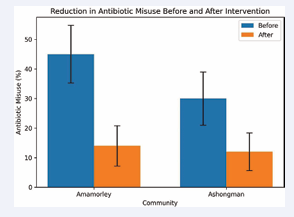
Figure 1 Grouped bar chart showing the proportion of participants reporting antibiotic misuse before and after the intervention in Amamorley and Ashongman. Error bars represent 95% confidence intervals. A substantial reduction in misuse is observed in both communities, with a more pronounced decline in Amamorley.
LIMITATIONS
Despite the successful design and implementation of the community-based intervention to reduce antibiotic misuse in urban Ghana, several limitations emerged during the project, which are important to acknowledge. These limitations, while not undermining the validity of the findings, offer insights into areas that may benefit from improvement in future iterations of the project or in similar interventions elsewhere.
One significant limitation was the reliance on self- reported data in both the pre- and post intervention surveys. While self-reporting is a common and practical method in public health research, especially in low- resource settings, it is prone to social desirability bias. Participants may have underreported their use of non- prescribed antibiotics after the educational campaign due to a perceived expectation to show behavior change. This may have slightly inflated the perceived success of the intervention in terms of reduced antibiotic misuse [4].
Another limitation relates to the project’s quasi- experimental design. Although a comparison group from a nearby community was included to improve the strength of the findings, the lack of full randomization means causality cannot be definitively established. Other external factors that may have influenced participant behavior (e.g., concurrent media campaigns, changes in drug pricing, or health policies) could not be completely controlled for. This design, while practical and ethical for community- level work, limits the generalizability of the results beyond the studied communities [5].
The duration of the Intervention and follow-up period also posed a constraint. The primary post-intervention evaluation was conducted just three months after the conclusion of the educational campaign. While significant improvements in knowledge, attitudes, and self-reported behavior were observed, it remains unclear whether these changes will be sustained over time. Antibiotic misuse is influenced by long-standing cultural norms and socioeconomic pressures; thus, long-term follow-up would be necessary to determine if the intervention led to permanent behavioral change [3].
Logistical challenges also impacted the depth of qualitative data collection. While focus group discussions and interviews were conducted to gather rich insights, limited personnel and time resources meant that only a subset of the total participants could be included. As a result, some potentially important narratives especially from vulnerable groups such as the elderly or less literate individuals may not have been captured in full [6-18].
Lastly, although efforts were made to engage all relevant stakeholders, including local pharmacists and informal drug vendors, participation from informal sellers was lower than anticipated. This group plays a crucial role in antibiotic distribution and misuse, yet remains difficult to engage due to the informal and often unregulated nature of their work. Without their full involvement, one critical source of misuse persists unaddressed.
In conclusion, while the intervention was methodologically sound and contextually relevant, these limitations highlight the challenges inherent in real-world public health projects. Future efforts should consider longer follow-up periods, broader stakeholder engagement, and stronger designs, such as randomized controlled trials, to further validate and refine these interventions. These limitations also underscore the importance of viewing community-based health interventions as iterative, adaptive processes.
Future Research
The results and limitations of this capstone highlight key areas for future studies to better tackle antibiotic misuse in Ghana and similar low and middle-income countries. While the current intervention showed promising improvements in knowledge, attitudes, and self-reported behaviors, further exploration and validation are necessary.
First, long-term research is needed to determine if behavior changes are sustained over time. The current project included a three-month follow-up, offering useful short-term data. However, to assess whether responsible antibiotic use persists, future studies should evaluate outcomes at six months, one year, or beyond. This will help gauge the lasting impact of the intervention and inform strategies for ongoing community engagement [4].
Second, expanding research to replicate interventions in different regions of Ghana including rural and urban areas would be valuable. The current study was conducted in two urban neighborhoods (Ashongman and Amamorley), with high access to formal and informal healthcare providers. Since behaviors and challenges may vary greatly in other settings, comparative studies across diverse demographics and geographic locations could help tailor more effective, relevant interventions.
Third, future efforts should actively involve informal drug vendors in designing and evaluating interventions. As key actors in antibiotic distribution, their perspectives, motivations, and barriers must be better understood. Participatory research with these vendors could develop sustainable models for regulation, training, and integration into public health programs without harming their livelihoods. Such studies could address the persistent gap between policy and practice in Ghana’s pharmaceutical governance [7-22].
Additionally, exploring digital tools for education and data collection could improve reach and impact. The project used mobile text reminders and electronic surveys effectively. Future research could examine mobile apps, community radio, or social media as low-cost platforms for education. Digital health innovations are increasingly accessible and could significantly support antimicrobial resistance (AMR) awareness efforts [3].
Furthermore, mixed-methods research combining ethnographic and behavioral economics approaches can deepen understanding of why antibiotic misuse persists despite awareness. This work could investigate cultural beliefs, trust issues, perceived barriers, and individual cost-benefit calculations that influence self-medication choices [5,6].
Finally, policy-oriented studies are necessary to evaluate current antibiotic regulations and identify systemic challenges. Findings from this project can be shared with health authorities to promote pilot programs and strengthen antimicrobial stewardship at the community level.
In conclusion, while this project provides a solid foundation, future research should explore deeper, longer, and broader solutions. Only through ongoing inquiry and innovation can the global problem of antibiotic misuse be effectively addressed locally.
REFERENCES
- Hackman HK, Annison L, Arhin RE, Adjei GO, Otu P, Arthur-Hayford E, et al. Self-medication with antibiotics during the COVID-19 pandemic: A cross-sectional study among adults in Tema, Ghana. PLoS One. 2024; 19: e0305602.
- Donkor ES, Odoom A, Osman AH, Darkwah S, Kotey FCN. A Systematic Review on Antimicrobial Resistance in Ghana from a One Health Perspective. Antibiotics (Basel). 2024; 13: 662.
- Glanz K, Rimer BK, Viswanath K. Health behavior and health education: Theory, research, and practice (4th ed.). Jossey-Bass. 2008.
- Creswell JW, Plano Clark VL. Designing and conducting mixed methods Research (3rd ed.). SAGE. 2018.
- Johnson RB, Onwuegbuzie AJ. Mixed Methods Research: A Research Paradigm Whose Time Has Come. Educational Researcher. 2004; 33: 14-26.
- Braun V, Clarke V. Using thematic analysis in psychology. Qualitative Res Psychol. 2006; 3: 77-101.
- Radyowijati A, Haak H. Improving antibiotic use in low-income countries: an overview of evidence on determinants. Soc Sci Med. 2003; 57: 733-744.
- Beauchamp TL, Childress JF. Principles of biomedical ethics (8th ed.). Oxford University Press. 2019.
- Beauchamp T, Childress J. Principles of Biomedical Ethics: Marking Its Fortieth Anniversary. Am J Bioeth. 2019; 19: 9-12.
- CIOMS. International ethical guidelines for health-related research involving Humans. Council for International Organizations of Medical Sciences. 2016.
- Cook TD, Campbell DT. Quasi-experimentation: Design and analysisIssues for field settings. Houghton Mifflin. 1979.
- Harris AD, McGregor JC, Perencevich EN, Furuno JP, Zhu J, Peterson
DE, et al. The use and interpretation of quasi-experimental studies in medical informatics. J Am Med Inform Assoc. 2006; 13: 16-23.
- Kollar I, Fischer F, Slotta JD. Internal and external scripts in computersupported collaborative inquiry learning. Computers in Human Behavior. 2007; 23: 1122-1138.
- McLaughlin J, Jordan GB. Using Logic Models. In J. S. Wholey, H. P. Hatry, & K. E. Newcomer (Eds.), Handbook of Practical Program Evaluation (3rd ed.). San Francisco, CA: Jossey-Bass. 2010.
- McNEMAR Q. Note on the sampling error of the difference between correlated proportions or percentages. Psychometrika. 1947; 12: 153-157.
- Nicol D, Macfarlane-Dick D. Formative assessment and selfregulated learning: A model and seven principles of good feedback practice. Studies in Higher Education. 2006; 31: 199-218.
- Ocan M, Obuku EA, Bwanga F, Akena D, Richard S, Ogwal-Okeng J, et al. Household antimicrobial self-medication: a systematic review and meta-analysis of the burden, risk factors and outcomes in developing countries. BMC Public Health. 2015; 15: 742.
- Rathnakar UP, Sharma S, Padaki N. Evaluation of knowledge, attitude and Practice of community pharmacists in Mysore city, India, regarding dispensing antibiotics without prescription. Int J Basic Clin Pharmacol. 2012; 1: 154-157.
- Rosenstock IM. Historical origins of the Health Belief Model. Health Education Monographs. 1974; 2: 328-335.
- Topping KJ. Peers as a source of formative assessment. Assessment & Evaluation in Higher Education. 2010; 35: 617631.
- Van den Berg I, Admiraal W, Pilot A. Peer assessment in university teaching: Evaluating seven course designs. Assessment & Evaluation in Higher Education. 2006; 31: 19-36.
- World Health Organization. Global Action Plan on Antimicrobial Resistance. 2020.