Community Health Centers Access to Care
- 1. Grand Canyon University, College of Doctoral Studies, Phoenix, Arizona, USA
- 2. Texas Woman's University , Denton, Texas, USA
- 3. Southern University, Baton Rouge, Mandela College of Government and Social Sciences, Louisiana, USA
- 4. Southern University, Baton Rouge, Louisiana, USA
Abstract
This research investigated access to care in community health centers (CHC) in Louisiana using the study by Rhodes et al. (2008) as a guide. CHCs serve medically underserved patients in a state with some of the most dismal health statistics in the nation. Each CHC was called in the daytime to determine: if answering machines were used, the wait time for an appointment, if walk-ins were allowed, if a sliding fee scale was used, if Medicaid and Medicare were accepted, and if access to care included extended clinic hours. Each clinic was called after hours to identify how after-hours coverage was managed.
The most positive result was that these CHCs were assuring after-hours coverage. Also encouraging was the finding that the majority of these centers could see a patient within three days or less. Less reassuring were the findings that approximately a third of these CHCs used answering machines during business hours. Further, if the phone was answered, there was a chance that staff would provide incorrect information or would not know the answer to basic questions. While our findings point to problems within the office staff in many of these clinics, we suggest that office staff are just a piece of a larger puzzle of the challenges facing these centers.
Our research admittedly skimmed the surface of investigating access to care in these CHCs using a simple method of calling each center. Future research should conduct an in-depth investigation of these CHCs to determine why the problems, cited in our study, exist.
Keywords
Access to care , Patient-centered care , Community Health Centers
Citation
Parsons S, Rogers-Fields C, Taylor-Grover L, Carmouche-Lee C (2017) Community Health Centers Access to Care. J Prev Med Healthc 1(4): 1016
INTRODUCTION
Logically, one would assume that medical organizations serving those with the greatest need would take even more care to assure access to those services. That assumption was tested and rejected in the 2008 study by Rhodes, Vieth, Kushner, Levy and Asplin [1] that examined the ease of making an appointment in mental health clinics versus medical clinics. Answering machines were reached in only 8% of the medical clinics compared to a staggering 45% of the mental health clinics.
As the Rhodes, et al. study demonstrated, access to care does not begin in the physician’s examination room, but starts long before with the ease of making an appointment. Our study extends the research of Rhodes et al. and explores additional aspects of access to care in community health centers in Louisiana. As a prelude to the major objective of this study, we provide background information on the health care system in Louisiana and explore the concept of access to care.
Health Care and the Health Care “System” in Louisiana
Community health centers (CHC’s) in Louisiana were selected because of their importance in providing access to care for the state’s medically underserved population. These centers specialize in primary care, oral health and mental health services for individuals who live in rural and underserved communities.
Few states rank worse in health care outcomes than Louisiana. The Commonwealth Fund study (2013) ranked Louisiana 49th in health system performance for low income populations [2]. Louisiana was ranked in the bottom five states for senior health care [3] and uninsured adults [4], had the highest diabetes and cancer death rate in the nation, ranked third per capita in emergency room use [5] and was 49th for low birth rate babies and 48th for infant mortality [6]. Louisiana is ranked among the worst states for the rate of Sexually Transmitted Diseases (STDs) and HIV: first in cases of gonorrhea; second in chlamydia; and third in syphilis and HIV [7]. The state also has one of the highest poverty rates and lowest median income levels [8].
The following brief history of the Louisiana health care system is necessary to grasp the state’s emphasis on acute care and sickness and not on prevention and primary care and to understand the pivotal role that CHC’s can play in assuring access to care. Louisiana, ensconced in the Deep South, has an eclectic mix of political history, culture and health care systems and it is the only state to have a state-wide system of acute care public hospitals. Public acute care hospitals have a long history in Louisiana starting with Charity Hospital in New Orleans founded
in 1735. Until its closing after Hurricane Katrina, Charity was the second oldest continuously operating public hospital in the nation [9]. The creation of a charity (public acute care) system in Louisiana was rooted in the 1930s wave of populism in the state and in the New Deal’s Public Works Administration. Over time, the state’s public acute care hospital system was shifted from one department to the next and finally to Louisiana State University [10]
These public hospitals, rather than be the providers of last resort, were the providers of only resort for the poor and uninsured. This method of delivering health care in the state has been described as a costlier [11], ineffective and inefficient [12] two-tiered system. In this system, the poor and uninsured are served by the public acute care hospital system while those with private insurance have access to community hospitals and physicians [13].
Louisiana, under the leadership of former Governor Bobby Jindal, was one of 19 states that chose not to expand Medicaid under the Affordable Care Act, with 289,000 Louisiana residents remaining uninsured and without Medicaid [14]. The Jindal administration’s response to the rejection of the Medicaid expansion was that the uninsured should seek care in the charity hospitals [15]. This speaks volumes about the entrenched notion that charity hospitals are somehow an appropriate source of health care. As the Jindal administration offered charity hospitals as a viable option for the uninsured seeking healthcare, the governor’s emphasis was on the privatization and closures of these hospitals, and not on any strengthening of public health efforts.
Exacerbating the problem is the fact that health care is expensive in the state and the lack of access only shifts the cost to more expensive medical services. While community health centers have had some success in reducing emergency room visits, an estimated 71% of these visits are still unnecessary and could have been treated in a primary care setting [20]. Over $350 million is wasted annually on avoidable emergency department visits in Louisiana alone [21] with the state ranking third per capita in the nation in emergency room use [5].
Access to care
If access is only measured by numbers served, then the number of patients using health care centers in Louisiana is over 250,000 [22]. Sheer numbers, however, is only an output gauge of access. How those services are delivered is also an important measure of access.
Access to healthcare is a complex concept and open to interpretation from one publication to the next. Two of the most workable definitions are courtesy of the Rand Corporation and the Centers for Disease Control and Prevention (CDC) (2015) [23] -- access refers to the ease with which an individual can obtain needed medical services and the Institute of Medicine (cited in Healthy People 2020) [24] -- the timely use of personal health services to achieve the best health outcomes. While there may be differing definitions of the term, there is a consensus on the importance of healthcare access to life expectancy, quality of life, prevention, detection, treatment and the realization of the human and societal potential [25-27].
Scheppersa, Dongenb, Dekkerc, Geertzend and Dekkere [28] conducted a review of the literature on barriers to health care access and categorized those barriers as patient level, provider level and system level. Within those categories are: insurance and affordability [29]; the ease of making appointments and taking time off from work [30]; transportation and geography – the time it takes to get to the clinic and age [31]; social stigma and privacy issues, particularly in rural areas; patient-provider relationship and communication [32]; legal obstacles [33]; racial biases [34,35]; language [36], childcare, trust in the provider and health care system, knowledge/health literacy, culture, and hours of operation [37]; and wait time before an appointment [38].
The World Health Organization conceptualized barriers to access as having three dimensions: financial affordability (including opportunity costs for instance, taking time off work); acceptability (perception of the services, language, age, gender, ethnicity and religion); and physical accessibility (location of services, hours of operation, appointment systems and other aspects of the delivery of services) [39]. Similarly, The National Institute of Health categorized access barriers as financial, personal and structural [40].
Structural barriers to health care services are those noneconomic (not related to the health insurance or affordability) that make it difficult for people to access services [41]. Examples of structural factors are proximity of the health care service to the target population, the match between the hours of service and the patient needs, and the client-centeredness of the administrative procedures (for example, scheduling assistance). In the world of marketing most of those structural aspects pertain to the placement or distribution of services which can be categorized as physical access (how and when the services will be offered), time access (hours of operation, how long it takes for an appointment, wait time) and informational/promotional access (aligned with communication with consumers, providers) [42].
Among other program requirements, Health Resources & Services Administration (HRSA) mandates that health centers provide accessible hours of operation and after-hours coverage. These requirements are a small part of the concept of patient centered care. As patient-centeredness gained momentum in the literature, it morphed from being viewed as the physician placing him or herself in the patient’s place to a broad construct defined as the “design of patient care within institutional resources and personnel (that) are organized around the patients….” [43]. In their review of the literature on patient-centeredness, Saba, Beach and Cooper [43] note that patient-centered care was one of the six aims for health system improvement in the Institute of Medicine’s 2001 report Crossing the Quality Chasm. Patient-centered care encompasses the doctor-patient-family relationship, communication, travel distance, convenience of office hours, ability to get an appointment when needed, and wait time.
The take-away from the literature on access, regardless of how the concept is interpreted, is that numbers served is a rudimentary and insufficient measure of access. The “ease” of obtaining needed medical services requires that care revolve around the patient [44] and that care is provided (in terms of the often-quoted phrase) "at the right place, at the right time and in a manner, that best suits a patient’s needs.” Therefore, the primary objective of our study is to examine the “patient-centeredness” of CHC’s in Louisiana in terms of the ease of obtaining medical services, convenience of clinic hours, insurance and affordability, and after-hours coverage.
METHODOLOGY
Our research investigated how community health centers in Louisiana fare on indicators of access to care. The data were collected from the 69 Louisiana health centers in 2013. These community health centers were in 39 of the 64 parishes and were from every region throughout the state.
Unlike the 2013 Kaiser Family Foundation report [45] which investigated the quality of care in CHCs, our study examined accessibility as measured by ease of appointment-making, extended clinic hours, and after-hours coverage. The data collection method for our research is modeled on the 2009 study by Rhodes, Vieth, Kushner, Levy & Brent [1]. In that study by Rhodes et al., individuals posing as patients called mental health and medical clinics to schedule an appointment.The data collection for our study was relatively straightforward. Each of the 69 Federally Qualified Health Centers (FQHCs), identified via the Louisiana Primary Care Association website, was called during business hours and each was called after hours. The questions during business hours are listed in Figure 1. It was also noted if the phone was answered by a person or a recorded message. The answers were recorded as yes, no or unknown. The second series of calls were made to the clinics after business hours (Figure 2).
ANALYSIS
The majority (68%, 47) did have someone answering the phone at the community health centers during business hours. Therefore, the following results (Table 1) are only for clinics, during business hours, in which staff answered the phone.
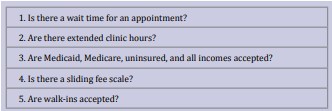
Figure 1: Business Hour Survey Questions

Figure 2: After-Business Hours Survey Questions
Table 1: All Clinics Results, Business Hours
| N=47 | Yes | No | Staff did not know |
| Walk In Appointments Accepted? | 38 (81%) | 7 (15%) | 2 (4%) |
| Extended Hours Offered? | 11 (23%) | 28 (60%) | 8 (17%) |
| Uninsured Patients Accepted? | 44 (94%) | 0 (0%) | 3 (6%) |
| Medicare/Medicaid Accepted? | 42 (89%) | 0 (0%) | 5 (11%) |
| Sliding Fee Scale for Patients? | 41 (87%) | 2 (4%) | 4 (9%) |
| All income levels accepted at clinic? | 37 (79%) | 8 (17%) | 2 (4%) |
| Wait Time to doctor < 3 days? | 32 (68%) | 12 (26%) | 3 (6%) |
Table 2: After Business Hours Results
| N=69 | Yes | No |
| After hours number to call | 42 (61%) | 27 (39%) |
| Used answering service | 29 (42%) | 40 (58%) |
| Persons answering calls and taking messages | 28 (41%) | 41 (59%) |
| On-call doctor or nurse referred to in answering service greeting/directions? | 24 (35%) | 45 (65%) |
| Call back within 24 hours? | 41 (59%) | 28 (41%) |
| Instructions to call 911 for emergency symptoms or services or to go to hospital? | 41 (59%) | 28 (41%) |
Thirty-eight of the 47 accepted walk-in appointments and seven stated no. Two staff did not know the answer to the question. The majority (28) of the health centers in our sample did not offer extended hours. Extended hours are those that are beyond the normal business hours (evening, early morning or weekends). Of those who answered the phone, eight staff did not know if the clinic provided extended hours.
Three staff responded that they did not know if the center accepted the uninsured. The remainder stated that they did accept the uninsured. The same was true for accepting Medicaid and Medicare - all who knew the answer (42) responded yes. Five staff answering the phone did not know. When asked about using a sliding scale, two staff stated no and four did not know. Thirty-seven of the staff of the clinics stated that all income levels are accepted and eight stated no. Two of the staff answering the phone did not know the answer to the question.
Sixty-eight percent (32) of those answering the health center phone agreed that the wait time to see the doctor would be three days or less. In 12 clinics, the wait time would be greater than three days to see the medical practitioner. Staff in three clinics did not know.
Turning now to after business hours services, all clinics either had a recorded message or were linked to an answering service. Some offered the option of leaving a recorded message and/or being connected to an answering service, therefore the following counts are duplicated.
More than half of the clinics (61%, 42 of 69) had an afterhours number to call. Twenty-nine clinics used an answering service to take messages after hours. Nearly 60% did not have a person answering calls and taking messages after hours.
The majority (65%, 45) did not have an on-call doctor or nurse. This was determined by either the recorded message referring to an on-call nurse or doctor or the answering service stating that. Fifty-nine percent (41) of the clinics’ answering machines or answering services stated that someone would call back within 24 hours. Forty-one of the 69 centers did instruct callers to call 911 or go to the nearest hospital in case of an emergency
DISCUSSION AND CONCLUSION
This research examined several aspects of the delivery of services in community health centers located in Louisiana. The method used was simple but laborious. The brief analysis relied on simple, manageable and understandable counts and percentages.
There are certain limitations of this study. First, the centers were not called multiple times in a day to determine if a staff person would answer rather than an answering machine. Second, this study examined only a few indicators of the delivery of access to care and did not attempt to evaluate the quality of care. Third, this study did not examine whether all calls were returned within a certain time frame or if the answering service contacted the medical providers. That information was beyond the scope of this study. Last, our study did not consider extenuating circumstances these centers face, for example budget restrictions.
The results indicate that these health centers are assuring that there is some form of after-hours coverage. Also encouraging, the majority of the health centers could see a patient within three days or less. Considering the long wait times for appointments reported for primary care clinics in previous research, this finding is remarkable. A majority allowed walk-ins while seven staff stated no. Five of the health centers had a three day or more wait and did not allow walk-ins. Seven centers had a three day or more wait and did not offer extended clinic hours. Staff at three clinics stated that the wait would be three days or more, that walk-ins were not allowed and that the clinic did not have extended hours.
We did not anticipate that 32% of the health centers would use answering machines during business hours. This percentage is much higher than those medical centers using answering machines in the study by Rhodes, Veith, Kushner and Levy [1]. An answering machine is no substitute for someone answering the phone and can be a barrier to access, particularly considering populations with low health literacy, a problem prevalent among community health center patients. Navigating the health care system is difficult enough without adding additional obstacles in making appointments.
Talking to a person to make an appointment was only the first hurdle. Obtaining correct information was the second. FQHCs are required to offer services regardless of a person’s ability to pay and to provide a sliding fee scale discount. There were no “no” responses when asked about the acceptance of Medicare, Medicaid and the uninsured. However, staff at eight clinics stated that all income levels were not accepted and two staff indicated that a sliding fee scale was not used.
The majority of the clinics did not offer extended clinic hours. Although an argument could be made that extended clinic hours might matter less to an economically disadvantaged or uninsured population, the opposite is actually true. One fourth of the population of adults in Louisiana are working and uninsured [46], and fewer workers are predicted to obtain their health care insurance from an employer in the future, if current trends hold [47].
Many of uninsured adults work in smaller companies that either do not offer health insurance or if they do, the cost to employees is prohibitive. These smaller companies are also more likely to not offer any paid sick days [48], so that income is lost if a day of work is missed. These working uninsured adults need the flexibility of extended clinic hours. Excess wait time and the lack of availability of extended clinic hours may not only be a disincentive to seeking medical care but result in billions in opportunity costs particularly for minorities and the unemployed.
Extended clinic hours are not only a structural part of patientcentered care but make good economic sense as well. A study published in the Annals of Family Medicine found that extended office hours through the week and weekends were related to lower health care costs [49]. The cost savings were in terms of expenditures for office visits, prescription medications, hospitalizations and, equally important for CHCs – lower costs associated with emergency room use.
Undoubtedly, the most surprising finding of this study is the number of staff who did not know the answer to very basic questions. Three staff did not know if the wait time to schedule an appointment was three days or less. Eight staff did not know if the clinic had extended hours and two staff did not know if walkins were accepted. Three staff did not know if the clinic would accept the uninsured and five staff did not know if Medicare and Medicaid was accepted. Four staff did not know if a sliding fee scale was used and two staff did not know if all income levels were accepted.
Office staff create the first impression of health care services. They make or break medical offices, and research has shown office organization and staff professionalism are prompts that contribute to patient appointment adherence [50] and to patient retention [51]. The perception of the office staff is one of two factors most strongly tied to patient satisfaction [52] and the major reason for patients’ complaints [53].
In conclusion, we realize that limited resources affect the ability of these clinics to broaden access through extended hours, shorter wait times, and allow walk-ins. Even with the greater financial resources through the Affordable Care Act, significant challenges remain in providing patient-centered services. These clinics may be restricted by the need to stretch resources as the mandates increase, the growth in patients served and the higher rates of patients with chronic health conditions, staffing or other organizational issues.
Relatedly, the problem could also be a lack of board understanding of what should be done or could be done to become more patient-centered. These health centers are dependent upon boards of directors to chart the course and the literature is rife with examples of performance issues at the nonprofit board level [54,55]. These problems are just as common among boards of health centers although few studies have examined this type of consumer based board. The literature that has tends to be dated with studies focused more on the participation of and the dynamics between consumer and non-consumer board members [56-59] rather than performance
We recommend that future research examine possible explanations for our findings. Our study identified fragments of disconnect in many of these CHCs between actual access and the philosophy of patient centered care. The most glaring evidence of the disconnect is in the overuse of answering machines and staff providing wrong information or not knowing basic information. Our research concludes unfortunately with more questions than answers since we only skimmed the surface of the data. Future studies will need to drill deeper and determine why the problem exists.
DISCLOSURE
The authors declare no conflicts of interest.
REFERENCES
1. Rhodes K, Vieth, Kushner H, et al. Referral Without Access: For Psychiatric Services, Wait for the Beep. Ann Emerg Med. 2009; 54(2): 272-278.
2. Schoen C, Radley D, Riley P, et al. Health Care in the Two Americas: Findings from the Scorecard on State Health System Performance for Low-Income Populations. New York, NY: The Commonwealth Fund. 2013.
3. Americas Health Rankings: Senior Report. Minnetonka, MN: United Health Foundation. 2013.
4. Witters D. Highest Uninsured States Less Likely to Embrace Health Law. Washington, D.C: Gallup. 2014.
5. Louisiana Department of Health and Hospitals. Quick Facts about Louisiana’s Health. Baton Rouge, LA: Louisiana Department of Health.
6. Louisiana KIDS COUNT 2011-2012: Data book on Louisiana’s children. New Orleans, LA: Agenda for Children. 2012.
7. Cohen R. National health center week and the Planned Parenthood funding controversy. Boston, MA: Nonprofit Quarterly. 2015.
8. Adelson J. Louisiana ranks poorly on latest income, health insurance statistics. New Orleans, LA: The Times-Picayune. 2012.
9. Croghan T, Lim, et al. The Public Hospital System in Louisiana. Santa Monica, CA: RAND Health working paper series. 2005.
10. Council for a Better Louisiana. Baton Rouge, LA. 2010.
11. Report on Louisiana Healthcare Delivery and Financing System. Baton Rouge, LA: Baton Rouge Area Foundation and the Louisiana Recovery Authority Support Foundation. 2006.
12. Realigning Charity Health Care and Medical Education in Louisiana. Baton Rouge, LA: Public Affairs Research Council of Louisiana, Pub. 312. 2007.
13. Rudowitz R, Rowland D, Shartzer A. Health care in New Orleans before and after Hurricane Katrina. Health Affairs. 2006; 25(5): 393-406.
14. A 50-State Look at Medicaid Expansion. Washington, DC: Families USA, 2015.
15. Maggi L. Health clinics urge Louisiana lawmakers to expand Medicaid program. New Orleans, LA: The Times-Picayune. 2013.
16. Dreher R. How Bobby Jindal Wrecked Louisiana. Langhorne, PA: The American Conservative. 2015.
17. National Health Security Preparedness Index 2016: Louisiana. Lexington, KY: Centers for Disease Control and Prevention and the Robert Wood Johnson Foundation. 2016.
18. Hamburg R, Segal L, Martin A. Investing in America's Health: Issue Report A State by State Look at Public Health Funding and Key Health Facts. Trust for America's Health. 2016.
19. Mays G, Smith S. Evidence links increases in public health spending to declines in preventable deaths. Health Affairs. 2011; 30 (8): 1585- 93.
20. Rodak S. Study: 71% of ED visits unnecessary, avoidable. Chicago, IL: Beckers Hospital Review. 2013.
21. Choudhry L, Douglass M, Lewis J, et al. The Impact of Community Health Centers and Community-Affiliated Health Plans on Emergency Department Use. Washington, DC: National Association of Community Health Centers. 2007.
22. Griggs T. Louisiana health centers awarded $3.5 million in Obamacare funds. Baton Rouge,LA: The Advocate. 2015.
23. CHSI 2015 Organization and Key Terms. Access to Care. Atlanta, GA: Centers for Disease Control and Prevention (CDC). 2015.
24. Access to health services. Washington, DC: Healthy People 2020. 2016.
25. CDC Health Disparities and Inequalities Report - United States, 2013. MMWR Publication. U.S. Department of Health and Human Services. Atlanta, GA: Centers for Disease Control and Prevention (CDC). 2013.
26. MacKinney A, Clinton. Access to Rural Health Care - A Literature Review and New Synthesis. Iowa City, IA: RUPRI Health Panel. 2014.
27. Russell L. Reducing Disparities in Life Expectancy: What Factors Matter? Paper presented for the workshop on Reducing Disparities in Life Expectancy. Roundtable on the Promotion of Health Equity and Elimination of Health Disparities of the Institute of Medicine. 2011.
28. Scheppersa E, Dongenb E, Dekkerc J, et al. Potential Barriers to the Use of Health Services among Ethnic Minorities: A Review. Fam Pract. 2006; 23 (3): 325-348.
29. DeVoe J, Baez A, Angier H, et al. Insurance Plus Access Does Not Equal Health Care: Typology of Barriers to Health Care Access for Low Income Families. Ann Fam Med. 2007; 5 (6): 511-518.
30. Kahn K. Americans Face Barriers to Health Care beyond Cost. Washington, DC: Center for Advancing Health. Health Behavior News Service. 2011.
31. Kullgren JT, McLaughlin CG, Mitra N, Et al. Nonfinancial Barriers and Access to Care for US Adults. Chicago, IL: Health Research and Educational Fund. Robert Wood Johnson Foundation. 2011.
32. Allen H, Wright B, Harding K, et al. The Role of Stigma in Access to Health Care for the Poor. Milbank Q. 2014; 92 (2): 289–318.
33. Hasstedt K. Toward Equity and Access: Removing Legal Barriers to Health Insurance Coverage for Immigrants. Guttmacher Institute: Guttmacher Policy Review. 2013; 16 (1): 2-8.
34. Burnes-Bolton L, Giger N, Georges A. Eliminating Health Disparities among Racial and Ethnic Minorities in the United States. Annual Review of Nursing Research, 22, Springer Publishing Company. 2004.
35. Nelson A. Unequal Treatment: Confronting Racial and Ethnic Disparities in Health Care. Journal of the National Medical Association. 2002; 94 (8): 666-8.
36. Healthcare Quality and Disparities Report. US Department of Health and Human Services: Agency for Healthcare Research and Quality. 2011.
37. Access to Care. Johns Hopkins Center to Eliminate Cardiovascular Disease Disparities.
38. Brandenburg L, Gabow P, Steele G, Toussaint J, Tyson B. Innovation and Best Practices in Health Care Scheduling. Institute of Medicine of the National Academes. 2015.
39. Evans DB, Hsu J, Boerma T. Universal Health Coverage and Universal Access. Washington, DC: Bulletin of the World Health Organization. 2013; 91 (8): 546-546A.
40. Millman M. Access to Health Care in America. Washington, DC: Institute of Medicine. The National Academies Press. 1993.
41. 2012 Annual Report to Congress. Atlanta, GA: Community Preventive Services Task Force. 2013.
42. Rustino RJ. Public Relations Marketing: Applying Public Relations Techniques to the Marketing Mix. Health Care Management Review. 1989; 14 (2): 79-85.
43. Saha S, Beach MC, Cooper LA. Patient centeredness, cultural competence and healthcare quality. Philadelphia, PA: Journal of the National Medical Association. 2008; 100 (11): 1275-85.
44. Rickert J. Patient-Centered Care: What It Means and How to Get There, Bethesda, MD: Health Affairs Blog. 2012.
45. Quality of Care in Community Health Centers and Factors Associated with Performance. Kaieiser Family Foundation Report. 2013; 1: 1-16.
46. Spires S. New Census Data Shows Significant Increase in Poverty in Communities Across Louisiana, Children Especially at Risk. Louisiana Budget Project. September 20, 2012.
47. Mendes E. Fewer Americans have Employer Based Health Insurance. Gallup. February 14, 2012.
48. Fact Sheet: White House Unveils New Steps to Strengthen Working Families Across America. The White House, Office of the Press Secretary. January 14, 2015.
49. Jerant A, Bertakis K, Fenton J, Franks P. Extended Office Hours and Health Care Expenditures: A National Study. Annals of Family Medicine. 2012; 10 (5): 388-395.
50. Wall W, Tucker C, Roncoroni J, Blake A, Nquyen P. Patients' Perceived Cultural Sensitivity of Health Care Office Staff and Its Association with Patients' Health Care Satisfaction and Treatment Adherence. J Health Care Poor Underserved. 2013; 24 (4): 1586-1598.
51. Customer Experience in Healthcare: The Moment of Truth. Price Waterhouse, Health Research Institute. 2012.
52. Van de Ven AH. What matters most to patients? Participative provider care and staff courtesy. Patient Experience Journal. 2014; 1 (1): 131- 139.
53. Gooch Kelly. Patients’ No. 1 Complaint? Front Desk Staff. Becker’s Hospital Review.
54. Gavin T. Four Steps to Saving a Nonprofit from Its Own Board of Directors. Forbes. May 1, 2012.
55. Ryan W, Chait R, Taylor B. Problem Boards or Board Problem? Nonprofit Quarterly. May 8, 2017.
56. Latting J. Selecting Consumers for Neighborhood Health Boards. J Comm Health. 1983; 9 (2): 110-122.
57. Lohmeier K. An Exploration of the Quality of Citizen Participation: Consumer Majority Boards of Community Health Centers in Iowa. 2013. PhD dissertation.
58. Paap WR. Consumer-based Boards of Health Centers: Structural Problems in Achieving Effective Control. Am J Public Health. 1978; 68 (6): 578-582.
59. Wright B. Who Governs Federally Qualified Health Centers. J Health Polit Policy Law. 2013; 38 (1): 27-55.