Effect of Active and Passive Smoking upon Lung Capacities among Adolescents in High Schools: Comparative Study
- 1. Community Health Nursing Department, College of Nursing, University of Al-Ameed, Ministry of Higher Education and Scientific Research, Iraq
- 2. Adult Nursing, College of Nursing, University of Al-Ameed, Iraq
- 3. Pediatric Nursing, College of Nursing, University of Al-Ameed, Iraq
Abstract
Background: The act of someone who is not the intended “active” smoker inhaling tobacco smoke, also known as secondhand smoke (SHS) or environmental tobacco smoke (ETS), is known as passive smoking. It happens when tobacco smoke enters an area and is inhaled by those who are present in that area. Several of the same problems caused by direct smoking are also caused by passive smoking, such as lung cancer, cardiovascular ailments, and respiratory disorders.
Objectives: To investigate the influence of active and passive smoking among adolescents upon lung capacities.
Methods of the study: A quantitative study design comparative Study was Carrie out in order to achieve the stated investigation of the influence of passive and active smoking on adolescents upon lung capacities through lung function test by spirometer. The study begin from January 7, 2022 to June 16, 2022 in Karbala city.
Results: the study results for demographic data among passive and active study subject indicate most of age is (18-19) within age groups of male and females. Also, the majority of the study sample for class are within sixth class and the majority for students for body mass index (BMI) are normal among passive and active smokers, also the parameters depict the clinical data for study sample that indicate the majority of the study sample does not have chronic diseases such as (hypertension, diabetes mellitus, and cardiovascular disease) among passive and active smoker, also depict that the study results about the ratio between forced expiratory volume at one second (FEV1) and force vital capacity (FVC) that indicate the majority of the study sample are predict for respiratory disease among active rather than passive.
Conclusions: active smokers found to be predictable or susceptible for risk factors of respiratory disease according to indicater (FEV1 / FVC %) on the opposite side passive smokers are less susceptible for risk factors of respiratory disease.
Recommendation: Encourage clients to do breathing exercises and walk in an area with fresh air daily to improve lung capacity, provide programs that show and highlight the dangers of active and passive smoking, recommends that all physicians ask all their clients about tobacco and cigarettes use, and advise them to stop if they do.
Keywords
• Active and Passive Smoking
• Lung Function Capacities
• Adolescents
Citation
Lefta RM, Abdul-Jaleel MK, AlIbraheny AA. (2026) Effect of Active and Passive Smoking upon Lung Capacities among Adolescents in High Schools: Comparative Study. J Prev Med Healthc 8(1): 1044.
INTRODUCTION
The respiratory system is separated into a conducting zone and a respiratory zone, which is where air and blood are exchanged for gases. The respiratory alveoli’s walls act as a barrier for the exchange of gases between blood and air, allowing for quick gas diffusion rates. The term “respiration” refers to three distinct but connected processes: breathing; gas exchange, which takes place between blood and tissues throughout the body, including the lungs; and oxygen uptake by tissues during the energy releasing reactions of cell respiration. The fragile tissues of the human lung, which exchanges gases, are protected in the thorax by the bony and muscular thoracic cage [1]. Recent studies have shown that adult persistent smoking is correlated with number of cigarette and health issues, such as heart diseases, lung disorders, and an elevated risk of several malignancies [2,3]. The Smoking’s most significant effects on the lungs and respiratory system include harmful effects of tobacco use on health have been extensively documented for more than 50 years. Smoking is one of the major preventable causes of death worldwide, and it is predicted that by 2030, more than 8 million people will have died from smoking related illnesses. Smoking is among the most often used recreational drug practices. Around one billion people worldwide smoke tobacco, with emerging countries accounting for the majority of those smokers [4]. The average mortality rates experienced for don’t -smokers, it has been demonstrated that diseases associated with tobacco use cause around half of long term smokers to pass away. It also poses health dangers to the unborn child. Among the most frequent outcomes are preterm birth and low birth weight or tiny for gestational age [5,6]. It is commonly acknowledged that using tobacco increases the chance of developing COPD. The numerous phenotypic presentations of the disease may be influenced differently by exposure to tobacco smoke, and research suggests that a phenotype resulting from smoking may be distinct from one resulting from other environmental factors [7]. Secondhand smoke (SHS), also known as environmental tobacco smoke (ETS), is tobacco smoke that is inhaled by those who are not the intended “active” smokers. That happens when cigarette smoke penetrates an area, leading those there to breathe it in. The same illnesses that are brought on by direct smoking, such as lung cancer, cardiovascular illnesses, and respiratory illnesses, are also brought on by passive smoking. Disease, disability, and even death are brought on by exposure to secondhand smoking [8]. These dangers have played a significant role in the development of smoke-free policies in workplaces, indoor public spaces, such as bars, restaurants, and nightclubs, as well as some open public spaces [9]. Every smoke from burning nicotine products contains dangerous chemicals (toxins), and even nonsmokers breathing other people’s smoke breathes in these toxins. Passive smoking is the mixture of smoke from the burning end of a cigarette and the smoke breathed out by smokers [10]. Nonsmokers have a 20–30% higher chance of acquiring lung cancer if they are around secondhand smoke at home or at work [11]. For simple Pulmonary Function Tests, the main piece of equipment utilized is a spirometer (PFTs). The tests may rule out lung conditions such bronchitis, asthma, and emphysema. A spirometer is also frequently used to determine the cause of shortness of breath, determine how pollutants affect lung function, determine the impact of medications, and monitor the effectiveness of disease treatments [12]. A physiological test for respiratory test is called spirometry examines the amount of air that a person inhales or exhales over the course of a given amount of time. Volume or flo may be the main signal in spirometry. Spirometry enables Detecting airflow restriction early (often late signs and symptoms), enhance from diagnosis (helps to distinguish between asthma and COPD is Proper follow-up (for hypertension patients, compare with blood pressure meter [13]. The following parameters are obtained from spirometry measurement: FVC (Forced Vital Capacity), which is the maximum amount of air exhaled with a maximum effort from a maximum inspiration, or vital capacity performed with a maximum amount of forced expiratory effort, expressed in liters at body temperature and ambient pressure saturated with water vapor (BTPS), with normal values for males of 4.8L and for females of 3.7L, FEV1 (Forced Expired Volume in One. In healthy adults, the FEV1 /FVC ratio average 70% to 80%; a outcome of less than 70% indicates airflow determination. FEF stands for forced expiratory flow, which is the rate at which air exits the lung during a forced expiration [14].
METHOD AND MATERIALS
Study design: A quantitative study design (comparative Study) was Carrie out in order to achieve the stated investigation of the effect of active and passive smoking upon lung capability among adolescents through lung function test by spirometer. The study is begin from January 7, 2022 to June 16, 2022 in Karbala city.
Sample and sampling: Study Sample is non-probability Purposive sample of 100 control cases and 100 study cases. The study cases are the students who don’t smoke but have one or more relatives within the family who smoke and are exposed to cigarette smoke and its inhalation also called passive smoking, while the control study those are students or adolescents who smoke themselves and have relative in the family who also smoke, also called active smoker.
Instruments of the study: Researchers hase modification to evaluate the effects of passive and active smoking on adolescents’ lung capacities through spirometer lung function monitoring. The subsequent subsections make up the final questionnaire copy:
Part I: Demographic information on the client, which consists of six items—age, gender, education level, height, weight, and BMI. Part II: The client’s clinical data form has two subparts, which are as follows: A- Current history, which details the type and length of smoking. B- Past history: covers alcohol consumption, smoking, and diseases that are connected to them. Part III: Lung volumes measured with spirometry, including forced expiratory volume (FEV) in liters, forced vital capacity (FVC), and peak expiratory flow (PEF). The FEV, FEV%, FCV, and PEF are used by (Sue Hill et.al 2013).
Data collection: The data were gathered utilizing a questionnaire instrument and a structured interview technique with students who were each interviewed one on-one. The demographic and clinical data were gathered using the Arabic version of the questionnaire. While utilizing the Spirometry test equipment to determine the lung capacities or lung function.
Statistically analyzed by two methods:
1. A statistical method that is descriptive (frequencies and percentages).
2. Statistical inference method (P. Value, means, stander deviations, and independent t. test.)
STUDY RESULT
This table show that the study results for demographic data among passive and active smokers which indicate most of age is (18-19) within age groups of male and females. Also, the majority of the study sample for class are within sixth class and the majority for students for body mass index (BMI) are normal among passive and active smokers This table show that the study results about lung function test by spirometer that compare between passive and active smokers by independed t. test that indicate there is differences between active and passive smokers according to p. value and mean deference, except (PEF) there is no differences between passive and active smokers at p. value more than 0.05 which is 0. 466 and it is no significance or different. This table depict that the study results about the ratio between forced expiratory volume at one second (FEV1) and force vital capacity (FVC) that indicate the majority of the study sample are predict for respiratory disease among active rather than passive.
DISCUSSION OF THE RESULTS
The finding in Table 1 discussed that the study results for demographic data among passive and active study subject that indicate most of age is (18-19) within age groups of male and females. This study is inconsistent with (Aswathy et al; 2021) which found The study population’s sociodemographic variables were as follows The participants’ average age was 13.97 years, one-third of
Table 1: sample distribution by the their demographic characteristics for passive and active smokers among adolescents
|
Demographic Data |
Scale |
Active Smoker (N=100) |
Passive Smoker (N=100) |
||
|
F |
Percent |
F |
Percent |
||
|
Age /Years |
16- 17 |
21 |
21.0 |
38 |
38.0 |
|
18-19 |
79 |
79.0 |
62 |
62.0 |
|
|
Mean ±SD |
1.79±0.40 |
1.61±0.43 |
|||
|
Gender |
Male |
80 |
80.0 |
80 |
80 |
|
Female |
20 |
20.0 |
20 |
20 |
|
|
Mean ±SD |
1.20±0.45 |
1.19±0.40 |
|||
|
Class |
5th |
7 |
7.0 |
36 |
36 |
|
6th |
93 |
93.0 |
64 |
64 |
|
|
Body mass index |
Under Wight |
5 |
5.0 |
9 |
9 |
|
Normal |
95 |
95.0 |
91 |
91 |
|
|
Mean ±SD |
1.95±0.24 |
1.91±0.28 |
|||
|
Total |
100 |
100.0 |
100 |
100.0 |
|
them were female students, and 1.5% of their fathers were illiterate [15-17]. Also inconsistent with (Borba et al; 2014) who discussed the demographic data of 43 White people were divided to three groups based on their smoking habits: active smokers (n = 14), passive smokers (n = 14), and non-smokers (n = 0). The mean age of the groups was 33.5 years that number of subject is (n = 15) [16-21].
Also, the majority of the study sample for class are within sixth class and the majority for students for body mass index (BMI) are normal among passive (n: 100) and active (n: 100) smokers. And consistent with (Hoteit et al; 2017) who found The average for body mass index in adolescent with smoking was 27.25 which was similar to that of non-smoker’s [22].
Also consistent with (Hamidreza et al; 2019) that found no linked with the study population’s development of hypertension Table 2. Although active smoking had no discernible effect on the absolute level of systolic and diastolic blood pressure [23,24].
Table 2: summery statistics by independent t. test for Spirometer parameters among active and passive smokers for adolescents
|
Spirometer parameters |
Type of groups |
Statistics parameters |
||||
|
Mean |
S.D |
t. value |
d.f |
p. value |
||
|
FVC |
Adolescent smoker (active) |
2.93 |
0.66 |
8.495 |
198 |
0.0001 |
|
Adolescent non- smoker (passive) |
3.67 |
0.47 |
||||
|
FEV1 |
Adolescent smoker (active) |
2.30 |
0.64 |
-8.495 |
198 |
0.0001 |
|
Adolescent non- smoker (passive) |
2.97 |
1.156 |
||||
|
FEV1 / FVC % |
Adolescent smoker (active) |
59.3 |
0.49 |
0.986 |
198 |
0.0325 |
|
Adolescent non- smoker (passive) |
70.3 |
45.8 |
||||
|
PEF |
Adolescent smoker (active) |
2.35 |
0.39 |
0.731 |
198 |
0.466 |
|
Adolescent non- smoker (passive) |
3.15 |
0.41 |
||||
(FVC= Forced vital capacity, FEV1= forced expiratory volume at one second, FVC% = Forced vital capacity percentage, PEF= Peak expiratory flow.)
Also, consistent with (Roger,et.al; 2012) that found and discussed Teenagers who smoke heavily and have smoking parents and best friends are more likely to get asthma symptoms than other teenagers. Teenage asthma symptoms are linked to both active and passive smoking [25].
The findings in Table 3 discussed the spirometer test among passive and active smokers that indicate the differences between them according to lung function test by indicter mean analysis of statistical. So, the difference for (FVC) is best among active while (FEV1) for passive is best. Also the (FEV1 / FVC) for passive is best than active while (PEF) for active smoker is best than passive smoker according to mean analysis differences Figure 1.
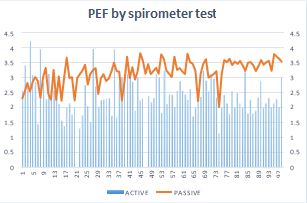
Figure 1 Evaluation of PEF for the active and passive smokers among adolescents.
Table 3: summery statistics by Spirometer parameters through (FEV1 / FVC %) among active and passive smokers for adolescents.
|
Spirometer parameters |
Type of groups |
Statistics parameters |
|||
|
|
Frequency |
Percentage |
Evaluate |
||
|
FEV1 / FVC % |
Adolescent smoker (active) |
Predict (>70%) |
63 |
63% |
Predict |
|
Normal (<70%) |
37 |
37% |
|||
|
Adolescent non- smoker (passive) |
Predict (>70%) |
15 |
15% |
Normal |
|
|
Normal (<70%) |
85 |
85% |
|||
FEV1= forced expiratory volume at one second, FVC%= Forced vital capacity percentage.
This study is consistent with (Gupta et al; 2014) who their studies the FVC mean values were lower than average, they were statistically insignificant. When compared to controls, individuals’ mean FEV1 values were statistically significantly lower than those of the controls. FEV1 /mean FVC%’s value was lower in participants, although it didn’t differ substantially from controls [18]. Also, inconsistent with (Yelena et al; 2016) that found the lung capacities as a parameter is passive among adolescent with smoking were low (FEV1) [19].
The discussion of the study results about lung function test by spirometer test that compare between passive and active smokers by independed t. test that indicted there is differences between active and passive smokers according to p. value and mean deference, except (PEF) there is no differences between passive and active smokers at p. value more than 0.05 is 0. 466 is no significance or different.This study is consistent to (Esra et al; 2019) who discussed there were no appreciable variations in the FEV1, FVC, and FEV1/FVC values between people with smoking with physical activity and who don’t it. The independent t test revealed a significant difference between non-smokers who physical activity and those who did not in terms of their FEV1 and FVC values.
The finding in depict and discussed that the study results about The majority of the study population is predicted for respiratory disease among active rather than inactive individuals, according to the ratio between forced expiratory volume at one second (FEV1) and force vital capacity (FVC). This study is consistent with (Korsbæk et al; 2021) that discussed the FEV1 predicted and FVC predicted were significantly reduced as a function of passive smoke exposure in the general population [21]. Also inconsistent with (Nassim et al; 2017) They discovered no outward symptoms of respiratory disease and linearly negative relationships with smoking status in both males and females [23-27].
CONCLUSION OF THE STUDY
- The majority of the study sample don’t suffer from chronic disease because there are majorly adolescent and not in the age group of risk factors for (HTN, DM).
- Active smokers are mostly predictable or susceptible for risk factors of respiratory disease according to indicater (FEV1 / FVC %).
- As for passive smokers they are less predictable than active smokers for respiratory disease according to indicator (FEV1 / FVC %).
Recommendations of the Study
- Provide programs that show and highlight the dangers of active and passive smoking.
- As part of routine medical treatment and health care provider, inquire about tobacco use and exposure among kids, teens, and families, and offer age-appropriate information and counseling to help avoid beginning.
- Put the programs in residency and medical schools to emphasize smoking cessation and prevention..
Learning students, families, and the general public on the harmful effects of smoking and how it affects non- smokers.
Author Contributions
Ridha M lefta planned, put the frame of the study, and collecting references. AMJ Shlash critically revised the manuscript with editing. Amar al abrahemy write the draft collecting references.
Declaration of Conflicting Interests
The author(s) declared no potential conflicts of interest with respect to the research, authorship, and/or publication of this article.
Funding
The author(s) denies receipt of any financial support for the research, authorship, and/or publication of this article.
REFERENCES
- Human physiology/Stuart Ira Fox, Pierce College. Fourteenth edition Printed in the United States of America. 2016: 533-534.
- World Health Organization. Tobacco Free Initiative: Why Is Tobacco a Public Health Priority. World Health Organization website. 2011.
- Tom Heffernan, Editorial: The Impact of Active and Passive Smoking upon Health and Neurocognitive Function. Front. Psychiatry. 2016; 7: 148.
- Tobacco Fact sheet N°339. 2014.
- Marissa B Reitsma, Nancy Fullman, Marie Ng, Joseph S Salama, Amanuel Abajobir, Kalkidan Hassen Abate, et al. Smoking prevalence and attributable disease burden in 195 countries and territories, 1990-2015: a systematic analysis from the Global Burden of Disease Study 2015. Lancet. 2017; 389: 1885-1906.
- Hyland A, Piazza KM, Hovey KM, Ockene JK, Andrews CA, Rivard C, et al. Associations of lifetime active and passive smoking with spontaneous abortion, stillbirth and tubal ectopic pregnancy: a cross-sectional analysis of historical data from the Women’s Health Initiative. Tob Control. 2015; 24: 328-335.
- World Health Organization. WHO report on the global tobacco epidemic 2015.
- IARC. There is sufficient evidence that involuntary smoking (exposure to secondhand or ‘environmental’ tobacco smoke) causes lung cancer in humans. 2004.
- “CDC - Fact Sheet - Smoke-Free Policies Reduce Smoking - Smoking & Tobacco Use”. Smoking and Tobacco Use. 2015.
- U.S. Department of Health and Human Services. Let’s Make the Next Generation Tobacco-Free: Your Guide to the 50th Anniversary Surgeon General’s Report on Smoking and Healthpdf iconexternal icon. [PDF–795 KB] Atlanta: U.S. Department of Health and Human Services, Centers for Disease Control and Prevention, National Center for Chronic Disease Prevention and Health Promotion, Office on Smoking and Health. 2014.
- U.S. Department of Health and Human Services. The Health Consequences of Smoking—50 Years of Progress: A Report of the Surgeon General. Atlanta: U.S. Department of Health and Human Services, Centers for Disease Control and Prevention, National Center for Chronic Disease Prevention and Health Promotion, Office on Smoking and Health. 2014.
- Spirometry. National Institute for Occupational Safety and Health (NIOSH). 2017.
- Sue Hill, Robert Winter. A Guide to Performing Quality Assured Diagnostic Spirometry. 2013.
- Pierce R. Spirometry: an essential clinical measurement. Aust Fam Physician. 2005; 34: 535-539.
- Aswathya S, Syamaa S, Georgya S, Mathewa M, Mohandasa S, Menona V, et al. Tobacco use and exposure to second-hand smoke among high school students in Ernakulum district, Kerala: A cross-sectional study. Public Health in Practice. 2021; 2.
- Andresa Thier de Borba, Renan Trevisan Jost, Ricardo Gass, Fúlvio Borges Nedel, Dannuy Machado Cardoso, Hildegard Hedwig Pohl, et al. The influence of active and passive smoking on the cardiorespiratory fitness of adults. Multidisciplinary Respiratory Medicine. 2014; 9.
- Bird Y, Staines-Orozco H. Pulmonary effects of active smoking and secondhand smoke exposure among adolescent students in Juárez, Mexico. International Journal of Chronic Obstructive Pulmonary Disease. 2015; 1.
- Neena Sharma, Vijay Gupta. Effect of passive smoking on lung function tests in women. Indian Journal of Clinical Anatomy and Physiology. 2022: 9; 42-46.
- Bird Y, Staines-Orozco H. Pulmonary effects of active smoking and secondhand smoke exposure among adolescent students in Juárez, Mexico. Int J Chron Obstruct Pulmon Dis. 2016; 11: 1459-1467.
- Dugral E, Balkanci D. Effects of smoking and physical exercise on respiratory function test results in students of university: A cross- sectional study. Medicine (Baltimore). 2019; 98: e16596.
- Korsbæk N, Landt EM, Dahl M. Second-Hand Smoke Exposure Associated with Risk of Respiratory Symptoms, Asthma, and COPD in 20,421 Adults from the General Population. J Asthma Allergy. 2021; 14: 1277-1284.
- Amani Haidar, Lama Jouni, Mohamad Koubar, Sarine El Daouk, Maha Hoteit. Impact of active smoking, passive smoking, and smoking cessation on overweight and obesity: First national cross-sectional study. International Journal of Medical Science and Public Health. 2017; 6.
- Heshmat R, Qorbani M, Safiri S, Eslami-Shahr Babaki A, Matin N, Motamed-Gorji N, et al. Association of passive and active smoking with self-rated health and life satisfaction in Iranian children and adolescents: the CASPIAN IV study. BMJ Open. 2017; 7: e012694.
- Aryanpur M, Yousefifard M, Oraii A, Heydari G, Kazempour-Dizaji M, Sharifi H, et al. Effect of passive exposure to cigarette smoke on blood pressure in children and adolescents: a meta-analysis of epidemiologic studies. BMC Pediatr. 2019; 19: 161.
- Mak KK, Ho RC, Day JR. The associations of asthma symptoms with active and passive smoking in Hong Kong adolescents. Respir Care. 2012; 57: 1398-1404.
- Harvey J, Chadi N, Canadian Paediatric Society, Adolescent Health Committee. Preventing smoking in children and adolescents: Recommendations for practice and policy. Paediatr Child Health. 2016; 21: 209-221.
- USPSTF. Tobacco Smoking Cessation in Adults, Including Pregnant Persons: Interventions. 2021.