Practice of Pranayama and Its Effect on Mental Health – A Systematic Review
- 1. Associate Professor, C.K.B College, India
- 2. Department of Education, Dibrugarh University, India
- 3. Department of Sports & Physical Education, Dibrugarh University, India
Abstract
The objective of the present paper is to see the effectiveness of Pranayama on mental health. Three authors reviewed the research studies that explored the effects of pranayama on mental health. Systematic review was carried out by the three authors independently according to Preferred Reporting Items for Systematic Reviews and Meta-analysis Guidelines through the database i.e., Shodhganga, Scopus, PubMed and Embase. Article published until 31st July, 2025 were included. Out of 28 papers initially selected papers, 15 research papers were finally chosen for review that fitted with the inclusion criteria of the present study. The studies under the present review revealed significant positive effect of pranayama-based practices in mental health. Such effect is unanimously seen in all studies that employed different kinds of pranayama-based practices such as Bhastika, Nadisuddhi, Ujjawi, Bhramari, Kapalbhati. The results of the present review identify pranayama to be a very effective holistic health practice that can ensure wellbeing and enduring happiness in man.
Keywords
• Mental health; Physical health; Detoxification; Pranayama; Depression
Citation
Boruah J, Barua NK, Boro M (2026) Practice of Pranayama and Its Effect on Mental Health – A Systematic Review. J Prev Med Healthc 8(2): 1051.
INTRODUCTION
Vedanta outlines five sheaths of human existence as Annamaya Kosha, Pranamaya Kosha, Manomaya Kosha, Vijnanamaya Kosha and Anandamaya Kosha and speaks for need of a balance among these five (Aurobindo) [1]. Annamaya Kosha refers to the Physical Sheath or physical body – the body of flesh and blood. It is associated with the material aspect of existence nourished by food, often referred as ‘food body’. Pranamaya Kosha, often described as the “vital sheath” represents the life force or prana that animates the physical body. It regulates the physiological functions and energy flow within the body. Manomaya Kosha, literally mean Mental Sheath includes the mind and emotions that harbours our thoughts, feelings, and desires. Vijnanamaya Kosha is the Intellectual Sheath and it is associated with cognition, intellect, and wisdom. This sheath is often called the “intuitive body” or “intellect”. Anandamaya Kosha is the innermost sheath often described as “bliss body” represents the state of bliss and spiritual fulfilment. It is considered to be closest to our true existence i.e., true self or Atman. Attainment of liberation through realisation of atman or the self depends on maintaining a balance among these sheaths. Among these five, Pranamaya Kosha plays the most crucial role in terms of establishment of a balance among the sheaths. It serves as the bridge between the lowest sheath (annamaya kosha) and upper three sheaths (Manomaya Kosha, Vijnanamaya Kosha and Anandamaya Kosha). Although all the koshas are interrelated so far as their wellbeing is concerned, it is pranamaya Kosha that has relatively more influence over any other koshas. This whole universe and its elements in the forms of galaxies, stars, air, water and all the living objects are the composition of two core elements – Prana and Akasha (Swami Vivekananda) [2]. The differences among these are due to the variations in respect to the nature of vibration in prana. It is prana that comes in contact with akasha with a certain amount of vibration and results in creation of a certain thing. The differences as we see among various manifestations in the form of living and non-living things are due to the differences in vibration of prana. In human being prana has four kinds of manifestation – Prana, Apana, Samana, Udana and Vyana [3]. These four kinds of Pranas are responsible for different kinds of functions in our body. Prana is responsible for regulation of our breath and circulation lifeforce throughout our body. Apana helps downward and outward movement of energy. It regulates the process of excretion, detoxification and reproduction. Samana Prana is responsible for regulation of digestion process and to maintain a balance in different part of body. Udana Pran represents upward movement of energy. It is responsible to regulate and control vocalisation and ability of communication, influences our creativity, judgement and higher-level mental faculties. Vyana Prana ensures harmony in our bodily systems and determines vitality, flexibility and adaptability in our body. In the words of Prana with its different manifestation regulates the entire creations. In the words of Vivekananda “there is no difference between you and the sun, except the vibration of prana” [4]. With a control over this vital energy (Prana) man can do marvellous things, can effectively achieve goals pertaining to his physical, mental and spirituals domains. Here lies the importance of pranayama.
Pranayama refers to the psycho-physical practices leading to control over the vital life-force (prana). Basically, Pranayama includes three things Rechaka, Puraka and Kumbhaka. Rechaka refers to exhalation, Puraka inhalation and Kumbhaka refers to the moment of pause between rechaka or puraka. In other word it is holding of the breath without rechaka or puraka. Bhagawat Gita explains pranayama as a form of sacred inner sacrifice where a practitioner, by controlling the breath can master his vital life-force (prana) and withdraw the mind from external distractions to achieve deep meditative states and spiritual trance [5].
Yoga texts revealed benefits of pranayama practice [6-8]. Different types of pranayama such as Bhastika, Nadisuddhi, Ujjawi, Bhramari, Kapalbhati have their specific benefit along with some common benefits. These benefits are related with physical health, mental health and spiritual health. So far as mental health is concerned texts mention the significance of pranayama in development of positive personality traits like positive self-image, self esteem, empathy, patience, enthusiasm, positive attitude and so on. In the present study, the author reviewed the research studies that explored the effects of pranayama on the aspects that influence upon the mental health to a great extent.
Rationale of the review
The objective of the present paper is to see the effectiveness of Pranayama on mental health. The investigator objectively, on the basis of inclusion criteria, analysed the papers. It is perceived that such analysis will be helpful to understand the utility of breath regulation practices or pranayama on mental health from practical point of view. Text have mentioned the wide spread benefits of pranayama for mental health. Our objective is to explore whether these claims are substantiated by the findings of the experimental studies.
METHODS
Selection of studies
The present study has not been a registered to any database. Systematic review was carried out by the three authors independently according to Preferred Reporting Items for Systematic Reviews and Meta-analysis Guidelines through the following database: Shodhganga, Scopus, PubMed and Embase. Article published until 31st July,2025 were included. The key word “Pranayama” was matched with mental health and individually matched with components of mental health i.e., self-concept, self efficacy, adjustment, emotional intelligence etc. Articles written in English regarding effectiveness of pranayama in mental health and its components were included in the study. The review-based studies, editorials, meta-analysis and articles in language other than English were excluded. Initially the articles for review were selected on the basis of titles that fit with the title of the present paper which was followed by full-text review. After full-text review only the original articles based on direct experimentation on human subjects were chosen for the final review. Even among the original studies, the studies that involved both asana and pranayama were excluded and only pranayama based studies were finally chosen. The screening as well as full-text review, were done by the three authors independently and they involved in discussion in case of confusion that they came across.
Data extraction and synthesis
After selection of the studies on the basis of the inclusion criterions the data extraction was done by the three authors independently in terms of objectives of the study, methodology, specific type of pranayama that has been practiced, major findings and implications of the study. Data extraction was followed by data synthesis and such a synthesis was carried out by categorising the findings of the study under emotional intelligence, stress reduction, self-esteem, self-efficacy.
RESULTS
Keeping inclusion criterions in view the investigator chose 31 papers for review. Four papers were excluded at the completion of initial scrutiny for duplication check. After going through the title, objectives and abstract of the 28 papers, 12 papers were finally chosen for review that fitted with the inclusion criteria of the present study Table 1.
Table 1: Details of Included studies
|
Sl No. |
Names of Author |
Objective |
Methodology |
Participants |
Findings |
Implications |
|
1 |
Kanhaiya Lal (2018) [9] |
To investigate the effects of Kapalbhati on
Mental Health |
Pre-test post-test randomized group design |
80 subjects. (Experimental group 40, Control group 40
18 to 24 years of age |
Significant difference was found between pre-test and post-test in experimental group but not in control group |
Practice of Kapalbhati pranayama led to positive improvement in Positive self-evaluation, Perception of reality, integration of personality, Autonomy, Group oriented attitudes |
|
2 |
Singh, Yatendra Kumar (2024). [10] |
To ascertain the impact of bhramari pranayama and trataka kriya on the degree, quality, and mental well-being of individuals suffering from insomnia |
Quasi-experimental random group pre-and post-test design |
75 participants (between the ages of 35 and 55) |
Bhramari Pranayama Practicing group had significantly better sleep quality, less severe insomnia as compared to Trataka practicing group and control group at post-test. Bhramari Pranayama Practicing group had also significantly better state of mental health in comparison to control group and Trataka group. |
Practice of Bhramari significantly improve sleep quality, reduces insomnia. The practice also leads to positive self- Evaluations, the perception of reality, integrity of personality and greater autonomy among practitioners. |
|
3 |
Awasthi H.H., Anand. A., Patwardhan K. (2018) [11] |
The objective of this study was to find out the effect of Pranayama on physical fitness and mental health in university-level healthy students |
Two group pre-test and post - test design |
108 adult volunteers of university-level healthy students of both gender, aged 17–28 years were included in the study. |
The experimental group showed significant improvement in parameters of mental health after 12 weeks of Pranayama practice; however, the control group did not show significant improvement |
Practice Anuloma-viloma and Bhastrika Pranayama has led to significant improvement in mental health with respect to such as autonomy, environmental mastery, perception of reality, and group-oriented attitudes |
|
4 |
Novaes MM, Palhano-Fontes F, Onias H, Andrade KC, Lobão-Soares B, Arruda-Sanchez T, Kozasa EH, Santaella DF and de Araujo DB (2020) [12] |
This study aimed at to explore the impact of a Bhastrika pranayama training program on emotion processing, anxiety, and affect. |
Randomized controlled trial design |
Thirty
healthy young adults, between the age 18 and 40 |
Significant changes in pre-test and post-test was observed in experimental group that attended Bhastrika pranayama practices in respect to trait |
Practice of Bhastrika pranayama significantly decreased states of anxiety and negative affect |
|
5 |
Jagadeesan T, R A, R K, Jain T, Allu AR, Selvi G T, Maveeran M, Kuppusamy M. (2022). [13] |
The study aimed to assess the effect of Bhramari pranayama for the patients diagnosed with COVID 19 during home isolation. |
Quasi-experimental study (pre-post design) |
40 patients under home isolation were enrolled in the study. |
Level of depression, anxiety, stress significantly reduced at the end of intervention |
Practice of Bhramari significantly reduces depression, anxiety, stress among practitioners |
|
6. |
Kumar, S., Kalyani, M. S., Pant, M., Rawat, A., Yadav, H., & Mola, D. W. (2025). [14] |
The goal of the study was to evaluate the effectiveness of Nadi Shodhana Pranayama (alternate nostril breathing), in reducing psychological distress among chronically injured athletes. |
Pre-test post-test design. |
Forty athletes with long-term injuries, between the age 19 to 26 years |
The Experimental group showed significant improvement in depression (t = 6.65, p < .001), anxiety (t = 5.07, p < .001), and stress (t = 5.72, p < .001) from pre-to post-test. No substantial changes were observed in the Control group. |
Practice of Nadi Shodhana Pranayama significantly reduces stress and anxiety among practitioners. It’s regular practice helps people to retrieve from depression. |
|
7 |
Peterson,T.C., Bauer.M.S., Chopra,D., Mill.J.P., Maturi,K.R. (2017) [15] |
The present study investigated the effects of Shambhavi Mahamudra practice, which is essentially composed of a simple 21-minute protocol of breath regulation techniques, on perceived stress and general well-being in a healthy population. |
Baseline and follow up Survey based study |
142 individuals (mean age = 43 years; SD = 13.90) |
Practice of Shambhavi Mahamudra practice, composed of a simple 21-minute protocol of breath regulation techniques has significantly reduced perceived stress and increased general well-being at 6-weeks follow-up compared with baseline. |
Yogic breathing techniques practiced as a part of Shambhavi Mahamudra kriya may represent a complementary therapy in the treatment of anxiety and stress reduction as well as for general well-being enhancement. |
|
8 |
Saraswati P, Kanaujia S, Singh Thakur G, Kapri BC. (2025) [16] |
The purpose of the study was to see how practice of Pranayama affects athletes' stress levels, levels of mindfulness, and psychological flexibility. |
The post-test-only, parallel-group, randomized controlled design. |
88 participants between 18 and 45 years. |
Participants' stress levels were significantly reduced after the intervention. |
Practice of Kapal Bhati, Ujjai, Bhastrika, Sitli, Sitkari, Anulom Vilom, and Bhramari Pranayama significantly improved their mindfulness and awareness, psychological flexibility and reduces negative emotional states. |
|
9 |
Yadav.S.S.,Saoj i,A.A.,Saoji.A.A,, Somanadhapai.S.S.,Yadav. N., Upadhyay. J., Rishi.N.N., Thapa. R.
(2024) [17] |
The aim of this study is to assess the effect of Yoga-based breathing practices on the mental state of patients with COVID-19. |
A randomized controlled study design |
63 patients (male=46) who were RT-PCR positive for COVID-19 and hospitalized.
Experimental (n = 32),
Control (n=31) |
Depression, anxiety, stress and fear of COVID-19 were significantly reduced in experimental group after intervention. No improvement was noticed in control group. |
Practice of Pranayama (Yoga-based breathing practices) for 30 min per day for ten days by the patients reduced their anxiety, stress and fear of COVID-19. |
|
10 |
Koch S, Esch T, Werdecker L. (2022) [18] |
The aim of the study was to explore the impact of regular yoga breathing exercises on blood pressure, work-related stress, and the prevalence of arterial hypertension in young police academy trainees |
A single-centre, prospective, randomized controlled trial. |
120 healthy trainees aged between 18 and 39 years. |
Perceived stress was significantly reduced at the completion of pranayama intervention (as measured by Perceived Stress Scale [PSS]. Significant increase of
Resilience was found. No improvement was noticed in control group. |
Practice of Pranayama can help people undergoing tough training to restore and increase resilience and to reduce the level of stress. |
|
11 |
Dilliraj.G., Kannan.H., Shanthi.B.,
(2020). [19] |
find the effects of yoga on the stress in female doctors |
Single group pre-post-test design |
50 females
doctors with a mean age of 35 ± 5.5 years |
Significant difference between pre and post-test was found. The experimental results revealed that practice of pranayama helped the doctors in reducing the stress and depression |
Practice of pranayama helps even the extremely busy professionals to recover from the
Stress and depression. |
|
12 |
Jain.V., Sharma, J. (2017) [20] |
To study the effect of Yoga: Pranayama on Anxiety & Depression. |
Pre and post control group design. |
120 persons (60 males & 60 females) |
Experimental group that practices pranayama showed significant positive changes so far as management of Anxiety & Depression are concerned.
Practice also led to create positive image among the members of experimental group while control group didn’t show any significant differences. |
Practice of yoga led to cope up with stressful situations, to face the challenges and to co-exist with such situations with a creative way. |
The following Prisma flow diagram (Figure 1) reveals the search process and selection of the study.
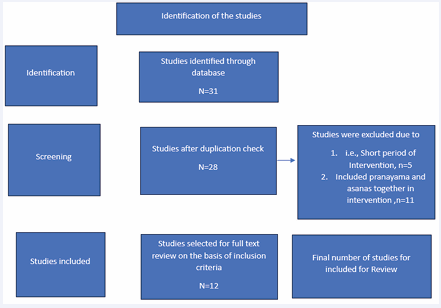
Figure 1: Prisma flow diagram showing the search process and selection of the studies for Review.
Quality assessment of the selected Reviews
The objective of the present study is to see the effectiveness of Pranayama in mental health. Keeping this objective in view the investigator reviewed the experimental studies in respect to pranayama and mental health. The need of quality screening of selected papers is felt for coming to conclusions based on sources that are reliable and valid. The inclusion criteria (set on the basis of protocols of quality assessment) for selecting the studies serve initial screening doors of the selected studies. The selected studies are placed for further quality assessment to minimize risk of bias generalizations based on inauthenticity of the sources. The quality screening of included studies has been carried out as per the norms outlined in MQRS scale. The details of scoring are revealed through Table 2.
Table 2: Quality assessment of included studies through Methodological Quality Rating Scale (MQRS)
|
Selected Studies |
Scale criterions/dimensions of assessment and scoring key |
||||
|
Group allocation (4=Randomisation 3=counterbalanced 2=matching 1=quasi Experimental 0= non-equivalent groups) Score 4 & 3 refers high, 2 refers medium, 1 & 0 refers low |
Quality control (1= treatment standardized by manual, specific training 0=no standardization) Score 1 refers high,0 refers low |
Follow up rate (2=85-100% follow up complete 1=70-84.9% follow up complete 0=bellow 70% follow up) Score 2 refers high;1 refers medium & 0 refers low |
Follow up length (2=12 months longer 1=6 to 11 months 0=bellow six months) Score 2 refers high,1 refers medium,0 refers low |
Independent (1= Follow up conducted by independent interviewer blind to group 0= Follow up by non-blind or questionnaire data only) Score 1 refers high,0 refers low |
|
|
Kanhaiya (2018) |
4 |
1 |
2 |
0 |
0 |
|
Singh (2024). |
1 |
1 |
1 |
0 |
0 |
|
Awasthi et al. (2018) |
4 |
1 |
2 |
0 |
0 |
|
Novaes et al. (2020) |
4 |
1 |
0 |
0 |
0 |
|
Jagadeesan et al. (2022). |
1 |
1 |
2 |
0 |
0 |
|
Kumar et al. (2025). |
4 |
1 |
2 |
0 |
0 |
|
Peterson et al. (2017) |
2 |
1 |
2 |
0 |
0 |
|
Saraswati et al. (2025) |
4 |
1 |
0 |
0 |
0 |
|
Yadav et al. (2024) |
4 |
1 |
2 |
0 |
0 |
|
Koch et al. (2022) |
4 |
1 |
1 |
0 |
0 |
|
Dilliraj et al. (2020). |
4 |
1 |
1 |
0 |
0 |
|
Jain et al. (2017) |
4 |
1 |
2 |
0 |
0 |
The quality assessment of the selected studies reveals that all most all studies sored high with respect randomization, quality control and follow up rate. So far as last two criterions (i.e., follow up length and follow up process) are concerned studies scored low. Keeping good overall scores and high scores under relatively high weight criterions the studies are found adequate for the present review.
DISCUSSION
The studies under the present review revealed significant positive effect of pranayama-based practices in mental health. Such effect is unanimously seen in different kinds of pranayama-based practices such as Bhastika, Nadisuddhi, Ujjawi, Bhramari, Kapalbhati. Out of the twelve studies three examined effect of pranayama on self evaluation, perception of reality, integration of personality, and feeling of autonomy. These are some core components and they influence the mental health to a great extent. All the experimental groups in these three studies that practiced pranayama showed significant improvement in respect to these core factors at post-test. Type of pranayama practices employed by these studies were different. Kanhaiya’s (2018) study employed Kapalbhati pranayama. Singh’s study (2024) included Bhramari, while Awasthi’s study (2018) employed Bhastrika. In spite of employing different kind of pranayama practices, their effects remained the same. Quality sleep is an external criterion of good mental health and in Singh’s study, Bhramari pranayama practitioners showed significant improvement in sleep quality. Seven of the twelve studies examined stress and anxiety before and after intervention [Peterson (2017), Novaes (2020), Dilliraj (2020), Koch (2022) Jagadeesan (2022), Kumar (2025) Saraswati (2025)]. The Findings revealed stress and anxiety significantly reduced at post test after intervention period. Koch’s study (2022) showed significant improvement of resilience among practitioners of breathing exercises. In our day today life stress is common and obvious. Important thing is to manage the stress. One of the studies (i.e., Jain,2025) showed pranayama practitioners did significantly better in stress management as compared to control group i.e., non practitioner of pranayama. The practitioners also showed positive self-image about themselves who were found to be significantly better in respect to self-image than that of non-practitioners of pranayama.
CONCLUSION
Classic yoga texts such as Yogasutra of Patanjali, Yoga Vasishtha, Upanishad, Hath Yoga Pradipika mentioned the significance of Pranayama on physical, psychological and spiritual life of mankind. The studies included in the present review revealed the same truth and observed great positive changes among pranayama practitioners in respect to mental health. On the basis of the results of the present study, it is anticipated that regular practice of pranayama may bring miracle where modern approach of treatment proves to be futile in treating who are in need of help and support to come out from stress, anxiety or such mental health ailments.
REFERENCES
- Aurobindo.The Complete Works of Sri Aurobindo. Aurobindo Ashram Publication Department. 1998.
- Vivekananda S. Raj yoga. Advaita Ashram. 1920.
- Sivananda S. Mokshagita. The Divine Life Society. 1949.
- Vivekananda S. Raj yoga. Advaita Ashram. 1920.
- Mukundananda S. Bhagwat Gita. Chapter 4. Verses 29 and 30.
- Iyengar BKS. Light on Yoga. Harper Collins Publishers. 2014.
- Vivekananda S. Patanjali’s yoga sutras. Grapevine India Pvt Ltd. 2023.
- Sibananda S. Yog bole Rog Niramoi. Umachal Ashram Press. 1985.
- Kanhaiya Lal. Effect of kapalbhati on mental health and respiratory parameters Ph.D Thesis. Banaras Hindu University. 2018.
- Singh, Yatendra Kumar. Effect of Bhramari pranayama and Trataka kriya on mental health and sleep quality of the people with insomnia. Ph.D Thesis, Lakshmibai National Institute of Physical Education. 2024.
- Awasthi H, Anand A, Patwardhan K, Singh RKC. Effects of Pranayama on mental health and physical fitness in healthy University students. Yoga Mimamsa. 2018; 50: 27.
- Novaes MM, Palhano-Fontes F, Onias H, Andrade KC, Lobão-Soares B, Arruda-Sanchez T, et al. Effects of Yoga Respiratory Practice (Bhastrika pranayama) on Anxiety, Affect, and Brain Functional Connectivity and Activity: A Randomized Controlled Trial. Front Psychiatry. 2020; 11: 467.
- Jagadeesan T, RA, RK, Jain T, Allu AR, Selvi GT, Maveeran M, Kuppusamy M. Effect of Bhramari Pranayama intervention on stress, anxiety, depression and sleep quality among COVID 19 patients in home isolation. J Ayurveda Integr Med. 2022; 13: 100596.
- Kumar S, Kalyani MS, Pant M, Rawat A, Yadav H, Mola DW. Evaluating the Effect of Yogic Intervention on Psychological Distress among Injured Athletes. Physical Education Theory and Methodology. 2025; 25: 794-799.
- Peterson CT, Bauer SM, Chopra D, Mills PJ, Maturi RK. Effects of Shambhavi Mahamudra Kriya, a Multicomponent Breath-Based Yogic Practice (Pranayama), on Perceived Stress and General Well-Being. J Evid Based Complementary Altern Med. 2017; 22: 788-797.
- Saraswati P, Kanaujia S, Singh Thakur G, Kapri BC. An Investigation of the Effects of Yoga on the Psychological Well-Being of Young Athletes: A Randomized Controlled Trial. Cureus. 2025; 17: e85452.
- Yadav SS, Saoji AA, Somanadhapai S, Yadav NL, Upadhyay J, Rishi NN, et al. Effect of Yoga-based breathing practices on depression, anxiety, stress, and fear of COVID-19 positive hospitalized patients: A randomized controlled trial. J Ayurveda Integr Med. 2024; 15: 100897.
- Koch S, Esch T, Werdecker L. Effects of a Yoga-Based Stress Intervention Program on the Blood Pressure of Young Police Officers: A Randomized Controlled Trial. J Integr Complement Med. 2022; 28: 234-240.
- Dilliraj G, Kannan H, Shanthi B. Effect of pranayama on stress in doctors. Biomedicine. 2020; 40: 102- 104.Jain V, Sharma J. Effect of Yogic Intervention: Pranayama on Anxiety & Depression. Int J Indian Psychol. 2017; 4.