Necrotic Testicular Pulp Due to an Intra-Testicular Abscess, an Uncommon Complication of the Epididymo-Orchitis: Case Report
- 1. Urology B Department, University Hospital Center IBN SINA, University Mohammed V, Morocco
ABBREVIATIONS
MRI: Magnetic Resonance Imaging.
INTRODUCTION
Testicular abscess and global testicular infarction are rare consequences of epididymo- orchitis, particularly when appropriate antibiotic treatment is given. The imaging technique used to check for testicular ischemia is ultrasonography. However, testicular pathology may not be visible on normal imaging, as stated in the literature.
It is challenging to anticipate and differentiate testicular infarction from more typical manifestations of acute scrotum, a catastrophic consequence of epididymo orchitis.
CASE PRESENTATION
F.A, a 55 years old male patient with high blood pressure and chronic kidney disease, The history of the illness dates back one month, when the patient experienced pain in his right testicle and a burning sensation when urinating. This prompted him to consult his primary care physician, who prescribed ceftriaxone 2 g/day for 15 days.
As the clinical signs persisted, the patient came to our clinic with right-sided testicular pain associated with dysuria and fever. The examination found an inflamed and hard right testicle. He had a high C-reactive protein level (192 mg/l) and total with cell count (13,4 x 10^9 / L). The patient underwent a scrotal doppler ultrasound, which revealed:
-Intra-scrotal testicle, enlarged in size, with regular contours, heterogeneous echo structure consisting of well- defined confluent hypoechoic areas, non-vascularized on Doppler, covering the entire testicle measuring 30x45x48 mm. (Figure 1).
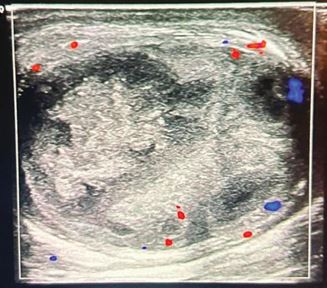
Figure 1 Doppler-Ultrasound showing the confluent hypoechoic areas, non-vascularized. -Swollen and heterogeneous epididymis measuring 20 mm.
A surgical exploration of the scrotum was indicated, revealing inflamed tunics and a completely abscessed right testicle with necrotic testicular pulp, warranting an orchiectomy, under antibiotic cover (Figure 2,3).
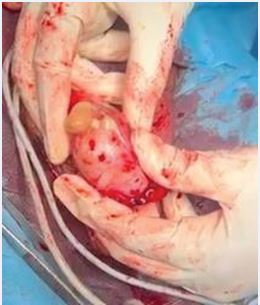
Figure 2 Peroperative picture show the pus.
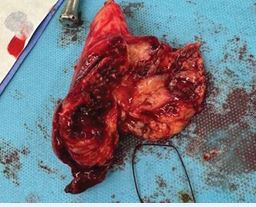
Figure 3 Post operative picture show the necrotic testicular pulp.
The results of the cytobacteriological study of the pus revealed an infection with carbapenem- sensitive ESBL-producing E. coli. Histopathology revealed cute inflammatory changes with suppuration. The interstitial tissue contains numerous congestive vessels.The follow-up was unremarkable, with improvement of symptoms after 2 weeks under carbapenem antibiotic.
Citation
BIBAT MA, Anass R, Ayoub M, El AFARI MA, Amine S, et al. (2025) Necrotic Testicular Pulp Due to an Intra-Testicular Abscess, an Uncommon Complication of the Epididymo-Orchitis: Case Report. J Urol Res 12(1): 1164.
DISCUSSION
Rare side effects of epididymo-orchitis when proper antibiotic treatment is administered include testicular abscess development and ischemia [1]. Although the precise mechanics are still unknown, theories that have been put forth indicate that a compartment syndrome is successfully produced by compressing the testicular and epididymal vasculature [2,3].
Additional luminal compression may be caused by tissue edema, exudates, and acute inflammatory alterations. Concurrently, endothelial dysfunction and venous congestion with the thrombosis they cause raise pressure and cause hypoxia.
Potential warning symptoms of ischemia were present in our case and included spermatic cord thickness and discomfort, recurrent epididymo-orchitis, rapid worsening of pain despite initial clinical improvement, and non resolving infection despite proper antibiotic therapy [4]. The research shows that using ultrasonography alone to detect testicular disease may miss the diagnosis [5]. It has been noted that contrast-enhanced Magnetic Resonance Imaging (MRI) is accurate on detecting necrosis Incision of the tunica albuginea may theoretically lessen the compartment effect within the testis if compartment syndrome is the primary cause of testicular ischemia and the diagnosis is made early before irreparable testicular damage occurs. Grafting with tunica vaginalis to cover the defect after capsulotomy of the tunica albuginea has been reported to restore the compartment pressure to normal [6]. In order to increase testicular blood flow, Figueroa and his team developed this method for patients who had testicular torsion and were surgically treated with de torsion and capsulotomy. However, the use of this surgical technique in cases with infectious processes has not yet been tested. [7]
We report a case of acute epididymo-orchitis that required surgical investigation and orchiectomy after developing into an abscess and ischemia. Elevated compartment pressures may contribute to circulatory deprivation. However, the precise process of ischemia is still being studied. Ultrasonography may improve early diagnosis of abscess or ischemia, resulting in therapeutic optimization.
DECLARATION
Ethical Approval
Ethics approval has been obtained to proceed with the current study Ethical approval for this study (Ethical Committee N009-24) was provided by the Ethical Committee Ibn University Hospitals, Rabat Morocco on 22 January 2024
Consent
Written informed consent was obtained from the patient for publication of this case report and any accompanying images. A copy of the written consent is available for review by the Editor-in-Chief of the journal.s
Availability of Data and Materials
Supporting material is available if further analysis is needed.
Scare Guidelines
The work has been reported in line with the SCARE criteria.
REFERENCES
- Fehily SR, Trubiano JA, McLean C, Teoh BW, Grummet JP, Cherry CL,et al. Testicular loss following bacterial epididymo-orchitis: Case report and literature review. Can Urol Assoc J. 2015; 9: E148-E151.
- Alharbi B, Rajih E, Adeoye A, Allatiefe BA, Abdullah MH. Testicular ischemia secondary to epididymo-orchitis: A case report. Urol Case Rep. 2019; 27: 100893.
- Gandhi J, Dagur G, Sheynkin YR, Smith NL, Khan SA. Testicular compartment syndrome: an overview of pathophysiology, etiology, evaluation, and management. Transl Androl Urol. 2016; 5: 927-934.
- Hourihane DO. Infected infarcts of the testis: A study of 18 cases preceded by pyogenic epididymoorchitis. J Clin Pathol. 1970; 23: 668-675.
- Serra AD, Hricak H, Coakley FV, Kim B, Dudley A, Morey A, et al. Inconclusive clinical and ultrasound evaluation of the scrotum: impact of magnetic resonance imaging on patient management and cost. Urology. 1998; 51: 1018-1021.
- Figueroa V, Pippi Salle JL, Braga LH, Romao R, Koyle MA, Bägli DJ, et al. Comparative analysis of detorsion alone versus detorsion and tunica albuginea decompression (fasciotomy) with tunica vaginalis flap coverage in the surgical management of prolonged testicular ischemia. J Urol. 2012; 188: 1417-1422.
- Alharbi B, Rajih E, Adeoye A, Allatiefe BA, Abdullah MH. Testicular ischemia secondary to epididymo-orchitis: A case report. Urol Case Rep. 2019; 27: 100893.