Online Self-Directed Cognitive Behavioural Therapy for Anxiety in Pregnancy and Postpartum: Quantitative Findings of a Randomized Controlled Trial
- 1. Department of Psychology, University of Manitoba, Canada
- 2. Department of Psychiatry, University of Manitoba, Canada
- 3. George and Fay Yee Centre for Healthcare Innovation, Canada
- 4. Department of Clinical Health Psychology, University of Manitoba, Canada
Abstract
In Canada, approximately 368, 928 babies were born during 2024-25. The perinatal period, spanning pregnancy to 12 months following childbirth, encompasses some of life’s most substantial changes and transitions (e.g., physiological, emotional, social, familial) and involves prominent medical, psychological, sociocultural, and economic resources and impacts. Challenges experienced during the perinatal period can lead to a worsening of mental health or development of a new onset of a mental health problem.
Keywords
• Cognitive Behavioural Therapy
• Anxiety
• Pregnancy
• Postpartum
• Mental health problem
Citation
Reynolds KA, Hardman MP, Arora B, Hadley I, Balshaw R, Gornik ME, et al. (2026) Online Self-Directed Cognitive Behavioural Therapy for Anxiety in Pregnancy and Postpartum: Quantitative Findings of a Randomized Controlled Trial. Med J Obstet Gynecol 14(1): 1202.
INTRODUCTION
In Canada, approximately 368, 928 babies were born during 2024-25 [1]. The perinatal period, spanning pregnancy to 12 months following childbirth, encompasses some of life’s most substantial changes and transitions (e.g., physiological, emotional, social, familial) and involves prominent medical, psychological, sociocultural, and economic resources and impacts [2-4]. Challenges experienced during the perinatal period can lead to a worsening of mental health or development of a new onset of a mental health problem [5-7]. Though there may be many new joys to experience while pregnant and postpartum, there are also many new stressors and worries to consider. Some degree of worry concerning fetal development, one’s health and safety as the pregnant or postpartum person, and the incredible task demands of raising an infant is common. When worry is excessive, challenging to curb, impacting sleep, and interfering with day-to-day functioning, perinatal anxiety treatment may be needed [8]. Lack of timely intervention can lead to adverse outcomes on maternal, fetal or infant health [9], such as preeclampsia, preterm delivery, low birth weight of infant, as well as socio-emotional, cognitive, language and motor problems in infant, with negative impacts lasting years into childhood [10-12]. Further, untreated mental health problems in pregnancy are the strongest predictor of postpartum mental health challenges [13-15].
Emerging literature indicates that anxiety has become increasingly prevalent among the perinatal population worldwide. For example, in a meta-analysis by Dennis et al. [16], the prevalence of self-reported symptoms of anxiety during pregnancy was estimated to be 22.9% and 17.8% in the first month postpartum, decreasing to 15% afterward. Additionally, a Canadian study reported that the increasing prevalence rate of perinatal anxiety is greater than that of perinatal depression, with rates being approximately 17.4% for anxiety and 6.5% for depression [17].
The prevalence of perinatal anxiety spiked from 29% pre-pandemic to 72% during the COVID-19 pandemic [18], which may be partly attributed to the heightened uncertainty and isolation which accompanied the pandemic [19].
Additional factors which exacerbated perinatal anxiety during the pandemic included fear of attending in-person health appointments, increased isolation, worries about risking one’s own health or that of their infant, long wait times, lack of social support, and increased family stressors [20-22]. In addition to increased anxiety, many perinatal people also reported experiencing low mood and feelings of hopelessness associated with the uncertainty during the pandemic [18]. In line with other populations, anxiety and depression are highly comorbid in the perinatal period, where both anxiety and depression co-occur in approximately 9% of the global perinatal population [23]. High comorbidity of anxiety and depression increases the severity of presentation, enhancing the need for readily accessible and effective treatments [24].
There have been recent global, national, and provincial calls for accessible and effective mental health services to treat and reduce the whole-family-health impacts of mental health problems [25,26]. The Canadian Network for Mood and Anxiety Treatments (CANMAT), which involves a group of academics and clinicians, has outlined effective clinical practice guidelines for mood and anxiety disorders during the perinatal period, which suggest the use of psychological interventions for the treatment of mild to moderate symptoms of anxiety and depression [26]. One effective psychological treatment involves the use of cognitive-behavioural therapy (CBT), which has been evidenced as the gold-standard approach to treat mild to moderate levels of anxiety and depression within the perinatal population [27]. Despite this, mental health service access and use remain limited [28-30]. Further, for many who do seek perinatal mental health services, they may experience tremendous barriers, including long wait times, financial strain, lack of transportation and childcare, geographical barriers, and stigma [22,31,32]. One solution to mitigate barriers is the utilization of e-health programs, which offer a great potential to improve access to services and meet the service needs of this underserved population group [33].
The rapid shift from traditional face-to-face service delivery to e-health programs during the COVID-19 pandemic transformed access, as digital services opened alternative to seek support safely during lockdowns [34]. Indeed, the rise of digital services is posited as one of the silver linings of the pandemic, continues to be offered present-day, and is often a preferred form of service delivery for many perinatal people [35,36]. Findings investigating the efficacy of e-health programs for perinatal mental health have shown promising results, including reduced anxiety and depression, and improved coping mechanisms [37-40]. Particularly, the flexibility offered by e-health programs, such as online CBT, increases accessibility for parents of newborns, as these interventions are accessible from home at any time of day [41-43]. Given the increasing acceptability of e-health programs for perinatal mental health problems across the globe, this study sought to provide rigorous randomized controlled trial findings of a self-directed six-session CBT e-health intervention for anxiety in pregnancy and postpartum during the COVID-19 pandemic [44,45].
MATERIALS & METHODS
Participants
People were eligible for the present study if they were: 1) over 18 years of age, 2) currently pregnant or had given birth within the past 12 months, 3) experiencing subclinical or clinical levels of anxious and/or depressive symptoms, 4) current residents of [blinded for review], 5) could communicate in English, and 6) had Internet access. Participants with existing psychological treatment plans and/or stable medication regimes at the time of recruitment were eligible to participate. Participants were ineligible if they 1) met clinical criteria for current substance use disorder, schizophrenia, or bipolar disorder, and/or 2) endorsed current and active suicidal ideations during screening. Participants were recruited through community organizations, hospital clinics, university psychology services, social media, and mainstream media.
Participants were screened for eligibility through a virtual screening interview and a clinical symptom interview (Mini International Neuropsychiatric Interview [MINI]; Adult Standard MINI 7.0.2; [46]. Eligible participants were considered enrolled in the study once they completed their baseline questionnaire (N = 95). The number of women within the intervention (n = 48) and waitlist (n = 47) conditions was approximately equal. The minimum sample size was 50 participants per condition (N = 100) after accounting for attrition (α = .05, power = .80). Our attrition rate was approximately 39% and was similar across the program and waitlist conditions (35.4% and 42.6%, respectively).
Table 1 indicates the demographic and psychosocial characteristics of the total sample and by condition. On average, participants were 32.40 years old (SD = 4.21) and were predominately in the postpartum period (n = 67, 70.5%). All participants identified as female. Of the participants who reported their ethnicity (n = 85), most identified as being of European descent (n = 69, 81.2%). Most participants were married at the time of study participation (n = 77, 81.1%) or in a common law relationship (n = 17, 17.9%). The majority of participants had graduated from a college, trade school, or university program (undergraduate or graduate; n = 82, 86.3%).
Table 1: Demographic and Psychosocial Characteristics across Conditions at Baseline (T1)
|
Characteristics |
Total sample (N = 95) |
Program condition (n = 48) |
Waitlist condition (n = 47) |
????????/???? |
df |
p |
Effect size |
|
Age, M(SD) |
32.40 (4.21) |
32.52 (4.59) |
32.28 (3.83) |
0.27 |
92 |
0.786 |
0.06 |
|
Perinatal status, n(%) |
|
0.15 |
1 |
0.701 |
0.04 |
||
|
Pregnant |
28 (29.5) |
15 (31.3) |
13 (27.7) |
|
|||
|
Postpartum |
67 (70.5) |
33 (68.8) |
34 (72.3) |
||||
|
First child, n(%) |
61 (64.2) |
30 (62.5) |
31 (66.0) |
||||
|
Ethnicity n(%) a |
|
0 |
1 |
0.958 |
0.01 |
||
|
European origins |
69 (81.2) |
35 (81.4) |
34 (81.0) |
|
|||
|
Another ethnicity |
16 (18.8) |
8 (18.6) |
8 (19.0) |
||||
|
Relationship status, n(%) a |
|
0.65 |
1 |
0.421 |
0.08 |
||
|
Married |
77 (81.9) |
37 (77.1) |
40 (85.1) |
|
|
|
|
|
Common law |
17 (17.9) |
10 (20.8) |
7 (14.9) |
|
|
|
|
|
Highest level of education, n(%) a |
|
0.73 |
1 |
0.393 |
0.09 |
||
|
High school or attended university, college, or trade school |
13 (13.7) |
8 (16.7) |
5 (10.6) |
|
|||
|
Graduated university, college, or trade school |
82 (86.3) |
40 (83.3) |
42 (89.4) |
||||
|
Occupation status, n(%) a |
|
0.16 |
1 |
0.691 |
0.04 |
||
|
Maternity leave |
67 (72.0%) |
33 (68.8%) |
34 (72.3%) |
|
|||
|
Employed (full-time or part-time) |
26 (28.0%) |
14 (29.2%) |
12 (25.5%) |
||||
|
Lifespan mental health, M(SD) |
2.60 (0.87) |
2.67 (0.88) |
2.53 (0.86) |
||||
|
Lifespan physical health, M(SD) |
3.68 (0.76) |
3.75 (0.73) |
3.62 (0.80) |
||||
|
Previous anxiety or depression, n(%) |
83 (87.4) |
44 (91.7) |
39 (83.0) |
||||
|
Previous psychotropic medication use, n(%) |
43 (45.3) |
18 (37.5) |
25 (53.2) |
||||
|
Previous psychological treatment, n(%) |
76 (80.0) |
40 (83.3) |
36 (76.6) |
||||
|
Current medication or psychological treatment use, n(%) |
|
0.01 |
1 |
0.924 |
0.01 |
||
|
Yes |
44 (46.3) |
22 (45.8) |
|
|
|||
|
No |
51 (53.7) |
26 (54.2) |
|
||||
|
Mental health diagnoses |
|
||||||
|
Any anxiety disorder |
65 (68.4) |
33 (68.8) |
32 (69.6) |
||||
|
Generalized anxiety disorder |
26 (27.4) |
13 (27.1) |
13 (27.7) |
||||
|
Illness anxiety disorder |
10 (10.5) |
7 (14.6) |
3 (6.4) |
||||
|
Current or lifetime panic disorder |
27 (28.4) |
15 (31.3) |
12 (25.5) |
||||
|
Social anxiety disorder |
6 (6.3) |
4 (8.3) |
2 (4.3) |
||||
|
Agoraphobia |
18 (18.9) |
9 (18.8) |
9 (19.1) |
||||
|
Specific phobia |
8 (8.4) |
4 (8.3) |
4 (8.5) |
||||
|
Subclinical anxiety symptoms |
28 (29.5) |
14 (29.2) |
14 (29.8) |
||||
|
Depression |
|||||||
|
Past major depressive episode |
62 (65.3) |
33 (68.8) |
29 (61.7) |
|
|||
|
Current major depressive episode |
16 (16.8) |
8 (16.7) |
29 (61.7) |
||||
|
Obsessive compulsive disorder |
8 (8.4) |
6 (12.5) |
2 (4.3) |
||||
|
Posttraumatic stress disorder |
8 (8.4) |
6 (12.5) |
2 (4.3) |
||||
|
Weeks to complete program, M(SD) |
6.54 (2.77) |
6.40 (3.22) |
6.71 (2.19) |
||||
|
Outcome measures at baseline (T1), M(SD) |
|
||||||
|
Anxiety (PASS) |
38.03 (14.81) |
39.96 (13.56) |
36.06 (15.89) |
1.29 |
93 |
0.202 |
0.26 |
|
Depression (EPDS) |
12.03 (4.56) |
12.48 (4.42) |
11.57 (4.70) |
0.97 |
93 |
0.337 |
0.2 |
|
Psychological stress (K6) |
9.41 (4.73) |
9.58 (4.32) |
9.23 (5.16) |
0.36 |
93 |
0.721 |
0.07 |
|
Perceived life stress (PSS) |
20.53 (2.24) |
20.58 (2.07) |
20.47 (2.43) |
0.25 |
93 |
0.804 |
0.05 |
|
COVID-19 stress |
64.23 (19.04) |
68.54 (20.94) |
59.83 (15.94) |
2.29 |
87.71 |
0.025 |
0.47 |
|
Antenatal attachment (MAAS) b |
71.68 (9.75) |
70.80 (11.63) |
72.69 (7.36) |
-0.52 |
23.97 |
0.607 |
-0.19 |
|
Postnatal attachment (MPAS) c |
73.65 (9.89) |
72.87 (11.31) |
74.38 (8.45) |
-0.62 |
64 |
0.541 |
-0.15 |
|
Maternal efficacy (MEQ) c |
31.57 (4.83) |
32.12 (3.90) |
31.03 (5.60) |
0.93 |
58.98 |
0.357 |
0.23 |
Note. Data have been reported for responses options when n > 5. Valid percentages have been reported when data are missing. df = degrees of freedom.
a Response categories were collapsed to increase the power of our analysis.
bOnly pregnant participants were asked to complete this item (n = 28).
c Only postpartum participants were asked to complete this item (n = 67)
Experimental Intervention
Overcoming Perinatal Anxiety [44,45], is a six-session cognitive behavioural therapy-based intervention targeting anxiety during the perinatal period. The existing OPA workbook (Overcoming Anxiety in Pregnancy and Postpartum) was adapted for an online program by clinical psychologists [blinded for review] and clinical psychology graduate students [blinded for review] on our team. The revised workbook included content around COVID-19 specific worries, as the e-health program was launched during the midst of the pandemic.
The online OPA program is completed on a self guided basis, with unique content and practice sessions in each module (Table 2). Participants could access the online program on their smartphone, tablet, or laptop. A voice-over option and video content were created by team members to provide various learning modalities. Participants were asked to complete one OPA module per week. Participants who completed all six modules were classified as program completers (n = 58).
Table 2: Overcoming Anxiety in Pregnancy and Postpartum Program Content
|
Module title |
Practice sessions |
|
|
1. Psychoeducation |
|
|
|
||
|
2. Self-care |
|
|
|
|
|
|
|
|
|
||
|
3. Setting goals and facing fears |
|
|
|
|
|
|
|
|
|
|
|
|
4. Nurturing development with baby/infant |
|
|
|
|
|
|
|
|
|
||
|
5. Coping with negative thoughts and worries |
|
|
|
|
|
|
|
|
|
|
|
|
|
|
|
|
6. Looking forward |
|
|
|
|
|
|
Procedure
The CONSORT diagram shown in Figure 1 illustrates the screening process, randomization, and participant retention throughout the study. Women who were interested in the study completed a virtual screening interview with a designated research assistant to determine initial eligibility. Eligible participants who provided informed consent were scheduled to complete a clinical symptom interview with a trained member of the research team. The MINI assesses 17 of the most common mental health disorders, including a range of anxiety disorders [46]. Participants who endorsed anxious or depressive symptoms on the MINI were considered eligible for the present study, regardless of whether full diagnostic criteria were met. If participants endorsed active suicidal ideations or recent suicidal attempts during either of their screening interviews, the interviewer immediately consulted with a clinical psychologist on the team to ensure participant safety and to determine eligibility. All participants were provided with a list of alternative mental health resources and a $15 Amazon e-gift card following their clinical symptom interview, regardless of eligibility.
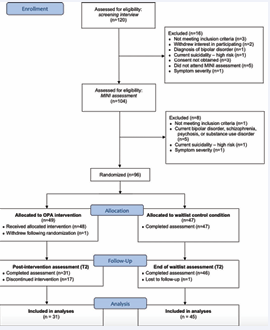
Figure 1: CONSORT flow chart.
Eligible participants (n = 96) were randomized into the intervention or six-week waitlist control condition. One participant withdrew from the study following randomization, leaving a total of 95 participants with baseline data. The research team were blinded to the randomization process and only viewed the participant’s assigned condition after the clinical symptom interview. Participants were contacted via email by the research team to inform them of their condition, to administer the baseline questionnaire, and to provide them with a list of mental health resources. Participants randomized to the intervention condition were given access to OPA program once they completed their baseline questionnaire, while those in the waitlist condition waited six weeks to access the program. Waitlisted participants received a check in email with a mental health resource list at week three. Throughout the study, participants in both conditions were sent a check-in email after 7 days of program inactivity.
Data were collected via online surveys in Qualtrics between April 30, 2021 to June 29, 2022. Participants completed these surveys at various time points in the study (Table 3), and received a $10 Amazon e-gift card for each questionnaire battery completed. Ethics approval was obtained from the University of Manitoba Research Ethics Board (P2020:104, HS24437) and the Shared Health Research Impact Committee (SH2021-070). This study was pre-registered as a randomized controlled trial (ClinicalTrials.gov, identifier: NCT04844138).
Table 3: Data Collection Time Points
|
Condition |
T1 (Week 1) |
|
T2 (Week 6) |
T3 (Week 10) |
T4 (Week 12) |
T5 (Week 16) |
|
Intervention |
Baseline |
Intervention |
Post-program |
1-month follow-up |
– |
– |
|
Waitlist |
Baseline |
Waitlist period |
End of waitlist |
Intervention |
Post-program |
1-month follow-up |
Note. A subset of questionnaires was also administered at the end of each program module. Participants did not receive an honorarium for surveys completed at the end of each module. – indicates that no research activities or data collection took place.
Measures
Within the present study, participants were asked a series of questions about their sociodemographics. Our primary outcome measure was anxiety symptoms, which were measured using the Perinatal Anxiety Screening Scale [47,48]. In regard to secondary outcomes, we evaluated participants’ symptoms of depression using the Edinburgh Postnatal Depression Scale [49]. We also assessed participants’ levels of psychological stress (Kessler Distress Scale 6-Item Version [K6]; [50], life stress (Perceived Stress Scale [PSS]; [51], and COVID-19 related stress (COVID-19 Stress Scales, [52]. To assess prenatal attachment among pregnant participants, we administered the Maternal Antenatal Attachment Scale [53-54], while postnatal attachment was evaluated among postpartum participants using the Maternal Postnatal Attachment Scale (MPAS; [55]. We also assessed maternal self-efficacy among postpartum participants using the Maternal Efficacy Questionnaire [56]. These measures were completed at T1 through T5. When assessing participants’ symptoms of anxiety, our team developed a shortened version of the PASS from Somerville et al. [47], that was administered at the end of each program module to monitor symptoms of anxiety across each module. For a detailed description of each measure, please see Appendix A of the supplementary materials.
Data Analysis
Data were cleaned and analyzed using the Statistical Package for Social Sciences (SPSS) Version 29. Participants were categorized by condition and program completion status (program completer or non-completers). Outliers were not removed or transformed as they varied based on these groupings. Among program completers, missing data ranged from 0% to 3.7% across all outcome measures completed at baseline, post-module surveys, post program, and follow-up.
Data were analyzed using a complete case analysis approach, such that only individuals who completed the program were considered within inferential analyses. This is common practice when less than 5% of cases are missing [43].
Descriptive statistics were calculated to characterize our sample’s demographic and psychosocial functioning at baseline. Although participants were randomized to conditions, we explored potential differences between intervention and waitlist groups at T1 and T2 using chi squares analyses and independent and paired samples t-tests (Table 1). Demographic variables were collapsed as needed to improve the power of the chi squares analyses. Following, paired-sample t-tests were conducted to compare pre-post program scores for program completers on all primary and secondary outcome measures. It was not possible to compare differences in antenatal attachment due to the limited number of pregnant participants who completed the program (n = 11). To more precisely estimate the effect of our treatment program on the intervention group relative to the waitlist condition, we conducted a series of ANCOVA analyses. Covariates were selected based on theory and our primary outcome variable, and included age, use of medication or therapy services during program participation, and baseline anxiety scores (T1). To assess outcome variables at follow-up, we computed within participant change scores and evaluated these scores descriptively. Residuals from some t-test analyses demonstrated evidence of non-normality; however, analyses based on nonparametric t-test alternatives (i.e., Mann-Whitney U, Wilcoxon Signed-rank) resulted in no substantive changes in conclusions, and parametric test results have been reported.
RESULTS
Demographic and Psychosocial Characteristics
Most participants were pregnant with or had given birth to their first child (n = 61, 64.2%) at the time of study involvement. Just under half of participants were currently using medication for their mental health or accessing psychological services (n = 44, 46.3%). Most participants met diagnostic criteria for at least one anxiety disorder (n = 65, 69.1%), while nearly one third of the sample endorsed sub-clinical symptoms of an anxiety disorder (n = 28, 29.5%).
Outcome measures at baseline are shown in Table 1. Participants’ anxiety scores fell within the mild to moderate range (M = 38.03, SD = 14.81). Participants within the program and waitlist conditions possessed similar demographic and psychosocial characteristics. The difference in COVID-19 stress scores at baseline (T1) between women in the intervention (M = 68.54, SD = 20.94) and waitlist conditions (M = 59.83, SD = 15.94) was statistically significant, t(87.71) = 2.29, p = .025, d = 0.47, 95% CI [1.13, 16.29]; however, this difference may be due to chance given that participants were randomized to conditions. Additionally, we explored differences in outcome measures between intervention participants at baseline (T1) and waitlist participants at the end of the waitlist period (T2). Participants in the waitlist condition had significantly lower anxiety scores prior to beginning the program (M = 33.07, SD = 17.38) compared to intervention participants (M = 39.96, SD = 13.56), t(92) = 2.15, p = .034, d = 0.44, 95% CI [0.52, 13.26]. We also assessed potential differences in outcome measures within the waitlist condition at baseline (T1) and the end of the waitlist period (T2). Participants in the waitlist condition reported experiencing significantly lower levels of anxiety at the end of the waitlist period (M = 33.07, SD = 17.38) than at baseline (M = 36.43, SD = 15.85), t(45) = 2.13, p= .039, d = 0.31, 95% CI [0.18, 6.56]. To account for these differences in baseline anxiety scores within and across conditions, we included this value as a covariate in our ANCOVA models.
Overall, 58 (61.1%) of participants completed the OPA program (n = 31 intervention participants, n = 27 waitlist participants). On average, participants completed the online program within 6.54 weeks (SD = 2.77), although this varied across participants from 2.43 to 18.43 weeks. See Uchechukwu et al. [32], (in preparation) for an exploration of the demographic and psychosocial differences between program completers and non-completers and factors associated with program completion.
Changes in Anxiety and Depression Scores by Module
Participants reported their anxiety (s-PASS) and depression (EPDS) symptoms across modules 1-5 (Figure 2 and Figure 3, respectively). Module 6 is not included as participants completed their post-program battery of questionnaires at the end of this module. Participants’ mean anxiety scores ranged from 6.55 to 9.01 across modules. Participants’ total depression scores averaged from 8.56 to 12.24 across modules. Participants reported the greatest reduction in both anxiety and depression symptoms after completion of module 2.
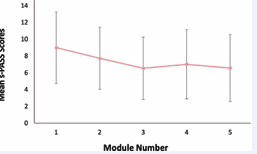
Figure 2: Changes in Anxiety Symptoms across Modules Pooling All Participants. Note. s-PASS = shortened Perinatal Anxiety Screening Scale. Each data point contains between 57-80 participants as varying numbers of participants completed each module.
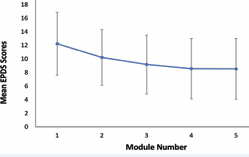
Figure 3: Changes in Depression Symptoms across Modules Pooling All Participants Note. EPDS = Edinburgh Postnatal Depression Scale. Each data point contains between 57-80 participants as varying numbers of participants completed each module.
Pre-Post Intervention Comparisons
Paired-sample t-tests were conducted to investigate changes in outcome measures before and after program completion (Table 4), pooling these change scores from both conditions.
Table 4: Differences in Outcomes Pre- and Post-Intervention for Combined Program and Waitlist Participants
|
Outcome variable |
Mean post-score (SD) |
Mean pre-score (SD) |
Mean difference (SE) |
t |
df |
p |
d |
95% CI |
|
Anxiety (PASS) |
25.07 (13.52) |
34.88 (15.05) |
-9.81 (1.44) |
6.79 |
56 |
< .001 |
0.90 |
[-12.70, -6.91] |
|
Depression (EPDS) |
8.10 (4.60) |
10.83 (4.86) |
-2.72 (0.61) |
4.44 |
57 |
< .001 |
0.58 |
[-3.95, -1.50] |
|
Psychological stress (K6) |
6.67 (3.83) |
8.28 (4.27) |
-1.60 (0.44) |
3.68 |
57 |
< .001 |
0.48 |
[-2.48, -0.73] |
|
Perceived life stress (PSS) |
19.84 (2.32) |
20.38 (2.19) |
-0.53 (0.35) |
1.52 |
57 |
.135 |
0.20 |
[-1.24, 0.17] |
|
COVID-19 stress |
59.47 (19.07) |
66.28 (20.62) |
-6.81 (1.72) |
3.95 |
57 |
< .001 |
0.52 |
[-10.26, -3.36] |
|
Postnatal attachment (MPAS) |
77.22 (7.16) |
74.30 (9.79) |
2.92 (0.86) |
-3.38 |
43 |
.002 |
-0.51 |
[1.18, 4.65] |
|
Maternal efficacy (MEQ) |
33.64 (2.81) |
31.20 (3.72) |
2.44 (0.47) |
-5.25 |
44 |
<.001 |
-0.78 |
[1.51, 3.38] |
Note: Pre-intervention scores include responses on T1 measures from the program condition and T2 measures for the waitlist condition. Post-intervention scores include responses from T2 for the program condition and T4 for the waitlist condition. df = degrees of freedom. d = Cohen’s d. CI = confidence interval.
Following completion of the OPA online program, participants reported significantly lower symptoms of anxiety than pre-program (Mchange = -9.81, SE = 1.44), t(56) = -6.79, p < .001, d =-0.90, 95% CI [-12.70, -6.91]. With regards to our secondary outcome variables, participants reported significantly lower symptoms of depression after completing the OPA intervention (Mchange = -2.72, SE = 0.61), t(57) = -4.44, p < .001, d = -0.58, 95% CI [-3.95, -1.50]. Program completers also experienced significant reductions in psychological stress (Mchange = -1.60, SE = 0.44), t(57) = -3.68, p = <.001, d = -0.48, 95% CI [-2.48, -0.73]. Significant reductions in COVID-19 related stress were also reported (Mchange = -6.81, SE = 1.72), t(57) = -3.95, p < .001, d = -0.52, 95% CI [-10.26, -3.36]. In regard to postnatal attachment, postpartum participants endorsed significantly higher levels of attachment toward their infant following program completion (Mchange = 2.92, SE = 0.86), t(43) = 3.38, p = .002, d = 0.51, 95% CI [1.18, 4.65].
Postpartum participants also reported significantly higher levels of maternal self-efficacy after completing the OPA program (Mchange = 2.44, SE = 0.47), t(44) = 5.25, p < .001, d = 0.78, 95% CI [1.51, 3.38].
Intervention Effects on Outcome Variables: ANCOVA Analyses
A series of ANCOVA models were constructed to determine whether there were significant treatment effects on the primary and secondary outcome variables at T2 after adjusting for covariates (age, medication or psychological treatment, and baseline anxiety scores [T1]). Program participation had a significant effect on participants’ anxiety symptoms after controlling for covariates, F(1, 70) = 9.12, p = .004, η2p = .12. Participants in the intervention condition had significantly lower PASS scores (Madjusted = 26.08, SE = 1.97) relative to women in the waitlist condition (Madjusted = 33.74, SE = 1.59; Mdifference adjusted = -7.66, SE = 2.54).
Participation in the OPA program led to significant improvements in several secondary outcome variables. Program completion had a significant effect on depression symptoms after controlling for covariates, F(1, 71) = 13.24, p < .001, η2p = .16, leading to a reduction in EPDS scores among program participants (Mdifference adjusted = -3.65, SE = 1.00). Additionally, a significant treatment effect was found on psychological stress (K6) when controlling for covariates, F(1, 71) = 7.68, p = .007, η2p = .10. Participants in the intervention condition had significantly lower adjusted mean scores on the K6 than women in the waitlist condition (Mdifference adjusted = -2.42, SE = 0.87). For postpartum participants, program participation had a significant effect on maternal self-efficacy (MEQ) when controlling for covariates, F(1, 55) = 9.29, p = .004, η2p = .15, and led to improved MEQ scores for program participants (Mdifference adjusted = 2.92, SE = 0.96). See Table 5 for an overview of all ANCOVA analyses.
Table 5: Treatment Effects on Primary and Secondary Outcome Variables: ANCOVA Findings
|
Outcome variables |
Program (n = 45) |
Waitlist (n = 30) |
Mean difference (standard error) |
ANCOVA |
|||
|
|
Adjusted mean |
SE |
Adjusted mean |
SE |
|
F (df, df) |
p |
|
Anxiety (PASS) |
26.08 |
1.97 |
33.74 |
1.59 |
-7.66 (2.54) |
9.12 (1, 70) |
0.004 |
|
Depression (EPDS) |
7.76 |
0.78 |
11.41 |
0.64 |
-3.65 (1.00) |
13.24 (1, 71) |
< .001 |
|
Psychological stress (K6) |
6.35 |
0.68 |
8.77 |
0.55 |
-2.42 (0.87) |
7.68 (1, 71) |
0.007 |
|
Perceived life stress (PSS) |
20.16 |
0.4 |
20.75 |
0.33 |
-0.59 (0.52) |
1.26 (1, 71) |
0.266 |
|
COVID-19 stress |
63.31 |
3.56 |
62.51 |
2.91 |
-0.80 (4.60) |
0.30 (1, 71) |
0.863 |
|
Postnatal attachment (MPAS) |
78.49 |
1.77 |
75.1 |
1.42 |
3.39 (2.23) |
2.31 (1, 54) |
0.135 |
|
Maternal efficacy (MEQ) |
33.87 |
0.76 |
30.96 |
0.6 |
2.92 (0.96) |
9.29 (1, 55) |
0.004 |
Note. Analysis of treatment effects for each outcome measure based on ANCOVA models including each outcome variable at T2 and controlling for participant age, use of psychotropic medication or therapy during study participation, and baseline (T1) anxiety scores as measured by the PASS.
One-Month Follow-up
Comparisons between outcome variables measured at one month follow-up and post-program completion are shown in Table 6. Reductions in anxiety scores (Mdifference = -3.82, SE = 1.29), depression scores (Mdifference = -0.91, SE = 0.49), psychological distress scores (Mdifference =-1.33, SE = 2.87), perceived life stress (Mdifference = -0.40, SE = 0.38), and COVID-19 stress (Mdifference = -4.40, SE = 1.90) were maintained and, interestingly, continued to decrease at follow-up. Gains in postnatal attachment (Mdifference = 0.80, SE = 0.59) and maternal self-efficacy (Mdifference = 0.13, SE = 0.32) were maintained at follow-up.
Table 6: Changes in Outcome Variables between Program Completion and One Month Follow-Up
|
Outcome variable |
Mean follow-up score (SD) |
Mean post-program score (SD) |
Mean difference (SE) |
t |
df |
p |
d |
95% CI |
|
Anxiety (PASS) |
21.67 (13.16) |
25.49 (13.52) |
-3.82 (1.29) |
-2.96 |
54 |
.005 |
-0.40 |
[-6.41, -1.23] |
|
Depression (EPDS) |
7.32 (4.56) |
8.23 (4.54) |
-0.91 (0.49) |
-1.87 |
56 |
.067 |
-0.25 |
[-1.88, 0.06] |
|
Psychological stress (K6) |
5.44 (3.91) |
6.77 (3.79) |
-1.33 (2.87) |
-3.51 |
56 |
<.001 |
-0.47 |
[-2.09, -0.57] |
|
Perceived life stress (PSS) |
19.51 (2.50) |
19.91 (2.28) |
-0.40 (0.38) |
-1.07 |
56 |
.288 |
-0.14 |
[-1.16, 0.35] |
|
COVID-19 stress |
55.39 (17.50) |
59.79 (19.07) |
-4.40 (1.90) |
-2.32 |
56 |
.024 |
-0.31 |
[-8.21, -0.60] |
|
Postnatal attachment (MPAS) |
78.14 (7.50) |
77.35 (7.15) |
0.80 (0.59) |
1.36 |
45 |
.182 |
0.20 |
[-0.39, 1.98] |
|
Maternal efficacy (MEQ) |
33.62 (3.00) |
33.49 (2.87) |
0.13 (0.32) |
0.42 |
44 |
.678 |
0.06 |
[-0.51, 0.78] |
Note: Post-program scores include responses from T2 for the intervention condition and T4 for the waitlist condition. One-month follow-up scores include responses from T3 for the intervention condition and T5 for the waitlist condition. CI = confidence interval.
DISCUSSION
The primary aim of this study was to evaluate the efficacy of a six-session self-directed CBT e-health program, Overcoming Perinatal Anxiety [44,45], on participants’ level of anxiety before and after completing the program. We also aimed to examine the effects of program completion on perinatal participants’ symptoms of depression, psychological distress, life stress, COVID-19-related stress, self-efficacy, and levels of attachment to infant. Since participants were randomized to intervention or waitlist conditions, the study also aimed to compare group differences across the listed variables. Our findings highlighted a significant reduction in anxiety, depression, psychological distress, life stress, and COVID-19-related distress in participants across both conditions following program completion. Symptom reduction was maintained and continued to decline at one-month follow-up.
Participants also indicated increased levels of attachment toward their infant and improved maternal self-efficacy immediately after completing the program, and this was maintained at one-month follow-up.
Additionally, our study found a significant positive effect on maternal self-efficacy after controlling for factors such as maternal age, anxiety at baseline, and participants’ use of medication or psychological services. As such, our study provides evidence supporting the efficacy of the six-session self-directed CBT e-health program, OPA. Our results are consistent with the growing body of literature investigating the effectiveness of e-health interventions, including Mamma-Mi [57], WazzUp Mama?! [58], and MUMentum Pregnancy [59], programs, which have significantly reduced symptoms of depression, anxiety, and distress among perinatal women.
In our sample, participants in the intervention group reported significantly lower anxiety, depression, and psychological stress, relative to women in the waitlist condition, who waited six weeks before receiving the intervention, and these results were noted after controlling for age, medication or psychological treatment, and baseline anxiety scores. This is not surprising, as long waitlists typically result in increased worries for individuals awaiting mental health care [60]. However, not all individuals respond similarly to being waitlisted. For example, in a separate qualitative study, perinatal women who were waitlisted in this study varied in their reactions, with some indicating feelings of disappointment, some reporting excitement about being accepted to receive the program, and a few noting a sense of relief, as the wait allowed them some time to prepare for the program and to focus on other competing demands in the interim [22].
This sense of relief among some participants may offer one explanation for the significantly lower levels of anxiety symptoms noted by those in the waitlist condition at the end of the waitlist period compared to baseline.
STRENGTHS, LIMITATIONS, AND FUTURE DIRECTIONS
The OPA program is one of the first few self-directed e-health interventions designed exclusively to target perinatal anxiety during the COVID-19 pandemic. In a meta-analysis exploring the availability of 16 remotely delivered treatments for anxiety in pregnancy, Evans et al. [61], reported that none of the interventions specifically targeted anxiety. Given that treatment for anxiety is often subsumed under broader interventions, particularly those that target depression and overall psychological well-being, the findings from this study uniquely contribute to the limited literature on treatment availability for perinatal anxiety. Additionally, this study was a randomized controlled trial and was sufficiently powered, factors which further added to the study’s strengths. However, the study also had limitations, with the first being the lack of heterogeneity in the study sample. Research indicates that BIPOC communities are commonly underrepresented in research and are likely to report worsened mental health problems during the perinatal period compared to their White counterparts [62]. Future studies are also recommended to recruit a diverse sample that reflects the shifting demographic landscape of Canada. Second, given that one of the study’s inclusion criteria was access to a stable Internet, this may have hindered participation from perinatal people residing in rural or remote communities who are more likely to lack access to a stable Internet connection.
Findings from this study extend beyond pandemic-related contexts and contribute to a broader understanding of the efficacy of self-directed e-health interventions. In addition to enabling the rapid delivery of mental health care and being comparable in their effectiveness to traditional face-to-face interventions [63-65], e-health interventions help mitigate logistical barriers and offer increased flexibility and anonymity, which help buffer against stigma and further enhance accessibility among the perinatal people [38,41]. However, one element that the self-guided online OPA program lacked was social connection [32]. Future studies may supplement informal supports, such as peer support, to mitigate this barrier. Peer support has been found to help facilitate knowledge sharing and foster a sense of community among women with similar lived experiences who may benefit from emotional and informational support [66-76].
CONCLUSION
Overall, our findings indicated that the self-directed online OPA program was efficacious in reducing perinatal anxiety, depression, perceived stress, as well as COVID-19-related stress. The program also helped to improve maternal self-efficacy and maternal attachment. The results of this study contribute to the limited literature on the treatments for perinatal anxiety, and demonstrated the efficacy of the online self-direct OPA program. Although this study was conducted and evaluated during the COVID-19 pandemic, its findings contribute meaningfully to the literature on the effectiveness of e-health interventions, lending support to them as a promising solution to the growing demand for mental health care.
ETHICAL APPROVAL
Ethics approval was obtained from the University of Manitoba Research Ethics Board, Fort Garry Campus (P2020:104, HS24437) and the Shared Health Research Impact Committee (SH2021-070).
Funding
This research received funding through Research Manitoba [COVID-19 Research Fund, PI: K. Reynolds]
Data, Materials, and/or Code Availability
A de-identified copy of the datasets used and analyzed during the current study are available from the corresponding author on reasonable request.
Clinical Trial Identifier
This study has been registered as a randomized controlled trial NCT04844138.
REFERENCES
- Statistics Canada. Table 17-10-0016-01: Estimates of births, by gender, annual [Data table]. Statistics Canada. 2025.
- Maguire PN, Clark GI, Cosh SM, Wootton BM. Exploring experiences, barriers and treatment preferences for self-reported perinatal anxiety in Australian women: a qualitative study. Aust Psychol. 2024; 59: 46-59.
- Vora V, Kanyal S, Chauhan A, Agarwal P, Sethi Y. Cultural perceptions and social determinants of health in perinatal mental health: An obstetric-psychiatric perspective. Int J Gynecol Obstetr. 2026; 172: 137-148.
- Walker RE, Choi TST, Quong S, Hodges R, Truby H, Kumar A. “It’s not easy”—A qualitative study of lifestyle change during pregnancy. Women Birth. 2020; 33: e363-e370.
- Furtado M, Chow CHT, Owais S, Frey BN, Van Lieshout RJ. Risk factors of new onset anxiety and anxiety exacerbation in the perinatal period: A systematic review and meta-analysis. J Affect Disord. 2018; 238: 626-635.
- Krishnamurti T, Rodriguez S, Wilder B, Gopalan P, Simhan HN. Predicting first time depression onset in pregnancy: Applying machine learning methods to patient-reported data. Arch Women’s Mental Health. 2014; 27: 1019-1031.
- Scroggins JK, Brandon D, Reuter-Rice K, Min SH, Yang Q. Changes in maternal psychological symptom profiles from 2 to 6 months postpartum: An application of latent transition analysis. Arch Women’s Ment Health. 2024; 27: 309-316.
- Bayrampour H, Ali E, McNeil DA, Benzies K, MacQueen G, Tough S. Pregnancy-related anxiety: A concept analysis. Int J Nurs Stud. 2016; 55: 115-130.
- Adhikari K, Racine N, Hetherington E, McDonald S, Tough S. Women’s mental health up to eight years after childbirth and associated risk factors: Longitudinal findings from the All Our Families cohort in Canada. The Can J Psychiatr. 2023; 68: 269-282.
- Hayes LJ, Goodman SH, Carlson E. Maternal antenatal depression and infant disorganized attachment at 12 months. Attach Hum Dev. 2013; 15: 133-153.
- Matsas A, Panopoulou P, Antoniou N, Bargiota A, Gryparis A, Vrachnis N, et al. Chronic Stress in Pregnancy Is Associated with Low Birth Weight: A Meta-Analysis. J Clin Med. 2023; 12.
- Rogers A, Obst S, Teague SJ, Rossen L, Spry EA, Macdonald JA, et al. Association between maternal perinatal depression and anxiety and child and adolescent development: A meta-analysis. JAMA Pediatr. 2020; 174.
- Jimènez-Barragan M, Falguera-Puig G, Curto-Garcia JJ, Monistrol O, Coll-Navarro E, Tarragó-Grima M, et al. Prevalence of anxiety and depression and their associated risk factors throughout pregnancy and postpartum: A prospective cross-sectional descriptive multicentred study. BMC Pregnancy Childbirth. 2024; 24.
- Luciano M, Di Vincenzo M, Brandi C, Tretola L, Toricco, R, Perris, F, et al. Does antenatal depression predict post-partum depression and obstetric complications? Results from a longitudinal, long-term, real-world study. Front Psychiatry. 2022; 13.
- Witt WP, Wisk LE, Cheng ER, Hampton JM, Creswell PD, Hagen EW, et al. Poor pre-pregnancy and antepartum mental health predicts postpartum mental health problems among US women: A nationally representative population-based study. Women’s Health Issues. 2011; 21: 304-313.
- Dennis CL, Falah-Hassani K, Shiri R. Prevalence of antenatal and postnatal anxiety: Systematic review and meta-analysis. Br J Psychiatr. 2017; 210: 315-323.
- Fairbrother N, Janssen P, Antony MM, Tucker E, Young AH. Perinatal anxiety disorder prevalence and incidence. J Affect Disord. 2016; 200: 148-155.
- Davenport MH, Meyer S, Meah VL, Strynadka MC, Khurana R. Moms are not ok: COVID-19 and maternal mental health. Front Global Women’s Health. 2020.
- Iwanowicz-Palus G, Mróz M, Korda A, Marcewicz A, Palus A. Perinatal anxiety among women during the COVID-19 pandemic—a cross-sectional study. Int J Environ Res Public Health. 2022; 19: 2603.
- Hicks LM, Ou C, Charlebois J, Tarasoff L, Pawluski J, Roos LE, et al. Assessment of Canadian perinatal mental health services from the provider perspective: Where can we improve? Front Psychiatr. 2022; 13
- Kolker S, Biringer A, Bytautas J, Kukan S, Carroll J. Psychological distress and behavioural changes in pregnant and postpartum individuals during the COVID-19 pandemic. J Obstet Gynaecol Can. 2022; 44: 1067-1075.
- Kristjanson AJ, Hardman MP, Penner KE, Gornik ME, Pryor TAM, Petty SK, et al. “There is always a waitlist”: The experiences of perinatal women randomized to a waitlist condition in a trial evaluating a novel online self-directed intervention for perinatal anxiety. Front Health Serv. 2022; 2.
- Ou L, Shen Q, Xiao M, Wang W, He T, Wang B. Prevalence of co-morbid anxiety and depression in pregnancy and postpartum: A systematic review and meta-analysis. Psychol Med. 2025; 55.
- Ramakrishna S, Cooklin AR, Leach LS. Comorbid anxiety and depression: A community-based study examining symptomology and correlates during the postpartum period. J Reprod Infant Psychol. 2019; 37: 468-479.
- McNab S, Fisher J, Honikman S, Muvhu L, Levine R, Chorwe-Sungani G, et al. Comment: Silent burden no more: a global call to action to prioritize perinatal mental health. BMC Pregnancy Childbirth. 2022; 22.
- Vigod SN, Frey BN, Clark CT, Grigoriadis S, Barker LC, Brown HK, Charlebois J, et al. Canadian Network for Mood and Anxiety Treatments 2024 clinical practice guideline for the management of perinatal mood, anxiety, and related disorders: Guide de pratique 2024 du Canadian Network for Mood and Anxiety Treatments pour le traitement des troubles de l’humeur, des troubles anxieux et des troubles connexes périnatals. Can J Psychiatry. 2025; 70: 429-489.
- Clinkscales N, Golds L, Berlouis K, MacBeth A. The effectiveness of psychological interventions for anxiety in the perinatal period: A systematic review and meta-analysis. Psychol Psychotherap. 2023; 96: 296-327.
- Lee-Carbon L, Nath S, Trevillion K, Byford S, Howard LM, Challacombe FL, et al. Mental health service use among pregnant and early postpartum women. Soc Psychiatry and Psychiatr Epidemiol. 2022; 57: 2229-2240.
- Pankratz L, Sommer JL, Mota N, El-Gabalawy R, Reynolds K. Perinatal mental health service use in a representative sample of US women. Midwifery. 2024; 137: 104121.
- Zhu Z, Wang H, Zhu T, Wang Z, Shen Y, Xiong C, et al. Mental health service utilization among pregnant and postpartum women: Status, determinants, and insights from a mixed-methods study. BMC Public Health. 2025; 25: 1942.
- Daehn D, Rudolf S, Pawils S, Renneberg B. Perinatal mental health literacy: Knowledge, attitudes, and help-seeking among perinatal women and the public – a systematic review. BMC Pregnancy Childbirth. 2022; 22: 574.
- Uchechukwu L, Hardman MP, Hadley I, Gornik ME, Petty SK, Pryor TAM, et al. “I’m not alone”: Perinatal women’s experiences in an online self-directed program for perinatal anxiety. BMC Pregnancy Childbirth. 2025; 25: 190.
- Bayrampour H, Trieu J, Tharmaratnam T. Effectiveness of ehealth interventions to reduce perinatal anxiety: A systematic review and meta-analysis. J Clin Psychiatr. 2019; 80: 18r12386.
- Bonardi O, Wang Y, Li K, Jiang X, Krishnan A, He C, et al. Effects of COVID-19 mental health interventions among children, adolescents, and adults not quarantined or undergoing treatment due to COVID-19 infection: A systematic review of randomised controlled trials. Can J Psychiatry. 2022; 67: 336-350.
- Harrison V, Moore D, Lazard L. Supporting perinatal anxiety in the digital age; a qualitative exploration of stressors and support strategies. BMC Pregnancy Childbirth. 2020; 20: 363.
- Jahre LM, Frewer AL, Meyer H, Koelkebeck K, Iannaccone A, Skoda EM, et al. Drivers and barriers of acceptance of eHealth interventions in postpartum mental health care: A cross-sectional study. BMC Public Health. 2025; 25.
- Ansaari N, Rajan SK, Kuruveettissery S. Efficacy of in-person versus digital mental health interventions for postpartum depression: Meta-analysis of randomized controlled trials. J Reprod Infant Psychol. 2025; 43: 1067-1087.
- Arifin SRM, Kamaruddin A, Muhammad NA, Nurumal MS, Mohadis HM, Hussain NHN, et al. An evaluation of digital intervention for perinatal depression and anxiety: A systematic review. AIMS Public Health. 2024; 11: 499-525.
- Kuipers YJ, Bleijenbergh R, Rimaux S, Mestdagh E. The effect of a web-based intervention on perinatal emotional wellbeing and coping: A nested case-control study. Mental Health Prevention. 2023; 33: 200332.
- Loughnan SA, Butler C, Sie AA, Grierson AB, Chen AZ, Hobbs MJ, et al. A randomised controlled trial of ‘MUMentum postnatal’: Internet-delivered cognitive behavioural therapy for anxiety and depression in postpartum women. Behav Res Ther. 2019; 116: 94-103.
- Attard R, Iles J, Satherley RM. How acceptable do parents experiencing mental health challenges find e-Health interventions for mental health in the postnatal period: A systematic review. BMC Pregnancy Childbirth. 2022; 22: 763.
- Schmidt-Hantke J, Jacobi C. Investigating perspectives on e-health interventions to enhance maternal mental well-being: Results of a stakeholder interview. PLOS Digit Health. 2023; 2: e0000326.
- Jakobsen JC, Gluud C, Wetterslev J, Winkel P. When and how should multiple imputation be used for handling missing data in randomised clinical trials: A practical guide with flowcharts. BMC Med Res Methodol. 2017; 17.
- Furer P, Reynolds K. Overcoming Anxiety in Pregnancy and Postpartum. Unpublished treatment manual. 2015.
- Furer P, Alcolado G, Reynolds K, Hebert EA. Group cognitive-behavioural therapy for perinatal anxiety disorders: treatment development, content, and pilot results. J Affective Disorders Rep. 2021; 6: 100195.
- Sheehan DV, Lecrubier Y, Sheehan KH, Amorim P, Janavs J, Weiller E, et al. The Mini-International Neuropsychiatric Interview (M.I.N.I.): The development and validation of a structured diagnostic psychiatric interview for DSM-IV and ICD-10. J Clin Psychiatr. 1998; 59: 22-33.
- Somerville S, Dedman K, Hagan R, Oxnam E, Wettinger M, Byrne S, et al. The Perinatal Anxiety Screening Scale: development and preliminary validation. Arch Women’s Mental Health. 2014; 17: 443-454.
- Somerville S, Byrne SL, Dedman K, Hagan R, Coo S, Oxnam E, et al. Detecting the severity of perinatal anxiety with the Perinatal Anxiety Screening Scale (PASS). J Affect Disord. 2015; 186: 18-25.
- Cox JL, Holden JM, Sagovsky R. Detection of postnatal depression: development of the 10-item Edinburgh Postnatal Depression Scale. Br J Psychiatry. 1987; 150: 782-786.
- Kessler RC, Andrews G, Colpe LJ, Hiripi E, Mroczek DK, Normand SLT, et al. Short screening scales to monitor population prevalences and trends in non-specific psychological distress. Psychol Med. 2022; 32: 959-976.
- Cohen S, Kamarck T, Mermelstein R. A global measure of perceived stress. J Health Soc Behav. 1983; 24: 385-396.
- Taylor S, Landry CA, Paluszek MM, Fergus TA, McKay D, Asmundson GJG. Development and initial validation of the COVID Stress Scales. J Anxiety Disorders. 2020; 72: 102232.
- Condon JT. The assessment of antenatal emotional attachment: development of a questionnaire instrument. The Br J Med Psychol. 1993; 66: 167-183.
- Condon JT, Corkindale C. The correlates of antenatal attachment in pregnant women. British J Med Psychol. 1997; 70: 359-372.
- Condon JT, Corkindale CJ. The assessment of parent-to-infant attachment: Development of a self-report questionnaire instrument. J Reproductive and Infant Psychol. 1998; 16: 57-76.
- Teti DM, Gelfand DM. Behavioral Competence among Mothers of Infants in the First Year: The Mediational Role of Maternal Self-Efficacy. Child Development. 1991; 62: 918-929.
- Haga SM, Drozd F, Lisøy C, Wentzel-Larsen T, Slinning K. Mamma Mia – A randomized controlled trial of an internet-based intervention for perinatal depression. Psychol Med. 2019; 49: 1850-1858.
- Fontein-Kuipers YJ, Ausems M, De Vries R, Nieuwenhuijze MJ. The effect of Wazzup Mama?! An antenatal intervention to prevent or reduce maternal distress in pregnancy. Arch Women’s Ment Health. 2016; 19: 779-788.
- Loughnan SA, Joubert AE, Grierson A, Andrews G, Newby JM. Internet-delivered psychological interventions for clinical anxiety and depression in perinatal women: A systematic review and meta-analysis. Arch Women’s Ment Health. 2019; 22: 737-750.
- Punton G, Dodd AL, McNeill A. ‘You’re on the waiting list’: An interpretive phenomenological analysis of young adults’ experiences of waiting lists within mental health services in the UK. PLOS ONE. 2022; 17: e0265542.
- Evans K, Rennick-Egglestone S, Cox S, Kuipers Y, Spiby H. Remotely Delivered Interventions to Support Women With Symptoms of Anxiety in Pregnancy: Mixed Methods Systematic Review and Meta-analysis. J Med Internet Res. 2022; 24: e28093.
- Hoang TMH, Hsieh WJ, Lee BA, Lukacena KM, Tabb KM. Navigating Pregnancy and the Healthcare System during COVID-19: A Qualitative Study with Perinatal Women of Color. Int J Environ Res Public Health. 2022; 19: 13698.
- Alavi N, Moghimi E, Stephenson C, Gutierrez G, Jagayat J, Kumar A, et al. Comparison of online and in-person cognitive behavioral therapy in individuals diagnosed with major depressive disorder: A non-randomized controlled trial. Front Psychiatry. 2023; 14: 1113956.
- Giovanetti AK, Punt SEW, Nelson EL, Ilardi SS. Teletherapy Versus In-Person Psychotherapy for Depression: A Meta-Analysis of Randomized Controlled Trials. Telemed J E Health. 2022; 28: 1077-1089.
- Sandre A, Shah V, Slyepchenko A, Key B, Simons S, Sgambato J, et al. Comparing in-person to videoconference group cognitive behavioural therapy (CBT) for depressive disorders in an out-patient mood disorders clinic. Behav Cogn Psychother. 2025; 53: 332-348.
- Gui X, Chen Y, Kou Y, Pine K, Chen Y. Investigating Support Seeking from Peers for Pregnancy in Online Health Communities. Proceedings of the ACM on Human-Computer Interaction. 2017; 1: 1-19.
- McLeish J, Ayers S, McCourt C. Community-based perinatal mental health peer support: A realist review. BMC Pregnancy Childbirth. 2023; 23: 570.
- Cohen S, Janicki-Deverts D. Who’s stressed? Distributions of Psychological Stress in the United States in probability samples from 1983, 2006, and 20091. J Appl Social Psychol. 2012; 42: 1320-1334.
- Cohen S, Williamson G. Psychological stress in a probability sample of the United States. In S. Spacapan & S. Oskamp (Eds.), The social psychology of health: Claremont Symposium on Applied Social Psychology. Newbury Park, CA: Sage. 1998; 31-67.
- Condon J. Maternal Antenatal Attachment Scale [Measurement instrument]. 2015.
- Furukawa TA, Kessler RC, Slade T, Andrews G. The performance of the K6 and K10 screening scales for psychological distress in the Australian National Survey of Mental Health and Well-Being. Psychol Med. 2023; 33: 357-362.
- Kessler RC, Barker PR, Colpe LJ, Epstein JF, Gfroerer JC, Hiripi E, et al. Screening for serious mental illness in the general population. Arch Gen Psychiatry. 2003; 60: 184-189.
- Miller RL, Pallant JF, Negri LM. Anxiety and stress in the postpartum: Is there more to postnatal distress than depression? BMC Psychiatry. 2006; 6: 12.
- Milosevic I, Levy HC, Alcolado GM, Radomsky AS. The Treatment Acceptability/Adherence Scale: Moving beyond the assessment of treatment effectiveness. Cogn Behav Ther. 2015; 44: 456-469.
- Murray D, Cox JL. Screening for depression during pregnancy with the Edinburgh Depression Scale (EPDS). J Reproductive and Infant Psychology. 1990; 8: 99-107.
- Vigod S, Sultana A, Fung K, Hussain-Shamsy N, Dennis CL. A population-based study of postpartum mental health service use by immigrant women in Ontario, Canada. Can J Psychiatr. 2016; 61: 705-713.