Chemical Evaluation of Poplar Buds from Urban Green Spaces by Isolation and Identification of Pinostrobin
- 1. Department of Chemistry, Nazarbayev Intellectual School of Natural Sciences and Mathematics in Petropavlovsk, Kazakhstan
- 2. Department of Chemistry and Chemical Technology, Manash Kozybayev North Kazakhstan University, Kazakhstan
Abstract
Urban green infrastructure generates substantial amounts of renewable plant biomass that Structural identification was confirmed through complementary analytical techniques. TLC demonstrated complete chromatographic agreement with the reference standard. IR spectra revealed characteristic absorption bands corresponding to the flavanone structure. GC–MS analysis showed a molecular ion at m/z 270 together with diagnostic fragmentation patterns, while ¹H NMR spectra confirmed the presence of the expected aromatic, methoxy, hydroxyl, and flavanone proton signals. The results also demonstrated that pinostrobin can be effectively recovered from the hexane fraction, indicating partial solubility in this non-polar solvent and providing an alternative purification strategy.
The proposed isolation method contributes to the sustainable utilization of biomass derived from urban green spaces by transforming poplar buds into a valuable source of high-purity natural flavonoids. The developed approach expands opportunities for the circular use of urban plant resources and supports future applications of bioactive compounds in agriculture, pharmaceuticals, and green technologies.
Keyword
• Populus balsamifera
• Pinostrobin
• Urban green biomass
• Flavonoids
• Sustainable biomass valorization
Citation
Mechshanova A, Polyakov V (2026) Chemical Evaluation of Poplar Buds from Urban Green Spaces by Isolation and Identification of Pi nostrobin. Chem Eng Process Tech 11(1): 1112.
ABBREVIATIONS
GC–MS: Gas Chromatography–Mass Spectrometry; IR: Infrared Spectroscopy; TLC: Thin-Layer Chromatography; ¹H NMR: Proton Nuclear Magnetic Resonance Spectroscopy; DI: Direct Injection; TMS: Tetramethylsilane; CDCl?: Deuterated Chloroform; m/z: Mass-to-Charge Ratio; UV: Ultraviolet; APCI: Atmospheric Pressure Chemical Ionization.
INTRODUCTION
Urban green infrastructure plays a crucial role in improving environmental quality, mitigating climate change, maintaining biodiversity, and enhancing the well-being of urban residents [1]. Trees growing in cities provide numerous ecosystem services, including air purification, carbon sequestration, temperature regulation, stormwater management, and noise reduction. In addition to these ecological functions, urban vegetation represents an abundant and renewable source of plant biomass that remains largely underutilized [2]. Routine maintenance of urban green spaces annually generates significant quantities of buds, leaves, branches, and pruning residues, much of which, despite containing valuable secondary metabolites, is discarded as waste. Sustainable use of these biological resources is increasingly recognized as an important component of a circular bioeconomy and resource-efficient urban management [3].
Among the dominant tree species used in urban landscaping, Populus balsamifera L. (balsam poplar) occupies a special place due to its rapid growth, adaptation to various climatic conditions, and widespread distribution in temperate regions [4]. In addition to its ecological significance, balsam poplar has long attracted scientific interest because its buds are rich in bioactive compounds, including flavonoids, phenolic acids, terpenoids, and aromatic resins [5]. These metabolites exhibit diverse biological activities, including antioxidant, antimicrobial, anti-inflammatory, antiviral, and plant growth-regulating properties, making poplar extracts promising raw materials for the pharmaceutical, agricultural, and cosmetic industries [6].
One of the major flavonoids found in poplar buds is pinostrobin (5-hydroxy-7-methoxyflavanone), a naturally occurring flavanone reported to possess antioxidant, antibacterial, antifungal, anti-inflammatory, hepatoprotective, and anticancer properties [7]. Due to its broad spectrum of biological activity, pinostrobin has attracted increasing attention as a valuable natural compound with significant industrial and biomedical potential. However, developing efficient methods for its isolation from natural plant sources remains a significant challenge, as traditional extraction methods often require multiple purification steps and provide relatively low product yields. Recent advances in natural compound chemistry have shown that solvent fractionation combined with modern spectroscopic techniques provides reliable approaches to the isolation and identification of plant secondary metabolites. Thin-layer chromatography, infrared spectroscopy, spectrometry, and gas nuclear chromatography-mass magnetic resonance spectroscopy are complementary analytical methods widely used for the structural characterization of flavonoids [8,9]. The integration of these methods significantly improves the reliability of compound identification, while enabling the optimization of extraction protocols to obtain highly pure products.
While numerous studies have investigated the phytochemical composition of poplar buds, comparatively little attention has been paid to the efficient isolation of pinostrobin from the hexane fraction and its comprehensive structural verification using multiple analytical methods [10]. Furthermore, only a few studies have examined poplar buds as a renewable resource generated by urban green infrastructure and assessed their potential contribution to sustainable biomass recycling. Expanding knowledge in this area can contribute not only to the chemistry of natural compounds but also to the development of environmentally friendly strategies for the use of urban plant biomass [11].
The aim of this study was to develop an efficient procedure for the isolation of pinostrobin from Populus balsamifera buds and to confirm its chemical structure using thin-layer chromatography, infrared spectroscopy, gas chromatography-mass spectrometry, and proton nuclear magnetic resonance spectroscopy. Particular attention was paid to the study of the hexane fraction and optimization of the purification procedure leading to the production of crystalline pinostrobin. The proposed approach demonstrates the feasibility of converting renewable biomass obtained from urban green spaces into a valuable source of biologically active flavonoids. The obtained results open new opportunities for the sustainable use of urban plant resources and contribute to the development of environmentally responsible technologies based on renewable natural raw materials.
MATERIALS AND METHODS
Freshly picked poplar buds were extracted with 96% ethanol (GOST 57251–2016) using a Soxhlet apparatus for 48 hours. After extraction, the solvent was removed, and the resulting extract was concentrated in an IR-1LT rotary evaporator until a thick resinous substance was obtained.
Hexane extraction was performed for the substance obtained by extract obtained by the extraction method. For this, 1.0 g of the resinous substance was extracted with hexane at 60°C for 20 min. After cooling to room temperature, the hexane extract was separated by decantation and used for further analysis.
Isolation of Pinostrobin
Pinostrobin was isolated from the hexane fraction. After cooling, the extract was filtered to remove the insoluble high-molecular resinous fraction (for samples obtained by the barothermal method). The filtrate was concentrated by evaporation and then left at room temperature until crystals formed. The resulting crystals were washed with petroleum ether and used for further identification. A preliminary assessment of the purity of the isolated substance was performed by thin-layer chromatography and melting point determination.
Chromatographic Methods
Silufol plates were used for thin-layer chromatography. Chromatographic separation was performed in a benzene-chloroform-formic acid-ethanol-diethyl ether (30:5:5:5:10) solvent system.
0.02 µl of the test solution was applied to the starting line of a pre-activated chromatographic plate (100 105°C). An alcoholic solution of pinostrobin was used as a standard. Chromatography was performed in an ascending mode in a chamber saturated with solvent vapor. After the solvent front had passed approximately 8 cm, the plates were dried and analyzed in daylight, under ultraviolet light (254 and 366 nm), and after treatment with a 3% alcoholic solution of aluminum chloride.
To confirm the identity of the isolated compound, the purified hexane fraction was further analyzed by thin layer chromatography in a petroleum ether-diethyl ether acetic acid (80:20:1) solvent system. Pinostrobin was used as a standard sample. The chromatograms were developed with iodine vapor and analyzed under ultraviolet light.
Instrumental Analysis
IR spectra were recorded on a Varian 660 FTIR spectrometer in the wavenumber range of 4000–400 cm?¹. Mass spectrometric analysis of the isolated compound was performed on a GCMS-QP2010 Ultra gas chromatograph mass spectrometer (Shimadzu, Japan) using a Direct Injection (DI) system. Mass spectra were recorded in the m/z range of 35–500. The ion source and interface temperature were maintained at 150°C. The scanning rate was 5000 amu/s. The resulting spectra were used to determine the molecular weight of the compound and analyze its fragmentation.
H NMR spectra were recorded on a Bruker AMX 400 spectrometer (Bruker, Germany) at 400 MHz. CDCl? was used as the solvent, and tetramethylsilane (TMS) served as the internal standard.
RESULTS AND DISCUSSION
After hexane extraction, the resulting hexane fraction was analyzed to isolate individual compounds and determine the composition of the insoluble resinous portion. The separation scheme was based on the differences in the solubility of the components in a non polar solvent and their subsequent crystallization.
In the first step, the resinous substance was extracted with hexane, followed by evaporation of the extract, yielding a hexane fraction. After removing the solvent, the mass of the resulting hexane fraction was approximately 0.05 g per 1g of the original resinous substance.
After cooling, the hexane extract was separated by decantation, and the resulting suspension was filtered. A viscous, light-brown resinous fraction, weighing approximately 0.2 g per 1g of the original resinous substance (20%), was retained on the filter.
Attempts to recrystallize this fraction in a non-polar solvent, primarily petroleum ether, resulted only in partial clarification without complete dissolution. This indicated the possibility of separating the insoluble resinous fraction from the hexane extract components.
A solubility study of the isolated resinous fraction in ethyl acetate, dichloromethane, diethyl ether, ethanol, and petroleum ether revealed that the substance was insoluble in these solvents; only swelling was observed. These results suggest that the isolated fraction contains resinous components with high molecular weight. To obtain additional information about the nature of the isolated fraction, its IR spectrum was recorded (Figure 1).
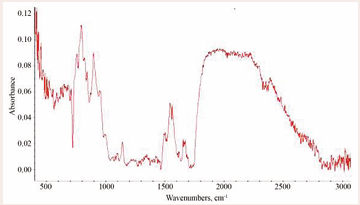
Figure 1: IR spectrum of a high-molecular compound obtained by extracting a substance from poplar buds with hexane
When decoding the spectrum, peaks corresponding to the fragments of molecules indicated below were identified (Table 1).
Table 1: IR spectroscopy data of a high-molecular compound
|
Chemical bond |
Type of vibration |
Frequency range, cm-1 Literature data |
Value of identified vibrations, cm-1 |
|
-?-?=?- |
Valence |
1690-1635 |
1632, 1683 |
|
|
Valence |
725-675 |
698,4; 722,6 |
|
?=? conjugated esters |
Valence |
1730-1710 |
1704, 1727 |

Based on the obtained IR spectra, it can be assumed that the isolated resinous fraction contains compounds characterized by the presence of ester and unsaturated carbonyl groups, as well as high-molecular-weight components.
After separation of the insoluble resinous fraction, the filtrate was evaporated and left at room temperature. After two days, light-yellow crystals formed in the concentrate, which were separated by filtration and washed with petroleum ether.
Thin-layer chromatography was used for preliminary identification of the isolated compound. Comparison of the chromatographic mobility (Rf) of the obtained crystals with a standard pinostrobin sample revealed a match, indicating the presence of pinostrobin in the sample.
To improve the purity of the substance, it was recrystallized from ethyl acetate, yielding well-formed light-yellow crystals (Figure 2). The morphology of the obtained crystals was studied by transmission electron microscopy using an EM-125K device (Figure 2).
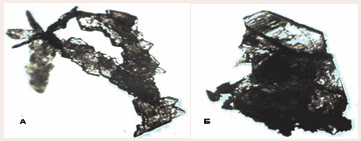
Figure 2: Pinostrobin crystals before recrystallization (a) and after recrystallization (b)
IR spectra were recorded for crystals of the resulting pinostrobin. Analysis of the spectra showed the presence of characteristic absorption bands corresponding to the functional groups of pinostrobin, which confirms the identity of the resulting substance (Figure 3).
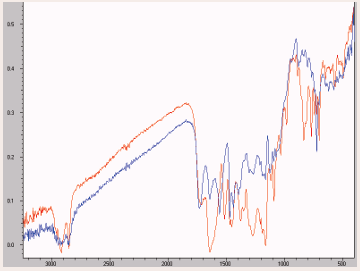
Figure 3: IR spectrum of pinostrobin
The characteristic absorption bands are presented in Table 2. The results obtained indicate that, under the selected extraction conditions, pinostrobin passes into the hexane fraction and, after concentrating the extract, crystallizes from solution. This indicates its limited solubility in hexane upon heating, followed by a decrease in solubility upon cooling and concentrating the extract. The data obtained expand the existing understanding of the features of the isolation of pinostrobin from natural plant materials and can be used in the development of methods for its preparative production.
Table 2: Characteristic peaks of the IR spectrum of pinostrobin
|
Chemical bond |
Type of vibration |
Frequency range, cm-1 Literature data |
Value of identified vibrations, cm-1 |
|
Ar C-C |
Valence |
1625-1575 |
1620, 1574 |
|
?-?-? in saturated heterocycles |
Valence |
900-650 |
668, 888 |
|
?=? in saturated heterocycles |
Valence |
1525-1475 |
1505, 1471 |
The isolated compound was tentatively identified as pinostrobin based on thin-layer chromatography and IR spectroscopy. According to literature data, pinostrobin (5-hydroxy-7-methoxyflavanone) belongs to the class of flavanones, has a molecular formula of C??H??O?, and a molecular weight of 270.28 g/mol. The structural formula of the compound is shown in Figure 4.
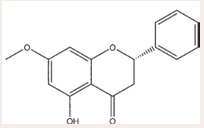
Figure 4: Structural formula of pinostrobin
To finally confirm the structure of the isolated compound, mass spectrometric analysis and ¹H NMR spectroscopy were carried out.
The mass spectrum of the isolated compound (Figure 5) shows an intense molecular peak at m/z 270, corresponding to the molecular mass of C??H??O?. This value is consistent with the molecular mass of pinostrobin (5-hydroxy-7 methoxyflavanone). In addition to the molecular ion, the spectrum contains characteristic fragment peaks at m/z 252, 242, 227, 193, 166, 138, 110, 95, 77, and 69, due to the sequential cleavage of the flavanone skeleton. The observed fragmentation pattern is consistent with published data for pinostrobin and confirms that the isolated compound is a flavanone.
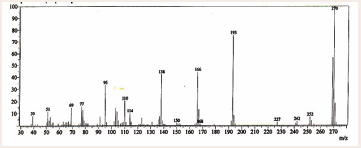
Figure 5: Mass spectrum of pinostrobin
For further structural confirmation, ¹H NMR spectroscopy was performed (Figure 6). In the 1H NMR spectrum of the isolated compound, a signal of the phenolic hydroxyl group is observed at δ 12.0 ppm, which is characteristic of the hydroxyl group participating in intramolecular hydrogen bonding.
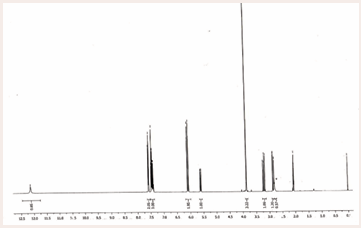
Figure 6: ¹H NMR spectrum of pinostrobin in CDCl?
Signals of five aromatic protons of the phenyl ring B are recorded in the δ 7.40 7.59 ppm region. Signals at δ 6.05–6.10 ppm correspond to two aromatic protons of ring A. The signal at δ 5.58 5.62 ppm is due to the H-2 proton of the flavanone ring. The singlet at δ 3.86 ppm corresponds to the protons of the methoxyl group –OCH?. Signals in the δ 3.16–3.24 and 2.82–2.87 ppm region refer to the diastereotopic protons H-3 of the flavanone ring. In the enlarged portion of the spectrum (Figure 7), the signals of the H-3 protons of the flavanone ring and the signal of the methoxyl group are clearly distinguishable in the δ 2.8–3.9 ppm region. The signal at δ 3.86 ppm corresponds to three protons of the –OCH? group, and the signals at δ 3.16–3.24 and 2.82–2.87 ppm are attributed to two diastereotopic H-3 protons.
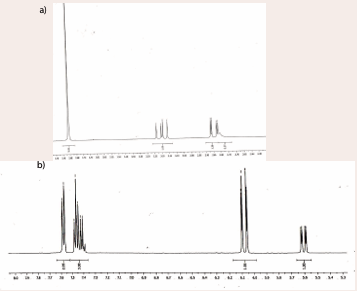
Figure 7: Enlarged fragments of the ¹H NMR spectrum of pinostrobin: a – region of H-3 and OCH? signals; b – region of H-2, H-6, H-8 and aromatic proton signals.
In the enlarged portion in the δ 5.5–7.6 ppm region, a signal of proton H-2 is observed at δ 5.58–5.62 ppm, signals of protons H-6 and H-8 of ring A at δ 6.05–6.10 ppm, as well as signals of aromatic protons of phenyl ring B at δ 7.40–7.59 ppm.
The combined use of thin-layer chromatography, IR spectroscopy, mass spectrometry, and 1H NMR spectroscopy reliably confirmed that the isolated compound is pinostrobin, present in the hexane fraction of poplar buds. The isolation scheme is shown in Figure 8.
The scheme presented in Figure 8 illustrates the sequence of pinostrobin isolation from the hexane fraction of poplar buds. In the first step, the resinous substance was extracted with hexane at 60°C, followed by cooling and separation of the extract. The extract was then filtered to remove the insoluble high-molecular resinous fraction (in samples obtained by the barothermal method). After concentrating the filtrate and settling, pinostrobin crystallized. The resulting crystals were washed with petroleum ether and further purified by recrystallization from ethyl acetate. The identity of the isolated compound was confirmed by thin-layer chromatography and a combination of spectral methods. The yield of pinostrobin was approximately 3% of the mass of the original resinous substance, regardless of the extract preparation method.
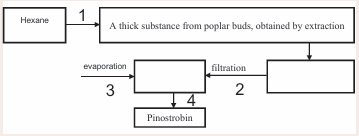
Figure 8: Scheme of pinostrobin isolation
CONCLUSION
In this study, an efficient procedure for the isolation and purification of pinostrobin from the hexane fraction of balsam poplar (Populus balsamifera L.) buds was developed. The proposed extraction method yielded crystalline pinostrobin with an average yield of approximately 3%, demonstrating the feasibility of obtaining this valuable flavanone from renewable plant biomass.
The identity of the isolated compound was comprehensively confirmed using additional analytical methods. Thin-layer chromatography provided preliminary evidence of the compound's identity, while infrared spectroscopy, gas chromatography-mass spectrometry, and proton nuclear magnetic resonance spectroscopy definitively confirmed the chemical structure of pinostrobin. The combination of these analytical methods ensured a reliable structural characterization of the isolated flavonoid.
The results demonstrated that the developed extraction and purification procedure provides an efficient method for isolating pinostrobin from the hexane fraction of poplar bud extracts. The study also demonstrated that, under the selected extraction conditions, pinostrobin can be successfully isolated from a hexane extract, opening up additional opportunities for optimizing purification protocols for flavonoid-rich plant materials.
From a sustainable urban green resource management perspective, balsam poplar buds represent a renewable and underutilized source of bioactive compounds. Their use facilitates the efficient use of biomass generated during the maintenance of urban green infrastructure and supports the principles of a circular bioeconomy. The proposed methodology can serve as a basis for the production of highly pure natural flavonoids for further application in agriculture, pharmaceuticals, and other green technologies.
REFERENCES
- Pamukcu-Albers P, Ugolini F, La Rosa D, Gr?dinaru SR, Azevedo JC, Wu J. Building green infrastructure to enhance urban resilience to climate change and pandemics. Landsc Ecol. 2021; 36: 665-673.
- MacFarlane DW. Potential availability of urban wood biomass in Michigan: Implications for energy production, carbon sequestration and sustainable forest management in the USA. Biomass Bioenergy. 2009; 33: 628-634.
- Bayeroju OF, Sanusi AN, Nwokediegwu ZQ. Review of circular economy strategies for sustainable urban infrastructure development and policy planning. J Sustain Infrastruct. 2024; 9: 101-118.
- Zasada JC, Phipps HM. Populus balsamifera L. Balsam poplar. In: Burns RM, Honkala BH, editors. Silvics of North America. Vol. 2. Washington, DC: USDA Forest Service; 1990: 518-529.
- Polyakov VV, Alzhanov AE. Prospects for the introduction of new original drugs based on balsam poplar buds (Populus balsamifera). GISAP Med Sci Pharmacol. 2013; 86–89.
- Shataer D, Li Y, Wang X, Zhang H, Liu Q, Zhao Y, et al. An up-to-date review on the classification, pharmacology, and production of terpenes and terpenoids. Curr Org Chem. 2025.
- Urbanchik EA, Kiselova YV, Karpova IA, Kholodova ES, Khoroshilova OV, Lobanova AA, et al. Phytochemical and pharmacological study of biologically active compounds and dry extracts of Populus rubrinervis Hort. Alb. buds of various polarities. Sci Pract J. 2023: 301.
- Wang Z, Zhang Y, Liu X, Li H, Chen Y, Zhao L, et al. Research progress on the pharmacological effects and molecular mechanisms of pinostrobin. Nat Prod Commun. 2023; 18: 1934578X231215934.
- Juszczak AM, Zovko-Kon?i? M, Tomczyk M. Recent Trends in the Application of Chromatographic Techniques in the Analysis of Luteolin and Its Derivatives. Biomolecules. 2019; 9: 731.
- Kis B, Avram S, Pavel IZ, Lombrea A, Buda V, Dehelean CA, et al. Recent Advances Regarding the Phytochemical and Therapeutic Uses of Populus nigra L. Buds. Plants (Basel). 2020; 9: 1464.
- Rajendran S, Siengchin S, Parameswaranpillai J, Sanjay MR, Saba N, Jawaid M, et al. Replacement of petroleum-based products with plant-based materials, green and sustainable energy: A review. Eng Rep. 2025; 7: e70108.