Assessing Cognitive Socio‑Emotional Dissociation in Autism: Cross‑National Studies Using the Socio‑Emotional and Cognitive Evaluation Battery (SCEB)
- 1. University Paris Cité, Laboratory of Psychopathology and Health Processes, France.
- 2. Medical University of Varna, Faculty of Medicine, Department of Psychiatry and Medical Psychology, Bulgaria
Abstract
Developmental assessment provides essential insight into the functional organization of Autism Spectrum Disorder (ASD) beyond categorical diagnosis. The Socio?Emotional and Cognitive Evaluation Battery (SCEB) grounded in Piagetian and neo?Piagetian models reliably assesses 16 developmental domains. This paper presents some researches using this tool which showed that autistic children functioning between 4 and 24 months of developmental age presented highly heterogeneous developmental profiles, marked by strong cognitive abilities (spatial relations) and pronounced socio?emotional weaknesses (vocal and gestural imitation, expressive language, social interaction). These patterns are different in children with Intellectual Disability without ASD. International studies using SCEB across Europe, North Africa, and South America reveal highly similar developmental profiles in autistic children with ID, confirming a stable cognitive socio?emotional dissociation and systematic associations between autistic symptomatology and ID severity. Together, these findings, on one hand, confirm a relatively stable developmental pattern observed across several cultural contexts and on the other hand serves as support for the international applicability of the SCEB.
Keywords
• Assessment of cognitive and socio-emotional development
• Socio-Emotional and Cognitive Evaluation Battery (SCEB)
• Children with autism spectrum disorder
• Intellectual disability and global development delay
• Atypical developmental organization in autism across countries
• Cross-cultural assessment
Citation
Adrien JL, Stefanova R (2026) Assessing Cognitive–Socio?Emotional Dissociation in Autism: Cross?National Studies Using the Socio?Emo tional and Cognitive Evaluation Battery (SCEB). Pediatr Child Health 14(2): 1367.
INTRODUCTION
Developmental assessment provides essential insights into the functional organization of Autism Spectrum Disorder (ASD) beyond categorical diagnosis. Rather than focusing solely on the presence of autistic symptoms, developmental profiling helps identify relative strengths and weaknesses across cognitive and socio?emotional domains, thereby guiding individualized intervention planning. Research using the Socio?Emotional and Cognitive Evaluation Battery [1], has consistently shown that autistic children functioning between 4 and 24 months of developmental age present highly heterogeneous developmental profiles [2], characterized by robust strengths in cognitive domains such as spatial relations, causal reasoning, and object permanence and marked weaknesses in socio?emotional domains such as vocal imitation, gestural imitation, expressive language, and in the cognitive domain, symbolic play.Studies focusing on autistic children with co?occurring intellectual disability (ID) or global developmental delay (GDD) show even more pronounced heterogeneity than in children with ID without ASD [3,4].These profiles reveal a significant heterochrony, i.e., uneven developmental timing across domains, a stable dissociation between relatively preserved cognitive abilities (such as spatial visuo?construction) and highly impaired socio?emotional functions (such as joint attention and vocal imitation) and systematic associations between autism severity, ID severity, and overall developmental level. And the developmental profiles were different in children with ID but without ASD [5?7], who exhibited socio?emotional abilities at a more advanced developmental level. These findings have been replicated across several countries [8 11], suggesting that developmental heterogeneity is a core characteristic of ASD, not an incidental variation. Thus, although this tool did not exhibit all informed assessments criteria such as they were recomnended by Yu et al (2024) [12], it seems to be relevant to examine autistic children living in several different countries on different continents. After the description of the SCEB and the presentation of its interest, we exposed different international researches involving autistic children living in different countries, and the limitations of the SCEB
THE SOCIO-EMOTIONAL COGNITIVE EVALUATION BATTERY (SCEB)
Theoretical framework and composition
The SCEB [1,13], is an instrument specifically created for the examination of pre?school and school?aged children with autism and intellectual disability and recommended by the French High Health Authority (HAS, 2010, 2018). The SCEB translates Piagetian and neo?Piagetian models of psychological development [14,15], into an operationalized assessment structure. It was characterized by a theoretical and empirical developmental sensitivity and satisfactory adjustment to chronological and developmental age differences in French young typical children aged from 4 to 24 months [16].
This assessment tool determines the developmental level in each of 16 domains which are grouped in two areas : the cognitive area, including 7 domains: self?image, symbolic play, object?relation schemata, operational causality, means?aims, spatial relations and object permanence, and the socio?emotional area consisting of 9 domains: behavior regulation, social interaction, joint attention, expressive language, comprehensive language, vocal imitation, gesture imitation, affective relation and emotional expression). Each domain comprises a hierarchical list of items for each developmental level corresponding to 4 period of age: Level 1 (4-8 months), Level 2 (8-12 months), Level 3 (12-18 months) and Level 4 (18-24 months). Relative to cognitive area, the domains was constructed from the Piaget’ sensori?motor intelligence model (1977) and inspired from the Uzgiris Hunt scale (1975). Relative to Socio?emotional area, the social interaction, joint attention, behavior regulation items were selected and ranged by period of age based upon from the Early Social Communication Scales [17]. Expressive and Receptive Language domains’ items [18 20], Emotional Expression [21], Affective Relations [22], Gestural and Vocal Imitation [23], and Self?image domain’ items development [24], were selected from researches relative to infant and young children and relative to autistic children [25,26].
Asessment procedure
The child is examined in one or two 30 minute sessions in a suitable room by a psychologist or other professional experienced with children presenting ASD and ID, and familiar with the SCEB material. The SCEB is administered in a naturalistic manner, and assessment protocol must be respected. The examiner interacts with the child by inviting them to make verbal and non?verbal contact with them and to manipulate the test material. The examiner observes the child’s behaviors, including response and initiating interactions, objects and toy manipulation, vocalizations, words and sentences of two or more words, facial expressions, imitation and joint attention behaviors. Complementary information can be obtained from the family or teachers after the examination, in particular for the Emotional Expression and Affective Relations domains. In fact, these domains includes behaviors mainly expressed in the presence of parents or teachers, such as “He/she can recognize and differentiate between his/her parents”, or “He/she delights in provoking the favorite person”.
Cotation
Each item was rated, either as grade 2 (= complete success), grade 1 (= emergence or relative success with a bit of help and a demonstration) or grade 0 (= failure in spite of some help and a demonstration). The developmental level reached by the child in a domain corresponds to a level in which at least one of the items among the higher level was graded 1. A developmental level score from 1 to 4 was determined for each of the 16 domains and this provide a developmental profile for each child (Figure 1).
The overall average levels, as well as both global, cognitive and socio?emotional and global, cognitive and socio?emotional heterogeneity’ indices were calculated. All scores of the SCEB presented appropriate reliability and validity according to the usual psychometric criteria [1,13,16] (Figure 1).
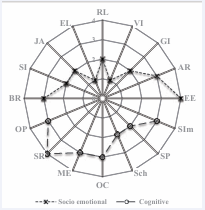
Figure 1: Example of a profile of cognitive and socio-emotional development obtained with the SCEB
|
Legend: |
|||
|
Cognitive domains (n = 7) |
Socio-emotional domains (n = 9) |
||
|
SIm |
Self-Image |
BR |
Behavior Regulation |
|
SP |
Symbolic Play |
SI |
Social Interaction |
|
Sch |
Object relation Schemata |
JA |
Joint Attention |
|
OC |
Operational Causality |
EL |
Expressive Language |
|
ME |
Means-Ends |
RL |
Receptive Language |
|
SR |
Spatial Relation |
VI |
Vocal Imitation |
|
OP |
Object Permanence |
GI |
Gestural Imitation |
|
|
AR |
Affective Relation |
|
|
EE |
Emotional Expression |
||
Interests of the SCEB comparatively to other developmental tests
The interest and the originality of the SCEB, comparatively to other tests such as Bayley Infant scale [27], Vineland scales [28], and Mullen scales [29,30], are that it makes it possible to assess, simultaneously, numerous socio?communicative (9) and cognitive (7) domains that develop during the first two years of life, some of which are known to be particularly impaired in autistic individuals. So, it is useful in pediatric departments as well as in autism screening and diagnostic center but also in centers specialized in treatment and education for handicapped and disabled children. From the assessment with the SCEB can be elaborated therapeutic and educative intervention programs based on cognitive and socio emotional weaknesses and strenghts identified in some domains. For example, if vocal imitation and symbolic play were the lowest developmental level domians, then, play and vocal training carried out by a speech therapist can be proposed for the child [31]. Moreover, several successive assessments over time permit to show evidence of the child’ developmental progression and changes in these 16 domains and be related to intervention programs [32?34].
Limitations of the SCEB
The SCEB is designed for children and also adults with ASD and severe ID [10], functioning between 4 and 24 months of developmental age, but it is not suitable for higher?functioning autistic children or adults whose developmental ages were above two years. So, when the child or adult progresses and exceeds the highest developmental level of the BECS (24 months) in one or several domains, it is no longer possible to document the developmental level reached in those domains. It was necessary tu use another test covering the period of developmental age above two years, such as the PEP?3 especially dedicated to autistic children [35]. Moreover, the SCEB does not assess all domains relevant to autism such as sensory processing, motor skills, executive fonctions. So, for a complete assessment of the autistic child functioning and development, it was necessary to use adapted tests in these domains [12].
International researches findings using SCEB
Several international studies in autism were carried out using the SCEB. At first, it was necessary to ensure that the SCEB materials and administration procedures were appropriate for children across the different countries. Thus, before psychologists from different countries start the assessment and to control for the cross?cultural context, they ensure that the SCEB is easily usable for all children of their country: they assessed a few children with ASD and then confirm that the SCEB could be easily and correctly used without adaptation. On one hand, the material is very common and familiar to children (toys such as cars, dolls and blocks…) and on the other hand, the vocal, verbal (e.g. “give me the car”, “look at pictures”; “show me the ball”) and non?verbal instructions (e.g. “point to a picture or an object”; “imitate a gesture of clapping”; “look at the mirror”; “hide an object under a box”) are simple and very accessible to and understood by children across these cultures.
Cross?cultural using of the SCEB and stability of developmental profiles
The international studies using the SCEB converge on a central finding: children with ASD and ID exhibit remarkably similar developmental profiles across countries, despite differences in language, culture, educational systems, and clinical practices. The developmental heterogeneity assessed with SCEB was noted in 130 autistic children from seven countries, France, Belgium, Spain, Algeria, Greece, Canada, Brazil [8]. Moreover, a clinical group of 119 children across three countries, France (N= 40), Brazil (N = 40), Algeria (N = 39) displayed identical strengths (spatial relations, operational causality, object permanence, behavior regulation), identical weaknesses (vocal imitation, gestural imitation, expressive and receptive language, social interaction), and a very high developmental heterogeneity indices, far exceeding those of typically developed children [9].
Together, these results might confirm that the SCEB is very useful and relevant and reveals a stable developmental organization that appears to reflect fundamental neurodevelopmental mechanisms in children with ASD rather than culturally shaped developmental trajectories.
Toward a developmental phenotype of autism
Integrating these different studies supports a strong conclusion: autistic children with intellectual disability present a specific, stable, and relatively stable developmental pattern observed across several cultural contexts, characterized by extreme heterogeneity across domains, a robust cognitive–socio?emotional dissociation, consistent cognitive strengths in spatial and object?related processing, consistent socio?emotional weaknesses in communication and imitation, systematic correlations between autistic symptomatology and ID severity.
CONCLUSION: THEORETICAL AND CLINICAL IMPLICATIONS
These findings support the view that autism involves an atypical developmental organization, not a uniform global delay. The identified profiles help target priority intervention domains (vocal imitation, expressive language, social interaction). They contribute to defining a developmental phenotype of autism, useful for research, diagnosis, and intervention planning. Moreover, the relatively stable developmental pattern observed across several cultural contexts reinforces the ecological and international validity of the SCEB which can be used to assess cognitive and socio?emotional development of autistic children with Intellectual Disability or Global Development Delay.
Conflict of Interests
The first author is the author of the SCEB edited in the Pearson France-ECPA. The second author declares that the brief communication was conducted in the absence of any commercial or financial relationships that could be construed as a potential conflict of interest
Data Availability Statement
The raw data supporting the conclusions of this article and appearing in previous publications will be made available by the authors, without undue reservation.
REFERENCES
- Adrien JL. Manuel de la Batterie d’Evaluation Cognitive et Socio-émotionnelle (BECS). Manual of Social Cognitive Evaluation Battery (SCEB). Paris : Pearson France-ECPA.
- Adrien JL, Hémar E, Blanc R, Boiron M, Couturier G, Hameury L, et al. Etude du développement cognitif et socio-émotionnel d’enfants sévèrement autistiques. Approche évaluative et thérapeutique. Revue Québécoise de Psychologie. 1999; 1:109-125.
- Adrien JL, Taupiac E, Thiébaut E. Paulais MA, Van-Gils J, Kaye K, Blanc R, et al. A comparative study of cognitive and socio-emotional development in children with autism spectrum disorder and children with Rubinstein-Taybi syndrome associated with a severe intellectual disability, and in young typically developing children with matched developmental ages. Res Dev Disabil. 2021; 116: 104029.
- Krieger AE, Devouche E, Paulais MA, Nader-Grosbois N, Sankey C, Taupiac E, et al. Specificity of cognitive and socio-emotional developmental profiles in children with Down Syndrome presenting diagnosis of autism spectrum disorder. Global J Intellectual Dev Disabilities. 2022; 10: 555783.Taupiac E, Lacombe D, Thiébaut E, Michel G, Adrien JL. Psychomotor, cognitive and socio-emotional developmental profiles of children with Rubinstein-Taybi Syndrome and severe intellectual disability. J Intellect Dev Disabil. 2020.
- Nader-Grosbois N, Seynhaeve I. Étude des profils multidimensionnels d’enfants à déficience intellectuelle et à trouble autistique in BECS Pratiques psychologiques et recherches cliniques auprès d’enfants atteints de TED, ed. J-L. Adrien (De Boeck, Brussels). 2008; 171-191.
- Seynhaeve I, Nader-Grosbois N. Sensorimotor development and dysregulation of activity in young children with autism and with intellectual disabilities. Res Autism Spectrum Disorders. 2008; 2: 46-59.
- Bernard MA, Thiébaut E, Mazetto C, Nassif MC, de Souza MTCC, Nader-Grosbois N, et al. L’hétérogénéité du développement cognitif et socio-émotionnel d’enfants atteints d’autisme en lien avec la sévérité des troubles. Revue de Neuropsychiatrie de l’Enfance et de l’Adolescence. 2016; 64: 376-382.
- Bernard Paulais MA, Mazetto C, Thiébaut E, Nassif MC, Costa Coelho De Souza MT, Stefani AP, et al. Heterogeneities in Cognitive and Socio-Emotional Development in Children with Autism Spectrum Disorder and Severe Intellectual Disability as a Comorbidity. Front Psychiatry. 2019; 10: 508. Adrien JL, Thiébaut É, Blanc R. Preliminary psychometric study of Socio-emotional and Cognitive Evaluations Battery for Adults (SCEB-A) with autism spectrum disorders and severe intellectual disability. Global J Intellectual Developmental Disabilities. 2013; 14.
- Stefanova R. Developmental Profiles and Clinical Decision-Making: Using BECS in Children with Neurodevelopmental Disorders. Scientific researches of the Union of Scientists in Bulgaria–Plovdiv, series G. Medicine, Pharmacy and Dental medicine. 2026.
- Yu Y, Ozonoff S, Miller M. Assessment of Autism Spectrum Disorder. Assessment. 2024; 31: 24-41.
- Thiébaut E, Adrien JL, Blanc R, Barthélémy C. The Social Cognitive Evaluation Battery (SCEB) for children with autism: a new tool for the assessment of cognitive and social development in children with autism spectrum disorders. Autism Res Treat. 2010.
- Fischer KW. A theory of cognitive development: the control and construction of hierarchies of skills. Psychological Review. 1980; 87: 477-531.
- Piaget J. La naissance de l’intelligence chez l’enfant (9th éd.). Neuchâtel, Delachaux et Niestlé. 1977.
- Thiébaut E, Paulais MA, Blanc R, Gattegno MP, Adrien JL. Sensibilité développementale théorique et empirique des items de la BECS pour l’évaluation du développement psychologique de jeunes enfants au développement typique. (Theoretical and empirical genetic sensitivity of SCEB items for assessment of young typically developing children). Psychologie Française. 2021; 61-76.
- Seibert JM, Hogan AE. Procedures manual for the Early Social Communication Scales (ESCS), Miami, Mailman Center for Child Development. 1982.
- Bruner JS. From communication to language. A psychological perspective. Cognition. 1975; 3: 255-287.
- Bruner JS. Le développement de l’enfant : savoir faire, savoir dire.Paris, P.U.F. 1983.
- Coplan J, Gleason J, Ryan R, Burke MG, Williams ML. Validation of an early language milestone scale in a high-risk population. Pediatrics. 1982; 70: 677-683.
- Barrett K, Campos J. Perspectives on emotional development: II. A functionalist approach to emotions. In J. Osofsky (ed.), Handbook of Infant development (2nd ed.). New York: Wiley. 1987; 555-578.
- Spitz R. De la naissance à la parole. La première année de la vie. Paris,P.U.F. 1968.
- Uzgiris JC, Hunt JMV. Infant psychological development scale, IPDS. In: Assessment in infancy. Urbana, University of Illinois Press. 1975.
- Zazzo R. La genèse de la conscience de soi (la reconnaissance de soi devant le miroir). The genesis of self-consciousness (self-recognition in the mirror). In P. Fraisse (éd.), Psychologie de la connaissance de soi. Paris, PUF. 1975.
- Dawson G, McKissick. Self-recognition in autistic children. J Autism Dev Disord. 1984; 4: 383-394.
- Ferrari M, Matthews WS. Self-recognition deficits in autism: syndrome-specific or general developmental delay? J Autism Dev Disord. 1983; 3: 317-324.
- Aylward GP. Bayley 4 clinical use and interpretation. Academic Press. 2020.
- Sparrow SS, Cicchetti DV, Saulnier CA. Vineland-III, Vineland Adaptive Behavior Scales, Third Edition. NCS Pearson, USA. 2016.
- Shank L. Mullen Scales of Early Learning. In: Kreutzer, J.S., DeLuca, J., Caplan, B. (eds) Encyclopedia of Clinical Neuropsychology. Springer, New York, NY. 2011.
- Lee EB. Mullen Scales of Early Learning. In: Volkmar, F.R. (eds) Encyclopedia of Autism Spectrum Disorders. Springer, New York, NY. 2013.
- Barton EE, Murray R, O’Flaherty C, Sweeney EM, Gossett S. Teaching object play to young children with disabilities: A systematic review of methods and rigor. Am J Intellect Dev Disabil. 2020; 125: 14-36.
- Bernard MA, Wolff M, Nézereau C, Bourgueil O. Garnier A, Collinet M, Vandromme L, et al. Etude de l’évolution cognitive, socio-émotionnelle et des comportements autistiques d’enfants avec autisme et autre trouble envahissant du développement bénéficiant d’une intervention structurée, la méthode A.B.A. (Applied Behaviour Analysis). Study of cognitive, socio-emotional and autistic behaviour evolution in children with Autism ant other Pervasive Developmental Disorders benefiting of a structured intervention, Applied Behaviour Analysis. Annales Médico-psychologiques. 2018; 176: 847-856.
- Blanc R, Latinus M, Guidotti M, Adrien JL, Roux S, Dansart P, et al. Early Intervention in Severe Autism: Positive Outcome Using Exchange and Development Therapy. Frontiers in Pediatric, section Child and Adolescent Psychiatry. 2021; 9: 785762.
- Mazetto CTM, Thiébaut E, Aquino Vizoná T, Nassif MC, dos Santos RR, Paulais MA, et al. Investigating developmental profiles of children with autism spectrum disorder: Early indicators and directions for intervention. Psychological Research and Applications. 2021; 3.
- Schopler E, Lansing MD, Reichler RJ, Marcus LM. Examiner’s manual of psychoeducational profile (Vol. 3rd). Austin, Texas: Pro-ed Incorporation. 2005.