Prophylaxis Timing in Traumatic Brain Injury: A Path to Shorter Intensive Care Unit Stays
- 1. Center for Clinical Epidemiology and Population Health, Marshfield Clinic Research Institute, USA
- 2. Department of Surgery, Orlando Regional Medical Center, USA
- 3. Department of Surgical Education, Orlando Regional Medical Center, USA
- 4. University of Hawaii, John A. Burns School of Medicine, USA
- 5. Department of Trauma, Wesley Medical Center, USA
- 6. Department of Trauma, Grand Strand Medical Center, USA
- 7. Department of Trauma, TriStar Skyline Medical Center, USA
- 8. Department of Trauma, Marshfield Clinic Health System, USA
Abstract
Background: Venous thromboembolism (VTE) is a serious complication in patients with moderate to severe traumatic brain injury (TBI). While early VTE prophylaxis (VTEp) initiation (24–72 hours) has been shown to reduce thromboembolic events without increasing hemorrhagic complications, the safety and efficacy of very early (≤ 24 hours) administration remain unclear. This study examines the impact of VTEp timing on intensive care length of stay (ICU LOS) in TBI patients, stratified by bleeding risk using the modified Berne-Norwood Criteria (mBNC).
Objective: To develop predictive tools for robust risk stratification that incorporate TBI characteristics, VTEp timing, and patient factors to predict rebleeding risk and optimize ICU resource utilization.
Methods: A retrospective cohort study was conducted using the ACS-TQIP-PUF (2017–2021) database. Adult patients (≥15 years) with isolated TBI receiving VTEp (low molecular weight heparin, unfractionated heparin, or mechanical filter) were included. Patients were categorized by mBNC re-bleeding risk (low, moderate, high) and VTEp timing (very early ≤ 24 hours, middle > 24 to < 72 hours, late ≥ 72 hours). ICU LOS was analyzed using multivariable linear regression models.
Results: Among 99,078 patients, very early VTEp was associated with significantly shorter ICU LOS in low and moderate-risk groups (3.7–4.4 days reduction, p < .01) compared to late initiation. High-risk patients receiving very early VTE PPX exhibited increased mortality (p < .01). Patients with and without anticoagulation history showed similar trends.
Conclusion: Very early VTEp significantly reduces ICU LOS in low/moderate risk TBI patients without increasing complications. This finding highlights the importance of timely VTEp in minimizing ICU resource utilization without increasing rebleeding risk in appropriately stratified patients. Developing predictive tools that integrate TBI size, type, and patient factors can further refine risk stratification and optimize clinical decision-making for VTE management in TBI patients.
Levels of Evidence: Level III, retrospective/epidemiological
Highlights
- Initiating VTE prophylaxis within 24 hours significantly decreased ICU length of stay in low and moderate-risk TBI patients.
- Early VTE prophylaxis was beneficial for most patients, high-risk TBI patients experienced increased mortality with very early administration.
- Patients with and without a history of anticoagulation or bleeding disorder showed similar trends in ICU stay reduction with very early VTEp.
Keywords
• Venous Thromboembolism Prophylaxis
• Traumatic Brain Injury
• Intensive Care Unit Stay
• Modified Berne-Norwood Criteria
• Early Vs. Late Anticoagulation Timing
Citation
Rhodes-Lyons HX, Elkbuli A, Chin B, Lee P, Berg G, et al. (2025) Prophylaxis Timing in Traumatic Brain Injury: A Path to Shorter Intensive Care Unit Stays. Ann Vasc Med Res 12(2): 1191.
INTRODUCTION
Venous thromboembolism (VTE) is a serious and potentially fatal complication among trauma patients, particularly those with traumatic brain injury (TBI). TBI patients face an increased risk of developing deep vein thrombosis (DVT) and pulmonary embolism (PE) due to a combination of prolonged immobility, systemic inflammatory responses, and coagulation abnormalities [1-3]. Given these risks, the administration of venous thromboembolism prophylaxis (VTEp) is an essential component of post-trauma management. However, in TBI patients, the decision to initiate pharmacologic VTEp must be carefully balanced against the risk of intracranial hemorrhage (ICH) progression. The timing of VTEp initiation in TBI patients has been a longstanding area of clinical uncertainty. Recent studies suggest that early administration (within 24–72 hours post-injury) of VTEp is associated with reduced rates of DVT and PE without significantly increasing the risk of ICH progression [3-5]. However, the safety and efficacy of very early (≤ 24 hours) VTEp initiation remain unclear. The concern is that administering anticoagulation too soon could exacerbate intracranial bleeding, leading to worsened neurological outcomes or necessitating neurosurgical intervention. Despite these risks, some trauma providers have started adopting very early VTEp protocols to further reduce VTE incidence and intensive care unit length of stay (ICU LOS). This shift in practice warrants further investigation to determine whether very early VTEp provides net clinical benefit in TBI patients. TBI patients often require ICU admission due to the complexity of their injury and the need for close neurological monitoring, ventilatory support, and management of complications such as increased intracranial pressure and seizures [6]. Compared to other trauma patients, those with TBI tend to have longer ICU stays, which are influenced by factors such as Glasgow Coma Scale (GCS) score, injury severity, need for mechanical ventilation, and occurrence of secondary complications [7,8]. Studies have reported ICU LOS for severely injured patients ranging from 6.3 days to over 19 days for severe TBI patients with mass lesions [9,10]. Prolonged ICU LOS is associated with increased risks of secondary complications, including ventilator-associated pneumonia, bloodstream infections, sepsis, and ICU acquired weakness [11]. Furthermore, extended ICU stays place a significant burden on healthcare systems, increasing costs and straining resources. Studies have also linked longer ICU stays with higher post-discharge mortality, particularly in older patients [12,13]. Given these challenges, interventions that safely reduce ICU LOS while maintaining patient safety are of high clinical relevance. A growing body of evidence supports early VTEp initiation in trauma patients, demonstrating reductions in VTE incidence, ICU LOS, and overall hospital costs [14,15]. Rhodes and colleagues, in their recent analysis, stratified TBI patients using the Modified Berne-Norwood Criteria (mBNC) a validated tool for classifying TBI patients into low, moderate, or high risk of spontaneous hemorrhagic progression [16,17]. Their findings suggested that very early (≤ 24 hours) VTEp was safe and effective in patients in the low/moderate risk categories but associated with increased mortality in the high-risk category. These findings underscore the importance of individualized risk stratification when deciding on the timing of VTE prophylaxis. While several studies have compared early versus late (≥ 72 hours) VTEp in terms of mortality and VTE prevention, there remains a lack of high-quality evidence evaluating very early VTE PPX (≤ 24 hours) specifically in relation to ICU LOS [14,15]. Understanding whether very early administration can safely reduce ICU LOS while maintaining low rates of hemorrhagic complications is crucial for optimizing trauma care strategies. Despite advances in trauma care, there is no consensus on the optimal timing of VTEp in TBI patients. Existing guidelines vary in their recommendations. The American College of Surgeons (ACS) suggests early prophylaxis only for low risk nonoperative TBI patients [18]. The American Association for the Surgery of Trauma (AAST) broadly recommends initiation within 24–72 hours, balancing the risk of VTE and ICH progression [19]. Meanwhile, the Brain Trauma Foundation does not provide specific timing recommendations, reflecting ongoing uncertainty in the field [20]. Given this variability, there is an urgent need for large scale, evidence-based research to inform clinical practice. The present study aims to bridge this gap by utilizing data from the American College of Surgeons Trauma Quality Program Participant Use File (ACS-TQIP-PUF) 2017–2021, a comprehensive national trauma dataset. This study will evaluate the impact of very early (≤ 24 hours) versus later (> 24 hours) VTEp on ICU LOS in isolated TBI patients stratified by mBNC re-bleeding risk. By incorporating risk stratification via mBNC, we aim to determine whether certain patient populations (low vs. moderate vs. high risk) may safely benefit from earlier prophylaxis initiation.Our findings have the potential to refine existing clinical guidelines, improve patient outcomes, and enhance ICU resource utilization in trauma centers. Given the high incidence of VTE in TBI patients and the associated risks of prolonged ICU stays, the question of optimal VTEp timing remains a critical topic in trauma care. While early prophylaxis (24–72 hours) has been shown to be safe and effective, very early (≤ 24 hours) administration remains controversial due to concerns about hemorrhagic progression. This study seeks to clarify whether very early VTE can safely reduce ICU LOS, thereby improving patient outcomes and reducing healthcare burden. Our findings will provide valuable insights to guide future trauma management and VTE prevention strategies.
OBJECTIVE
This study aims to evaluate the impact of very early (≤ 24 hours) versus later (> 24 hours) VTE prophylaxis initiation on ICU length of stay among moderate to severe TBI patients. Using the American College of Surgeons Trauma Quality Program Participant Use File (ACS-TQIP PUF) 2017–2021 dataset, we stratified patients by re bleeding risk (low, moderate, and high) per the mBNC. Our objective is to provide evidence-based insights to inform clinical decision-making and optimize the timing of VTEp to improve patient outcomes and healthcare efficiency.
METHODS
Study Design and Data Source
This study was deemed exempt from oversight by the [RHO10523] Institutional Review Board in compliance with current regulations. Results were reported in accordance with the Strengthening the Reporting of Observational Studies in Epidemiology (STROBE) guidelines. The completed checklist is submitted as supplemental digital content. This retrospective cohort study utilized the ACS TQIP-PUF from 2017 to 2021. The ACS-TQIP-PUF dataset comprises anonymized research data from more than 700 trauma centers across the United States, encompassing Level I-V or undesignated centers, and includes all records transmitted to the National Trauma Data Bank (NTDB) [21]. Collected variables included VTEp type and timing, demographics (age, sex, race, ethnicity, insurance, facility verification level, and mode of transportation), injury categories (blunt injury, Injury Severity Score [ISS], and Abbreviated Injury Scale [AIS] body regions), in hospital complications (DVT, pulmonary embolism [PE]), morbidity, ICU length of stay, ventilatory days), ICD10 procedure codes (intracranial pressure monitor and craniotomy) with timing, comorbidity (anticoagulation or bleeding disorder) and in-hospital mortality. The modified Berne-Norwood Criteria is a categorical risk stratification tool used in this research has been adapted for assessing rebleeding risk in TBI patients when considering initiation of VTEp. It categorizes patients into low-, moderate-, and high-risk groups based on clinical and radiologic features such as presence and type of intracranial hemorrhage and need for neurosurgical intervention [17]. This stratification helps clinicians determine the optimal timing for starting low molecular weight heparin (LMWH) or other anticoagulants, balancing the risk of hemorrhagic progression against the risk of VTE. While not all adaptations of the Berne-Norwood criteria for VTE timing are universally codified, this use is supported by evolving clinical practice and literature. Always cross-reference with institutional protocols or more recent studies if needed.
Study Population and Eligibility Criteria
The study population consisted of adult (≥15 years) patients who received low molecular weight heparin (LMWH), unfractionated heparin (UFH), or mechanical filter VTEp with no missing times (Figure 1).
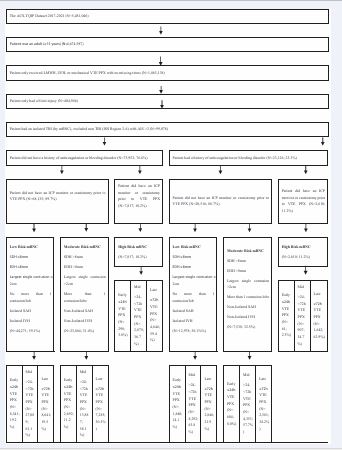
Figure 1 Participant Flowchart Among Adults (≥ 15 Years) Who Only Received LMWH, UFH, or an IVC Filter With No Missing Times That Experienced A Blunt Isolated Traumatic Brain Injury. Note: ACS-TQIP=American College of Surgeons Trauma Quality Improvement; LMWH=low molecular weight heparin; UFH=unfractionated heparin; VTE PPX= venous thromboembolism prophylaxis; TBI=traumatic brain injury; mBNC=modified Bernie Norwood Criteria; ISS=injury severity score; AIS=abbreviated injury severity score; ICP=intracranial pressure; SDH=subdural hematoma; EDH=epidural hematoma; SAH=subarachnoid hemorrhage; IVH=intraventricular hemorrhage
This study population only had a blunt injury type with an isolated TBI based upon the mBNC. The sample population was grouped based on mBNC re-bleeding risk using corresponding AIS PREDOT codes (Supplementary Table 1). The AIS PREDOT codes determines the presentation and size of hemorrhage based upon the computed tomography (CT) scans received closest to the first 24 hours [22]. The mBNC TBI population excluded all ISS non TBI region codes 2-6 (face, chest, abdominal or pelvic, extremities or pelvic girdle, external) that had an AIS injury severity score > 2 (moderate to severe). The isolated mBNC population was split into two groups, patients with and without a comorbid history of anticoagulation or bleeding disorder. The mBNC was applied to distinguish each group into a low-, moderate, or high re-bleeding risk based on size and type of TBI. The high-risk mBNC group had an ICP monitor or craniotomy prior to VTEp. The risk groups were stratified into very early ≤ 24-hour, middle > 24 to < 72 hour, and late ≥ 72 hour VTEP administration. Patient records with incomplete VTEp type and timing were excluded from further analysis. The outcome of interest in this analysis was an estimate on ICU stay based on the timing of VTEp.the Kruskal Wallis test, whereas categorical variables were compared using Pearson’s Chi-square test of proportions, as appropriate in R-4.4.1 in RStudio (R Core Team, 2023, Vienna, Austria) software. Predictor variables for the regression model were selected via multicollinearity test for tolerance, ensuring that values > 0.5 were included to satisfy the goodness of fit criterion. All variables chosen for the model were found to be independent of each other and adequately powered. Statistical significance was defined as p-values <.05 for all models. Two linear regression models were constructed, with ICU length of stay as the dependent variable, respectively. The analysis utilized linear regression in SPSS-28 software (Armonk, NY). There were 18 exposure groups based upon VTEp timing and mBNC re-bleeding risk. The secondary controlled effects encompassed of age, sex, race, ethnicity, insurance, mode of transportation, facility verification level, injury severity score, and VTEp type. The reference group for the models was late (≥ 72 hours) administration of VTEp.
RESULTS
Section I: First Analysis Patient Description
Patient Characteristics with History of Anticoagulation or Bleeding Disorder: Query of the ACS-TQIP database over the four-year period yielded a total of 99,078 isolated TBI patients; 23% had a history of anticoagulation or bleeding disorder (Supplementary Table 2).
Table 2: Linear Regression Analysis of Factors Associated with Intensive Care Unit Length of Stay Among Adults (≥ 15 Years) Who Only Received Low Molecular Weight Heparin, Unfractionated Heparin, or an Inferior Vena Cava Filter with No Missing Times That Experienced A Blunt Isolated Traumatic Brain Injury.
|
|
|
Effect |
S.E. |
Estimates |
95% C.I. |
P-Value |
|
|
|
|
|
|
|
Lower |
Upper |
|
|
No Anticoagulation or Bleeding History |
Low Risk |
Early ≤24h VTEP |
.09 |
-4.40 |
-4.60 |
-4.21 |
<.01 |
|
Mid >24 to <72h VTEP |
.07 |
-4.33 |
-4.47 |
-4.19 |
<.01 |
||
|
Late ≥72h VTEP |
Reference Group |
||||||
|
Moderate Risk |
Early ≤24h VTEP |
.15 |
-4.22 |
-4.52 |
-3.92 |
<.01 |
|
|
Mid >24 to <72h VTEP |
.08 |
-3.94 |
-4.10 |
-3.78 |
<.01 |
||
|
Late ≥72h VTEP |
Reference Group |
||||||
|
High Risk |
Early ≤24h VTEP |
.43 |
-.32 |
-1.16 |
.52 |
.45 |
|
|
Mid >24 to <72h VTEP |
.14 |
-.45 |
-.74 |
-.15 |
<.01 |
||
|
Late ≥72h VTEP |
Reference Group |
||||||
|
Controlling Covariates |
Age |
.002 |
-.01 |
-.01 |
-.008 |
<.01 |
|
|
Sex (Male) |
.05 |
.63 |
.52 |
.74 |
<.01 |
||
|
Race (Caucasian) |
.06 |
-.34 |
-.46 |
-.22 |
<.01 |
||
|
Ethnicity Hispanic or Latino |
.08 |
-.20 |
-.36 |
-.03 |
.01 |
||
|
Insurance (Medicare) |
.07 |
-.27 |
-.41 |
-.13 |
<.01 |
||
|
Mode of Transport (Ground Ambulance) |
.07 |
-.19 |
-.33 |
-.06 |
<.05 |
||
|
Facility Verification Level (Level I) |
.05 |
-.12 |
-.24 |
-.01 |
.03 |
||
|
Injury Severity Score |
.004 |
.07 |
.06 |
.08 |
<.01 |
||
|
VTE Type (LMWH) |
.05 |
-.52 |
-.63 |
-.41 |
<.01 |
||
|
Note: VTEP=venous thromboembolism prophylaxis; LMWH = Low Molecular Weight Heparin; S.E.=Standard Error; C.I.=Confidence Interval |
|||||||
This population was largely Caucasian (84%) and on average was 75 years [SD = 10]. Within this group 56% were considered low, 32% moderate, or 11% high re-bleeding risk based on the mBNC. Of the total sample, patients typically received UFH (50%) on average 68 hours (SD = 62] after arrival. Neurosurgical intervention (1% of total sample; craniotomy or intracranial pressure monitor) after VTEp largely occurred in the moderate risk mBNC very early (≤ 24 hour) VTEp administration group (6%, p < .01; Supplementary Table 3). The average ICU stay in the total population was 5 days [SD = 5], with the longest stay among the high risk mBNC late (≥ 72 hours) VTEp group (Mean = 10 days [SD = 7.4], p < .01). The mortality rate (21%) was the highest among the high risk mBNC very early (≤ 24 hour) VTEp administration group (p < .01).
Patient Characteristics without History of Anticoagulation or Bleeding Disorder: Of the queried sample, 76% did not have a history of anticoagulation or bleeding disorder (Supplementary Table 4). This population was largely Caucasian (72%) and on average was 62 years [SD = 19]. Within this group 59% were considered low 31% moderate, or 10% high re-bleeding risk based on the mBNC. Patients in this group typically received LMWH (59%) on average 63 hours (SD = 67] after arrival. Neurosurgical intervention (1% of total sample; craniotomy or intracranial pressure monitor) after VTEp largely occurred in the moderate risk mBNC very early (≤ 24 hour) VTEp administration group (4%, p < .01; Supplementary Table 4-6). The average ICU stay in the total population was 5 days [SD = 5], with the longest stay among the high risk mBNC late (≥ 72 hours) VTEp group (Mean = 10 days [SD = 8], p < .01). The mortality rate (7%) was the highest among the high risk mBNC very early (≤ 24 hour) VTEp administration group (p < .01).
Section II: Second Analysis, Regression Models Linear Regression Model:
Patients with Anticoagulation and Bleeding History: A linear regression was calculated to estimate ICU length of stay based on early, middle, and late administration of VTEp (Table 1).
Table 1: Linear Regression Analysis of Factors Associated with Intensive Care Unit Length of Stay Among Adults (≥ 15 Years) Who Only Received Low Molecular Weight Heparin, Unfractionated Heparin, or an Inferior Vena Cava Filter with No Missing Times That Experienced A Blunt Isolated Traumatic Brain Injury
|
|
|
Effect |
S.E. |
Estimates |
95% C.I. |
P-Value |
|
|
|
|
|
|
|
Lower |
Upper |
|
|
Anticoagulation or Bleeding History |
Low Risk |
Early ≤24h VTEP |
.17 |
-3.70 |
-4.04 |
-3.35 |
<.01 |
|
Mid >24 to <72h VTEP |
.11 |
-3.48 |
-3.70 |
-3.26 |
<.01 |
||
|
Late ≥72h VTEP |
Reference Group |
||||||
|
Moderate Risk |
Early ≤24h VTEP |
.27 |
-3.39 |
-3.93 |
-2.85 |
<.01 |
|
|
Mid >24 to <72h VTEP |
.12 |
-3.19 |
-3.44 |
-2.94 |
<.01 |
||
|
Late ≥72h VTEP |
Reference Group |
||||||
|
High Risk |
Early ≤24h VTEP |
.83 |
.43 |
-1.20 |
2.08 |
.60 |
|
|
Mid >24 to <72h VTEP |
.23 |
-.01 |
-.46 |
.44 |
.96 |
||
|
Late ≥72h VTEP |
Reference Group |
||||||
|
Controlling Covariates |
Age |
.005 |
-.03 |
-.04 |
-.02 |
<.01 |
|
|
Sex (Male) |
.08 |
.56 |
.39 |
.74 |
<.01 |
||
|
Race (Caucasian) |
.12 |
-.52 |
-.75 |
-.28 |
<.01 |
||
|
Ethnicity Hispanic or Latino |
.19 |
.20 |
-.17 |
.58 |
.29 |
||
|
Insurance (Medicare) |
.11 |
.07 |
-.14 |
.28 |
.51 |
||
|
Mode of Transport (Ground Ambulance) |
.11 |
-.07 |
-.29 |
.14 |
.49 |
||
|
Facility Verification Level (Level I) |
.09 |
-.11 |
-.29 |
.06 |
.19 |
||
|
Injury Severity Score |
.007 |
.10 |
.08 |
.11 |
<.01 |
||
|
VTE Type (LMWH) |
.08 |
-.57 |
-.74 |
-.40 |
<.01 |
||
|
Note: VTEP=venous thromboembolism prophylaxis; LMWH = Low Molecular Weight Heparin; S.E.=Standard Error; C.I.=Confidence Interval |
|||||||
The low re-bleeding risk group with very early (≤ 24 hour) VTEp timing was estimated to discharge from the ICU 3.7 days shorter (95% C.I. = -4.04 to -3.35, p < .01) when compared to the late (≥ 72 hour) reference group. The moderate re-bleeding risk group with very early (≤ 24 hour) VTEp timing was estimated to discharge from the ICU 3.3 days shorter (95% C.I. = -3.9 to -2.85, p < .01) when compared to the late (≥ 72 hour) reference group.
Linear Regression Model: Patients without Anticoagulation and Bleeding History: A linear regression was calculated to estimate ICU length of stay based on early, middle, and late administration of VTEp (Table 2). The low re-bleeding risk group with very early (≤ 24 hour) VTEp timing was estimated to discharge from the ICU 4.4 days shorter (95% C.I. = -4.6 to -4.2, p < .01) when compared to the late (≥ 72 hour) reference group. The moderate re-bleeding risk group with very early (≤ 24 hour) VTEp timing was estimated to discharge from the ICU 4.2 days shorter (95% C.I. = -4.5 to -3.9, p < .01) when compared to the late (≥ 72 hour) reference group.
DISCUSSION
This study demonstrates that among isolated blunt TBI patients in low and moderate mBNC re-bleeding risk groups, those who received very early (≤ 24 hour) VTE prophylaxis had significantly reduced ICU length of stay compared to those who received late (≥ 72 hour) prophylaxis. This was consistent across patient populations irrespective of anticoagulation or bleeding history. Previous clinically relevant findings associated with very early prophylaxis included decreased rates of in-hospital mortality, decreased incidence of in-hospital DVT and PE, and fewer ventilator days [16]. These results suggest that initiating VTE prophylaxis within 24 hours can lead to both improved patient outcomes and more efficient use of healthcare resources. The significant reductions in ICU length of stay associated with very early prophylaxis highlights the potential benefits of more immediate treatment in isolated TBI patients, regardless of anticoagulation or bleeding history. Previous literature has demonstrated similar findings when comparing early prophylaxis (≤ 72 hours from admission) with late (> 72 hours to 7 days) or delayed (> 7 days) prophylaxis. A retrospective study by Hollfelder et al. observed decreased ICU length of stay by approximately four to six days with early prophylaxis versus late or delayed [15]. Similarly, Koehler et al., observed a two-day reduction in ICU stay with early compared to late prophylaxis [23]. Another retrospective study by Al-Dorzi et al., found that low and moderate risk patients given early prophylaxis resulted in approximately three fewer days in the ICU, although their findings were not statistically significant [24]. Notably, these studies used smaller sample sizes and did not further stratify timing into very early and middle VTE prophylaxis, as was done in our study. Our analyses support previous research while demonstrating further reductions in ICU length of stay with more immediate timing. Moreover, because our findings were consistent for patients both with and without anticoagulation or bleeding history, this approach appears to be effective in a wide range of patient populations.Reduced ICU length of stay is associated with improved short- and long-term patient outcomes as well as lower hospital costs. A multicenter cohort study by Tardif et al., found that ICU stays exceeding 72 hours were associated with significantly higher rates of ventilator acquired pneumonia and cardiovascular complications [6]. Additionally, a prospective study by Huijben et al. observed that patients with longer stays had a greater than threefold increase in six-month mortality [25]. While these outcomes may be affected by other factors such as trauma center practice variations and injury severity, minimizing ICU length of stay directly benefits both patient well being and effective utilization of hospital resources [26]. Therefore, administering very early VTE prophylaxis may be beneficial in mitigating multiple complications associated with prolonged ICU days, ultimately improving patient outcomes and reducing the overall burden on healthcare systems. Our analysis also demonstrated very early VTE prophylaxis to be associated with significantly decreased mortality in low and moderate risk re-bleed patients with or without anticoagulation or bleeding history. Previous literature examining the effects of thromboprophylaxis timing on mortality in this patient population have reported inconsistent findings. For example, Hollfelder et al., observed a greater than four-fold decrease in mortality when patients were given early versus late prophylaxis [15]. In contrast, Byrne et al., and Koehler et al., found that administering early prophylaxis did not significantly decrease mortality [4-23]. Our large-scale study adds to the existing body of evidence, supporting the potential mortality benefits of both very early and early prophylaxis when compared to late prophylaxis. Furthermore, our stratification by history of bleeding and anticoagulation emphasizes the potential safety of early prophylaxis across these clinically relevant patient groups. Consistent with our other outcomes, rates of DVT and PE as well as ventilator days were also significantly decreased with very early VTE prophylaxis in both patient groups. These findings align with existing studies such as Hollfelder et al. which demonstrated that early prophylaxis was associated with significantly reduced VTE rates compared to late prophylaxis [15]. Moreover, a retrospective case series by Saadeh et al. found that none of the 122 patients who received very early prophylaxis developed VTE [27]. Regarding ventilation days, Al-Dorzi et al., and Koehler et al. both observed that late prophylaxis was associated with an increased need for mechanical ventilation compared to the early group [23,24]. Further research should explore the cost-effectiveness of very early prophylaxis, given its potential impact on both clinical outcomes and healthcare resource use. The clinical implications of very early VTE prophylaxis for isolated blunt TBI patients in low and moderate mBNC re-bleeding risk groups are substantial, with potential to impact both current patient management and future guidelines. Initiating prophylaxis within 24 hours improves patient outcomes by significantly reducing ICU length of stay, in-hospital mortality, ventilator days, and rates of DVT and PE. The effectiveness of this early timing extends even to patients with a prior history of anticoagulation or bleeding, addressing concerns about potential contraindications in these groups. Therefore, with careful risk assessment, this approach can be safely implemented to optimize patient outcomes. These benefits also help alleviate healthcare system burdens by reducing the length and complexity of patient care, optimizing resource use, and ultimately reducing costs [28]. Currently, there is variability in the recommended timing of VTE prophylaxis across trauma organization guidelines. The American College of Surgeons only recommends very early prophylaxis in low risk nonoperative TBI patients as determined by the mBNC. For patients with moderate and high risk nonoperative TBI, a timing of 24 to 48 hours is recommended, provided the intracranial injury remains stable [29]. In contrast, the American Association for the Surgery of Trauma (AAST) more broadly recommends initiation of thromboprophylaxis within 24-72 hours following TBI while balancing the risk of further bleeding [5]. The Brain Trauma Foundation does not provide specific level I or II recommendations regarding VTE prophylaxis in this patient population [20]. Our study provides additional evidence that may be utilized to create more specific and consistent guidelines in the future. We propose several recommendations based on our findings. Very early VTE prophylaxis appears to be safe and effective in isolated TBI patients with low and moderate risks of re-bleeding, therefore surgical and trauma societies should consider revisiting existing guidelines to provide more specific recommendations regarding very early prophylaxis and its potential impacts on key outcomes including ICU length of stay, mortality, and VTE rates. However, clinicians should remain cautious when managing high-risk patients due to the known risk of bleed expansion or worsening bleed. Finally, future research is needed to provide more granular data on metrics such as cost implications, bleed progression, and cause of mortality. Gaps in the literature exist regarding safety of early initiation in patients with severe head injuries. This study served to address these issues with a large-scale retrospective cohort grouped using the mBNC. Our findings demonstrate that very early VTE prophylaxis for TBI patients with low and moderate re-bleeding risk was associated with reduced ICU LOS compared to patients who received late prophylaxis. Benefits were also observed regarding in-hospital mortality, ventilator days, and rates of DVT/PE. Our findings highlight the need for updated practice management guidelines regarding the timing of thromboprophylaxis initiation in this patient population, to optimize patient outcomes, costs, and hospital resources.
CONCLUSION
This study of adult trauma patients with severe isolated TBI found that those receiving chemical or mechanical VTE prophylaxis within 24 hours had significantly reduced ICU length of stay compared to those who received delayed prophylaxis. These patients also experienced reduced mortality, DVT and PE rates, and ventilator days. These findings underscore the importance of establishing more specific protocols and guidelines to improve treatment and outcomes for this high-acuity patient population. Future studies should also examine the cost implications and long-term outcomes of this management strategy to provide further evidence for hospitals and trauma systems.
STRENGTHS AND LIMITATIONS
Our study has several strengths, including the intention to analyze only isolated TBI patients stratified by the presence of preexisting anticoagulation or medical coagulopathy in three specific time cohorts. However, it is not without the limitations of a large retrospective database design. First, neurosurgical procedures served as a marker for clinically significant bleeding progression, however this does not consider significant events that do not require surgical intervention. Relying on neurosurgical intervention as a proxy for significant hemorrhagic progression, potentially overlooks clinically relevant non-operative bleeding events. As an example, many trauma centers use repeat head CT imaging in practice management guidelines that allow for the initiation of VTE prophylaxis. Radiologically indicated progression of bleeding is significant and would impact timing of prophylaxis, but this data is not captured in this study or by the ACS-TQIP-PUF dataset. Secondly, there is little mortality information available in this data set. The time and cause of death, specifically if related to bleeding events, is crucial before any recommendations can be made about timing of prophylaxis in the highest risk patients. Third, due to limited granularity, we were unable to assess long term functional outcomes, especially in patients requiring craniotomy or ICP monitoring after prophylaxis. Fourth, variations in institutional VTEp protocols may introduce bias, though stratification by re-bleeding risk (mBNC) aimed to mitigate this. Fifth, the dataset does not include long-term functional outcomes, which are essential for evaluating the broader impact of early prophylaxis. Finally, while ICU LOS serves as a valuable metric for resource utilization, other confounding factors such as variations in mechanical ventilation practices, secondary complications, and ICU admission criteria across trauma centers could influence results. Future prospective studies with real-time imaging data and long-term follow-up are needed to validate these findings.
ACKNOWLEDGMENT
There are no conflicts of interest to share. Funding for this project was provided in part through philanthropic support of Marshfield Clinic Research Institute led by the Marshfield Clinic Health System Foundation (255800-00 RES SUPPT TRAUMA). Committee on Trauma, American College of Surgeons. TQP PUF Admission Year 2017-2022 Version (e.g., 2020.1.0), Chicago, IL, 20XX. The content reproduced from the TQP PUF remains the full and exclusive copyrighted property of the American College of Surgeons. The American College of Surgeons is not responsible for any claims arising from works based on the original data, text, tables, or figures.
Icmje Authorship Contributions
This research is in compliance with ICMJE authorship guidelines (1) substantial contributions to the conception or design of the work; or the acquisition, analysis, or interpretation of data for the work; (2) drafting the work or revisit it critically for important intellectual content; (3) final approval of the version to be published; (4) agreement to be accountable for all aspects of the work in ensuring that questions related to the accuracy or integrity of any part of the work are appropriately investigated and resolved. The following types of contributions were:
- Conception and Study Design: HR, AD, BC, GB, SJ, JR, DM, DH, AP, JS, LM.
- Literature Review: HR, AD, BC, GB, SJ, JR, DM, DH, AP, JS, LM
- Data Acquisition: HR, DM
- Data Analysis and Interpretation: HR, AD, BC, GB, SJ, JR, DM, DH, AP, JS, LM
- Drafting of the Manuscript: HR, AD, BC, GB, SJ, JR, DM, DH, AP, JS, LM
- Critical Revision: HR, AD, BC, GB, SJ, JR, DM, DH, AP, JS, LM.
STATEMENTS AND DECLARATIONS
Article Type: Original Research (P)
Confirmation that the article is not under consideration and has not been published previously anywhere else except in Abstract form for the TQIP 2024 Conference. The article’s publication is approved by all authors and tacitly or explicitly by the responsible authorities where the work was carried out. If accepted, the article will not be published elsewhere in the same form, in English or in any other language, including electronically, without the written consent of the copyright-holder. All authors have seen and approved the final version of the manuscript that is submitted and fulfill the Committee on Publication Ethics requirements for authorship. I, Heather Rhodes, have reviewed and edited the submission to omit any identifying information.
Competing Interest
COI Statement: None of the authors have any conflicts of interest to disclose.
Funding
Funding for this project was provided in part through philanthropic support of Marshfield Clinic Research Institute led by the Marshfield Clinic Health System Foundation (255800-00-RES SUPPT TRAUMA).
Ethical Statement
This study was deemed exempt from oversight [RHO10224] Marshfield Clinic Institutional Review Board in compliance with current regulations.
Human Ethics and Consent to Participate
Human ethics and consent to participate not applicable. The consent to participate was waived under emergency research guidelines exception from informed consent.
DATA AVAILABILITY
The data is not publicly available. The content reproduced from the Trauma Quality Program Participant Use File (TQP PUF) remains the full and exclusive copyrighted property of the American College of Surgeons (ACS). Access to the TQP PUF is granted through their online data application located on the TQP PUF homepage. All applicants agree to the TQP PUF Data Use Agreement, complete the online data application, and receive approval from the ACS TQP before PUF access is granted.
REFERENCES
- Reiff DA, Haricharan RN, Bullington NM, Griffin RL, McGwin G Jr, Rue LW 3rd. Traumatic brain injury is associated with the development of deep vein thrombosis independent of pharmacological prophylaxis. J Trauma. 2009; 66: 1436-1440.
- Scudday T, Brasel K, Webb T, Codner P, Somberg L, Weigelt J, et al. Safety and efficacy of prophylactic anticoagulation in patients with traumatic brain injury. J Am Coll Surg. 2011; 213: 148-153.
- Wu YT, Chien CY, Matsushima K, Schellenberg M, Inaba K, Moore EE, et al. Early venous thromboembolism prophylaxis in patients with trauma intracranial hemorrhage: Analysis of the prospective multicenter Consortium of Leaders in Traumatic Thromboembolism study. J Trauma Acute Care Surg. 2023; 95: 649-656.
- Byrne JP, Witiw CD, Schuster JM, Pascual JL, Cannon JW, Martin ND, et al. Association of Venous Thromboembolism Prophylaxis After Neurosurgical Intervention for Traumatic Brain Injury with Thromboembolic Complications, Repeated Neurosurgery, and Mortality. JAMA Surg. 2022; 157: e215794.
- Rappold JF, Sheppard FR, Carmichael Ii SP, Cuschieri J, Ley E, Rangel E, et al. Venous thromboembolism prophylaxis in the trauma intensive care unit: an American Association for the Surgery of Trauma Critical Care Committee Clinical Consensus Document. Trauma Surg Acute Care Open. 2021; 6: e000643.
- Tardif PA, Moore L, Boutin A, Dufresne P, Omar M, Bourgeois G, et al. Hospital length of stay following admission for traumatic brain injury in a Canadian integrated trauma system: A retrospective multicenter cohort study. Injury. 2017; 48: 94-100.
- Réa-Neto Á, da Silva Júnior ED, Hassler G, Dos Santos VB, Bernardelli RS, Kozesinski-Nakatani A, et al. Epidemiological and clinical characteristics predictive of ICU mortality of patients with traumatic brain injury treated at a trauma referral hospital - a cohort study. BMC Neurol. 2023; 23: 101.
- Böhmer AB, Just KS, Lefering R, Paffrath T, Bouillon B, Joppich R, et al. Factors influencing lengths of stay in the intensive care unit for surviving trauma patients: a retrospective analysis of 30,157 cases. Crit Care. 2014; 18: R143.
- Lefering R, Waydhas C; TraumaRegister DGU. Prediction of prolonged length of stay on the intensive care unit in severely injured patients-a registry-based multivariable analysis. Front Med (Lausanne). 2024; 11: 1358205.
- Lazaridis C, Yang M, DeSantis SM, Luo ST, Robertson CS. Predictors of intensive care unit length of stay and intracranial pressure in severe traumatic brain injury. J Crit Care. 2015; 30: 1258-1262.
- Mathew PJ, Jehan F, Kulvatunyou N, Khan M, O’Keeffe T, Tang A, et al. The burden of excess length of stay in trauma patients. Am J Surg. 2018; 216: 881-885.
- Moitra VK, Guerra C, Linde-Zwirble WT, Wunsch H. Relationship Between ICU Length of Stay and Long-Term Mortality for Elderly ICU Survivors. Crit Care Med. 2016; 44: 655-662.
- Guillon A, Hermetet C, Barker KA, Jouan Y, Gaborit C, Ehrmann S, et al. Long-term survival of elderly patients after intensive care unit admission for acute respiratory infection: a population-based, propensity score-matched cohort study. Crit Care. 2020; 24: 384.
- Byrne JP, Mason SA, Gomez D, Hoeft C, Subacius H, Xiong W, et al. Timing of Pharmacologic Venous Thromboembolism Prophylaxis in Severe Traumatic Brain Injury: A Propensity-Matched Cohort Study. J Am Coll Surg. 2016; 223: 621-631.
- Hollfelder EK, Rappaport S, Cheng J, Patel JH. Retrospective evaluation of chemical venous thromboembolism prophylaxis in traumatic brain injury. Surg Pract Sci. 2023; 13: 100168.
- Rhodes and colleagues mBNC increased mortality risk in high-riskcategory
- Pastorek RA, Cripps MW, Bernstein IH, Scott WW, Madden CJ, Rickert KL, et al. The Parkland Protocol’s modified Berne-Norwood criteria predict two tiers of risk for traumatic brain injury progression. J Neurotrauma. 2014; 31: 1737-1743.
- Lara-Reyna J, Alali L, Wedderburn R, Margetis K. Compliance with venous thromboembolism chemoprophylaxis guidelines in non- operative traumatic brain injury. Clin Neurol Neurosurg. 2022; 215: 107212.
- Schellenberg M, Costantini T, Joseph B, Price MA, Bernard AC, Haut ER. Timing of venous thromboembolism prophylaxis initiation after injury: Findings from the consensus conference to implement optimal VTE prophylaxis in trauma. J Trauma Acute Care Surg. 2023; 94: 484-489.
- ?Brain Trauma Foundation. (2020) Guidelines for the Management of Severe TBI. 2025.
- American College of Surgeons. Trauma Quality Program ParticipantUse File.2025.
- Association for the Advancement of Automotive Medicine.Abbreviated Injury Scale: 2015. 2018.
- Koehler DM, Shipman J, Davidson MA, Guillamondegui O. Is early venous thromboembolism prophylaxis safe in trauma patients with intracranial hemorrhage. J Trauma. 2011; 70: 324-329.
- Al-Dorzi HM, Al-Yami G, Al-Daker F, Alqirnas MQ, Alhamadh MS, Khan R. The association of timing of pharmacological prophylaxis and venous thromboembolism in patients with moderate-to-severe traumatic brain injury: A retrospective cohort study. Ann Thorac Med. 2022; 17: 102-109.
- Huijben JA, Wiegers EJA, Lingsma HF, Citerio G, Maas AIR, Menon DK, et al. Changing care pathways and between-center practice variations in intensive care for traumatic brain injury across Europe: a CENTER- TBI analysis. Intensive Care Med. 2020; 46: 995-1004.
- Kaplan ZLR, van der Vlegel M, van Dijck JTJM, Pisic? D, van Leeuwen N, Lingsma HF, et al. Intramural Healthcare Consumption and Costs After Traumatic Brain Injury: A Collaborative European NeuroTrauma Effectiveness Research in Traumatic Brain Injury (CENTER-TBI) Study. J Neurotrauma. 2023; 40: 2126-2145.
- Saadeh Y, Gohil K, Bill C, Smith C, Morrison C, Mosher B, et al. Chemical venous thromboembolic prophylaxis is safe and effective for patients with traumatic brain injury when started 24 hours after the absence of hemorrhage progression on head CT. J Trauma Acute Care Surg. 2012; 73: 426-30.
- Dasta JF, McLaughlin TP, Mody SH, Piech CT. Daily cost of an intensive care unit day: the contribution of mechanical ventilation. Crit Care Med. 2005; 33: 1266-1271.
- American College of Surgeons. Best Practice Guidelines: The Management of Traumatic Brain Injury. 2024.