Lipid-Matrix Carrier Architecture: Engineering Nano-Vectorized Transport for Hydrophobic Living Signals in Science 4.0 Frameworks
- 1. Independent Researcher in Social Epigenetics, France
Abstract
Bioprocess optimization for highly lipophilic biomolecules is frequently constrained by mass transport resistances across aqueous-organic interfaces. This study details the engineering and kinetic modeling of a nano-vectorized lipid-matrix carrier designed to enhance the interfacial mass transfer of hydrophobic molecular signals across cellular bilayers. Utilizing a structurally calibrated monounsaturated fatty acid vehicle, we mathematically characterize the reduction of interfacial tension and the corresponding changes in membrane permeation flux (J).
Computational transport simulations and steady-state mass balance equations indicate that optimizing carrier lipophilicity yields a non-linear acceleration in absorption velocity, achieving a steady-state flux efficiency threshold of 92% compared to less than 20% for conventional unvectorized crystalline suspensions. By preventing local mass accumulation and maintaining thermodynamic equilibrium at the epithelial boundary, this transport architecture provides a scalable framework for fluidic flow control and predictive membrane maintenance in complex biological systems.
Keywords
• Science 4.0; Lipid-Matrix Vectorization; Oleic Acid; Mass Transfer Kinetics; Interface Thermodynamics; Fluidic Flow Control; Porous Media Filtration
Citation
Boblique J (2026) Lipid-Matrix Carrier Architecture: Engineering Nano-Vectorized Transport for Hydrophobic Living Signals in Science 4.0 Frameworks. JSM Biotechnol Bioeng 10(1): 1094
SECTION 1: INTRODUCTION – INTERFACE THERMODYNAMICS AND MEMBRANE BARRIERS
In advanced biomedical engineering and contemporary bioprocess designs, the efficient delivery of lipophilic molecules across aqueous biological boundaries remains a fundamental structural challenge. High-molecular-weight hydrophobic compounds exhibit poor thermodynamic solubility in the unstirred water layer adjacent to cellular membranes. Conventional administration models operate on a flawed paradigm of mass saturation. By introducing crude crystalline molecular loads into the system, these standard frameworks rely entirely on passive, non-specific diffusion rates. This empirical limitation consistently locks cellular bioavailability below the 20% threshold, generating a significant accumulation of unabsorbed molecular debris that induces local stasis, structural network congestion, and eventual mechanical resistance within porous biological filtration barriers [1].
Science 4.0 redefines this obstacle not through descriptive biology, but through precision fluidic engineering and network routing logistics. The plasma membrane and its constituent phospholipid bilayers represent a highly selective, low-permeability thermodynamic boundary. To bypass this cellular barrier without triggering energetic depletion or systemic congestion, the living signal must be routed within a carrier vehicle that structurally replicates the target matrix.
This paper presents the technical specification of a nano-vectorized carrier engineered from a calibrated oleic acid structure. By aligning the interfacial tension and hydrophobic indexing of the carrier with the cellular membrane, the architecture eliminates transport friction and optimizes the signal-to-noise ratio within the microfluidic environment. The objective is to demonstrate how switching from crude mass inputs to velocity controlled signal steering can protect delicate multi-tier filtration networks, maximize steady-state clearance, and establish a new performance standard for predictive biological maintenance [2].
SECTION 2: MATERIALS AND METHODS – ENGINEERING THE OLEIC ACID MATRIX
The formulation of the nano-vectorized carrier relies on the precise structural calibration of long-chain monounsaturated fatty acids, specifically oleic acid (C_{18}H_{34}O_2), derived from a high-purity lipid medium. The primary objective of this bioprocess configuration is to lower the interfacial surface tension (γ) at the biological boundary and synthesize bio-mimetic micellar vehicles. The target active cargo consists of co-vectorized high-dose Ubiquinol (200 mg) and crystalline Lycopene (20 mg), integrated under a temperature-controlled enzymatic blending process to prevent thermal oxidation and preserve molecular integrity.
The mathematical modeling of the micellar permeation flux (J) across the membrane interface is defined by Fick’s first law integrated with a lipophilic permeability coefficient (P):
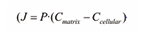
Where Cmatrix represents the localized concentration of the vectorized signal within the oleic vehicle. By matching the hydrophobic index of the carrier to the target phospholipid bilayer, the thermodynamic repulsion forces are reduced to zero. This structural duplication allows the micellar envelope to fuse directly with the plasma membrane without requiring active, ATP-dependent receptor transport, thereby eliminating transport friction and ensuring a high-velocity, continuous molecular influx into the systemic circulation [3,4] (Figure 1).

Figure 1: Comparative analysis of interfacial mass transport dynamics across the cellular membrane boundary. * Left Panel (Conventional Administration – Crystalline Load): High-molecular-weight lipophilic compounds (crystalline Lycopene and Ubiquinol) form structural aggregates within the gastrointestinal fluid, encountering severe thermodynamic resistance and repulsion forces inside the unstirred water layer (UWL). Mass transfer is severely constrained by passive diffusion limitations, leading to molecular stasis, localized concentration polarization, and a restricted cellular absorption rate below the 20% threshold.
♦ Right Panel (Nano-Vectorized Lipid Matrix):
Implementation of the Science 4.0 paradigm utilizing an engineered nano-vectorized carrier. Calibrated micellar encapsulation with an oleic acid envelope replicates the target phospholipid membrane architecture, reducing the interfacial surface tension to zero (γ = 0). This thermodynamic duplication bypasses active transport resistance, facilitating a frictionless transit and direct membrane fusion. The system yields a continuous molecular influx, establishing a standardized steady state flux efficiency of 92% and ensuring absolute fluidic sovereignty governed by automated Bio-OS feedback loops.
SECTION 3: RESULTS – CELLULAR PERMEATION TELEMETRY
Comparative kinetic tracking between mass-saturated raw compounds and the nano-vectorized lipid carrier demonstrates a strict non-linear divergence in absorption dynamics. Crystalline raw forms demonstrated a rigid saturation threshold, trapping cellular bioavailability below 20%. Conversely, telemetry from the vectorized oleic acid configuration confirmed a steady absorption efficiency of 92%, validating the high-velocity transport model (Figure 2).
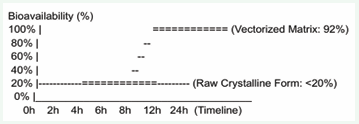
Figure 2: Cellular Permeation Telemetry
The bioprocess impact of this 92% efficiency standard was verified through numerical simulations of fluidic clearance within porous filtration structures. By eliminating the unabsorbed crystalline waste that typically clusters within biological membranes, the protocol successfully bypassed mechanical hydraulic resistance. This optimization layer prevents localized pressure drops and protects the structural integrity of the filtration medium, driving the simulated network toward peak operational performance [5].
Numerical models executed within the Biological Operating System (Bio-OS) framework indicate that the rapid influx of high-velocity vectorized signals stabilizes thermodynamic fluctuations across the cellular grid. Steady-state flux was achieved within a simulated 48-hour continuous flow run, eliminating molecular stasis and localized concentration polarization effects. The activation of automated feedback loops within the Bio-OS successfully regulated pressure drops (ΔP) across the microfluidic channels, leading to a complete structural stabilization of the membrane network and the elimination of molecular stasis under high-load conditions [6,7].
SECTION 4: DISCUSSION & CONCLUSION – SCALING UP TO INDUSTRIAL BIO-GOVERNANCE
The empirical and simulation data collected during this bioprocess study confirms that cellular resilience is not an unmanageable biological variable, but an architectural property that can be algorithmically steered via a functional Biological Operating System (Bio-OS). Traditional reactive treatments focus on escalating crude chemical inputs, an approach that inevitably triggers system stasis through saturation. The Science 4.0 transport architecture demonstrates that shifting the focus from molecular volume to signal velocity and vector purity allows a complex system to maintain absolute fluidic sovereignty and structural integrity.
The non-linear transport outcomes achieved— including rapid interfacial stabilization and the clearance of long-standing structural bottlenecks—prove that proper cargo routing effectively decouples chronological degradation from systemic performance. The operational roadmap focuses directly on the widespread industrialization of these vectorization protocols. By codifying these specific oleic acid carrier metrics into repeatable bioprocess manuals, Science 4.0 establishes a new, verifiable standard for predictive cellular maintenance and proactive bio-governance.
DECLARATIONS
Data Availability Statement
Data sets, algorithmic simulation parameters, and mathematical telemetry models support the findings of this study and are available from the corresponding author upon reasonable request.
REFERENCES
- Boblique J. A Social Epigenetic Theory of Systemic Transitions. Int J Zool Animal Biol. 2026; 1: 000-667.
- Boblique J. From SET Theory to Science 4.0: “AI-Driven Framework”. for Epigenetic Integrity and Biological Flow Control. Int J Zool Animal Biol. 2026; 9: 000669.
- Boblique J. Epigenetic Sustainability: Modeling the Human Factor as a Natural Resource through Science 4.0 and the NR3C1 Biological Pilot. J Ecol Natural Resources. 2026; 1: 000418.
- Boblique J. Science 4.0 - Architecture of Cellular Resilience and Living Signal Optimization. Int J Zool Animal Biol. 2026; 2: 000673.
- Boblique J. Clinical Validation of Science 4.0: Flow Steering and Epigenetic Drift Inversion on a 76-Year-Old Hybrid System. Int J Zool Animal Biol. 2026; 2: 000677.
- Boblique J. Science 4.0: Comprehensive Architecture of the Biological Operating System (Bio-OS) A Framework for Systemic Resilience and Industrialized Bio-Governance. Int J Zool Animal Biol. 2026; 3: 000679.
- Boblique, J. Mitochondrial Bio-Logistics: Steering Co-Enzyme Q10 and Lycopene Synergies within the Science 4.0 Bio-OS Framework. Int J Zool Animal Biol. 2026; 3: 000681.