Qualitative Analysis of the Impact of Palm and Sesame Oil on Liver Tissue Health: A Comparative Study
- 1. Department of Anatomical Sciences, School of Medicine, Kermanshah University of Medical Sciences, Iran
- 2. Student Research Committee, Kermanshah University of Medical Sciences, Iran
Abstract
Background: Palm oil can affect liver features and lipid metabolism because of its high saturated fat content, and its consumption causes nonalcoholic steatohepatitis. Sesame has strong anti-inflammatory and antioxidant properties that help to lower oxidative stress and inflammation in the liver. Study aims: This study aimed to clarify the precise impact of palm and sesame oils on liver tissue health. Material and methods: In a controlled laboratory setting, researchers divided the rats (18) into three groups and treated them with palm oil (15% w/w), sesame oil, and a control diet for 90 days. Liver tissue was then examined for histopathology, including hematoxylin-eosin and Van Gieson staining, and histomorphometric changes, including sinusoidal size, liver, and body weight of rats. Results: The results showed that palm oil consumption led to liver damage, inflammation, and fibrosis, whereas sesame oil protected liver health. Conclusion: Therefore, it is recommended that palm oil consumption be limited as much as possible and that healthier alternatives, such as sesame oil, should be considered.
Keywords
• Palm oil • Sesame oil • Liver tissue • Steatohepatitis • Non-alcoholic fatty liver
Citation
Zhaleh M, Moradi M, Ahookhash M (2026) Qualitative Analysis of the Impact of Palm and Sesame Oil on Liver Tissue Health: A Comparative Study. JSM Gastroenterol Hepatol 13(1): 1137.
INTRODUCTION
Edible palm oil is derived from the mesocarp of the oil palm fruit (Elaeis guineensis Jacq) [1]. Due to its versatility and numerous applications, the cultivation of Elaeis guineensis has expanded significantly over the past four decades. Indonesia and Malaysia are the primary producers, producing in over forty countries across Asia, Africa, and South America [2]. Palm oil consumption may impact liver function and lipid metabolism due to its high saturated fat content [3]. The ingestion of palm oil can lead to non-alcoholic steatohepatitis (NASH) by causing hepatocyte swelling and lipid accumulation [4]. Structural damage to liver tissue may result from increased liver weight, hepatic structure disorganization, and abnormal hepatocyte arrangements [5]. Palm oil is widely utilized as a cooking oil by consumers [6].
Sesame seeds (Sesamum indicum L.) are among the earliest oil seeds and are used extensively in agriculture, industry, medicine, and pharmaceuticals [7,8]. Because sesame oil contains compounds like sesamol and sesamin, it has strong anti-inflammatory and antioxidant properties that help lower oxidative stress and inflammation in the liver [9]. This oil increases fatty acid oxidation and decreases fat, which aids in fat metabolism, particularly in non-alcoholic fatty liver disease [10]. The protective effects of sesame oil on liver health have been demonstrated by lowering ALT and AST enzyme levels, decreasing the severity of non-alcoholic fatty liver, and lowering inflammation and hepatocyte destruction in lead-induced liver damage [11], as well as reducing inflammation and destruction of hepatocytes in liver damage caused by lead [12].
Hepatitis, also known as liver inflammation, is caused by autoimmune diseases, viral infections, excessive alcohol consumption, and metabolic disorders. If left untreated, these conditions can result in cirrhosis, fibrosis, and hepatocellular carcinoma. Nutrient metabolism, drug detoxification, and protein synthesis are dependent on liver function. These essential processes are disrupted by chronic liver inflammation, which subsequently affects health and quality of life. It is imperative to elucidate the etiology and mechanisms of liver inflammation to develop preventative and therapeutic interventions. Dietary modifications may potentially mitigate liver inflammation and enhance hepatic function [13].
Extensive research has been conducted on the consumption of various types of oil due to their potential health effects. The findings regarding palm oil’s health effects demonstrate significant variability [5,14]. These discrepancies are noteworthy because palm oil is a prevalent ingredient in numerous processed foods and is widely utilized in cooking and food products [15]. Consequently, its potential adverse health effects warrant consideration. This study aims to elucidate the precise impact of these two oils on liver tissue health. Given its comparatively positive effects on the liver [10], sesame oil may present a more favorable option. In a controlled laboratory environment, this study provides valuable insights into the effects of these oils on liver tissue health. There is substantial evidence of the differential effects of palm and sesame oils in this qualitative comparison of their impact on liver tissue health. Research of this nature contributes to the body of knowledge that can inform individuals’ health-related decision-making processes.
MATERIALS AND METHODS
Laboratory animals
Eighteen male Wistar rats aged 12–14 weeks and weighing 230 ± 20 g were acquired from the Pasteur Institute (Tehran, Iran). Animals were kept in special cages at a temperature of 22 ± 2?, 12-hr light/12-hr dark photo cycle, and had free access to water and food (according to Canadian Council on Animal Care guidelines). All animal treatments have been certified by the Kermanshah University of Medical Sciences Ethics Committee (Ethics number: IR.KUMS.REC. 1398.099).
The rats were randomly divided into three groups (six in each) and treated as bellows for 90 days after weighting. The groups were as follows: Control (the rats treated with their normal chew), palm oil (PO; the rats treated with 15% weight/weight of palm oil added to their normal chew), Sesame oil (SO; the rats treated to 7/5% weight/weight of Sesame oil into their normal chew). (Xin-Fang et al., 2012). One day after the last treatments, the rats were weighed and anesthetized by intraperitoneal injection of ketamine HCL (100 mg/kg) and xylazine (10 mg/kg) (Merk; Germany). Every effort was made to minimize suffering. The liver was excised, blotted dry, weighed, and placed in 10% formalin. Hematoxylin- eosin (H&E) and van gieson staining were added for histopathological examination. In this regard, according to our previous study (Chehrei et al., 2017), The diameter of sinusoids was measured using Motic software and an optical microscope.
Statistical Analysis
Data were expressed as Mean±Standard error of the mean (Mean±SEM) and statistically evaluated using analysis of variance (ANOVA) followed by a post-hoc test using IBM SPSS software version 26. A value of p<0.05 was considered statistically significant.
RESULTS
No significant changes were observed in liver tissue in the group receiving sesame oil compared to the control group (Figure 1).
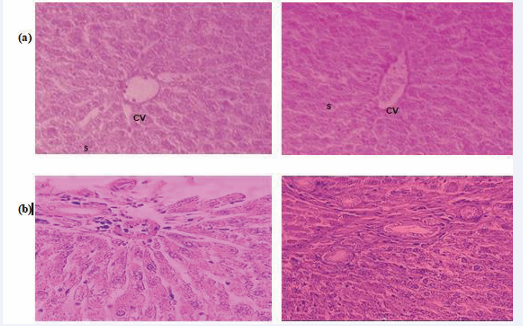
Figure 1 Photomicrograph Showing Essentially Normal Liver Section in control and sesame group. Include clear hepatocyte cord, central vein: SV and normal sinusoid: S (a), and normal portal triad (b) observed under an Olympus light microscope fixed with the camera, at a magnification (40 ×). (H&E staining)
In the samples treated with 15% w/w palm oil, lipid droplets in the hepatocytes were evident (Figure 2a).
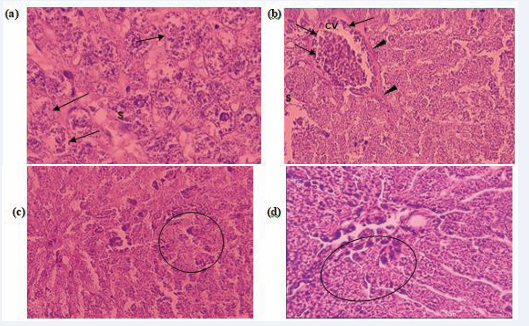
Figure 2 Histological examinations of liver tissue in the group treated with 15% w/w palm oil. (a) Section showing fat-filled, balloon-shaped hepatocytes: arrows, dilated sinusoids (S), (b) The section shows a central vein with a thick wall: arrowheads, an accumulation of inflammatory cells adjacent to the endothelial area: arrows, the presence of abnormal cell clusters within the vein, and distortion of hepatic architecture, (c) Section showing infiltration of the inflammatory cell, (d) section showing abnormal portal triad with inflammatory cell observed under an Olympus light microscope fixed with the camera, at a magnification (40 ×). (H&E staining).
Structural alterations were apparent in the liver tissue, including irregular hepatocyte arrangement, hepatocellular swelling and ballooning, and disruption of liver architecture (Figure 2a). Amas was observed within the endothelium of the central vein, accompanied by the presence of inflammatory cells. A group of cells had abnormally entered the central lobular vein, and the blood vessel walls exhibited increased thickness compared to the control group (Figure 2b). Infiltration of inflammatory cells was observed near the damaged hepatocytes (Figure 2c). The portal triad exhibited abnormalities and was infiltrated with inflammatory cells (Figure 2d). Fibrotic strands were visible surrounding the central vein (Figure 3).
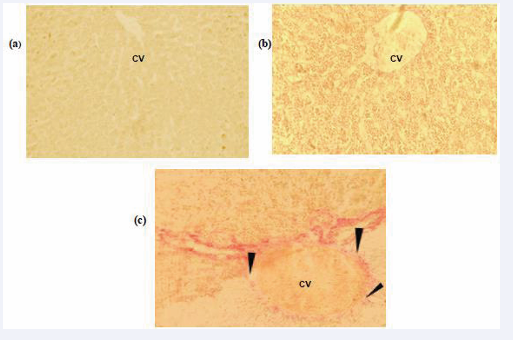
Figure 3 Histological examination of fibrosis in experimental and control groups. (a) Section showing the control group without the fibrous strand. (b) Section showing the sesame group without the fibrous strand. (c) section showing fibrous strands around the central vein which also extend around the sinusoids: arrowheads, in the palm oil group observed under an Olympus light microscope fixed with the camera, at a magnification (40 ×). (Van Gieson staining).
The sinusoidal spaces were enlarged and irregular compared to other groups (Figure 4).
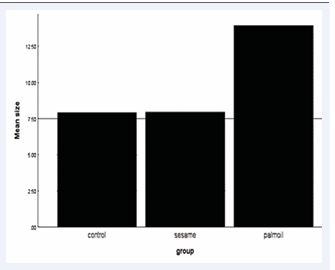
Figure 4 The effect of palm and sesame oils on the diameter of rat liver sinusoids. The data are represented as Mean ± EM. Values are statistically significant at *p < 0.05 Vs. control.
Although the group receiving palm oil demonstrated an increase in weight compared to other groups, this weight gain did not differ significantly (p>0.05) between the experimental and control rats. The liver weight of rats receiving palm oil increased significantly (p<0.05) compared with the sesame and control groups (Table 1).
Table 1: The Effect of Palm and sesame oils on Body and Liver Weight (g)
|
Diet |
Control |
Palm oil |
Sesame oil |
|
Body Weight |
256.83±10.22 |
263.33±17.03 |
257.16±10.05 |
|
Liver Weight |
11.81±1.38 |
15.86±0.79* |
11.88±1.39 |
DISCUSSION
The findings suggest that, in comparison to sesame oil, palm oil may have detrimental effects on liver tissue health. Prolonged exposure to palm oil may contribute to hepatic damage, as evidenced by increased liver weight, mild steatosis, inflammation, and early fibrosis. Conversely, the research demonstrated that sesame oil had a benign impact on liver tissue, which remained comparable to normal tissue.
Liver steatosis is characterized by the accumulation of neutral lipids within organelles called lipid droplets (LDs) in the hepatocyte cytoplasm. Currently, non-alcoholic fatty liver disease (NAFLD), an umbrella term used to define different conditions in which LDs are present in more than 5% of the hepatocytes and are associated with metabolic diseases [11-16], has garnered increasing attention. NAFLD is classified based on the histological assessment of liver biopsies, which evaluates the degree of steatosis, hepatocyte ballooning, and inflammation in the liver tissue. Non-alcoholic fatty liver (NAFL) refers to simple steatosis, while non-alcoholic steatohepatitis (NASH) requires hepatocyte ballooning and inflammation [17].
Liver inflammation is a complex process involving various cellular and molecular mechanisms, emphasizing the crucial role of hepatocytes in this process, particularly their response to liver insults and inflammatory signals [18]. Inflammatory pathways involving diverse immune cells, such as T lymphocytes and neutrophils, are activated in NAFLD, contributing to liver damage and fibrosis [19].
Liver fibrosis is a severe condition that can lead to cirrhosis, liver failure, and portal hypertension. It is caused by chronic liver diseases such as hepatitis B and C, alcoholism, and nonalcoholic fatty liver disease [20]. The primary cells involved in the development and progression of liver fibrosis are hepatic stellate cells (HSCs), which secrete fibrogenic factors that promote collagen production [21].
The effects of palm oil and sesame oil on liver tissue have been studied in various contexts with differing results. Palm oil, which is high in saturated fats, has been found to have both positive and negative impacts on liver health. Therefore, there is no clear evidence that palm oil benefits or harms health. Some studies, which are consistent with the results of the present study, have shown negative effects of palm oil consumption on the body, such as fat accumulation in hepatocytes, liver inflammation [22], and body weight gain. Owing to its high saturated fat content, palm oil can lead to increased cholesterol levels, metabolic disorders, and cardiovascular diseases [23]. In contrast, due to the omega-3 and omega-6 fatty acids [24], a sesame oil-based diet helps maintain the normal structure and function of the liver [25]. Sesame oil protects the liver from methotrexate toxicity by reducing inflammatory responses and oxidative stress [26].
However, these results contradict those of the present study, showing that palm oil reduces proinflammatory factors and improves liver function in patients with hypercholesterolemia [27]. A histopathological examination showed no significant changes in the liver weight and texture of the treated mice with palm puree compared to the control group [28]. This discrepancy in results may be due to the use of pure palm oil instead of palm oil. Similar to the results of the present study, several studies have investigated the effect of palm oil [29], and sesame supplementation on body weight has shown that this oil does not affect body weight compared with other oils [30]. In contrast, one study showed increased broiler weight after palm oil consumption [31], Also, A comprehensive meta-analysis of clinical trials found that sesame oil consumption significantly lowered body weight and BMI [32]. This difference in results may be due to the difference in the type of samples used and that Atefi et al., study samples were affected by NAFLD.
In public discussions, the increasing use of palm oil is often criticized because of its negative health effects. In addition to examining the health effects of palm oil, the environmental impacts associated with palm oil production, especially deforestation and the resulting problems for biodiversity, are also highly debated [33].Many studies have focused on the consumption of different types of oil due to their potential impact on human health. The effects of palm oil and sesame oil on liver tissue appear complex. They may depend on various factors, including the oils’ specific components, the oxidation level, and the overall dietary context. Further research is needed to fully understand the potential impacts of these oils on liver health and to determine their effects in different populations and disease states.
CONCLUSION
This comparative study highlights potential risks such as fat accumulation in hepatocytes, liver inflammation, and fibrosis associated with palm oil consumption and the relative safety of sesame oil on liver health. The results of this study indicate that palm oil consumption should be limited as much as possible and healthier alternatives such as sesame oil should be considered. Further research, including long-term studies and human trials, must confirm these findings and understand the underlying mechanisms.
STATEMENTS & DECLARATIONS
“Kermanshah University of Medical Sciences supported this work”
“The authors have no relevant financial or non-financial interests to disclose.”
REFERENCES
- Foster R, Williamson CS, Lunn J. BRIEFING PAPER: Culinary oils and their health effects. Nutrition Bulletin. 2009; 34: 4-47.
- Lai OM, Phuah ET, Lee YY, Basiron Y. Palm Oil. Bailey’s Industrial Oil and Fat Products.
- Imad Khan MH, Bangzhi Jiang, Lei Zheng, Yuechao Pan, Jijie Hu, Adil Khan, et al. Omega-3 long-chain polyunsaturated fatty acids: Metabolism and health implications. Progress in Lipid Res. 2023; 92.
- Sales RC, Medeiros PC, Spreafico F, De Velasco PC, Gonçalves FKA, Martín-Hernández R, et al. Olive Oil, Palm Oil, and Hybrid Palm Oil Distinctly Modulate Liver Transcriptome and Induce NAFLD in Mice Fed a High-Fat Diet. Int J Mol Sci. 2019; 20: 8.
- Astiah A, Syahrijuita S, Yustisia I. Chicken Oil as The New Cooking Oil: Its Effect on Lipid Profile and Liver Histology in Male Wistar Rats. Amerta Nutr. 2021; 5: 133.
- Ritchie H. Palm Oil. Our World in Data. 2021.
- Hany Aly AG, Shehata AAY, Fereidoon S. Effect of processing on oxidative stability and lipid classes of sesame oil. Food Res Int. 2000; 33: 331-340.
- Crews C, Hough P, Godward J, Brereton P, Lees M, Guiet S, et al. Quantitation of the main constituents of some authentic grape-seed oils of different origin. J Agric Food Chem. 2006; 54: 6261-5.
- Oboulbiga EB, Douamba Z, Compaoré-Sérémé D, Semporé JN, Dabo R, Semde Z, et al. Physicochemical, potential nutritional, antioxidant and health properties of sesame seed oil: a review. Front Nutr. 2023; 10: 1127926.
- Yin WT, Ma XT, Li SJ, Wang XD, Liu HM, Shi R. Comparison of key aroma-active compounds between roasted and cold-pressed sesame oils. Food Res Int. 2021;150: 110794.
- Atefi M, Entezari MH, Vahedi H, Hassanzadeh A. The effects of sesame oil on metabolic biomarkers: a systematic review and meta-analysis of clinical trials. J Diabetes Metab Disord. 2022; 21: 1065-80.
- Azab A. Hepatoprotective effect of sesame oil against lead induced liver damage in albino mice: Histological and biochemical studies. Am J Biosci. 2014; 2: 1-11.
- Goldstein MC, Goldstein MA. Healthy Herbs: Fact versus Fiction: Bloomsbury Publishing; 2012.
- Saleem A, Naureen I, Naeem M, Tasleem G, Ahmed H, Farooq U, et al. Effect of Palm oil and Their Main Compounds in the Management of Cardiovascular Disease Risk Factors. Scholars Bulletin. 2022; 8: 59-65
- Donis N, Jiang Z, D’Emal C, Dulgheru R, Giera M, Blomberg N, et al. Regular Dietary Intake of Palmitate Causes Vascular and Valvular Calcification in a Rabbit Model. Front Cardiovasc Med. 2021; 8.
- Godoy-Matos AF, Silva Júnior WS, Valerio CM. NAFLD as a continuum: from obesity to metabolic syndrome and diabetes. Diabetol Metab Syndr. 2020; 12: 60.
- Kleiner DE, Brunt EM, Van Natta M, Behling C, Contos MJ, Cummings OW, et al. Design and validation of a histological scoring system for nonalcoholic fatty liver disease. Hepatol. 2005; 41: 1313-21.
- Ramos-Tovar E, Muriel P. Molecular Mechanisms That Link Oxidative Stress, Inflammation, and Fibrosis in the Liver. Antioxidants (Basel). 2020; 9: 1279.
- Wiering L, Tacke F. Treating inflammation to combat non-alcoholic fatty liver disease. J Endocrinol. 2023; 256: e220194.
- Berumen J, Baglieri J, Kisseleva T, Mekeel K. Liver fibrosis: Pathophysiology and clinical implications. WIREs Mech Dis. 2021;13: e1499.
- Zhang CY, Yuan WG, He P, Lei JH, Wang CX. Liver fibrosis and hepatic stellate cells: Etiology, pathological hallmarks and therapeutic targets. World J Gastroenterol. 2016; 22:10512-22.
- Ahookhash M, Moradi M, Zhaleh M. Histopathological manifestations of liver tissue affected by heated and unheated palm oil in male Wistar rats. Morphologie. 2024; 108: 100915.
- Sun Y, Neelakantan N, Wu Y, Lote-Oke R, Pan A, van Dam RM. Palm Oil Consumption Increases LDL Cholesterol Compared with Vegetable Oils Low in Saturated Fat in a Meta-Analysis of Clinical Trials. J Nutr. 2015; 145: 1549-1558.
- Sunil Chikkalakshmipura G, Tareq NA, Halugudde Nagaraja S, Ashwini B, Cláudia Maria Fragão P, Rajesha J. Synergistic hypoglycemic and hypolipidemic effects of ω-3 and ω-6 fatty acids from Indian flax and sesame seed oils in streptozotocin-induced diabetic rats. Phytomedicine Plus. 2022; 2: 100284.
- Al-jbouri F, Al-Zahra J. Histological study for the effect of sesame oil on liver and kidney in female albino rats. Int J Health Sci. 2022: 13294-300.
- Farid Elbakry H, Abdel Rahman Abdel Salam H, Saeid Abdelgayed S, Mohamed DA. Hepatorenal Protective Effects of Sesame Seeds Oil, Flaxseed Oil and their Mixture against Methotrexate Toxicity in Rats. Iranian J Toxicol. 2022; 16: 51-62.
- Albrahim T, Alotaibi MHM, Altamimi NMM, Albariqi AMA, Alqarni LAO, Alassaf SNA, et al. The Impact of Dietary Consumption of Palm Oil and Olive Oil on Lipid Profile and Hepatocyte Injury in Hypercholesterolemic Rats. Pharmaceuticals (Basel). 2022;15: 1103.
- Zainal Z, Ong A, Yuen May C, Chang SK, Abdul Rahim A, Khaza’ai H. Acute and Subchronic Oral Toxicity of Oil Palm Puree in Sprague-Dawley Rats. Int J Environ Res Public Health. 2020; 17.
- Swarnamali H, Ranasinghe P, Jayawardena R. The effect of coconut oil and palm oil on anthropometric parameters: a clinical trial. BMC Nutr. 2024; 10: 9.
- Mahdi V, Hooria SG, Shirin H, Negar M, Mahsa K, Fatemeh, et al. Effect of sesame supplementation on body composition and lipid profile in patients with type 2 diabetes: A systematic review and meta-analysis of randomized controlled trials. Nutrition, Metabolism and Cardiovascular Diseases. 2024; 34: 838-849.
- Zhong X, Gao S, Wang JJ, Dong L, Huang J, Zhang LL, et al. Effects of linseed oil and palm oil on growth performance, tibia fatty acid and biomarkers of bone metabolism in broilers. Br Poult Sci. 2014; 55: 335-342.
- Atefi M, Entezari MH, Vahedi H, Hassanzadeh A. Sesame Oil Ameliorates Alanine Aminotransferase, Aspartate Aminotransferase, and Fatty Liver Grade in Women with Nonalcoholic Fatty Liver Disease Undergoing Low-Calorie Diet: A Randomized Double-Blind Controlled Trial. Int J Clin Pract. 2022; 4982080.
- Qaim M, Sibhatu K, Siregar H, Grass I. Environmental, Economic, and Social Consequences of the Oil Palm Boom. Ann Rev Resource Economics. 2020;12: 321-44.