Noticing Cancer Early: In Adolescents to Prevent Cancer from increasing into the Higher Stages
- 1. Odyssey School of Denver, USA
Abstract
We studied how to notice cancer early in adolescents. 75% of people in the world have cancer cells in their bodies, which does not necessarily mean you will get cancer. In fact, only half of that percentage gets cancer (37.5%). So we looked at the factors that cause some people to get cancer and others not. After lots of research, we determined that it was the health of the cancer cells in the body. When they are healthier, they can slip past the body’s defenses. The hypothesis took 1.5 years to determine. In the words of Charles B Simone, M.D: ‘The white blood cell army and the antibody army must be functioning perfectly to destroy any cancer cell or foreign invader, and prevent either from gaining a foothold in your body.
Keywords
• Immune System; Cancer Cells; Age; Human Blood; DNA
Citation
Whetten K, L Thomas (2026) Noticing Cancer Early: In Adolescents to Prevent Cancer from increasing into the Higher Stages. J Cancer Biol Res 13(1): 1154.
INTRODUCTION
The purpose of the 24-cell is to prevent cancer rather than cure it. This paper is a research theory, created over the space of 2 years. Research was done on various forms of biology and cancer types, along with research on numerous factors that affect cancer diseases and the human body in general. This is the third draft for the publication. We need to prevent cancer because the immune system makes mistakes.
METHODS
We researched and reviewed experiments done by others using the scientific method.
Our dependent variable is the likelihood of people getting cancer, depending on the age of the cancer cells.
The independent variable is the age of telomeres, which shows the maturity of cancer cells Figure 1.
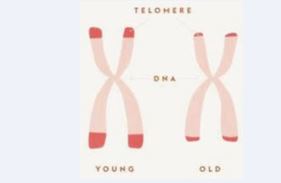
Figure 1 The young telomere has longer caps on the chromosomes. The old telomere has the opposite, which is short caps.
The control variable is the amount of mass studied and the health of the person’s immune system.
Many of the sources that were used were:
- The Lancet
- New England journal of medicine
- Biomedical central
- American Cancer Society
We used premade slides under the microscope for observation and experimentation. The different slides used were:
- Rabbit testicles
- Human skin cells
- Human blood
- Cow blood
All information researched and companies used were official and legitimate.
RESULTS
Here are the results gained from the research done:
If 75% of people have cancer, we have to find the people (37.5%) who will actually get cancer.
So, we looked for traits and differences between the two groups.
Based on the research, we inferred that the age of the cancer cells plays a significant role in determining who will develop cancer, and we developed a theory.
The theory is that survival of the fittest applies to cancer cells and how they can avoid the immune system’s defenses. But 2 questions still need to be answered.
#1 How can you determine the age of a cancer cell?
#2 What’s the process for determining who will get cancer in the end, along with how it’s treated?
How to determine the age of a cancer cell
The way you determine age is by measuring the length of the telomeres. (telomeres protect DNA) Telomeres are the caps on the ends of chromosomes. Using basic logic, we know the young are weak, the middle-aged are strong old are weak. We can also infer that it can also apply to cancer cells.
If the average lifespan of a red blood cell is about 4 months, the optimum healthy cancer cell range would be from 1-3 months. Here is the chart that would represent measuring the telomeres:
This is not the actual size; they are microscopic and are only visible when the nucleus condenses due to cancer.
WHAT’S THE PROCESS FOR DETERMINING THE 35%?
Here is the theory:
• Step 1: At birth, the child’s parents would be allowed to screen for genetically induced cancer.
• Step 2: A blood draw would be taken, and an analyst would prepare multiple slides.
• Step 3:The blood would be observed for cancer cells, and after that, they would measure cancer cell length and maturity.
• Step 4: If the length of the telomeres is in the middle of the scale in Figure 2, then the cancer cell mass will be labeled OPT.CM, this means optimum cancer maturity.
• Step 5: If the majority of the masses studied are OPT.CM The person would be labeled OPT.C.M.M.
(Optimum Cancer Maturity mass) This means the person is likely to contract stage one to two cancer in the next few months to a year.
(THIS PROCESS HAS NOT BEEN TESTED).
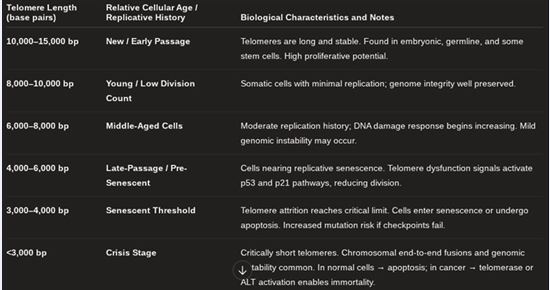
Figure 2 This model shows the relationship between telomere length and cell age and health it is important for understanding the principles of this project.
WHAT WOULD BE THE NEXT RECOMMENDED COURSE OF ACTION?
Depending on varied circumstances, the probable. The next step would be to initiate CAR-T cell immunotherapy. This kind of therapy is used to weaponize T-cells in the body that can’t recognize the cancer and attack it.
One of the benefits of CAR-T cell therapy is that T-cells are weaponized for a long period of time, because the body will continue cellular genesis with the modified T-cells that are genetically enhanced.
Rather than Chemotherapy, which only works while it is being taken and loses effect after treatment, making the chances of recurrence higher (Figure 3).
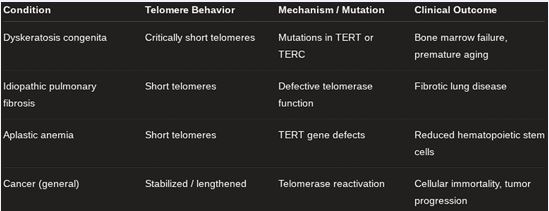
Figure 3 This shows the relationship between telomere length and diseases associated with it.
Though it does have certain cons, the benefits of using it would probably be higher than using other therapies
Such as chemolite or similar treatments.
DISCUSSION
Here are some medical articles that are similar to the project or add background information:
“Roles of Telomeres and Telomerase in cancer and Advances in Telomerase targeted therapies.”
“Telomere biology in aging and cancer: early history and perspectives”
These are some of the best examples of similar articles to this research project. Both address similar topics and are important in the fields of telomerase biology and cancer immunotherapy.
SOURCES
Here are some of the sources used for the research
- BioMed Central
- The lancet
- American Cancer Society
- JAMA
- DOAJ
- AMERICAN MEDICAL ASSOCIATION
All of these sources were useful in the creation of this article.