A Retrospective Comparative Study of Short-Term Outcomes between On-Pump Versus Off Pump Cardiac Surgery in Patients underwent Coronary Artery Bypsass Grafting
- 1. Department of Cardiac Perfusion Technology, Sree Balaji Medical College and Hospital, India
- 2. Department of Cardiothoracic Surgery, Sree Balaji Medical College and Hospital, India
Abstract
Background: Coronary artery bypass grafting is a commonly executed surgical procedure for individuals with coronary artery disease (CAD). Coronary artery disease (CAD) involves the constriction of the coronary arteries. which are responsible for delivering oxygen and nutrients to the heart muscle. the condition arises from the accumulation of fatty substance within the artery walls. This accumulation restricts the interior of the arteries. reducing the flow of oxygen rich blood to the heart muscles. The procedure can be carried out using two methods. off-pump (CABG), which is done without cardiopulmonary bypass on a heart that is still beating on-pump coronary artery bypass grafting (CABG). which involves cardiopulmonary bypass, on-pump (CABG) has been the conventional methods providing a motionless surgical field and allowing accurate anastomosis. The decision between these two methods has been a topic of continual discussion especially concerning their short-term results. Off-pump coronary artery bypass grafting (CABG)may be associated with increase hazard for short-term mortality as compared with on-pump coronary artery bypass grafting Aim: The Aim of the study is to analyze and compare the short-term outcomes in patients underwent on pump CABG to off pump CABG.
Objectives: To analyze and evaluate the following data. ? ECG ? ECHO ? Heart Rate ? CBC ? Ejection fraction
Methodology: The study was conducted in 40 patients underwent Coronary Artery Bypass Graft. The study was done to analyze and compare the outcome in patients underwent on-pump vs off- pump CABG. They were divided into two groups, group A (on-pump) and group B(off- pump) The data were collected from past history and medical reports, case sheets ECG, ECHO, Heart rate, CBC, Ejection fraction.
Result: According to the study, 40 patients have been compared and analyzed on short term outcomes. the both groups, group A (on-pump) and group B (off pump), shows as off pump patients usually have a faster discharge from the hospital, but on-pump patients often have more durable long – term graft.
Conclusion: This study was conducted to compare and analyze the short-term outcomes between on- pump vs off –pump in patients undergoing coronary artery bypass graft. According to the study, it is concluded that patients undergoing off-pump Coronary Artery Bypass Graft. patients usually have a faster discharge from hospital, but on- pump Coronary Artery Bypass Graft. Patients often have more durable long-term graft success.
Keywords
• Coronary Angiogram
• Coronary Artery Bypass Graft
• Cardio pulmonary bypass
Citation
Praveena M, Thangasaravanan B (2026) A Retrospective Comparative Study of Short-Term Outcomes between On-Pump Versus Off-Pump Cardiac Surgery in Patients underwent Coronary Artery Bypsass Grafting. J Cardiol Clin Res. 14(1): 1219.
INTRODUCTION
Coronary artery disease (CAD) is one of the leading causes of morbidity and mortality worldwide. It results from the progressive narrowing of the coronary arteries due to atherosclerotic plaque formation, which reduces blood flow to the myocardium and can lead to myocardial ischemia, infarction, and heart failure. Coronary artery bypass grafting (CABG) remains one of the most effective and commonly performed surgical interventions for the management of advanced coronary artery disease [1]. CABG can be performed using two main surgical techniques: on-pump CABG and off-pump CABG. On pump CABG involves the use of cardiopulmonary bypass (CPB), where the heart is temporarily stopped and blood circulation is maintained by a heart–lung machine, providing a motionless and bloodless surgical field for precise graft anastomosis. In contrast, off-pump CABG is performed on a beating heart without the use of CPB, with the aim of reducing the potential complications associated with extracorporeal circulation. Although on-pump CABG has been considered the conventional and widely accepted approach, off-pump CABG has gained popularity due to its potential benefits, such as reduced inflammatory response, lower transfusion requirements, shorter hospital stay, and decreased neurological and renal complications. However, the choice between on-pump and off-pump CABG remains controversial, particularly with regard to short-term postoperative outcomes [2]. Therefore, this retrospective comparative study aims to assess and compare the short-term outcomes of patients undergoing on-pump versus off-pump coronary artery bypass grafting, with particular emphasis on clinical, hematological, and cardiac functional parameters. Off-Pump Surgery vs Cardiopulmonary Bypass (On Pump) Surgery Coronary artery bypass grafting (CABG) is a standard surgical treatment for patients with advanced coronary artery disease. The procedure can be performed either with the support of cardiopulmonary bypass (on pump CABG) or without cardiopulmonary bypass on a beating heart (off-pump CABG). Both techniques aim to restore adequate myocardial blood flow, but they differ significantly in their surgical approach, physiological effects, and postoperative outcomes [3].
Cardiopulmonary Bypass (On-Pump CABG)
In on-pump CABG, the heart is arrested using cardioplegia, and circulation is maintained by a cardiopulmonary bypass (CPB) machine, which temporarily takes over the function of the heart and lungs. This provides a motionless and bloodless operative field, allowing the surgeon to perform precise graft anastomoses, especially in complex or multi vessel disease. However, the use of CPB is associated with systemic inflammatory response, hemodilution, coagulation disturbances, neurological complications, and renal dysfunction. and lungs. This provides a motionless and bloodless operative field, allowing the surgeon to perform precise graft anastomoses, especially in complex or multi-vessel disease. However, the use of CPB is associated with systemic inflammatory response, hemodilution, coagulation disturbances, neurological complications, and renal dysfunction [4].
Off-Pump Coronary Artery Bypass Surgery
Off-pump CABG is performed on a beating heart without the use of cardiopulmonary bypass. Specialized stabilizing devices are used to immobilize the target coronary arteries during grafting. This technique avoids the adverse effects associated with CPB, such as inflammatory response and blood transfusion requirements. Off-pump CABG may be beneficial in high-risk patients, including the elderly and those with renal or cerebrovascular disease. However, it may be technically demanding and carries a risk of incomplete revascularization [5].
MATERIALS AND METHODS
Study design
Retrospective study
Study population
Patients undergoing cardiac surgery in Sree Balaji Medical College and Hospital.
Study period
6 months.
Inclusion Criteria
- Patients with preoperative inspiratory muscle training undergoing cardiac surgery and provide consent to participate in the study.
- Adult male and female patients (above 35years).
- Patients who are on IMT are included.
Exclusion Criteria
- Patient with pre-existing pulmonary disease, such as severe chronic obstructive pulmonary disease (COPD) and severe asthma.
- Patient above 70 years of age.
- Patient with bronchospasm, pneumothorax, and hypercarbia.
METHODOLOGY
A Retrospective study was conducted among patients undergoing CABG surgery. Patients were categorized based on their ejection fraction. Hemodynamic parameters such as heart rate, heamoglobin, WBC, Platelets, Ejection fraction were recorded at different types of surgery, particularly. The collected data were analyzed and compared between groups (Figures 1-3).
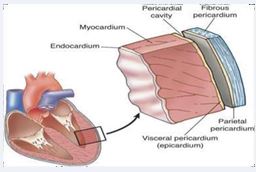
Figure 1 Layers of the heart.
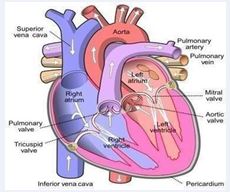
Figure 2 Heart and Pathway of Blood Flow

Figure 3 Coronary Arteries.
Table 1: Hemoglobin
|
Group |
Group A |
Group B |
P-value |
Significance |
|
Hemoglobin |
9.93±0.282 |
11.3±0.212 |
< 0.0001 |
Significant |
Table 2: Heart rate
|
Group |
Group A |
Group B |
P-value |
|
Heart rate |
91.65±4.24 |
82.15±2.12 |
<0.0001 |
Table 3: Platelets
|
Group |
Group A |
Group B |
P-value |
|
Platelets |
2.085±0.141 |
2.625±0.070 |
<0.0001 |
RESULT
The study included 40 patients, with 20 undergoing off-pump CABG and 20 undergoing on-pump CABG. Postoperative pulmonary function parameters such as FVC and FEV? showed better preservation in the off-pump group compared to the on-pump group, with statistically significant improvement. Patients in the off-pump group also demonstrated reduced ventilator time, shorter ICU stay, and fewer pulmonary complications. Overall postoperative outcomes favored the off-pump technique, particularly in patients with compromised respiratory function [6,7] (Tables 1-3).
DISCUSSION
The findings of this study indicate that off-pump CABG offers superior postoperative respiratory outcomes in COPD patients when compared to conventional on-pump CABG. Avoidance of cardiopulmonary bypass likely reduces systemic inflammatory response, pulmonary edema, and lung injury, which are known contributors to postoperative respiratory dysfunction. Improved lung function and reduced complication rates observed in the off- pump group are consistent with previous studies suggesting better pulmonary preservation. Thus, off-pump surgery appears to be a safer and more effective approach for high-risk respiratory patients.
CONCLUSION
Off-pump coronary artery bypass grafting demonstrates better postoperative pulmonary function, fewer complications, and improved recovery in COPD patients compared to on-pump CABG. The technique minimizes the adverse effects associated with cardiopulmonary bypass and offers a significant clinical advantage in patients with compromised lung function. Therefore, off-pump CABG should be considered the preferred surgical strategy for COPD patients requiring coronary revascularization.
ACKNOWLEDGEMENT
The author sincerely expresses gratitude to the Department of Cardiac Perfusion Technology 12 and the Department of Cardiac Surgery, Sree Balaji Medical College and Hospital, Chennai, for their valuable guidance, cooperation, and support throughout the course of this study. The author also extends sincere thanks to all the patients who consented to participate in the study.
Statement of Informed Consent
Written informed consent was obtained from all patients prior to their participation in the study. The purpose of the study was explained to the participants, and confidentiality of patient information was strictly maintained throughout the study.
Ethics of Human Experimentation
The study was conducted in accordance with the ethical standards of the Institutional Ethics Committee of Sree Balaji Medical College and Hospital. Ethical clearance was obtained prior to the commencement of the study. All procedures performed in this study involving human participants were in accordance with the ethical standards of the institutional research committee and with the principles of the Declaration of Helsinki.
REFERENCES
- Smart NA, Dieberg G, King N. Long-Term Outcomes of On- Versus Off-Pump Coronary Artery Bypass Grafting. J Am Coll Cardiol. 2018; 71: 983-991.
- Head SJ, Börgermann J, Osnabrugge RL, Kieser TM, Falk V, Taggart DP, et al. Coronary artery bypass grafting: Part 2--optimizing outcomes and future prospects. Eur Heart J. 2013; 34: 2873-2886.
- Deppe AC, Arbash W, Kuhn EW, Slottosch I, Scherner M, Liakopoulos OJ, et al. Current evidence of coronary artery bypass grafting off- pump versus on-pump: a systematic review with meta-analysis of over 16,900 patients investigated in randomized controlled trials†. Eur J Cardiothorac Surg. 2016; 49: 1031-1041
- Gundry SR, Romano MA, Shattuck OH, Razzouk AJ, Bailey LL. Seven- year follow-up of coronary artery bypasses performed with and without cardiopulmonary bypass. J Thorac Cardiovasc Surg. 1998; 115: 1273-1277
- Puskas JD, Williams WH, Duke PG, Staples JR, Glas KE, Marshall JJ, et al. Off-pump coronary artery bypass grafting provides complete revascularization with reduced myocardial injury, transfusion requirements, and length of stay: a prospective randomized comparison of two hundred unselected patients undergoing off- pump versus conventional coronary artery bypass grafting. J Thorac Cardiovasc Surg. 2003; 125: 797-808.
- Chikwe J, Lee T, Itagaki S, Adams DH, Egorova NN. Long-Term Outcomes After Off- Pump Versus On-Pump Coronary Artery Bypass Grafting by Experienced Surgeons. J Am Coll Cardiol. 2018; 72: 1478- 1486.
- Benedetto U, Caputo M, Patel NN, Fiorentino F, Bryan A, Angelini GD. Long-term survival after off-pump versus on-pump coronary artery bypass graft surgery. Does completeness of revascularization play a role? Int J Cardiol. 2017; 246: 32-36.