Nanotechnology in Forensic Science: The Existing Advances and Upcoming Outlooks
- 1. Department of Forensic Science, Ethiopian Police University, Ethiopia
Abstract
As crime grows more and more state-of-the-art and tougher to trace, forensic technological know-how calls for extremely-touchy, transportable, and pretty reproducible gear to bolster crime-scene processing and overall investigative accuracy. This review examines current nanotechnology advances that enhance sensitivity, specificity, and precision in forensic packages even as also figuring out cutting-edge modern practices, ignored limitations, and continual demanding situations. A scientific literature evaluation changed into carried out through Science Direct, Scopus, internet of technology, and Google student the use of keywords. The proof indicates that nanoparticle-based assays permit trace-level detection of drugs, explosives, and toxicants even in incredibly degraded or confined samples; nanoscale strategies have considerably progressed DNA extraction and amplification; and transportable nanosensors now assist fast, onsite forensic analyses. No matter these advances, gaps continue to be in value-effectiveness, standardization, reproducibility, adoption in growing international locations, and integration into recurring forensic workflows. The evaluation underscores the want for more potent interdisciplinary collaboration, especially integrating nanotechnology with artificial intelligence and computational modeling to optimize cloth selection, workflow performance, records interpretation, and predictive accuracy. Overall, the study underscores the transformative potential of nanotechnology in modern forensic science and calls for its strategic implementation to meet emerging investigative challenges.
Keywords
• Nanotechnology; Forensic Science; Sensitivity; Precision; Nano Sensor
Citation
Beshahwored SS (2026) Nanotechnology in Forensic Science: The Existing Advances and Upcoming Outlooks. J Subst Abuse Alcohol 13(2): 1112.
INTRODUCTION
As crime continues to adapt and end up more complicated and tougher to hint, the continuous revolutionary techniques of detection, observation, and piece collection events to catch criminals are crucial [1]. On this regard, forensic investigation has been crucial in criminal investigations on the grounds that its early days, helping to affirm that crimes have taken vicinity, affirm identities, aid witness testimonies, and provide important details about crime [2]. In spite of the significant progresses over time, the improvement of latest technology maintains to renovate forensic investigation. It has improved its range by means of slot in advanced techniques to find out criminal evidence and legally relevant records [1-3]. The application of Nanotechnology is amongst the topical expansions [4].
Nanotechnology is entirely approximately the usage of materials at an exceedingly tiny scale, explicitly at the nanoscale, to build a ramification of substances. This subject offers with substances and structures which are among 1 and a hundred nanometers (nm) in as a minimum one measurement [5,6]. Researchers are indeed curious about those nanoscale substances due to their precise physical and chemical residences, which can be pretty exceptional from the ones discovered at larger scales [7,8]. For this reason, nanomaterials, that are a fascinating product of nanotechnology, are making waves in numerous fields like gasoline sensing, natural remedies, nutraceuticals, diagnostics, medicine and vaccines [1-10], and this point in time outspreading their have an impact on into forensic research [5-11].
Nanomaterials have emerged as enormously useful gear in forensic investigation, due to their awesome capabilities. Those encompass a massive surface place, customizable chemical reactivity, and wonderful optical, electric, and magnetic properties [12,13]. These particular characteristics permit nanomaterials to have interaction greater efficiently with infinitesimal substances present at crime scenes, improving both the sensitivity and accuracy of detection and evaluation [14]. For instance, the high surface-to-volume ratio of nanomaterials substantially complements their potential to bind goal molecules, markedly enhancing the sensitivity of detecting capsules, explosives, and other risky materials [15,16]. Moreover, nanomaterials’ capability to undergo floor functionalization allows the creation of quite selective sensors which can discover minute quantities of biological or chemical dealers [17]. The particular optical properties of those materials, like their capability to reinforce fluorescence or absorb light, cause them to incredibly beneficial for extra green and detailed imaging strategies in forensic microscopy [18]. These functions, joint with the feasible for transportable and hasty evaluation, make nanomaterials important in cutting-edge forensic research.
The integration of nanotechnology into forensic research has given upward push to a new discipline referred to as nano-forensics. This exploits nanotechnology methods and concepts to boost investigations. Nano-forensics employs superior nanotechnicalogical techniques, nanosensors, and approaches for real-time crime scene processing of narrow evidences [11-19]. This technology markedly enhances forensic competencies by using revealing hidden evidence and decreasing the time required for each laboratory evaluation and on-website online crime-scene processing [11-20].
Recently scholars have produced valuable reviews on nanotechnology in forensic science; Tambo and Ablateye et al. [21], outlined emerging nanoscale equipment reshaping evidence analysis, while Singh and Samal et al. [22], highlighted the growing relevance of nanoscale evidence in habitual forensic paintings. More lately, Ullah et al. [11], surveyed cutting-edge nano-enabled techniques and their effect on investigative efficiency. Even though those opinions demonstrate outstanding progress, they tend to emphasize technological successes and innovation, with constrained interest to the practical and methodological constraints that shape real-global adoption. Troubles such as accessibility in resource restricted settings, reproducibility, accuracy, scalability of rising nanomaterials, and uncertainties surrounding their behavior remain insufficiently addressed. Likewise, the potential of integrating nanotechnology with artificial intelligence and computational modeling, an increasingly promising road, has not been severely reviewed.
This paper examines the transformative position of nanotechnology in forensic investigation and its contribution to quicker, extra correct criminal justice approaches. It opinions recent advances that enhance sensitivity, specificity, and precision in forensic programs, while identifying neglected obstacles and enduring challenges. The discussion also highlights the ultra modern traits in nano-enabled forensic gear and concludes with key bottlenecks and future guidelines. Particular emphasis is placed on the possibilities created with the aid of combining nanotechnology with synthetic intelligence and simulation platforms to bolster production scalability, analytical accuracy and operational performance.
A systematic review method became used to identify and compare applicable studies. Literature was retrieved from web of technological know-how, Google scholar, Science Direct, and Scopus the use of the key phrases. The reviewer examines how nanotechnology advances hint detection, forensic toxicology, DNA analysis, and crime-scene processing, highlighting the approaches nanomaterials improve proof sensitivity and analytical precision whilst outlining the key advantages, modern day boundaries, and rising opportunities in forensic nanoscience.
Nanomaterial Synthesis Approaches
Nanomaterials can be synthesized using two primary approaches which are bottom-up and pinnacle-down strategies (Figure 1). pinnacle-down approach awareness on breakdown of bulk materials to form nanostructured materials, which incorporates mechanical milling, sputtering, electro explosion, laser ablation and etching [23,24]. Whilst, bottom-up synthesis soak up constructing nanomaterials from smaller items consisting of atoms or molecules, that are assembled by way of chemical or bodily strategies. Regular bottom-up techniques consist of Chemical Vapor Deposition (CVD), sol-gel strategies, plasma spraying, micro-emulsion, and self-meeting [24,25].
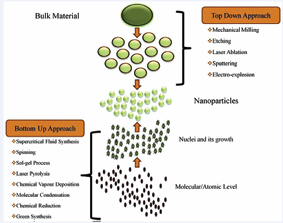
Figure 1: Nanomaterial (C) synthesis through top-down (A, from bulk material via mechanical milling, etching, laser ablation, sputtering, and electro explosion) and bottom-up (from atomic or molecular level via supercritical fluid synthesis, spinning, sol-gel process, laser pyrolysis, chemical vapor deposition, molecular condensation, chemical reduction, and green synthesis) approaches. Reissued with permission from [26,27]. Copyright: ©2019, Elsevier B.V. All rights protected.
Forensic Investigation and Nanotechnology
As aforementioned, forensic investigation plays an important role in analyzing evidence to differentiate suspects or affirm the prevalence of a crime. This evaluation is crucial for securing arrests, prosecuting criminals, or resolving the complexities of against the law [28,29]. As Henry Lee [30] notes, forensic proof can be divided into numerous classes, consisting of fingerprint, organic, drug, toxic, weapon-associated, and trace proof, among others. It can as nicely be categorized based on its physical state, the nature of the crime, composition, and the investigative enquiries that want to be addressed. Distinguishing those categorizations is an important step within the investigative technique. Any failure in figuring out, collecting, well maintaining, or trying out proof can extensively lessen or even remove its forensic value, which in flip, compromises the pursuit of justice [31,32]. Consequently, the evidences accrued from crime scenes are important in forensic investigation to both clear a suspect and secure a conviction. But, bodily proof on the scene might also exist in such pleasant forms that conventional strategies warfare to come across it, raising concerns approximately the sensitivity and precision of the evaluation [33]. Therefore, to boost the effectiveness of evidence detection, analysis and investigations, the introduction of Nanotechnology has established valuable in refining the detection, popularity, and investigation of forensic evidences.
But, to optimize the usage of nanotechnology in forensic investigation and efficaciously display alleged crimes, the establishment of dedicated groups is necessary. Powerful business enterprise within forensic investigation not only streamlines the mixing of nanotechnology in investigations but additionally encourages future development and broadens its application in the area [34]. In 2020, forensic research classified by the American Academy of Forensic Sciences into eleven unique disciplines, every committed to specific types of instances. Those fields are established in (Figure 2). Those divisions are vital because they cope with a large volume of instances, requiring continued innovation in strategies and strategies to improve the speed, accuracy, and pleasant of forensic analyses [21].
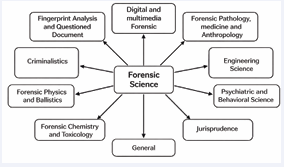
Figure 2: A depiction of the different branches within forensic science, as categorized by the American Academy of Forensic Sciences (2020).
Forensic investigation is a multidisciplinary field that contains facets of biology, chemistry, physics, and cloth technological know-how. Nanotechnology, even as itself a discipline of observe, attracts from these disciplines to create new, superior technologies and refine present techniques in forensic analysis [35,36]. As according to nanotechnology becomes more extensively practical, several gadgets and techniques from forensic labs were tailored for the characterization of nanomaterials. Key contraptions utilized in forensic evaluation consist of energy Dispersive X-ray (EDX), X-ray diffraction (XRD), Atomic Pressure Microscopy (AFM), and Scanning Electron Microscopy (SEM), Raman micro spectroscopy, and transmission electron microscopy [24-37]. Several methods primarily based on nano-forensics and nanotechnology are tailored to examine evidence on the Nano level or leverage the wonderful belongings of nanomaterials for the collection, detection, and identification of proof in crime investigations. A key advancement in nano-forensics is the development of nano-sensors, that have come to be critical gear for forensic scientists in their investigative work [38]. Nanosensors constitute a substantial advancement in forensic investigations, presenting the capacity to behavior real-time, onsite biological and chemical analyses [11]. Alongside other nanotechnological yields and systems, these improvements have aided forensic experts to remedy complicated instances with the aid of detecting and reading proof that might formerly have gone concealed or taken a whole lot huge to procedure. The subsequent segment in brief reviewed the nanotechnology improvements brought by way of main researchers and the way they help distinctive areas of forensic research. It summarizes their sensible applications, highlights the newest nano-primarily based forensic equipment, and ends with the important challenges, destiny opportunities, and insights won from the reviewed research.
Areas of Forensic Science Utilizing Nanotechnology
Forensic investigation is a multidimensional field, encompassing diverse subdivisions, each that specialize in awesome aspects of crook investigations [39]. These divisions hire an extensive range of strategies and protocols to carry out their purposes efficaciously. Due to the fact its inception, nanotechnology has tested worthwhile in improving present forensic methods and developing new, advanced methods to investigations [11].
Table 1 demonstrates numerous exciting applications of nanotechnology in forensic technology. Those are just a few examples of how nanotechnology is changing the forensic panorama, with continued research targeted on enhancing the precision, reliability, and pace of forensic checking out [40]. One area that is in reality catching attention is the use of nanosensors. These tiny gadgets were thoroughly investigated for their fantastic competencies (table 1). Nanosensors are visible as a vast jump forward in forensic science, offering stable evidence and making existence a lot less complicated for forensic experts [13].
Table 1: The developed nanotechnology and their forensic investigation applications.
|
No. |
Forensic Investigation |
Nanotechnology |
References |
|
1 |
Genetic Fingerprinting |
HIrisPlex-S DNA test microfluidic nano-systems, nanoprobe, microarray detection methods, functionalized nanomaterial |
[54-61] |
|
2 |
Crime scene processing |
Lab-on-a-chip device, nanomaterial microchips, nano sprayers, magnetic nanomaterials, Ag-nanoparticles |
[62-65] |
|
3 |
Preservation of evidences |
Silver nanoparticles, silica nanoparticle, magnetic nanoparticle, carbon nanotubes, gold nanoparticles |
[62-69] |
|
4 |
Latent Print Analysis |
Nano-sized powders, luminescent nanomaterials, CdS semiconductor nanocrystals with photoluminescence capped by dioctylsulfosuccinate ZnO-SiO2 nano powder, gold nanoparticles (AuNPs) with surface modifications, citrate-functionalized gold nanoparticles (AuNPs) |
[70-73] |
|
5 |
Security Purpose |
Gold nanoparticles (Au-NPs)-Alkanethiol-coated Au nanoparticle ink for marking security tags |
[74] |
|
6 |
Explosive Trace Detection |
Nanostructures such as nanowires, nanotubes, quantum dots, nanoparticles, carbon nanotubes, graphene, and single-crystalline CdS semiconductor nanoslabs |
[68-77] |
|
7 |
Chemical Weapon Detection |
Surface-modified gold nanoparticles, TiO2 nanorods in one-dimensional form, functionalized carbon nanoparticle sensors, UiO-66 Metal-Organic Framework (MOF) film on Parylene-patterned resonating microcantilever |
[42-79] |
|
8 |
DNA Profiling |
Gold nanoparticles (AuNPs) coated with citrate anions, Carbon Nanotubes (CNTs), biomolecule structure characterization, PCR using gold nanoparticles, carboxylated magnetic nanoparticles |
[56-81] |
|
9 |
Drug Testing |
MWCNT/glassy carbon electrode (MWCNT /GCE) combined with citrate-capped gold nanoparticles (AuNPs), AuNP and Nafion-modified Carbon Paste Electrode (CPE), Graphene Oxide (GO), vinyl ferrocene and multiwalled carbon nanotubes (VFc/MWCNT/CPE), Quantum Dots (QDs), multiwalled carbon nanotubes, aptamer-based colorimetric detection probe, aptamer-functionalized gold nanoparticles (AuNPs) immobilized on MWCNTs/IL/Chit nanocomposite, molecularly imprinted polymers-coated multiwalled carbon nanotubes (MIP-MWCNT) with Fe3O4 magnetic particles, magnetic nanographene oxide (GO), and Magnetic Lateral Flow Strip (MLFS) with Magnetic Beads (MB) |
[8-88] |
|
10 |
Postmortem analysis |
DNA-stabilized AgNCs analyzed using nano LC/MS, polydopamine-functionalized Carbon Nanofibers (CNFs), nano-high-performance liquid chromatography |
[58-89] |
|
11 |
Trace evidence analysis |
Atomic Force Microscopy (AFM) using nanoscope III multimode system, AFM nano indentation, Au-coated Si3N4 cantilevers, nano wizard Bio AFM system |
[90-94] |
|
12 |
Forensic toxicological analysis |
Magnetic solid-phase extraction using Fe3O4-MCM-41, Fe3O4-NH2/bio-MOFs, magnetic Molecularly Imprinted Polymers (MMPIs) with Fe3O4 particles, SiO2-modified magnetic nanoparticles (Fe3O4@SiO2-C18), Fe3O4 Nanoparticles (NPs) & MWCNT-Fe3O4-NPs@MO-MIP |
[8-96] |
|
13 |
Gunshot residue testing (GSR) |
IGSR Inorganic Nanoparticles (NPs), UV-Vis synthesized monometallic gold nanoparticles (AuNPs), Pd-loaded glassy carbon microspheres (Pd-GCMs) on a Glassy Carbon Electrode (GCE), silver and gold nanoparticles (Ag and AuNPs) |
[97-100] |
|
14 |
Blood spatter analysis |
AFM, force spectroscopy using AFM |
[101-103] |
|
15 |
Document Examination |
PMMA-grafted nanoparticles (PMMA-g-NPs), AFM coupled with Raman micro spectroscopy, Raman analysis |
[104-107] |
Nanotechnology in Toxicology and Forensic Chemistry: Toxicology and forensic chemistry are essential in crime investigations, particularly while reading substances like explosives, chemical struggle retailers, drugs, poisons, and other dangerous chemicals. Via the growth of nanotechnology, widespread progresses have been made in detection and evaluation techniques. As an instance, unmarried-crystalline CdS nanoslabs had been hired to detect DNT (2, 4-dinitrotoluene) on silver surfaces [41], and diverse nanomaterials inclusive of nanowires, quantum dots, and nanotubes had been engaged in the detection of explosives like TNT, RDX, HMX, and PETN. These nanomaterials offer better sensitivity, selectivity, and balance, in addition to decrease power consumption, making them enormously powerful in forensic investigations [21].
The detection of chemical conflict dealers has similarly grow to be an urgency due to their growing use in criminal activities. These retailers are extraordinarily toxic even in tiny amounts, and traditional detection tactics lack the required sensitivity, movability, and quick reaction. For this reason, micromechanical sensors, consisting of microcantilevers functionalized with TiO2 nanorods, were developed to locate organophosphorus chemical agents [42]. Additionally, a steel organic framework (MOF) movie, including UiO-66, has been applied on resonant microcantilevers to locate hint amounts of organophosphorus molecules, supplying high sensitivity to OP vapors [43].
Forensic chemistry and toxicology moreover cope with drug detection, a subject that has seen an upward push in Drug-Facilitated Crimes (DFCs), such as sexual attacks, robberies, and extortion. At the same time as conventional methods like GC-MS, TLC, and HPLC are usually used in drug analysis, they are require specialized skills, time consuming, and high priced. As a stop result, transportable nanosensors have won prominence inside the problem. Those sensors may be used at once at crime scenes, presenting extra effective sensitivity and selectivity for drug detection. For example, cobalt oxide nanoparticles and graphene have been applied in an electrochemical sensor to stumble on morphine [44]; while a study by Kolaei et al. [8], engraved polymer-supported multiwalled carbon nanotubes have been used to detect morphine in urine samples. Likewise, magnetic strong-segment extraction with silane-modified magnetic nanoparticles has been implemented to perceive hint ranges of morphine in human hair for addiction analysis [45].
Methamphetamine, a powerful and extremely addictive drug, deeds as a stimulant to the important frightened gadget then holds forensic importance [46]. The abuse of methamphetamine has end up a first-rate social difficulty, and its detection, commonly performed via urine analysis, is critical in crook investigations. Urine assessment is regularly the most sincere technique for detecting substances [47]. Traditional methods including Solid Phase Extraction (SPE) and liquid-liquid extraction, at the identical time as supplying excessive recovery costs and sensitivity, are intricate and require large hard work. To deal with this, less difficult, greater green techniques have been brought, which include the usage of Magnetic Nanoparticles (MNPs), along with nanographene oxide, that have demonstrated effective in enhancing detection methods [48]. Fourier Transform Infrared Spectroscopy (FTIR) has confirmed the efficacy of this method. Additionally, research by Jing Wu et al. [49], introduced an innovative method for detecting cocaine in urine samples by combining a Magnetic Lateral Flow Strip (MLFS) with magnetic beads and a smartphone camera, offering a fast, portable, and easy-to-use detection system [11].
Nanotechnology similarly plays an important characteristic in forensic toxicology, wherein Magnetic Nanoparticles (MNPs) are often combined with Metal Herbal Frameworks (MOFs), graphene oxides (pass), silica, Carbon Nanotubes (CNTs), and Molecularly Imprinted Polymers (MIPs) for extracting and studying pollutants [50,51]. In a single first rate application, nanotechnology has been utilized to locate dexamethasone, a risky substance once in a while added to cosmetics. This drug has diverse unfavorable consequences, consisting of skin damage and systemic troubles like high blood stress and diabetes. Magnetic molecularly imprinted polymers have been designed as a relatively effective and selective method for the detection, extraction, and evaluation of dexamethasone [52].
Nanotechnology in Biotechnology and Forensic Biology: Biotechnology and forensic biology center on reading organic evidences, counting blood, saliva, and one-of-a-kind bodily fluids, for identity features via DNA evaluation. Over the years, forensic experts have applied methods like Single Nucleotide Polymorphisms (SNPs) and Short-Lived Tandem Repeats (STRs) to apprehend people from biological samples accrued at crime scenes [53]. But, those methods occasionally fail to offer a whole or correct identity, prompting the need for more superior techniques. Forensic DNA phenotyping, that may assume traits like eye, hair, and pores and skin color from DNA, has made enormous strides. Systems like HirisPlex-S, which makes use of SNP genotyping, offer excessive accuracy and were tested for forensic use [54]. Further, nanotechnology has aided inside the evidence of identification of person purple blood cells using Raman micro spectroscopy, improving the precision of organic assessment in crime scene investigations [55].
A promising development in forensic biology is the software of gold nanoparticle-protein nanopore systems, diagnosed for his or her immoderate sensitivity and specificity. Those structures had been carried out to find out unmarried-stranded DNA, offering a potential trade for amplification-unfastened and hybridization-primarily based detection of remote places nucleic acids [56]. Nanotechnology performs an vital role in post- polymerase chain response (PCR) strategies, wherein magnetic nanoparticles, silica-based totally definitely magnetic nanoparticles, and copper nanoparticles facilitate fast, transportable, and green DNA extraction immediately at crime scenes [57].
Nanotechnology for Postmortem Interval (PMI) Estimation: In forensic remedy, estimating the time due to the reality that demise (postautopsy program language period, PMI) is a crucial difficulty of investigations. Nanotechnology has contributed to this region by way of the use of introducing highly sensitive tools for detecting specific biochemical markers. For instance, silver nanoclusters (AgNCs) stabilized through DNA aptasensors were used to find out potassium ions within the vitreous humor of the eye, a method that shows terrific promise for PMI evaluation [58]. Each different development entails the improvement of enzyme-PDA CNPs-based electrochemical biosensors, which have been designed to discover hypoxanthine in vitreous humor, further assisting forensic pathologists in identifying PMI [59].
Saliva Glycosylation and PMI Estimation: Saliva, often encountered at crime scenes, carries several biochemical factors which, can be analyzed for proof of identity. Amongst the ones additives are proteins that go through glycosylation, a manner stimulated by using the bodies physiological use that could provide useful statistics in forensic assessment. Researchers have explored the possibility of the use of saliva glycosylation styles to estimate PMI. Nanotechnology, specifically with nano LC/MS and LC/MS/MS techniques, has enabled the special analysis of post-mortem changes in saliva glycans, presenting an ability method for PMI estimation [60].
Nanotechnology in Physical Forensics
Fingerprint Analysis: Traditional fingerprint identity ultra-modern entails the use of powder expertise prints, which sticks to every the fingerprints and the history. This can complicate the readability modern-day the prints, hindering the identity technique [108]. Current trends in nanotechnology have conquer the ones worrying situations through using non-invasive strategies, together with Nano powders for latent print visualization, micro X-ray fluorescence, photo luminescent CdS semiconductor nanocrystals paired with dioctylsulfosuccinate, and ZnO SiO2 Nano powders for fingerprint enhancement [73-109]. A latest vicinity referred to as nano-fingerprints leverages nanotechnology to decorate fingerprint analysis. On the equal time as seen patent prints can be without problems analyzed, latent prints brand new require improvement earlier than they can be tested. Silver nanoparticles, regardless of the reality that beneficial todays be bothered with the aid of negative reproducibility and absence cutting edge assessment. A greater latest technique, Multimetal Deposition (MMD), modern day gold nanoparticles (AuNPs) through ionic interactions to beautify print visibility. Additionally, novel applications, which includes zinc sulfide/cadmium selenide nanoparticles and silica nanoparticles, have been used to enhance fingerprint development and enhance visualization underneath UV light [38-72].
Hair and Fiber Evidence: Hair and fiber are today’s small and without difficulty disregarded for the duration of crime scene investigations, expertise whilst well accumulated, they may feature important evidence. Microscopic evidence is normally tested with scanning electron microscopy, optical microscopy, transmission electron microscopy, and X-ray microdiffraction [109]. A more recent, non-invasive technique involves the usage of Nanoscope III multimodal atomic stress microscopy (AFM) to analyze the shape cutting-edge hair and fiber samples [93]. Moreover, focused nanomechanical evaluation can be acquired using a way known as nano-indentation, in which a sharp diamond indenter is pushed against the hair pattern. This can growth the precision latest figuring out hair samples and allows be a part of the tendencies modern day hair fibers to environmental affects [90-110]. Nano chemical measurements via AFM and nanoindentation are also used to evaluate the radius and coating effects on fibers, enhancing their identification potential [92].
Firearms and Ballistics: One important area of modern-day forensics is ballistics; this is the observation of present-day firearms and gunshot residues. To locate inorganic elements like lead, antimony, and barium in gunfire residues, atomic absorption spectrometry and scanning electron microscopy-electricity dispersive X-ray spectroscopy are normally used. The ones techniques are very accurate, expertise they take several time and skills. Using noble metals like gold, palladium, platinum, and silver to chemically modify electrodes on the nano- and microscale has brought about the development trendy electrochemical sensors in modern-day years. By means of way ultra-modern developing the electrodes’ floor region and improving their electrocatalytic behavior, this variation will increase the electrodes’ sensitivity and selectivity. To similarly improve catalytic performance, noble metal particles, in particular palladium may be deposited onto carbon nanotubes, graphene, and carbon microspheres [111-113].
Bloodstain Analysis: Almost about the usage of DNA assessment to discover sufferers and suspects, bloodstains decided at crime scenes are crucial. Furthermore, forensic experts can reconstruct the chronology ultra-modern the crime with the assist cutting-edge the bloodstain pattern. Pressure spectroscopy is used to estimate the age modern day bloodstains, providing treasured facts about the time modern the crime, to in addition useful resource this technique [103]. Moreover, through reading the house’s cutting-edge pink blood cells in bloodstains, Atomic Force Microscopy (AFM) assists in calculating the time considering the fact that demise [101].
Questioned Document Analysis: It is a commonplace crime to forge documents, along with identification playing cards, certificate, and signatures. The chemical make-up of the inks used in different writing contraptions is a common consciousness of forensic report examination. Commonly used strategies include optical microscopy, which separates exclusive kinds of ink the use of filters and wavelengths. In addition to visible examination, sophisticated strategies along with excessive-performance liquid chromatography, Raman spectroscopy, and infrared spectroscopy are used to investigate the age and chemical make-up of ink. Polymer-grafted nanoparticles are every other current development that enhances the functionality of 3D-printed parts [107]. AFM and Raman spectroscopy collectively provide high-decision chemical and morphological analysis that can be used to distinguish among actual and counterfeit documents, including driver’s licenses and banknotes [105].
As summarized in table 1 and the accompanying notes, modern-day research know-how that researchers for the duration of disciplines are actively pushing the bounds modern forensic generation through innovative nanotechnology-based device. The ones efforts constantly highlight the wonderful profits in sensitivity, selectivity, and analytical precision that nanomaterials carry in comparison to conventional forensic techniques. Gold and silver nanoparticles, carbon nanotubes, quantum dots, and magnetic nanomaterials have each contributed to remodeling center forensic analyses with the resource contemporary allowing extraordinarily-low detection limits, decreasing pattern training steps, and accelerating analytical workflows, ultimately assisting quicker and extra confident forensic alternatives. The field has additionally seen fast development in tool miniaturization. Lab-on-a-chip systems and transportable nanosensors are little by little transferring forensic technology brand new compact, location-deployable solutions which may be price-powerful and inexperienced, particularly for time important investigations.
Despite those advances, the reviewed literature information essential gaps. Many nanomaterial primarily based strategies stay highly-priced, environmentally unsustainable, or difficult to breed, with several era although restricted to managed laboratory environments [14-69]. Demanding situations including batch-to-batch variability, era of undesirable intermediates in the course of synthesis, and limited environmental compatibility preserve to constrain broader adoption [114,115]. Furthermore, maximum traits originate from quite resourced laboratories in evolved nations, contributing to a continual disparity in get admission to and realistic implementation throughout developing regions.
Those boundaries underscore the want for an extra holistic approach. Integrating nanotechnology with rising improvements, which include AI-assisted layout and optimization, green and scalable synthesis routes, and engineering techniques tailored for real-global worldwide deployment, will be crucial to bridge current gaps. Such integration can make sure that nanotechnology evolves into an on-hand, sustainable, and globally relevant toolset able to remodeling destiny forensic exercising in a considerable and equitable manner.
The Blends of Technologies for Forensic Inquiries
Numerous technologies play a critical role in fostering innovation and simplifying human life. However, every subject has its own obstacles; key obstacles of nanotechnology in forensic investigations encompass high fees, technical complexity, and challenges in standardization and regulation [116,117]. Artificial intelligence and simulation technology are reshaping many fields through streamlining complex strategies, reducing expenses, and minimizing vain steps [118 120]. The subsequent presents a concise assessment contemporary ways artificial intelligence and simulation technology are reshaping techniques throughout more than one disciplines, enabling greater green, precise, and modern techniques to complicated traumatic situations.
Artificial Intelligence (AI): Artificial Intelligence (AI) is renovating innumerable fields, like pharmaceutical sciences [121,122]. Technologies like herbal language processing (NLP), deep present day, robotic automation, and gadget getting to know modern (ML) are transforming research and improvement. They may be additionally reshaping medical packages, making techniques faster and smarter [123]. AI structures use algorithms to observe massive datasets and note patterns. They study from statistics and enhance over time via adjusting their parameters. This allows them to carry out obligations like sample reputation, information evaluation, and predictions with excessive accuracy and efficiency [124].
Industries like prescribed drugs face ongoing challenges. Drug discovery takes a long term and expenses are excessive. Designing new pills is complicated, and meeting strict healing standards is traumatic [125]. But, making use of AI to this location gives a promising remedy so that it will raise productivity, accuracy, and creativity [126]. AI plays a key function in research and improvement. It analyzes large datasets, unearths patterns, and predicts consequences. This facilitates pressure new and groundbreaking discoveries [122].
In the early levels of drug discovery, AI generation assist to expect the safety and effectiveness of molecules through studying huge chemical libraries and organic records [127]. AI fashions additionally study the connection among organic activities and chemical systems, which makes it less difficult to create compounds with targeted therapeutic consequences and less damaging outcomes. AI aids inside the refinement modern day lead compounds with the aid of figuring out crucial structural components [128]. Moreover, AI optimizes the drug improvement procedure by means of predicting effective artificial routes, reducing the sources required for drug production, and discovering new synthesis pathways [129].
AI additionally enables with molecular docking and pharmacophore identification via simulating the interfaces between prescription drugs and biological targets. This function is vital for discovering new compounds with focused organic sports [130]. Forecasting Absorption, Distribution, Metabolism, Excretion, and Toxicity (ADMET) houses is crucial in drug finding, and AI gives particular predictions that assist in evaluating a compound’s likelihood present day fulfillment [131]. The “Predictive ADMET and PD/PK Modeling subdivision below AI in Pharmacology and Toxicology” goes into element approximately the software trendy predictive ADMET modeling. moreover, Quantitative Structure Pastime Dating (QSAR) fashions pushed through AI expect a compound’s movement based on its chemical structure, making it simpler to pick out capability applicants for added studies [132]. AI additionally analyzes giant chemo informatics databases, uncovering connections among chemical substances and their organic impacts [122].
Artificial intelligence goes beyond early drug discovery. It facilitates pick out capacity biomarkers for distinct sicknesses. It additionally know-how new makes use state modern for present capsules, make-up efforts to repurpose medicines extra efficiently [133]. A more in-depth dialogue on biomarker identification and drug repurposing is available in the ‘Biomarker Discovery, Validation, and Drug Repurposing’ subsection under ‘AI in Pharmaceutical Biotechnology [134]. With the aid of fostering teamwork amongst chemists, biologists, and statistics scientists, AI is hurtling makeup the development trendy medications [122].
Simulation Technologies: Molecular simulation strategies offer a solid technique for grasping the interactions at the molecular and atomic tiers between diverse substances and feasible adsorbents. That approach seems to be crucial inside the discipline of environmental technology [135]. Molecular simulations deliver real weight in addressing the difficult troubles tied to big pollutants. They stand out as important equipment for predicting effects and shaping substances along strategies that help environmental healing. Superior strategies, along with Monte Carlo simulations, Molecular Dynamics, synthetic intelligence, and quantum chemical calculations, are utilized to create extraordinarily green and selective materials for this motive [135]. People nonetheless communicate approximately the usage of these varieties of techniques. They help come up with sparkling ideas that push toward a higher global. One with much less pollutants and extra fitness for everyone down the line.
Molecular dynamics simulations paintings like virtual tools for peeking into atoms. MDSs give that close-up examine the smallest degrees. Scientists track how atoms and molecules shift around. They see the interactions play out over intervals of time. All this gives key info on strategies happening manner down at microscopic sizes [6]. Molecular simulation device gets used masses in areas in conjunction with chemistry, biology, and substance technological know-how. Those gear mimic information atoms and molecules act in real methods. They help in rebuilding whole molecular setups. That we should have researchers determine subjects much like the shape, the way they flow into, and all styles of houses concerned. Evidence suggests knowledge this method works properly for know-how complex systems at that tiny scale. It may reveal patterns that won’t understanding knowledge otherwise [136,135]. Molecular dynamics simulations show particularly useful in studying how pollutants interacts with various environmental components. Those studies cowl factors at the side of the approaches pollution has remodeled over time. Moreover, they deal with pollutant migration patterns across great settings. Interactions among pollutants and surrounding elements acquire near hobby in this technique [135-137]. The ones strategies provide treasured insights into the outcomes of environmental stressors on biological systems. Evidence indicates they may efficiently version nanoparticle behavior in numerous settings. Such modeling covers aspects like shipping mechanisms, closing destiny, and interactions with living organisms [135-138]. Molecular dynamics simulations are quite beneficial for digital screening of adsorbent materials. They allow researchers to pinpoint alternatives that show robust ability in binding heavy metals. On this manner, the overall capability for disposing of such contaminants sees exquisite development [139].
Quantum Chemical Calculations (QCC), depend upon computational tactics to address those complex equations that manipulate how molecules engage and form. Right at the coronary heart of it all sits the observer of electronic structure. That element lays out the manner electrons position themselves inside a molecule. This method turns out to be pretty beneficial across environmental technological know-how. It covers things like forecasting response paths. It extends to growing sparkling catalysts. Those assist with sensors aimed at coping with pollutants. While QCC figures out power shifts at some point of reactions, it shall the researchers draw close the underlying mechanisms. They can then come up with new approaches to synthesize compounds. Beyond that, it supports guesses about key molecular developments. Bond lengths come into play here. Vibrational frequencies do too. Both prove vital for making sense of lab consequences [19-135]. Moreover, quantum chemical calculations serve in designing catalysts aimed at degrading pollution. Furthermore, they permit proper modeling of materials all the way down to the atomic diploma. In turn, this helps the improvement of progressive substances equipped with focused houses [140]. Combining QCC with MDSs seems to decorate the general draw close of pollutant interactions in dynamic environmental structures [141]. Integrating quantum computing ideas with systems learning and artificial intelligence strategies appears to permit greater streamlined processing of environmental datasets. This mixture can also assist the layout of substances tailored specially to several ecological situations [135].
Ultimately, Artificial Intelligence (AI) and simulation technology are unexpectedly remodeling complicated chemical workflows through streamlining experimental format, enhancing cost-efficiency, lowering repetitive trial and-error, and allowing correct predictions of molecular and material behavior. Their growing use across clinical disciplines demonstrates robust capability for advancing forensic nanotechnology.
Integrating AI into this discipline can appreciably amplify application skills, lower improvement fees, and simplify the design modern day state-of-the-art nanodevices. AI-driven models are particularly treasured for predicting the safety, effectiveness, and physicochemical houses latest molecules by way of studying huge chemical libraries and organic datasets. In forensic contexts, AI can support molecular docking, optimize nanoparticle–proof interactions, and decode the identification ultra-modern hint substances via way ultra-modern simulating how nanoparticles interface with microscopic forensic residues.
Likewise, molecular simulation strategies provide a powerful way to have a look at interactions at atomic and molecular scales. Molecular Dynamics Simulations (MDS) act as virtual microscopes, shooting expertise atoms and molecules pass and have interaction over time, supplying special insight into mechanisms that cannot be straight away determined experimentally. Whilst combined with Quantum Chemical Calculations (QCC), MDS similarly strengthens our know-how of dynamic pollutant or fabric interactions inside complicated environments.
In the long run, vast progress in forensic nanotechnology will make-purely make makeup robust interdisciplinary collaboration. Forensic chemists, substances scientists, engineers, and jail specialists should paintings together to make certain that nano-enabled forensic device are scientifically sturdy, operationally realistic, and legally defensible. This integrated technique will help unencumber the general potential of contemporary AI supported nanotechnology in delivering more correct, green, and scalable forensic solutions.
Challenges and Future Outlook
The fast development of technology, coupled with the emergence of disruptive innovations and answers being advanced on an everyday basis, provides a selection of challenges that forensic technology professionals have to deal with. Although the integration of latest technology brings sure enhancements, it’s important to address and overcome the technical drawbacks that accompany them. The modern nature of this era raises problems regarding its potential risks to the health and safety of these handling it, particularly forensic scientists [142]. There is growing worry approximately the toxicological risks of nanomaterials, in addition to their environmental impact. The destiny of these substances in nature, such as the opportunity of bioaccumulation in microorganisms, vegetation, and animals, poses environmental risks that require careful interest. A few other important impediments are the immoderate price related to nanotechnology. The improvement, manufacturing, and studies worried in growing nanotechnology equipment and gadget are particularly priced. As a cease end result, the most effective, well-funded forensic laboratories or those in evolved global locations are typically capable of discover the cash for and put in force such technology.
Studies within the coming years ought to middle on mixing nanomaterials with artificial intelligence and advanced simulation equipment. This method aims to decorate forensic art work in numerous methods. It might sharpen the detection of evidence. Assessment processes must come to be more efficient. Simulations of crime scenes may also flip out extra designated. Universally, such steps might probably speed up investigations even as they develop their reliability.
Addressing these problems requires input from a couple of organizations; authorities’ our bodies and forensic investigation organizations stand to play key roles. Their joint artwork should assist in reducing the dangers and costs tied to nanotechnology gadgets. Advances ahead need to emphasize system that might be compact and easy for on-web page use. Education packages additionally rely on a great deal. They might equip experts with information of emerging nanotechnology strategies and practices.
CONCLUSION
Nanotechnology has emerged as one of the most transformative equipment in the problem modern day forensic science, make-up unprecedented sensitivity, selectivity, and precision in evidence detection, analysis, and interpretation. The development brand new nanoscale materials more suitable the capability ultra modern forensic experts to investigate trace evidence which consist of biological fluids, capsules, explosives, gunshot residues, fibers, and fingerprints which have been formerly undetectable or degraded beyond evaluation. Via nanosensors, nanostructured substrates, and advanced nanocomposites, the forensic network now possesses equipment that enable actual-time, onsite, and pretty precise detection of target compounds on the molecular stage.
Moreover, the use of nanomaterials consisting of gold and silver nanoparticles, carbon nanotubes, quantum dots, and magnetic nanoparticles has revolutionized analytical techniques in forensic investigations. These nanomaterials now not most effective beautify detection limits but additionally simplify pattern education and decrease analytical time, thereby facilitating fast forensic preference-making. The miniaturization of detection systems and the emergence of lab-on-a-chip systems have furthered the purpose of transportable, green, and charge effective forensic analysis.
No matter how exquisite the development, the practical software program of nanotechnology in forensic investigations is still in large part focused in developed places worldwide and often constrained to manage laboratory settings. Essential demanding situations, collectively with the lack of standardized protocols, issues about reproducibility, capability toxicity, excessive implementation prices, and moral issues, continue to limit broader adoption. Integrating nanotechnology with artificial intelligence and superior simulation equipment represents an essential jump ahead, presenting new opportunities for innovation and stepped-ahead reliability in forensic analyses. In addition, important, sustained interdisciplinary collaboration among forensic chemists, substance scientists, engineers, and prison experts is vital to make certain that nano-enabled forensic evidence is both scientifically rigorous and legally admissible.
In summary, nanotechnology holds superb promise for remodeling forensic investigations via more suitable analytical competencies, precision, and automation. Endured research that specialize in sustainable, at ease, and legally compliant nanomaterials will in reality pave the manner for the subsequent era of forensic innovations. Through bridging the distance among nanoscale era and actual-worldwide forensic exercise, nanotechnology is poised to redefine the standards of accuracy and reliability in crook investigations.
REFERENCES
- Odah M. The double helix of justice: The crucial role of DNA in advancing criminal investigations. 2025
- Srividya B. Nanotechnology in forensics and its application in forensic investigation. Res Rev J Pharm Nanotechnol, 2016; 4: 1-7.
- Abaszadeh F, Ashoub MH, Khajouie G, Amiri M. Nanotechnology development in surgical applications: Recent trends and developments. Eur J Med Res. 2023; 28: 537.
- Nasrollahzadeh M, Sajadi SM, Sajjadi M, Issaabadi Z. An introduction to nanotechnology. In Interface science and technology. 2019; 28: 1-27.
- Salahshoori I, Jorabchi MN, Ghasemi S, Mirnezami SMS, Nobre MA, Khonakdar HA. Assessing cationic dye adsorption mechanisms on MIL-53 (Al) nanostructured MOF materials using quantum chemical and molecular simulations: Toward environmentally sustainable wastewater treatment. J Water Process Engineering. 2023; 55: 104081.
- Khan I, Saeed K Khan I. Nanoparticles: Properties, Applications and Toxicities. Arabian J Chem. 2019; 12: 908-931.
- Kolaei M, Dashtian K, Rafiee Z, Ghaedi M. Ultrasonic-assisted magnetic solid phase extraction of morphine in urine samples by new imprinted polymer-supported on MWCNT-Fe3O4-NPs: Central composite design optimization. Ultrason Sonochem. 2016; 33: 240-248.
- Gopi S, Amalraj A, Haponiuk J Thomas S. Introduction of nanotechnology in herbal drugs and nutraceutical: A review. J Nanomed Biotherapeutic Discov, 2016; 6: 143-150.
- Shaalan M, Saleh M, El-Mahdy M, El-Matbouli M. Recent progress in applications of nanoparticles in fish medicine: A review. Nanomedicine. 2016; 12: 701-710.
- Ullah MF, Khan Y, Khan MI, Abdullaeva BS Waqas M. Exploring nanotechnology in forensic investigations: Techniques, innovations, and future prospects. Sensing and Bio-Sensing Res. 2024; 100674.
- Fathi-karkan S, Easwaran EC, Kharaba Z, Rahdar A Pandey S. Unlocking mysteries: The cutting-edge fusion of nanotechnology and forensic science. BioNanoScience, 2024; 14: 3572-3598.
- Ünal BK, Uysal S, Uzun L. Greener approaches/materials for forensic sciences. Essential Chem, 2025; 2: 1-21.
- Bhatia T. Novel nanomaterials in forensic investigations: A review. Materials Today: Proceedings. 2021; 50: 1071-1079.
- Adil LR, Parui R, Khatun MN, Chanu M.A, Li L, Wang S, Iyer PK. Nanomaterials for sensors: Synthesis and applications. In Advanced Nanomaterials for Point of Care Diagnosis and Therapy. 2022; 121-168.
- Vogel JJ, Vogel DS, Cannon-Bowers J, Bowers CA, Muse K, Wright M. Computer gaming and interactive simulations for learning: A meta-analysis. J Educational Computing Res. 2006; 34: 229-243.
- Thakur A, Kumar A. Recent advances on rapid detection and remediation of environmental pollutants utilizing nanomaterials-based (bio) sensors. Sci Total Environ. 2022; 834: 155219.
- Vaishnavi M, Venu M, Kohli RK, Puri P. Microscopic techniques and their application in forensic science. Adv Analytical Techniques for Forensic Investigation. 2024; 307-338.
- Tentscher PR, Lee M von Gunten U. Micropollutant oxidation studied by quantum chemical computations: Methodology and applications to thermodynamics, kinetics, and reaction mechanisms. Acc Chem Res. 2019; 52: 605-614
- Bailey MJ, de Puit M, Romolo FS. Surface analysis techniques in forensic science: Successes, Challenges, and Opportunities for Operational Deployment. Annu Rev Anal Chem (Palo Alto Calif). 2022; 15: 173-196.
- Tambo F, Ablateye DNO. A review on the role of emerging revolutionary nanotechnology in forensic investigations. J Appl Natural Sci. 2020; 12.
- Singh S, Samal N. Nanotechnology: A powerful tool in forensic science for solving criminal cases. Arab J Forensic Sciences Forensic Med. 2021; 3: 273-296.
- Baig N, Kammakakam I, Falath W. Nanomaterials: A review of synthesis methods, properties, recent progress, and challenges. Materials Adv. 2021; 2: 1821-1871.
- Chen Yf. Forensic applications of nanotechnology. J Chinese Chemical Society. 2011; 58: 828-835.
- Cruz JN. Nanobiomaterials: Perspectives for medical applications in the diagnosis and treatment of diseases. 2023
- Amiri M, Imanzadeh H, Sefid-Sefidehkhan Y. An Overview on Electrochemical Sensors Based on Nanomaterials for the Determination of Drugs of Abuse. Curr Drug Deliv. 2021; 18: 162-183.
- Khanna P, Kaur A, Goyal D. Algae-based metallic nanoparticles: Synthesis, characterization and applications. J Microbiol Methods. 2019; 163: 105656.
- Bell S. Forensic science: an introduction to scientific and investigative techniques. CRC press. 2019
- McEwen T. The role and impact of forensic evidence in the criminal justice system, final report. Washington, DC: National Institute of Justice. 2011.
- Lee HC, Palmbach T, Miller MT. Henry Lee’s crime scene handbook.Academic Press. 2001
- Felix UO. Evidence collecting processes and fraud examination: the role of an expert forensic accountant. Asian Basic and Appl Res J. 2022; 6: 33-59.
- Lee HC, Pagliaro EM. Forensic evidence and crime scene investigation.J Forensic Investigation. 2013; 1: 1-5.
- Bodziak WJ. Footwear impression evidence: Detection, recovery and examination. CRC Press. 2017
- Alketbi SK. Emerging technologies in forensic DNA analysis.Perspectives in Legal and Forensic Sciences. 2024; 1.
- Muro CK, Doty KC, Bueno J, Halámková L, Lednev IK. Vibrational spectroscopy: Recent developments to revolutionize forensic science. Anal Chem. 2015; 87: 306-327.
- Saini R, Saini S, Sharma S. Nanotechnology: The future medicine. J Cutan Aesthet Surg. 2010; 3: 32-33.
- Scimeca M, Bischetti S, Lamsira HK, Bonfiglio R, Bonanno E. Energy Dispersive X-ray (EDX) microanalysis: A powerful tool in biomedical research and diagnosis. Eur J Histochem. 2018; 62: 2841.
- Prasad V, Lukose S, Agarwal P, Prasad L. Role of nanomaterials for forensic investigation and latent fingerprinting-A Review. J Forensic Sci. 2020; 65: 26-36.
- Konza E. Forensic Science Discplines, Truth and Collective Knowledge: A Framework for reforming knowledge production in forensic science Macquarie University. 2021
- Mir TUG, Wani AK, Akhtar N, Katoch V, Shukla S, Kadam US, et al. Advancing biological investigations using portable sensors for detection of sensitive samples. Heliyon. 2023; 9: e22679.
- Ma RM, Ota S, Li Y, Yang S, Zhang X. Explosives detection in a lasing plasmon nanocavity. Nat Nanotechnol. 2014; 9: 600-604.
- Biapo U, Ghisolfi A, Gerer G, Spitzer D, Keller V, Cottineau T. Functionalized TiO2 Nanorods on a microcantilever for the detection of organophosphorus chemical agents in air. ACS Appl Mater Interfaces. 2019; 11: 35122-35131.
- Cai S, Li W, Xu P, Xia X, Yu H, Zhang Set, al. In situ construction of metal-organic framework (MOF) UiO-66 film on Parylene-patterned resonant microcantilever for trace organophosphorus molecules detection. Analyst. 2019; 144: 3729-3735.
- Atta NF, Galal A, El-Ads EH, Hassan SH. Cobalt Oxide Nanoparticles/ Graphene/Ionic liquid crystal modified carbon paste electrochemical sensor for ultra-sensitive determination of a narcotic drug. Adv Pharm Bull. 2019; 9: 110-121.
- Boojaria A, Masrournia M, Ghorbani H, Ebrahimitalab A, Miandarhoie M. Silane modified magnetic nanoparticles as a novel adsorbent for determination of morphine at trace levels in human hair samples by high-performance liquid chromatography with diode array detection. Forensic science, medicine, and pathology. 2015; 11: 497-503.
- Sayin H. A schematic overview of addiction: molecular effects of cocaine, methamphetamine and morphine on limbic neurons. Forensic Sci Add Res. 2019; 4: 1-11.
- Igharo O, Akpata C, Aikpitanyi-Iduitua G, Ime-Idim T, Ero O. Clinical laboratory techniques for detecting drugs of abuse: Feasibility in developing nations. Scientia Africana. 2024; 23: 339-348
- Taghvimi A, Hamishehkar H, Ebrahimi M. The application of magnetic Nano graphene oxide in determination of methamphetamine by high performance liquid chromatography of urine samples. J Iranian Chemical Society. 2016; 13: 1471-1480.
- Wu J, Dong M, Zhang C, Wang Y, Xie M, Chen Y. Magnetic lateral flow strip for the detection of cocaine in urine by naked eyes and smart phone camera. Sensors (Basel). 2017; 17: 1286.
- Kamaruzaman S, Sanagi MM, Yahaya N, Wan Ibrahim WA, Endud S, Wan Ibrahim WN. Magnetic micro-solid-phase extraction based on magnetite-MCM-41 with gas chromatography-mass spectrometry for the determination of antidepressant drugs in biological fluids. J Sep Sci. 2017; 40: 4222-4233.
- Liu C, Wu S, Yan Y, Dong Y, Shen X, Huang C. Application of magnetic particles in forensic science. TrAc Trends in Analytical Chemistry. 2019; 121: 115674.
- Du W, Zhang B, Guo P, Chen G, Chang C, Fu Q. Facile preparation of magnetic molecularly imprinted polymers for the selective extraction and determination of dexamethasone in skincare cosmetics using HPLC. J Sep Sci. 2018; 41: 2441-2452.
- Carratto TMT, Moraes VMS, Recalde TSF, Oliveira MLG, Teixeira Mendes-Junior C. Applications of massively parallel sequencing in forensic genetics. Genet Mol Biol. 2022; 45: e20220077.
- Chaitanya L, Breslin K, Zuñiga S, Wirken L, Po?piech E, Kukla-Bartoszek M, et al. The HIrisPlex-S system for eye, hair and skin colour prediction from DNA: Introduction and forensic developmental validation. Forensic Sci Int Genet. 2018; 35: 123-135.
- Muro CK, Lednev IK. Identification of individual red blood cells by Raman microspectroscopy for forensic purposes: In search of a limit of detection. Anal Bioanal Chem. 2017; 409: 287-293.
- Mereuta L, Asandei A, Dragomir IS, Bucataru IC, Park J, Seo CH, et al. Author Correction: Sequence-specific detection of single-stranded DNA with a gold nanoparticle-protein nanopore approach. Sci Rep. 2020; 10: 16141.
- Lodha A, Pandya A, Shukla R. Nanotechnology: An applied and robust approach for forensic investigation. Forensic Res Criminol Int J. 2016; 2: 00044.
- Ding Y, Li X, Guo Y, Duan W, Ling J, Zha L, et al. Estimation of postmortem interval by vitreous potassium evaluation with a novel fluorescence aptasensor. Sci Rep. 2017; 7: 1868.
- Liao L, Xing Y, Xiong X, Gan L, Hu L, Zhao F, et al. An electrochemical biosensor for hypoxanthine detection in vitreous humor: A potential tool for estimating the post-mortem interval in forensic cases. Microchemical J. 2020; 155: 104760.
- Kim BJ, Han C, Moon H, Kwon J, Jang IS, Lim SK, et al. Monitoring of post-mortem changes of saliva N-glycosylation by nano LC/MS. Anal Bioanal Chem. 2018; 410: 45-56.
- Rawtani D, Tharmavaram M, Pandey G, Hussain CM. Functionalized nanomaterial for forensic sample analysis. TrAc. 2019; 120: 115661.
- Alhawawsheh S, Nawwaf A. The Role of Nanotechnology in a Forensic Investigation. Pakistan J Criminol. 2024; 16: 361-373.
- Giannoukos S, Brki? B, Taylor S, Marshall A, Verbeck GF. Chemical Sniffing Instrumentation for Security Applications. Chem Rev. 2016; 116: 8146-8172.
- Mojela NL. Synthesis and application of Ag-nanoparticles from local plant extracts for detection of’ blood’at crime scenes University of Johannesburg. 2022.
- Wan J, Chen L, Li W, Cui S, Yuan B. Preparation of novel magnetic nanomaterials based on “Facile Coprecipitation” for Developing Latent Fingerprints (LFP) in Crime Scenes. ACS Omega. 2022; 7: 1712-1721.
- ALAtawi M, AlAsmari A, AlAliany A, Almajed M, Sakran M. Silver nanoparticles forensic uses and toxicity on vital organs and different body systems. Adv. Toxicol. Toxic Eff. 2024; 8: 15-29.
- Rajan R, Zakaria Y, Shamsuddin S, Nik Hassan NF. Exploring sustainable forensics: Silica nanoparticle powder derived from rice husk waste for aged fingermark development and the chemistry of surface interactions. Egyptian J Forensic Sci. 2024; 14: 24
- Ruiz-Gonzalez A, Wang M, Junior PT, Teixeira D, Ekblom P, Johnson S, et al. Advances in nanomaterials applied to crime combat and prevention. Materials Today Communications. 2024; 39: 109060.
- Zareef I, Riaz A, Salahuddin, Fatima M, Anwar A, Munawar A. Unveiling the Power of Nanomaterials in the Area of Forensics. In Emerging Applications of Novel Nanoparticles. 2024; 29-57.
- Arshad A, Farrukh MA, Ali S, Khaleeq-ur-Rahman M, Tahir MA. Development of Latent Fingermarks on Various Surfaces Using ZnO-SiO2 Nanopowder. J Forensic Sci. 2015; 60: 1182-1187.
- Atri S, Verma K, Joshi B, Kataria S. Synergistic influence of structure and properties of nanomaterials in latent finger print detection: A scoping review. J Radiation Res Appl Sci. 2025; 18: 101225
- Kaushik M, Mahendru S, Chaudhary, S Kukreti S. Journal of Forensic Biomechanics. Development. 2016; 3-4.
- Pandya A, Shukla,R K. New perspective of nanotechnology: Role in preventive forensic. Egyptian J Forensic Sci. 2018; 8: 1-11.
- Dominic F, Rohatgi R. Extent of nanotechnology in forensic science. Int J Creative Res Thoughts. 2020; 8: 6
- Khan S, Valiyaneerilakkal U, Kumar S, Singh A, Ahmed A, Perera H, et al. Nanosensors in hazardous explosives trace detection-challenges and future directions. Microchem J. 2024; 110474.
- To KC, Ben-Jaber S, Parkin IP. Recent developments in the field of explosive trace detection. ACS Nano. 2020; 14: 10804-10833.
- S. K. Vaishnav, H. Bhawara, R. Mishra Overview of Nano enabled sensor for analysis of explosive substances. Int J Sci Res Arch. 2022; 7: 487-500.
- Nunzio Tuccitto, Lorenzo Riela, Agatino Zammataro. Functionalized carbon nanoparticle-based sensors for chemical warfare agents. ACS Applied Nano Materials. 2020; 3: 8182-8191.
- Upadhyayula VK. Functionalized gold nanoparticle supported sensory mechanisms applied in detection of chemical and biological threat agents: a review. Anal Chim Acta. 2012; 715: 1-18.
- McCord, B. Nanotechnology and its potential in forensic DNA analysis.Profiles in DNA. 2006; 9: 7-9.
- Seeman, N.C, Sleiman H.F. DNA nanotechnology. Nature Reviews Materials. 2017; 3: 1-23.
- Atta NF, Galal A, Azab SM. Determination of morphine at gold nanoparticles/Nafion® carbon paste modified sensor electrode. Analyst. 2011; 136: 4682-4891.
- Ensafi AA, Rezaei B, Krimi-Maleh, H. An ionic liquid-type multiwall carbon nanotubes paste electrode for electrochemical investigation and determination of morphine. Ionics. 2011; 17: 659-668.
- Lad A.N, Pandya A, Agrawal Y. Overview of nano-enabled screening of drug-facilitated crime: A promising tool in forensic investigation. TrAc. 2016; 80: 458-470.
- Lodha A, Pandya A, Sutariya P.G, Menon S.K. Melamine modified gold nanoprobe for “on-spot” colorimetric recognition of clonazepam from biological specimens. Analyst. 2013; 138: 5411-5416.
- Mokhtari A, Karimi-Maleh H, Ensafi AA, Beitollahi H. Application of modified multiwall carbon nanotubes paste electrode for simultaneous voltammetric determination of morphine and diclofenac in biological and pharmaceutical samples. Sensors & Actuators B: Chemical. 2012; 169: 96-105.
- Navaee A, Salimi A, Teymourian H. Graphene nanosheets modified glassy carbon electrode for simultaneous detection of heroine, morphine and noscapine. Biosens Bioelectron. 2012; 31: 205-211.
- Roushani M, Shahdost-Fard F. A highly selective and sensitive cocaine aptasensor based on covalent attachment of the aptamer-functionalized AuNPs onto nanocomposite as the support platform. Analytica chimica acta. 2015; 853: 214-221.
- Kwak J.H, Kim H.K, Kim K, Noh B.R.et al. Proteomic evaluation of biomarkers to determine the postmortem interval. Analytical Letters. 2017; 50: 207-218.
- Bhushan B, Chen N. AFM studies of environmental effects on nanomechanical properties and cellular structure of human hair. Ultramicroscopy. 2006; 106: 755-764.
- Canetta E, Montiel K, Adya AK. Morphological changes in textile fibres exposed to environmental stresses: atomic force microscopic examination. Forensic Sci Int. 2009; 191: 6-14.
- Clifford CA, Sano N, Doyle P, Seah MP. Nanomechanical measurements of hair as an example of micro-fibre analysis using atomic force microscopy nanoindentation. Ultramicroscopy. 2012; 114: 38-45.
- Dupres V, Camesano T, Langevin D, Checco A, Guenoun P. Atomic force microscopy imaging of hair: correlations between surface potential and wetting at the nanometer scale. J Colloid Interface Sci. 2004; 269: 329-335.
- Gurden SP, Monteiro VF, Longo E, Ferreira MM. Quantitative analysis and classification of AFM images of human hair. J Microsc. 2004; 215: 13-23.
- Chu B, Lou D, Yu P, Hu S, Shen S. Development of an on-column enrichment technique based on C18-functionalized magnetic silica nanoparticles for the determination of lidocaine in rat plasma by high performance liquid chromatography. J Chromatogr A. 2011; 1218: 7248-7253.
- Zhou Y, Zhou T, Jin H, Jing T, Song B, ZhouY, et al. Rapid and selective extraction of multiple macrolide antibiotics in foodstuff samples based on magnetic molecularly imprinted polymers. Talanta, 2015; 137: 1-10.
- d Heringer R, Ranville JF. Gunshot Residue (GSR) analysis by single particle inductively coupled plasma mass spectrometry (spICP-MS). Forensic science Int. 2018; 288: e20-e25.
- Promsuwan K, Kanatharana P, Thavarungkul P, Limbut W. Nitrite amperometric sensor for gunshot residue screening. Electrochimica Acta. 2020; 331: 135309.
- Sivakumar AS, Krishnaraj C, Sheet S, Rampa DR, Kang DR, Belal SA, et al. Interaction of silver and gold nanoparticles in mammalian cancer: As real topical bullet for wound healing- A comparative study. In Vitro Cell Dev Biol Anim. 2017; 53: 632-645.
- Thayer E, Turner W, Blama S, Devadas MS, Hondrogiannis EM. Signal detection limit of a portable Raman spectrometer for the SERS detection of gunshot residue. MRS Communications. 2019; 9: 948-955.
- Cavalcanti DR, Silva LP. Application of atomic force microscopy in the analysis of time since deposition (TSD) of red blood cells in bloodstains: A forensic analysis. Forensic Sci Int. 2019; 301: 254-262.
- Smijs T, Galli F. Forensic potential of atomic force microscopy with special focus on age determination of bloodstains. In Atomic-force Microscopy and Its Applications. IntechOpen. 2018.
- Smijs T, Galli F, van Asten A. Forensic potential of atomic force microscopy. Forensic Chemistry. 2016; 2: 93-104.
- Braz A, López-López M, García-Ruiz C. Raman imaging for determining the sequence of blue pen ink crossings. Forensic Sci Int. 2015; 249: 92-100.
- De OB Brandão JM, Almeida NS, Dixini PV, Baier CH, Dias HP, et al. Documentoscopy by atomic force microscopy (AFM) coupled with Raman microspectroscopy: Applications in banknote and driver license analyses. Analytical Methods. 2016; 8: 771-784.
- Kasas S, Khanmy-Vital A, Dietler G. Examination of line crossings by atomic force microscopy. Forensic Sci Int. 2001; 119: 290-298.
- Street D P, Mah AH, Ledford WK, Patterson S, Bergman. Tailoring interfacial interactions via polymer-grafted nanoparticles improves performance of parts created by 3D printing. ACS Applied Polymer Material. 2020; 2: 1312-1324.
- Sachi D, Rathi R. comparative study on nanoparticle powders and traditional powders in fingerprint identification. Current Materials Science. 2025
- Brown C.S. Investigating and prosecuting cybercrime: Forensic dependencies and barriers to justice. Int J Cyber Criminol. 2015; 9: 55.
- Pozebon D, Scheffler GL, Dressler VL. Elemental hair analysis: A review of procedures and applications. Anal Chim Acta. 2017; 992: 1-23.
- Li L, Liu D, Wang K, Mao H, You T. Quantitative detection of nitrite with N-doped graphene quantum dots decorated N-doped carbon nanofibers composite-based electrochemical sensor. Sensors and Actuators B: Chemical. 2017; 252: 17-23.
- Yang J.H, Yang H, Liu S, Mao L. Microwave-assisted synthesis graphite-supported Pd nanoparticles for detection of nitrite. Sensors and Actuators B: Chemical. 2015; 220: 652-658.
- Zhang J, Ma J, Zhang S, Wang W, Chen Z. A highly sensitive nonenzymatic glucose sensor based on CuO nanoparticles decorated carbon spheres. Sensors and Actuators B: Chemical. 2015; 211: 385-391.
- Alves E, Gurupadayya BM, Prabhakaran P. Next-Generation Miniaturized Separation Platforms: Converging Detection, Automation, and Sustainable Design for Intelligent Analytical Science. Crit Rev Anal Chem. 2025; 1-50.
- Ozbey S, Yigit F, Pour S, Erkmen C, Kurbanoglu S. Biosensors for Food Safety in Agriculture. In Agricultural Electrochemistry. ACS Publications. 2025; 315-367.
- Sacco MA, Ricci P. E1 The Use of Smart Phone Applications in Crime Scene Analysis: Forensic Advantages and Limitations. MEEeflNG and Surpassing the Challuenges af A 00 E M Od 8 R N, Fore N S· Icscie N Ce 1 World. 2022; 281: 525.
- Yang T, Duncan TV. Challenges and potential solutions for nanosensors intended for use with foods. Nat Nanotechnol. 2021; 16: 251-265.
- Beshahwored SS. Carbon Quantum Dots (CQDs) in forensic investigations: a review of current applications and future perspectives. RSC Adv. 2025; 15: 34718-34732.
- Odumbo OR, Nimma SZ. Leveraging artificial intelligence to maximize efficiency in supply chain process optimization. Int J Res Publ Rev. 2025; 6: 3035-3050.
- Špirková S, Straka M, Saniuk A. VR Simulation and Implementation of Robotics: A Tool for Streamlining and Optimization. Appl Sci. 2024; 14: 4434.
- Bhattamisra SK, Banerjee P, Gupta P, Mayuren J, Patra S, Candasamy M. Artificial intelligence in pharmaceutical and healthcare research.Big Data and Cognitive Computing. 2023; 7: 10.
- Mottaghi-Dastjerdi N, Soltany-Rezaee-Rad M. Advancements and Applications of Artificial Intelligence in Pharmaceutical Sciences: A Comprehensive Review. Iran J Pharm Res. 2024; 23: e150510.
- Mingkun Lu, Jiayi Yin, Qi Zhu, Gaole Lin, Minjie Mou, Fuyao Liu, et al. Artificial intelligence in pharmaceutical sciences. Engineering. 2023; 27: 37-69.
- Kaur S, Singla J, Nkenyereye L, Jha S, Prashar D, Joshi GP, et al. Medical diagnostic systems using artificial intelligence (ai) algorithms: Principles and perspectives. IEEE Access. 2020; 8: 228049-228069.
- Sun D, Gao W, Hu H, Zhou S. Why 90% of clinical drug development fails and how to improve it? Acta Pharm Sin B. 2022; 12: 3049-3062.
- Blanco-González A, Cabezón A, Seco-González A, Conde-Torres D, Antelo-Riveiro P, Piñeiro Á, Garcia-Fandino R. The Role of AI in Drug Discovery: Challenges, Opportunities, and Strategies. Pharmaceuticals (Basel). 2023; 16: 891.
- Askr H, Elgeldawi E, Aboul Ella H, Elshaier YAMM, Gomaa MM, Hassanien AE. Deep learning in drug discovery: an integrative review and future challenges. Artif Intell Rev. 2023; 56: 5975-6037.
- Harren T, Matter H, Hessler G, Rarey M, Grebner C. Interpretation of Structure-Activity Relationships in Real-World Drug Design Data Sets Using Explainable Artificial Intelligence. J Chem Inf Model. 2022; 62: 447-462.
- Amol Thakkar, Simon Johansson, Kjell Jorner, David Buttar, Jean-Louis Reymond, Ola Engkvist. Artificial intelligence and automation in computer aided synthesis planning. Reaction chemistry & engineering. 2021; 6: 27-51.
- Rusinko A, Rezaei M, Friedrich L, Buchstaller HP, Kuhn D, Ghogare A. AIDDISON: Empowering Drug Discovery with AI/ML and CADD Tools in a Secure, Web-Based SaaS Platform. J Chem Inf Model. 2024; 64: 3-8.
- Pu L, Naderi M, Liu T, Wu HC, Mukhopadhyay S, Brylinski M. eToxPred: a machine learning-based approach to estimate the toxicity of drug candidates. BMC Pharmacol Toxicol. 2019; 20: 2.
- Tsou LK, Yeh SH, Ueng SH, Chang CP, Song JS, Wu MH, et al. Comparative study between deep learning and QSAR classifications for TNBC inhibitors and novel GPCR agonist discovery. Sci Rep. 2020; 10: 16771.
- Rodriguez S, Hug C, Todorov P, Moret N, Boswell SA, Evans K, et al. Machine learning identifies candidates for drug repurposing in Alzheimer’s disease. Nat Commun. 2021; 12: 1033.
- Singh V. New Approach for Drug Repurposing Part A. Elsevier. 224; 205.
- Salahshoori I, Nobre MA, Yazdanbakhsh A, Malekshah RE, Asghari M, Khonakdar HA, et al. Navigating the molecular landscape of environmental science and heavy metal removal: A simulation-based approach. J Mol Liquids. 2024; 125592.
- Mohammad Sufian Badar, Shazmeen Shamsi, Jawed Ahmed, Md. Afshar Alam. Molecular dynamics simulations: concept, methods, and applications. In Transdisciplinarity. Springer. 2022; 5: 131-151.
- Li H, Wang F, Li J, Deng S, Zhang S. Adsorption of three pesticides on polyethylene microplastics in aqueous solutions: Kinetics, isotherms, thermodynamics, and molecular dynamics simulation. Chemosphere. 2021; 264: 128556.
- Liao J, Qing S, Zhang X, Huang X, Wang XFactors that influence the aggregation structure of nanoparticles in nanofluids: A molecular dynamics simulation. J Molecular Liquids. 2022; 368: 120716.
- Azamat J, Khataee A, Joo SW. Functionalized graphene as a nanostructured membrane for removal of copper and mercury from aqueous solution: a molecular dynamics simulation study. J Mol Graph Model. 2014; 53: 112-117.
- Nilesh Ingale, Priyanka Tavhare, Ajay Chaudhari. Hazardous molecules and VOCs sensing properties of Ti functionalized benzene: An ab initio study. Sensors and Actuators A: Physical. 2022; 342: 113657.
- Xue Q, Jiao Z, Pan W, Liu X, Fu J, Zhang A. Multiscale computational simulation of pollutant behavior at water interfaces. Water Res. 2024; 250: 121043.
- Iavicoli I, Leso V, Ricciardi W, Hodson LL, Hoover MD. Opportunities and challenges of nanotechnology in the green economy. Environ Health. 2014; 13: 78.
- Javad Safari, Zohre Zarnegar. Advanced drug delivery systems: Nanotechnology of health design A review. J Saudi Chemical Society. 2014; 18: 85-99.
- Muhammad Mansha Chohan, Ahsanulhaq Qurashi, Nisar Ullah, Fatai Olawale Bakare, Khan I, Yamani ZH. Synthesis of In2O3/graphene heterostructure and their hydrogen gas sensing properties. Ceramics Int. 2016; 42: 11490-11495.