Differences in Post-Cesarean Delivery Pain and Opioid Utilization among Women Utilizing Buprenorphine vs. Methadone during Pregnancy
- 1. Georgetown University School of Medicine, USA
- 2. Department of Anesthesiology and Perioperative Medicine, University of Pittsburgh School of Medicine, USA
- 3. Department of Anesthesiology, Université de Montréal, Canada
- 4. Department of Obstetrics, Gynecology & Reproductive Sciences, University of Pittsburgh Medical Center, USA
- 5. Magee-Women’s Research Institute, USA
- 6. Department of Anesthesiology, Perioperative, and Pain Medicine, University of Utah, USA
Abstract
Background: Buprenorphine and methadone are common medications for opioid use disorder (MOUD) in pregnancy. Buprenorphine’s high affinity to the mu-receptor may impact postoperative analgesia and increase opioid needs after cesarean delivery. We assessed whether parturients receiving buprenorphine, compared with methadone, experience higher postoperative opioid requirements or pain scores after cesarean delivery. Methods: Patients with documented opioid use disorder receiving buprenorphine or methadone MOUD who underwent cesarean delivery at a single institution (2017-2019) were identified. Outcomes included total postpartum supplemental opioid milligram morphine equivalents (MME) and maximum postpartum pain scores. Primary analyses compared total postpartum opioid consumption (MME) and maximum postpartum pain scores between MOUD groups using univariable and multivariable regression, while exploratory analyses evaluated clinical, obstetric, and anesthetic predictors of opioid use and pain severity. Statistical significance was defined as P<0.05 for primary analyses and P<0.1 for exploratory analyses. Results: A total of 177 patients were included, 59 (33%) receiving methadone and 118 (67%) buprenorphine. Postpartum opioid requirements and maximum pain scores were similar between MOUD groups. In exploratory analyses, MOUD did not predict postpartum maximum pain score. Obstetric and anesthetic factors including estimated gestational age, labor prior to cesarean, conversion to general anesthesia, neuraxial morphine, emergency cesarean delivery, duration of surgery, and postoperative parenteral opioid patient-controlled analgesia, were associated with higher pain scores and opioid use. Conclusion: After cesarean delivery, patients receiving buprenorphine and methadone for MOUD had similar postpartum opioid requirements and pain scores. Additional risk factors for postpartum pain and total opioid dose are identified as opportunities for future research and clinical improvement efforts. Key Points Question: Do pregnant patients receiving buprenorphine for opioid use disorder (OUD) experience worse postoperative pain or higher opioid use after cesarean delivery compared with those receiving methadone? Findings: After cesarean delivery, patients receiving buprenorphine and methadone for MOUD had similar postpartum opioid requirements and pain scores. Meaning: These findings suggest that postoperative analgesic needs among patients receiving MOUD may be driven more by obstetric urgency, anesthetic course, and perioperative management, rather than MOUD choice.
Keywords
• Buprenorphine • Methadone • Pregnancy • Perinatal Opioid Use Disorder • Neonatal Outcomes
Citation
Kalaga I, Bergeron C, Rodriguez P, Parsons E, Krans E, et al. (2026) Differences in Post-Cesarean Delivery Pain and Opioid Utilization among Women Utilizing Buprenorphine vs. Methadone during Pregnancy. J Subst Abuse Alcohol 13(1): 1107
INTRODUCTION
Opioid use disorder (OUD) has been increasing amongst individuals of childbearing age [1,2]. Substance abuse during pregnancy is associated with adverse maternal and neonatal outcomes, including preterm delivery, low birthweight, reduced neonatal head circumference, infectious diseases, and neonatal abstinence syndrome [2,3]. Women with OUD have also been reported to require more pharmacologic analgesia during labor and delivery [2].
Medications for opioid use disorder (MOUD), such as buprenorphine and methadone, are currently used in pregnancy to decrease illicit opioid use and promote consistent prenatal care [4]. Methadone, a full mu opioid agonist, is often recommended since it effectively reduces opioid cravings. However, postoperative pain experiences and analgesic requirements among patients receiving methadone are heterogeneous [5,6]. Chronic opioid exposure has been associated with opioid tolerance and hyperalgesia, yet studies of post-cesarean analgesic use among patients receiving methadone demonstrate variable patterns, including variable multimodal non opioid strategies and increased opioid dosing [5-7]. Physiologic changes during pregnancy and postpartum dose adjustments may further contribute to variability in postoperative opioid requirements [5]. Together, these findings underscore the complexity of perioperative pain management in methadone-maintained obstetric patients rather than a consistent directional effect on analgesic needs.
Buprenorphine, a semisynthetic derivative of thebaine and partial mu-opioid agonist with high affinity for the mu-receptor, has emerged as an alternative to methadone in perinatal OUD management [8,9]. It exhibits a ceiling effect on respiratory depression but not on analgesia, functioning as a full-agonist analgesic [10]. While intrapartum pain perception and the efficacy of regional analgesia appear similar between buprenorphine- and methadone-maintained women, findings regarding postoperative opioid requirements after cesarean delivery have been inconsistent [11,12]. Some studies have reported higher supplemental opioid use among buprenorphine-maintained patients, whereas others demonstrate no significant differences in postoperative opioid requirements, complications, or hospital length of stay compared with methadone [13]. This variability highlights ongoing uncertainty regarding the impact of MOUD type on post-cesarean pain and analgesic needs.
Neonatal outcomes also differ by MOUD type,with prenatal methadone exposure more strongly associated with neonatal abstinence syndrome requiring pharmacologic treatment and prolonged hospitalization, while buprenorphine exposure has been associated with reduced treatment intensity and shorter neonatal length of stay [14]. These maternal and neonatal considerations emphasize the importance of evidence-based peripartum pain management strategies in pregnant patients receiving MOUD [15].
In this study we compared postoperative pain and opioid consumption following cesarean delivery in patients receiving buprenorphine versus methadone MOUD. We hypothesized that postoperative pain scores and opioid requirements after cesarean delivery would differ between patients receiving buprenorphine and those receiving methadone for opioid use disorder.
METHODS
This retrospective cohort study was approved by the University of Pittsburgh Institutional Review Board and was conducted in accordance with the Strengthening the Reporting of Observational Studies in Epidemiology (STROBE) guidelines.
Study Design and Population
Patients who underwent scheduled or unscheduled cesarean deliveries at Magee Women’s Hospital (an urban, high-volume Level 4 maternity center) between 2017 and 2019 and received either buprenorphine or methadone for a documented history of opioid use disorder (OUD) or substance use disorder were identified. Demographic, obstetric, anesthetic, and postoperative data were abstracted from the electronic medical record. Both singleton and multiple gestations were included, but only neonatal outcomes for Baby A were recorded in patients with multiple gestations. Patients were excluded if they had missing pain score data, complicated surgical histories, methadone or buprenorphine use for indications other than OUD, or documented OUD without active medications for opioid use disorder (MOUD). After excluding 26 patients for missing data, surgical complications, or OUD without current MOUD, 177 patients remained: 59 (33%) on methadone and 118 (67%) on buprenorphine (Figure 1). All patients who met the inclusion criteria during the study period were included in the analysis; no a priori sample size calculation was performed.

Figure 1 Patient Inclusion and Exclusion Flow Diagram. The final cohort of included patients receiving methadone (n=59) or buprenorphine (n=118) for opioid use disorder who underwent cesarean delivery.
Exposure and Outcomes
The primary exposure was MOUD type (buprenorphine vs. methadone). Total daily MOUD dose was calculated for both groups by converting buprenorphine doses to methadone-equivalent doses using a conversion factor of 8 mg sublingual buprenorphine to 60 mg oral methadone [16]. The primary outcomes were total supplemental opioid use postpartum, reported in milligram morphine equivalents (MME), and maximum postpartum pain scores measured on a 0-10 rating scale. Secondary analyses explored whether the continuation of buprenorphine during hospitalization affected total MME and pain scores.
Covariates
Potential covariates included maternal age, parity, gestational age, body mass index, anesthesia type (neuraxial, converting to general anesthesia, or starting with general anesthesia), delivery type (scheduled vs. emergency cesarean), and continuation of MOUD during hospitalization. Patients receiving buprenorphine were categorized by inpatient continuation: no doses, partial dosing (at least one dose but not full daily regimen), or full daily dosing. Methadone patients were not analyzed for the exploratory, secondary analysis since all patients (59/59 or 100%) continued methadone postpartum.
Statistical Analysis
Demographic and baseline characteristics were compared between methadone and buprenorphine groups using unpaired Student’s t-tests with unequal variances for continuous variables and Fisher’s exact test for categorical variables. All tests were two-sided, with a p-value < 0.05 considered statistically significant.
Univariable and multivariable logistic regression analyses were performed to evaluate the association between MOUD type and total postpartum opioid consumption (total MME), the primary outcome. To explore factors associated with postpartum maximum pain score, univariable logistic regression analyses were performed to assess associations between clinical, obstetric, and anesthetic predictor variables and maximum postpartum pain score. A p-value <0.1 was used to identify potential factors associated with maximum postpartum pain score for exploratory purposes.
During the study period, postoperative buprenorphine management varied due to lack of consensus, prompting an exploratory analysis of inpatient continuation and postoperative pain and opioid use. As an exploratory analysis, among patients receiving buprenorphine with available inpatient medication data, postoperative pain scores and total postpartum opioid consumption (MME) were compared between those who received at least one inpatient dose of buprenorphine during hospitalization and those who received no inpatient buprenorphine using the Mann–Whitney U test for non-normally distributed data. Patients receiving methadone were not included in this analysis because all methadone-maintained patients in this cohort continued therapy during hospitalization, precluding meaningful comparison.
All statistical analyses were performed using StataSE v17.0, StataCorp LLC, College Station, TX.
RESULTS
Study Population
A total of 177 patients met the inclusion criteria, of whom 59 (33%) received methadone, and 118 (67%) received buprenorphine MOUD (Figure 1). Demographic and clinical characteristics are summarized in (Table 1).
Table 1: Demographic, delivery, and cesarean anesthesia characteristics of patients receiving methadone (n=59) versus buprenorphine (n=118) for opioid use disorder. Data are presented as mean (SD) for continuous variables and frequency (%) for categorical variables. *P < 0.05 was considered statistically significant.
|
|
METHADONE |
BUPRENORPHINE |
P-value |
|
|
n=59 |
n=118 |
|
|
Age (years) |
31.2 (4.8) |
30.8 (4.3) |
0.64 |
|
Gravidity |
|
|
|
|
1 |
9 (15.3%) |
15 (12.7%) |
0.10 |
|
2 |
4 (6.8%) |
27 (22.9%) |
|
|
≥3 |
46 (77.9%) |
76 (64.4%) |
|
|
Parity |
|
|
|
|
1 |
3 (2.2%) |
0 (0%) |
0.60 |
|
2 |
29 (21.3%) |
10 (27.8%) |
|
|
≥3 |
104 (76.5%) |
26 (72.2%) |
|
|
Estimated gestational age (weeks) |
36.6 (3.8) |
37.3 (3.2) |
0.21 |
|
Admission BMI (kg/m2) |
30.5 (5.5) |
30.8 (7.1) |
0.76 |
|
Race |
|
|
|
|
White |
54 (91.5%) |
105 (89.0%) |
0.90 |
|
Black |
4 (6.8%) |
10 (8.5%) |
|
|
Other |
1 (1.7%) |
3 (2.5%) |
|
|
Anxiety/Depression (yes/no) |
37 (62.7%) |
81 (68.6%) |
0.49 |
|
Smoker (yes/no) |
48 (81.4%) |
89 (75.4%) |
0.45 |
|
Total daily MOUD dose (methadone mg conversion) |
98.1 (44.7) |
118.7 (38.5) |
0.002* |
|
|
|
|
|
|
NEONATAL, DELIVERY, AND CESAREAN ANESTHESIA CHARACTERISTICS |
|
||
|
Labor before cesarean (yes/no) |
22 (37.3%) |
48 (40.7%) |
0.75 |
|
Induction of labor (yes/no) |
7 (11.9%) |
19 (16.1%) |
0.51 |
|
Emergent cesarean (yes/no) |
42 (71.2%) |
63 (53.4%) |
0.02* |
|
Cesarean Anesthesia Type |
|
|
|
|
Neuraxial |
52 (88.1%) |
103 (87.3%) |
0.58 |
|
Convert to general |
4 (6.8%) |
5 (4.2%) |
|
|
Started under general |
3 (5.1%) |
10 (8.5%) |
|
|
Neuraxial morphine (yes/no) |
56 (94.9%) |
105 (89.0%) |
0.27 |
|
Apgar 1min |
7.0 (2.4) |
7.8 (1.6) |
0.99 |
|
Apgar 5min |
8.1 (1.5) |
8.6 (1.0) |
0.99 |
|
SURGICAL AND POSTPARTUM CHARACTERISTICS |
|
||
|
Duration of surgery (min) |
61.3 (23.4) |
60.8 (21.9) |
0.44 |
|
Hysterectomy (yes/no) |
0 (0%) |
4 (3.4%) |
0.30 |
|
Max pain score |
9.2 (1.1) |
9.1 (1.2) |
0.42 |
|
MME Total |
147.8 (210.7) |
149.5 (134.9) |
0.95 |
|
Length of stay (days) |
3.9 (1.0) |
4.1 (1.3) |
0.39 |
|
POSTPARTUM ANALGESIA CHARACTERISTICS |
|
||
|
Ketorolac in OR (yes/no) |
7 (11.9%) |
10 (8.5%) |
0.58 |
|
Postpartum ketorolac (yes/no) |
55 (93.2%) |
111 (94.1%) |
1.00 |
|
Postpartum ibuprofen (yes/no) |
52 (88.1%) |
113 (95.8%) |
0.11 |
|
Postpartum acetaminophen (yes/no) |
56 (94.9%) |
112 (94.9%) |
1.00 |
|
Postpartum patient-controlled analgesia (yes/no) |
4 (6.8%) |
7 (5.9%) |
1.00 |
Postpartum Total Opioid Consumption
Buprenorphine and methadone groups were similar with respect to total postpartum opioid consumption (MME) (R2, CI, P=0.95) (Figure 2).
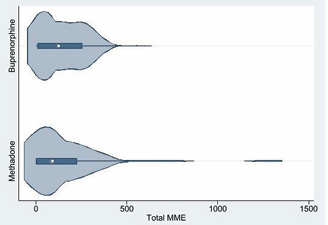
Figure 2 Total postpartum opioid consumption (MME) among patients receiving methadone (n=59) versus buprenorphine (n=118) for opioid use disorder after cesarean delivery (p = 0.95). Values are displayed as violin plots with mean and standard deviation. Total postoperative opioid consumption did not differ significantly between groups (methadone: 147.8 ± 210.7 mg vs buprenorphine: 149.5 ± 134.9 mg; P = 0.95).
On univariable analysis, predictors associated with total postpartum opioid consumption included estimated gestational age, labor prior to cesarean delivery, induction of labor, conversion to general anesthesia, neuraxial morphine, postpartum non-steroidal anti-inflammatory drug use, postpartum acetaminophen use, emergency cesarean delivery, duration of surgery, hysterectomy, mean and maximum postoperative pain scores, and use of postoperative opioid patient-controlled analgesia (Table 2).
Table 2: Univariable Analyses Identifying Predictors of Postpartum Total MME and Maximum Postpartum Pain Score. **Variables with P < 0.1 were considered potentially associated with total MME or total postpartum opioid consumption.
|
Variable (units) |
R² (Total MME) |
95% CI (Total MME) |
P-value (Total MME) |
R² (Max Pain) |
95% CI (Max Pain) |
P-value (Max Pain) |
|
MOUD type |
0.00 |
−49.94, 53.28 |
0.95 |
0.00 |
−0.52, 0.22 |
0.41 |
|
Length of stay (days) |
0.01 |
−4.69, 35.45 |
0.13 |
— |
— |
— |
|
Age |
0.00 |
−5.15, 5.81 |
0.91 |
0.00 |
−0.04, 0.03 |
0.81 |
|
Gravidity |
0.00 |
−7.86, 13.85 |
0.59 |
0.00 |
−0.05, 0.10 |
0.53 |
|
Parity |
0.00 |
−18.56, 13.63 |
0.76 |
0.00 |
−0.08, 0.15 |
0.54 |
|
Estimated gestational age (wks) |
0.05 |
−17.27, −3.26 |
<0.001** |
0.06 |
−0.14, −0.04 |
0.001** |
|
Race |
0.02 |
−9.50, 113.49 |
0.10 |
0.01 |
−0.16, 0.73 |
0.21 |
|
Admission BMI |
0.00 |
−2.13, 5.21 |
0.41 |
0.00 |
−0.02, 0.04 |
0.46 |
|
Anxiety/Depression |
0.00 |
−37.72, 55.42 |
0.60 |
0.01 |
−0.10, 0.64 |
0.15 |
|
Smoker |
0.00 |
−77.18, 39.02 |
0.52 |
0.02 |
−0.06, 0.77 |
0.09** |
|
Labor prior to cesarean |
0.03 |
5.93, 104.08 |
0.03** |
0.11 |
0.46, 1.14 |
<0.001** |
|
Induction of labor |
0.03 |
5.47, 141.16 |
0.03** |
0.01 |
−1.11, 0.87 |
0.13** |
|
Converted to general anesthesia |
0.07 |
33.60, 118.64 |
<0.001** |
0.04 |
0.12, 0.74 |
0.01** |
|
Ketorolac in OR |
0.00 |
−88.59, 76.53 |
0.89 |
0.00 |
−0.64, 0.55 |
0.88 |
|
Postpartum ketorolac |
0.11 |
−322.35, −132.58 |
<0.001** |
0.02 |
−1.39, 0.05 |
0.07** |
|
Postpartum ibuprofen |
0.02 |
−177.71, 14.29 |
0.10** |
0.94 |
−0.72, 0.67 |
0.94 |
|
Postpartum acetaminophen |
0.02 |
−216.98, −2.17 |
0.06** |
0.01 |
−0.39, 0.12 |
0.32 |
|
Emergency cesarean |
0.04 |
−115.76, −18.77 |
0.01** |
0.14 |
−1.22, −0.55 |
<0.001** |
|
Duration of surgery |
0.06 |
0.73, 2.85 |
<0.001** |
0.02 |
0.00, 0.02 |
0.04** |
|
Hysterectomy |
0.08 |
151.63, 465.78 |
<0.001** |
0.01 |
−0.25, 2.09 |
0.12 |
|
Total daily MOUD dose |
0.00 |
−6.80, 4.96 |
0.76 |
0.00 |
−0.00, 0.05 |
0.78 |
|
Mean postop pain score |
0.17 |
35.60, 71.49 |
<0.001** |
— |
— |
— |
|
Max postop pain score |
0.14 |
32.45, 70.94 |
<0.001** |
— |
— |
— |
|
Postop PCA (yes/no) |
0.13 |
150.47, 338.35 |
<0.001** |
0.04 |
0.25, 1.67 |
0.01** |
|
MME total |
— |
— |
— |
0.14 |
0.00, 0.04 |
<0.001** |
Postpartum Maximum Pain Score
In exploratory analyses, MOUD type did not predict maximum postpartum pain score. Factors associated with higher maximum postpartum pain score included estimated gestational age, smoking status, labor prior to cesarean delivery, conversion to general anesthesia, use of neuraxial morphine, emergency cesarean delivery,duration of surgery, and use of postoperative opioid patient-controlled analgesia (Table 2).
Exploratory Analysis: Inpatient Buprenorphine Continuation
Among patients receiving buprenorphine MOUD with available inpatient medication data (n = 87), 25 (29%) received no inpatient buprenorphine, while 62 (71%) received at least one inpatient dose during hospitalization. Patients who received buprenorphine only at discharge were excluded, as discharge dosing would not be expected to influence inpatient pain scores or opioid use measured in this study. Among those receiving inpatient buprenorphine, continuation patterns included continuation of the usual daily regimen (n=39, 45%) or intermittent dosing (n=23, 26%).
Patients who received at least one inpatient dose of buprenorphine had significantly lower total postpartum opioid consumption compared with those who received no inpatient buprenorphine (mean total MME 71.0 vs. 247.8; P < 0.001) (Figure 3). Maximum postpartum pain scores were numerically lower in the inpatient continuation group but did not differ significantly between groups (mean maximum pain score 8.9 vs. 9.3; P = 0.22).
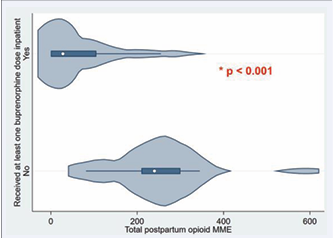
Figure 3 Total postpartum opioid MME requirements in patients who received at least one buprenorphine dose
DISCUSSION
Key Findings
The primary findings of this study are that postoperative opioid consumption and maximum pain scores after cesarean delivery did not differ between patients maintained on buprenorphine and those maintained on methadone for opioid use disorder. These results indicate that MOUD type alone does not meaningfully influence post-cesarean pain intensity or opioid requirements when contemporary perioperative care is provided. We also observed that inpatient continuation of buprenorphine was associated with lower total postpartum opioid consumption compared with no inpatient continuation,without significant differences in pain scores. Furthermore, higher postoperative opioid use and pain were associated with obstetric and perioperative factors (including emergency cesarean delivery, longer surgical duration, neuraxial morphine use, labor prior to cesarean delivery, and postoperative patient-controlled analgesia, highlighting the multifactorial drivers of analgesic needs in this population. These findings are clinically significant because they challenge concerns that buprenorphine intrinsically compromises postoperative pain control after cesarean delivery. Instead, they suggest that perioperative management practices and clinical context, rather than MOUD pharmacology, are primary determinants of postoperative analgesic requirements. From a clinical perspective, these results support the routine continuation of either methadone or buprenorphine during hospitalization for cesarean delivery, emphasize the importance of consistent MOUD management, and reinforce the need to anticipate higher analgesic needs in patients undergoing emergent or complex procedures.
Comparison with Existing Literature
Prior studies have reported increased postoperative opioid requirements among buprenorphine-maintained patients, with estimates up to 47–50% higher than those observed among methadone-maintained patients [11-14]. Our findings did not replicate this association, instead demonstrating comparable postoperative pain scores and opioid requirements between MOUD groups. Differences across studies may reflect heterogeneity in perioperative analgesic protocols, evolving multimodal pain strategies, and variability in inpatient MOUD continuation practices. Consistent with recent multidisciplinary consensus recommendations on peripartum pain management for patients with opioid use disorder, continuation of MOUD and use of standardized multimodal and neuraxial based analgesic approaches are emphasized as central to optimizing postoperative pain control [15-17]. The observed association between lack of inpatient buprenorphine administration and higher opioid consumption in our exploratory analysis suggests that previously reported differences may be partially attributable to inconsistent perioperative MOUD management and system-level practice variation, rather than inherent pharmacologic limitations of buprenorphine.
Pharmacologically, buprenorphine’s partial mu opioid receptor agonism and ceiling effect on respiratory depression (but not analgesia) support its safe perioperative use without compromising pain control [10,11]. These findings are consistent with prior work demonstrating that opioid-dependent women may require higher analgesic doses due to tolerance, and that continuation of buprenorphine does not appear to worsen postoperative pain or opioid requirements [5-7]. Although neonatal outcomes were not assessed in the present study, prior literature demonstrates shorter duration of neonatal abstinence syndrome and reduced morphine requirements among infants exposed to buprenorphine compared with methadone, further supporting the safety of buprenorphine continuation in the peripartum period [2-14].
Clinical Implications
Our findings provide practical guidance for obstetric anesthetic management. Both methadone and buprenorphine can be continued safely during cesarean delivery without clinically meaningful differences in postoperative pain scores or opioid requirements. Analgesic planning should prioritize obstetric urgency, surgical complexity, and perioperative factors, rather than MOUD type alone. Predictors of higher opioid requirements, including emergent cesarean delivery and longer surgical duration, likely reflect greater procedural complexity and anticipated analgesic needs, and may guide tailored perioperative strategies to optimize pain control while minimizing excess opioid exposure.
These results support the development of standardized institutional approaches to MOUD continuation during hospitalization. Reducing variability in perioperative MOUD management may help avoid unnecessary increases in supplemental opioid use and promote more consistent pain control. Multimodal analgesia including neuraxial opioids, NSAIDs, and acetaminophen remains essential, and anticipating higher analgesic needs in specific clinical scenarios allows care teams to proactively tailor pain management strategies.
Limitations
This study’s retrospective design and single-institution setting may limit generalizability. Sample size constraints precluded detailed subgroup analyses for rare surgical complications. Potential confounders—including socioeconomic factors, polysubstance use, and provider level decision-making—were not fully captured. Pain scores are subjective and dependent on documentation quality. The exploratory buprenorphine continuation analysis is subject to confounding by indication and should be interpreted as hypothesis-generating. Prospective, multicenter studies are needed to confirm causality and inform evidence-based perioperative guidelines for obstetric patients receiving MOUD.
CONCLUSION
In this cohort of cesarean delivery patients receiving MOUD, postpartum opioid requirements and maximum pain scores were similar between buprenorphine- and methadone-maintained patients. In exploratory analyses, inpatient continuation of buprenorphine was associated with lower total postpartum opioid consumption, without significant differences in pain scores. Predictors of higher opioid consumption and pain (gestational age, labor prior to cesarean delivery, emergency cesarean, surgical duration, hysterectomy, and postoperative patient-controlled analgesia) highlight opportunities for anticipatory, individualized analgesic planning. These findingssupport continuation of either methadone or buprenorphine during hospitalization and emphasize the importance of consistent perioperative MOUD management in optimizing postoperative care for women with OUD.
Funding
Support was provided solely from institutional sources.
Acknowledgements
We thank the Department of Obstetrics and Gynecology and the broader perioperative team at Magee Women’s Hospital for their contributions to this study.
Prior Presentations
2023 SOAP Annual Meeting in New Orleans on 05/07/2023 (Poster)
REFERENCES
- Kuczkowski KM. The effects of drug abuse on pregnancy. Curr Opin Obstet Gynecol. 2007; 19: 578-585.
- Ludlow JP, Evans SF, Hulse G. Obstetric and perinatal outcomes in pregnancies associated with illicit substance abuse. Aust N Z J Obstet Gynaecol. 2004; 44: 302-306.
- Birnbach DJ, Stein DJ. The substance-abusing parturient: implications for analgesia and anaesthesia management. Baillieres Clin Obstet Gynaecol. 1998; 12: 443-460.
- Committee Opinion No. 711: Opioid Use and Opioid Use Disorder in Pregnancy. Obstet Gynecol. 2017; 130: 81-94.
- Cassidy B, Cyna AM. Challenges that opioid-dependent women present to the obstetric anaesthetist. Anaesth Intensive Care. 2004; 32: 494-501.
- Nowakowski E, Dayananda S, Morgan M, Jarvis O, Altamirano V, LaSorda KR, Krans E, et al. Obstetric pain management for pregnant women with opioid use disorder: A qualitative and quantitative comparison of patient and provider perspectives (QUEST study). Addiction. 2023; 118: 1093-1104.
- Höflich AS, Langer M, Jagsch R, Bäwert A, Winklbaur B, Fischer G, et al. Peripartum pain management in opioid dependent women. Eur J Pain. 2012; 16: 574-84.
- Elkader A, Sproule B. Buprenorphine: clinical pharmacokinetics in the treatment of opioid dependence. Clin Pharmacokinet. 2005; 44: 661-680.
- Zoorob R, Kowalchuk A, Grubb MM de. Buprenorphine Therapy for Opioid Use Disorder. Am Fam Physician. 2018; 97: 313-320.
- White LD, Hodge A, Vlok R, Hurtado G, Eastern K, Melhuish TM. Efficacy and adverse effects of buprenorphine in acute pain management: systematic review and meta-analysis of randomised controlled trials. Br J Anaesth. 2018; 120: 668-678.
- Meyer M, Paranya G, Keefer Norris A, Howard D. Intrapartum and postpartum analgesia for women maintained on buprenorphine during pregnancy. Eur J Pain. 2010; 14: 939-943.
- Lim G, LaSorda K, Rosario B, Krans E, Caritis S. Affective dimensions of postpartum pain and opioid requirements in women with OUD. NIH J Womens Health. 2020; 28: 1577-1596.
- Vilkins AL, Bagley SM, Hahn KA, Rojas-Miguez F, Wachman EM, Saia K, et al. Comparison of Post-Cesarean Section Opioid Analgesic Requirements in Women With Opioid Use Disorder Treated With Methadone or Buprenorphine. J Addict Med. 2017; 11: 397-401.
- Hendrée E. Jones, Karol Kaltenbach, Sarah H. Heil, Susan M. Stine, Mara G. Coyle, Amelia M. Arria, et al. Neonatal abstinence syndrome outcomes in methadone and buprenorphine-exposed neonates. N Engl J Med. 2010; 363: 2320-2331.
- Lim, Grace, Carvalho, Brendan, George, Ronald B, Bateman, Brian T. Brummett, Chad M, et al. Consensus Statement on Pain Management for Pregnant Patients with Opioid-Use Disorder from the Society for Obstetric Anesthesia and Perinatology, Society for Maternal-Fetal Medicine, and American Society of Regional Anesthesia and Pain Medicine. Anesth Analg. 2025; 140: 1318-1346.
- Eder H, Fischer G, Gombas W, Jagsch R, Stühlinger G, Kasper S. Comparison of buprenorphine and methadone maintenance in opiate addicts. Eur Addict Res. 1998; 4: 3-7.
- Lim G, Carvalho B, George RB, Bateman BT, Brummett CM, Ip VHY, et al. Consensus statement on pain management for pregnant patients with opioid use disorder from the Society for Obstetric Anesthesia and Perinatology, Society for Maternal-Fetal Medicine, and American Society of Regional Anesthesia and Pain Medicine. Am J Obstet Gynecol. 2025; 233: 21-29.