Urine Drug Test Findings among Patients Prescribed Buprenorphine or Full Agonist Opioids in Pain Management Settings
- 1. Uprise Health, 2 Park Plaza, Suite 1200, Irvine, CA 92614, USA
- 2. Millennium Health, 6981 Via Tazon, San Diego, CA 92127, USA
- 3. Suremed Compliance, 115 Ronforth Street Fairhope, AL 36532, USA
Abstract
Purpose: Urine drug test (UDT) monitoring can support opioid prescribers in balancing effective analgesia and understanding treatment-specific risks associated with different opioid therapies. The purpose of this study was to estimate positive illicit substance UDT specimens provided by patients in pain management settings based upon their prescribed pain therapy.
Methods: Cross-sectional study using real-world UDT results (January 2019-March 2025) from patients in pain management settings. Patients were stratified by those prescribed (for pain) (1) buprenorphine buccal film [BBF], (2) buprenorphine transdermal patch [BTP], and (3) full agonist opioids [FAO]. Prevalence of documented substance use disorder (SUD) and relative risks of positive UDT results for heroin, fentanyl, cocaine, and methamphetamine were calculated.
Results: Of 137,204 UDT specimens from 34,739 unique patients, 9,363 specimens were from patients prescribed BBF, 12,235 prescribed BTP, and 115,606 prescribed FAOs. Overall prevalence of illicit substance positivity was low across all groups (<1%). Buprenorphine patients had a higher prevalence of SUD/OUD compared with FAO patients. Despite this higher risk, patients prescribed BBF or BTP had lower relative risks of fentanyl positivity compared with patients prescribed FAOs, particularly hydromorphone and oxymorphone.
Conclusions: In this 2019–2025 study of UDT results from pain management practices, illicit substance positivity was uncommon among patients receiving opioid therapy. Patients prescribed BBF and BTP for pain had lower relative risks of fentanyl positivity compared with patients prescribed FAOs despite higher prevalence of SUD or OUD. These findings support consideration of buprenorphine-based analgesic therapy as part of risk mitigation strategies in chronic pain management.
Keywords
• Pain management
• Chronic pain
• Opioids
• Urine Drug testing
• Buprenorphine
Citation
Green JL, Dailey-Govoni T, Vosburg SK, Whitley P, Passik S (2026) Urine Drug Test Findings among Patients Prescribed Buprenorphine or Full Agonist Opioids in Pain Management Settings. J Subst Abuse Alcohol 13(3): 1114.
INTRODUCTION
Prescription opioids are often a crucial component of a patient’s pain management plan; however, use of these medications carries the risks of misuse, abuse, addiction, overdose, and death [1]. Urine drug test (UDT) monitoring can support opioid prescribers in balancing effective analgesia and mitigation of opioid-related risks [1-3]. While the reported rates of illicit substances detected in UDTs of patients managed in pain clinics are low [4], unexpected UDT results, such as negative results for medications prescribed to the patient or positive results for nonprescribed medications or illicit substances,may be used alongside other clinical information to support prescriber decision-making and assess patient risks. In addition to assisting clinicians in providing safe and effective pain management to their patients, UDT results can also be evaluated in aggregate to estimate the prevalence of unprescribed and/or illicit substance positivity among a given patient population.
There is growing interest in the use of buprenorphine for the treatment of pain, in part due to its pharmacology (a partial opioid agonist with high binding affinity for the μ-opioid receptor, an antagonist with high binding affinity for the delta and kappa receptors, and a nociceptin agonist with low binding affinity) [5,6]. Current clinical guidelines also reflect this shift. The 2022 Centers for Disease Control and Prevention guideline recommends consideration of buprenorphine for patients who require opioid tapering but do not meet diagnostic criteria for opioid use disorder [1]. Likewise, the 2022 Department of Veterans Affairs and Department of Defense guideline prioritizes buprenorphine over full μ-opioid receptor agonists for patients receiving long-term opioid therapy, citing reduced risks of overdose and misuse [2]. Consistent with these recommendations, the 2023 American Society of Interventional Pain Physicians guideline identifies buprenorphine as an appropriate option for the management of moderate to severe chronic pain [3].
Buprenorphine is approved by the US Food and Drug Administration (FDA) for treatment of opioid use disorder (OUD; Bunavail® buccal film, Probuphine® intradermal implant, Sublocade® extended-release injection, Suboxone® sublingual film and generic sublingual film, Subutex® brand and generic sublingual tablet, Zubsolv® sublingual tablet, and Brixadi® extended-release injection), acute pain (Buprenex® intramuscular/intravenous injection) and chronic pain (Belbuca® buccal film, Butrans® transdermal patch, and generic transdermal patch products) [7,8]. Buprenorphine buccal film (BBF) and buprenorphine transdermal patch (BTP) are both specifically indicated for management of severe and persistent pain that requires an extended treatment period with a daily opioid analgesic and for which alternative treatment options are inadequate [9,10]. As with all prescription opioids, buprenorphine products carry a boxed warning regarding the risks of addiction, abuse, and misuse, which can lead to overdose and death.
Available evidence from real-world data on nonmedical use (NMU) of prescription opioids has demonstrated that buprenorphine formulations for pain have lower rates of NMU compared to full μ-opioid agonists [11-13]. Most opioid medications prescribed for chronic pain are full μ-opioid agonist opioids categorized as schedule II (CII) substances under the Controlled Substances Act, meaning that they are “drugs with a high potential for abuse, with use potentially leading to severe psychological or physical dependence”, whereas buprenorphine is a schedule III (CIII) substance which is defined as “drugs with a moderate to low potential for physical and psychological dependence” [14].
To date, the study of buprenorphine-prescribed UDT specimens has focused on patients receiving buprenorphine as a medication for OUD [15-24]. Fewer studies have evaluated UDT specimens among patients prescribed buprenorphine for the treatment of pain, including quantifying illicit substance positivity among these patients compared to patients prescribed other prescription opioid medications for chronic pain.
The objective of this study was to estimate illicit substance positivity among UDT specimens provided by patients in pain management settings comparing patients prescribed BBF, patients prescribed BTP, and patients prescribed full agonist opioids (FAO). Given the unique properties of buprenorphine, we hypothesized that patients prescribed buprenorphine pain medications (BBF or BTP) would be less likely to have positive UDT results for illicit substances than patients prescribed FAO medications
METHODS
Study Design and Data Source
An observational study was conducted using UDT results collected from 01 January 2019 through 31 March 2025 from patient specimens submitted for testing by healthcare practices specializing in pain management. UDT specimens were de-identified and analyzed by Millenium Health, a clinical testing laboratory that processes urine and oral fluid specimens in all US states and across multiple specialties. UDT specimens were analyzed by liquid chromatography–tandem mass spectrometry (LC-MS/MS) for each analyte. The LC-MS/MS testing method is a laboratory-developed test with performance characteristics determined by Millennium Health, certified by the Clinical Laboratory Improvement Amendments and accredited by the College of American Pathologists for high-complexity testing.
Study Groups and Specimen Selection
Three study groups were created based on prescribed medications at the time of specimen collection: (1) BBF, (2) BTP and (3) any FAO. FAO subgroups were also studied and included hydrocodone, hydromorphone, morphine, oxycodone, and oxymorphone. Each unique UDT specimen was assigned to one study group. However, unique patients could contribute multiple UDT specimens over time and their prescription medications could change; hence, a unique patient may have contributed specimens to more than one study group. In instances of multiple UDT results from one unique patient within a 30-day period, only the first specimen was included (i.e., each specimen provided by a unique patient is at least 30 days apart). Tramadol was not included among the FAO group because of its unique mechanism of action and difference in drug schedule from the other included FAO opioid compounds (schedule IV versus schedule II). Specimens that listed a prescription for fentanyl were excluded among the FAO group because UDT results do not differentiate between illicit and pharmaceutical manufactured fentanyl, complicating interpretation of fentanyl analyte/metabolite UDT results among individuals with a prescription for fentanyl.
To best assess any potential differences between the two buprenorphine analgesic medications, BBF and BTP specimens were selected to be mutually exclusive of one another; meaning that BBF prescribed specimens had no prescription listed for BTP, and vice versa. However, BBF and BTP specimens may also have had prescription(s) for a FAO. Specimens assigned to the FAO study group had only one FAO (e.g., hydrocodone) prescription and did not have a prescription for BBF or BTP.
Data Analysis
Frequencies of sex, age, and payor group among unique patients prescribed BBF and the primary comparator study groups.(BTP,.FAO) were generated. Pearson chi-square tests for categorical data and independent sample t-tests for continuous data were calculated to compare unique patients with BBF prescriptions to unique patients in comparator study groups. Relative risks for history of substance use disorder (SUD) and history of opioid use disorder (OUD; a subcategory of SUD) at time of specimen collection were calculated for the primary comparator groups as well as the FAO subgroups using BBF as the reference group, followed by a second set of analyses using BTP as the reference group. Relative risks for positive UDTs for heroin, fentanyl, cocaine, and methamphetamine were computed using the same approach. Statistical significance was defined as a 95% confidence interval (CI) for the risk ratio that did not include 1.0.
RESULTS
A total of 137,204 UDT specimens from 34,739 unique patients representing an average of approximately four specimens per patient were included in the final study analysis dataset (Figure 1). At the time of the specimen collection, 3,675 patients were prescribed BBF, 5,299 were prescribed BTP, and 26,607 were prescribed FAOs.
Demographic characteristics differed significantly across the three primary groups (Table 1). Sex distribution varied modestly but significantly between BBF and FAO patients and between BTP and FAO patients (both p < 0.0001). Female patients represented the majority across all groups, comprising 62.2% of the BBF cohort, 64.3% of the BTP cohort, and 59.0% of the FAO cohort. Comparisons between BBF and BTP did not show a statistically significant difference in sex distribution (p = 0.0658). Age differed across all prescribed groups. Patients prescribed BBF were younger on average (mean 56.1 years, SD 12.8) than those prescribed BTP (mean 58.8 years, SD 14.0) and FAOs (mean 59.4 years, SD 12.2). Median ages followed the same pattern (57 versus 59 and 60 years, respectively). All pairwise comparisons of age reached statistical significance (BBF vs. BTP p < 0.0001; BBF vs. FAO p < 0.0001; BTP vs. FAO p = 0.0017).
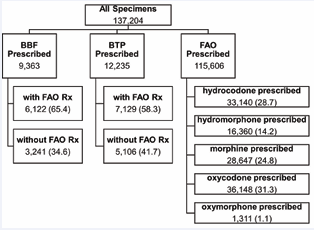
Figure 1: Urine drug test (UDT) specimens included in the final analysis dataset. Each unique specimen is assigned to only one study group (BBF, BTP, and FAO are mutually exclusive), but unique patients may have contributed more than one specimen and may have results in more than one study group. The sub-groups comprising the FAO study group were selected to be mutually exclusive of each other and excluded BBF and BTP. BBF=buprenorphine buccal film; BTP=buprenorphine transdermal patch; FAO=full agonist opioid; Rx=prescription.
Payor type also differed significantly among all three groups (p < 0.0001 for all comparisons) (Table 1). Medicare was the most common payor category across groups but was most prevalent in the FAO cohort (45.1%), followed by BTP (40.9%) and BBF (35.3%). Medicaid coverage was more frequent in the BTP group (20.5%) compared with BBF (16.3%) and FAO (12.3%). Commercial contracted insurance was more common in the BBF group (21.7%) compared with BTP (15.8%) and FAO (15.0%). The FAO group had the highest proportion of uninsured patients (3.7%), followed by BBF (2.2%) and BTP (1.4%).
Table 1:Patient demographics at time.of.first.prescribed specimen, and comparison between study groups a
|
|
BBF Prescribed Patients (n=3,675) |
BTP Prescribed Patients (n=5,299) |
FAO Prescribed Patients (n=26,607) |
BBF v. BTP Prescribed Patients |
BBF v. FAO Prescribed Patients |
BTP v. FAO Prescribed Patients |
|
n (%) |
n (%) |
n (%) |
p-value |
p-value |
p-value |
|
|
Sex |
|
|
|
|
|
|
|
Male Female |
1,363 (37.1) 2,286 (62.2)) |
1,871 (35.3) 3,407 (64.3) |
10,890 (40.9) 15,686 (59.0) |
0.0658 |
<0.0001 |
<0.0001 |
|
Unknown |
26 (0.7) |
21 (0.4) |
31 (0.1) |
|
|
|
|
Age |
|
|
|
|
|
|
|
Mean (SD) |
56.1 (12.8) |
58.8 (14.0) |
59.4 (12.2) |
<0.0001 |
<0.0001 |
0.0017 |
|
Median |
57 |
59 |
60 |
|
|
|
|
Payor Group |
|
|
|
|
|
|
|
Commercial Contracted |
799 (21.7) |
839 (15.8) |
3,978 (15.0) |
|
|
|
|
Commercial Non-Contracted |
119 (3.2) |
141 (2.7) |
649 (2.4) |
|
|
|
|
Medicaid Medicare |
599 (16.3) 1,299 (35.3) |
1,084 (20.5) 2,165 (40.9) |
3,267 (12.3) 12,007 (45.1) |
<0.0001 |
<0.0001 |
<0.0001 |
|
Private Insurance |
548 (14.9) |
555 (10.5) |
2,764 (10.4) |
|
|
|
|
Other |
230 (6.3) |
439 (8.3) |
2,951 (11.1) |
|
|
|
|
Uninsured |
81 (2.2) |
76 (1.4) |
991 (3.7) |
|
|
|
a Itaitalics represent statistically significant p-values. BBF=buprenorphine buccal film; BTP=buprenorphine transdermal patch; FAO=full agonist opioid; SD=standard deviation; v=versus.
Within the FAO group, 5,978 were prescribed hydrocodone, 5,909 were prescribed hydromorphone, 9,270 were prescribed morphine, 6,053 were prescribed oxycodone, and 520 were prescribed oxymorphone (Table S1). Patient demographics for the FAO subgroups are available in the online supplement (Table S1).
Compared to the BBF prescribed group, the BTP prescribed group had a significantly higher likelihood of specimens collected from patients with a history of SUD at the time of collection (10.7% versus 15.0%; RR 1.39, 95% CI 1.30, 1.50) and OUD (8.6% versus 11.3%; RR 1.32, 95% CI 1.21, 1.43) (Table 2). Conversely, the FAO prescribed group had a significantly lower likelihood of specimens collected from patients with a history of SUD (8.2%; RR 0.76, 95% CI 0.72, 0.81) and OUD (6.4%; RR 0.75, 95% CI 0.70, 0.80). FAO subgroups with significantly lower risk for SUD were hydrocodone, hydromorphone and oxycodone. The relative risks for OUD were significantly lower for all FAO subgroups. Using the BTP prescribed group as the reference, both BBF and FAO prescribed groups had significantly lower likelihood of specimens collected from patients with a history of SUD or OUD at the time of collection, with significantly lower risks for SUD and OUD across all FAO subgroups.
Table 2: History of substance use disorder (SUD) and opioid use disorder (OUD) diagnosis at the time of or prior to specimen collection.
|
|
Substance Use Disorder (SUD)a n (%) |
No SUD n (%) |
Relative Risk (95% CI) versus BBF |
Relative Risk (95% CI) versus BTP |
|
BBF |
1,004 (10.7) |
8,359 (89.3) |
Reference |
0.72 (0.67, 0.77) |
|
BTP |
1,830 (15.0) |
10,405 (85.0) |
1.39 (1.30, 1.50) |
Reference |
|
FAO |
9,437 (8.2) |
106,169 (91.8) |
0.76 (0.72, 0.81) |
0.55 (0.52, 0.57) |
|
hydrocodone |
2,418 (7.3) |
30,722 (92.7) |
0.68 (0.63, 0.73) |
0.49 (0.46, 0.52) |
|
hydromorphone |
1,224 (7.5) |
15,136 (92.5) |
0.70 (0.64, 0.76) |
0.50 (0.47, 0.54) |
|
morphine |
2,939 (10.3) |
25,708 (89.7) |
0.96 (0.89, 1.02) |
0.69 (0.65, 0.72) |
|
oxycodone |
2,722 (7.5) |
33,426 (92.5) |
0.70 (0.66, 0.75) |
0.50 (0.48, 0.53) |
|
oxymorphone |
134 (10.2) |
1,177 (89.8) |
0.95 (0.80, 1.13) |
0.68 (0.58, 0.81) |
|
|
Opioid Use Disorder (OUD)a |
No OUD |
Relative Risk (95% CI) versus BBF |
Relative Risk (95% CI) versus BTP |
|
n (%) |
n (%) |
|||
|
BBF |
801 (8.6) |
8,562 (91.5) |
Reference |
0.76 (0.70, 0.82) |
|
BTP |
1,381 (11.3) |
10,854 (88.7) |
1.32 (1.21, 1.43) |
Reference |
|
FAO |
7,394 (6.4) |
108,212 (93.6) |
0.75 (0.70, 0.80) |
0.57 (0.54, 0.60) |
|
hydrocodone |
2,053 (6.2) |
31,087 (93.8) |
0.72 (0.67, 0.78) |
0.55 (0.51, 0.59) |
|
hydromorphone |
1,093 (6.7) |
15,267 (93.3) |
0.78 (0.72, 0.85) |
0.59 (0.55, 0.64) |
|
morphine |
1,957 (6.8) |
26,690 (93.2) |
0.80 (0.74, 0.86) |
0.61 (0.57, 0.65) |
|
oxycodone |
2,216 (6.1) |
33,932 (93.9) |
0.72 (0.66, 0.77) |
0.54 (0.51, 0.58) |
|
oxymorphone |
75 (5.7) |
1,236 (94.3) |
0.67 (0.53, 0.84) |
0.51 (0.40, 0.63) |
aIf a specimen included a patient diagnosis of SUD or OUD, history of this diagnosis was assigned to that specimen as well as all subsequent specimens. BBF=buprenorphine buccal film; BTP=buprenorphine transdermal patch; FAO=full agonist opioid
Overall, the prevalence of a positive UDT for heroin, fentanyl, cocaine, and methamphetamine was less than 1% in this sample of patients treated for pain (Table 3). Relative risks between the BBF and BTP groups did not differ from one another except for cocaine, for which the BTP group had a relative risk of 1.54 (95% CI 1.03, 2.29) compared to BBF.
While the overall rates were low, relative to the BBF prescribed group (Table 3, Figure 2):
Table 3: Frequency and relative risk of positive urine drug testing (UDT) for heroin, fentanyl, cocaine and methamphetamine
|
Prescribed Group |
Heroin Positive UDT n (%) |
Heroin Negative UDT n (%) |
Relative Risk (95% CI) versus BBF |
Relative Risk (95% CI) versus BTP |
|
BBF |
1 (<0.01) |
8,341 (99.99) |
Reference |
0.16 (0.02, 1.30) |
|
BTP |
8 (0.07) |
10,818 (99.93) |
6.16 (0.77, 49.28) |
Reference |
|
FAO |
54 (0.05) |
104,895 (99.95) |
4.29 (0.59, 31.02) |
0.70 (0.33, 1.46) |
|
hydrocodone |
8 (0.03) |
30,038 (99.97) |
2.22 (0.28, 17.76) |
0.36 (0.14, 0.96) |
|
hydromorphone |
14 (0.10) |
14,426 (99.90) |
8.09 (1.06, 61.49) |
1.31 (0.55, 3.13) |
|
morphine |
15 (0.06) |
25,984 (99.94) |
4.81 (0.64, 36.43) |
0.78 (0.33, 1.84) |
|
oxycodone |
16 (0.05) |
33,290 (99.95) |
4.01 (0.53, 30.21) |
0.65 (0.28, 1.52) |
|
oxymorphone |
1 (0.09) |
1,157 (99.91) |
7.20 (0.45, 115.09) |
1.17 (0.15, 9.34) |
|
|
Fentanyl Positive UDT n (%) |
Fentanyl Negative UDT n (%) |
Relative Risk (95% CI) versus BBF |
Relative Risk (95% CI) versus BTP |
|
BBF |
45 (0.52) |
8,629 (99.48) |
Reference |
0.94 (0.64, 1.38) |
|
BTP |
61 (0.55) |
11,028 (99.45) |
1.06 (0.72, 1.56) |
Reference |
|
FAO |
950 (0.89) |
105,312 (99.11) |
1.72 (1.28, 2.32) |
1.63 (1.26, 2.10) |
|
hydrocodone |
85 (0.28) |
30,050 (99.72) |
0.54 (0.38, 0.78) |
0.51 (0.37, 0.71) |
|
hydromorphone |
259 (1.76) |
14,455 (98.24) |
3.39 (2.48, 4.65) |
3.20 (2.42, 4.22) |
|
morphine |
183 (0.69) |
26,301 (99.31) |
1.33 (0.96, 1.84) |
1.26 (0.94, 1.68) |
|
oxycodone |
405 (1.20) |
33,350 (98.80) |
2.31 (1.70, 3.14) |
2.18 (1.67, 2.85) |
|
oxymorphone |
18 (1.53) |
1,156 (98.47) |
2.96 (1.72, 5.09) |
2.79 (1.65, 4.70) |
|
|
Cocaine Positive UDT n (%) |
Cocaine Negative UDT n (%) |
Relative Risk (95% CI) versus BBF |
Relative Risk (95% CI) versus BTP |
|
BBF |
36 (0.42) |
8,449 (99.58) |
Reference |
0.65 (0.44, 0.97) |
|
BTP |
72 (0.65) |
10,959 (99.35) |
1.54 (1.03, 2.29) |
Reference |
|
FAO |
492 (0.46) |
105,540 (99.54) |
1.09 (0.78, 1.53) |
0.71 (0.56, 0.91) |
|
hydrocodone |
105 (0.35) |
30,304 (99.65) |
0.81 (0.56, 1.19) |
0.53 (0.39, 0.71) |
|
hydromorphone |
98 (0.67) |
14,580 (99.33) |
1.57 (1.08, 2.30) |
1.02 (0.76, 1.39) |
|
morphine |
89 (0.34) |
26,134 (99.66) |
0.80 (0.54, 1.18) |
0.52 (0.38, 0.71) |
|
oxycodone |
193 (0.58) |
33,366 (99.42) |
1.36 (0.95, 1.93) |
0.88 (0.67, 1.15) |
|
oxymorphone |
7 (0.60) |
1,156 (99.40) |
1.42 (0.63, 3.18) |
0.92 (0.43, 2.00) |
|
|
Methamphetamine Positive UDT n (%) |
Methamphetamine Negative UDT n (%) |
Relative Risk (95% CI) versus BBF |
Relative Risk (95% CI) versus BTP |
|
BBF |
45 (0.55) |
8,195 (99.45) |
Reference |
0.87 (0.60, 1.27) |
|
BTP |
65 (0.63) |
10,306 (99.37) |
1.15 (0.79, 1.68) |
Reference |
|
FAO |
451 (0.48) |
94,242 (99.52) |
0.87 (0.64, 1.18) |
0.76 (0.59, 0.98) |
|
hydrocodone |
133 (0.49) |
26,937 (99.51) |
0.90 (0.64, 1.26) |
0.78 (0.58, 1.05) |
|
hydromorphone |
96 (0.73) |
13,097 (99.27) |
1.33 (0.94, 1.90) |
1.16 (0.85, 1.59) |
|
morphine |
86 (0.37) |
23,076 (99.63) |
0.68 (0.47, 0.97) |
0.59 (0.43, 0.82) |
|
oxycodone |
131 (0.43) |
30,175 (99.57) |
0.79 (0.56, 1.11) |
0.69 (0.51, 0.93) |
|
oxymorphone |
5 (0.52) |
957 (99.48) |
0.95 (0.38, 2.39) |
0.83 (0.33, 2.05) |
BBF=buprenorphine buccal film; BTP=buprenorphine transdermal patch; FAO=full agonist opioid
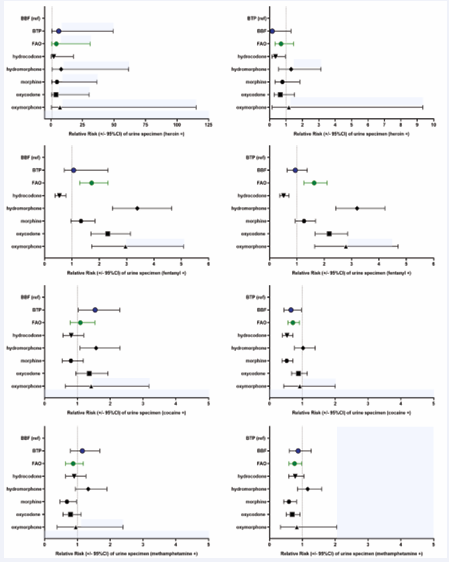
Figure 2 Relative risk of positive urine drug test. (1) using buprenorphine buccal film (BBF) as reference group (left panel) and (2) using buprenorphine transdermal patch (BTP) as reference group (right panel). BBF=buprenorphine buccal film; BTP=buprenorphine transdermal patch; FAO=full agonist opioid; ref=reference group.
• relative risk of a positive heroin UDT was significantly higher for those prescribed hydromorphone (RR 8.09, 95% CI 1.06, 61.49),
• relative risk of a positive fentanyl UDT was significantly higher for the FAO prescribed group (RR 1.72, 95% CI 1.28, 2.32), particularly for those prescribed hydromorphone (RR 3.39, 95% CI 2.48,4.65), oxycodone (RR 2.31, 95% CI 1.70, 3.14), and oxymorphone (RR 2.96, 95% CI 1.72, 5.09),
• relative risk of a positive cocaine UDT was significantly higher for the BTP prescribed group (RR 1.54, 95% CI 1.03, 2.29) and those prescribed hydromorphone (RR 1.57, 95% CI 1.08, 2.30), and
• relative risk of a positive methamphetamine UDT was significantly lower for the morphine prescribed group (RR 0.68, 95% CI 0.47, 0.97). Relative to the BTP prescribed group (Table 3, Figure 2):
• relative risk of a positive heroin UDT was not significantly different from BBF or FAO, and significantly lower for hydrocodone (RR 0.36; 95% CI 0.14, 0.96),
• relative risk of a positive fentanyl UDT was significantly higher for the FAO prescribed group (RR 1.63, 95% CI 1.26, 2.10), particularly those prescribed oxycodone (RR 2.18, 95% CI 1.67, 2.85) and oxymorphone (RR 2.79, 95% CI 1.65, 4.70),
• relative risk of a positive cocaine UDT was significantly lower for the BBF prescribed group (RR 0.65, 95% CI 0.44, 0.97) and those prescribed FAO (RR 0.71, 95% CI 0.56, 0.91), and
• relative risk of a positive methamphetamine UDT was significantly lower for the FAO prescribed group (RR 0.79, 95% CI 0.59, 0.98).
DISCUSSION
In this large real-world analysis of UDT specimens from pain management practices, patients prescribed opioid therapy (including BBF, BTP, and FAOs) demonstrated a low overall prevalence of illicit substance positivity, with rates of heroin, fentanyl, cocaine, and methamphetamine positivity each below 1%. This was consistent with prior reports from pain management populations [4]. Despite this low prevalence, clinically meaningful differences were observed across opioid classes, particularly with respect to illicit opioid exposure.
Patients prescribed BBF or BTP were significantly less likely to have positive fentanyl UDT results compared with patients prescribed FAOs. These differences were most pronounced among patients prescribed hydromorphone and oxymorphone, who had substantially higher relative risks of fentanyl positivity compared with patients 0.87 (0.64, 1.18) 0.90 (0.64, 1.26) 1.33 (0.94, 1.90) 0.68 (0.47, 0.97) 0.79 (0.56, 1.11) 0.95 (0.38, 2.39) 0.87 (0.60, 1.27) Reference 0.76 (0.59, 0.98) 0.78 (0.58, 1.05) 1.16 (0.85, 1.59) 0.59 (0.43, 0.82) 0.69 (0.51, 0.93) 0.83 (0.33, 2.05) fentanyl positivity compared with FAO prescribed patients. This finding supports existing evidence that buprenorphine’s partial μ-opioid agonism and high μ-receptor affinity produce substantial receptor occupancy and functional blockade that can attenuate the reinforcing and subjective effects of illicit opioids (eg, fentanyl, heroin), which may reduce incentives for opioid co-use [29]. It has also been reported that cravings associated with addiction are reduced with buprenorphine due to it being an antagonist at the kappa opioid receptor [5]. These results align with prior real-world studies demonstrating lower rates of nonmedical use, abuse, and diversion for buprenorphine pain formulations relative to full μ-opioid agonists [11-13]. prescribed buprenorphine-based analgesics. Given the widespread presence of illicitly manufactured fentanyl in the current drug supply, these findings have important implications for overdose risk and patient safety among individuals receiving long-term opioid therapy for pain [25,26].
Notably, patients prescribed buprenorphine for pain had a higher documented prevalence of SUD and OUD compared with FAO prescribed patients. Although the study design does not permit determination of causality, this pattern may be influenced by differential prescribing. Clinicians may preferentially select buprenorphine based therapies for patients perceived to be at higher risk for opioid-related harms, consistent with guideline recommendations emphasizing individualized risk assessment and opioid selection [1-3]. Differential opioid prescribing has been well documented across medical specialties and within pain management and represents an important contextual factor when interpreting observational UDT findings [27,28].
Despite this higher baseline risk profile, patients prescribed BBF demonstrated lower relative risks of fentanyl positivity compared with FAO prescribed patients. This finding supports existing evidence that buprenorphine’s partial μ-opioid agonism and high μ-receptor affinity produce substantial receptor occupancy and functional blockade that can attenuate the reinforcing and subjective effects of illicit opioids (eg, fentanyl, heroin), which may reduce incentives for opioid co-use [29]. It has also been reported that cravings associated with addiction are reduced with buprenorphine due to it being an antagonist at the kappa opioid receptor [5]. These results align with prior real-world studies demonstrating lower rates of nonmedical use, abuse, and diversion for buprenorphine pain formulations relative to full μ-opioid agonists [11-13].
Illicit opioid and stimulant positivity have distinct clinical implications in the context of pain management. Detection of heroin or fentanyl may indicate loss of control of opioid use, elevated overdose risk, or progression toward opioid use disorder and therefore represents a direct safety concern in patients prescribed opioid therapy. In contrast, detection of stimulants such as cocaine or methamphetamine may reflect pursuit of non-analgesic psychotropic effects rather than opioid substitution and does not necessarily indicate escalation of opioid misuse. This distinction is clinically relevant, as stimulant use may confer different risks and require different monitoring or intervention strategies than illicit opioid use.
In this study, BBF and BTP prescribed patients demonstrated lower relative risks of fentanyl positivity compared to FAO prescribed patients, but BTP had significantly higher relative risk of cocaine and methamphetamine positivity compared to FAO prescribed patients. While determination of causality is beyond the scope of this study, one potential explanation is that buprenorphine’s opioid receptor activity may reduce the reinforcing effects of additional opioid use without affecting non-opioid substance use. Considering 15.0% of the BTP prescribed group had a documented SUD history, higher stimulant positivity among these patients may potentially reflect comorbid or residual substance use behaviors rather than opioid-seeking behavior and therefore may be more apparent in populations selected for buprenorphine therapy due to higher baseline risk.
Overall, these findings have implications for opioid selection and risk mitigation in chronic pain management. In a real-world pain population with low overall rates of illicit substance positivity, buprenorphine-based analgesic therapies, both BBF and BTP, were associated with lower relative risks of fentanyl exposure despite higher baseline prevalence of SUD or OUD. When considered alongside current clinical guidelines, these results support the use of buprenorphine as a potentially lower risk opioid option for selected patients at elevated risk for opioid-related harms. Definitive UDT results may further support individualized prescribing decisions by informing ongoing assessment of patient risk and treatment response.
Limitations
This study has several limitations. First, the analysis was based on de-identified UDT specimens rather than longitudinal patient-level outcomes, limiting causal inference. Prescription data reflect medications listed at the time of specimen collection and may not capture adherence, dose, or duration of therapy. UDT results identify substance exposure but cannot distinguish intent, timing, or source. Patients could contribute multiple specimens across study groups. Finally, unmeasured confounders, including pain severity, comorbid mental health conditions, and prescriber characteristics, may influence both opioid selection and UDT outcomes. Despite these limitations, strengths of this study include its large national sample, use of definitive LC-MS/MS testing, inclusion of multiple opioid comparators, and evaluation of patients prescribed buprenorphine specifically for pain rather than OUD.
CONCLUSION
In this 2019–2025 analysis of UDT specimens from pain management practices, patients prescribed buprenorphine for pain, both BBF and BTP, were less likely to have positive fentanyl UDT results than patients prescribed full agonist opioids, despite a higher prevalence of documented SUD or OUD. These findings support the pharmacologic rationale for buprenorphine use in chronic pain management and are consistent with academic and governmental guidelines recommending buprenorphine as a potentially lower risk opioid option for select patients. Real-world UDT data may provide valuable insight into opioid-related risks and inform clinical decision-making in pain management settings.
Author Contributions: Dr. Green had full access to all of the data in the study and takes responsibility for the integrity of the data and the accuracy of the data analysis.
Conceptualization: Jody L. Green, Steven Passik.
Design and Methodology: Jody L. Green, Steven Passik.
Data Curation: Penn Whitley.
Statistical analysis: Jody L. Green, Penn Whitley, Taryn Dailey-Govoni.
Writing – original draft: Jody L. Green.
Writing – review and editing: All authors.
Funding Acquisition: Jody L. Green
Administrative, technical, or material support: All authors.
Supervision: Jody L. Green, Suzanne K. Vosburg.
Funding/Support: This study was funded by Collegium Pharmaceutical, Inc. through a research contract with Uprise Health. This division of Uprise Health contracts with government agencies and companies with interest in some of the products or compounds reported in this study.
Role of the Funder/Sponsor: The principal investigator designed the study, developed the protocol, and determined the statistical analysis plan with assistance from the coauthors and input from the sponsor. The sponsor reviewed the manuscript. The sponsor had no access to the database at any point. Data management and analysis for scientific publication were performed by Uprise Health. Dr. Green wrote all drafts of the manuscript and made revisions based upon the comments from coauthors and sponsor. The authors retained final determinations of interpretations and conclusions and made the decision to submit for publication.
ACKNOWLEDGEMENTS
The authors would like to thank Alec Gilfillan, MLIS (Uprise Health) and Sita Kalidindi, MS (Ephicacy Lifescience Analytics) for their contributions to data management and analysis.
ETHICAL APPROVALS
This study was exempt from IRB oversight as it was non-human subject research of existing de-identified data.
Declaration of Generative AI in Scientific Writing: No generative AI was used in this study.
Data Availability Statement: These data are proprietary to Millennium Health and not publicly available. Uprise Health was granted access and permission to publish aggregate data.
REFERENCES
- Dowell D, Ragan KR, Jones CM, Baldwin GT, Chou R. CDC Clinical Practice Guideline for Prescribing Opioids for Pain - United States, 2022. MMWR Recomm Rep. 2022; 71: 1-95.
- Sandbrink F, Murphy JL, Johansson M, Olson JL, Edens E, Clinton-Lont J, et al; VA/DoD Guideline Development Group. The Use of Opioids in the Management of Chronic Pain: Synopsis of the 2022 Updated U.S. Department of Veterans Affairs and U.S. Department of Defense Clinical Practice Guideline. Ann Intern Med. 2023; 176: 388-397.
- Manchikanti L, Kaye AM, Knezevic NN, Giordano J, Applewhite MK, Bautista A, et al. Comprehensive, Evidence-Based, Consensus Guidelines for Prescription of Opioids for Chronic Non-Cancer Pain from the American Society of Interventional Pain Physicians (ASIPP). Pain Physician. 2023; 26: S7-S126.
- Guevara MG, LaRue L, Zacharoff KL, Whitley P, Dawson E, Passik SD. Definitive urine drug test findings in patients prescribed opioids for pain from a large national database. J Opioid Manag. 2022; 18: 361-375.
- Davis M. Buprenorphine pharmacodynamics: A bridge to understanding buprenorphine clinical benefits. Drugs. 2025; 85: 215-230.
- Gudin J, Fudin J. A Narrative Pharmacological Review of Buprenorphine: A Unique Opioid for the Treatment of Chronic Pain. Pain Ther. 2020; 9: 41-54.
- Adler J, Mallick-Searle T, Garofoli M, Zimmerman A. Frontline Perspectives on Buprenorphine for the Management of Chronic Pain. J Multidiscip Healthc. 2024; 17: 1375-1383.
- Poliwoda S, Noor N, Jenkins JS, Stark CW, Steib M, Hasoon J, et al. Buprenorphine and its formulations: a comprehensive review. Health Psychol Res. 2022; 10: 37517.
- BELBUCA [Prescribing Information]. Stoughton, MA: Collegium Pharmaceutical, Inc. 2023.
- BUTRANS [Prescribing Information]. Stamford, CT: Purdue Pharmac, L.P. 2019.
- Vosburg SK, Dailey-Govoni T, Green JL. Systematic review of real-world data associated with opioid scheduling and nonmedical use. J Opioid Manag. 2026; 22: 77-89.
- Coplan PM, Sessler NE, Harikrishnan V, Singh R, Perkel C. Comparison of abuse, suspected suicidal intent, and fatalities related to the 7-day buprenorphine transdermal patch versus other opioid analgesics in the National Poison Data System. Postgrad Med. 2017; 129: 55-61.
- Wiegand TJ, Le Lait MC, Bartelson BB, Dart RC, Green JL. Analysis of the Abuse and Diversion of the Buprenorphine Transdermal Delivery System. J Pain. 2016; 17: 745-752.
- Drug Scheduling. United States Drug Enforcement Administration (DEA).
- Accurso AJ, Lee JD, McNeely J. High prevalence of urine tampering in an office-based opioid treatment practice detected by evaluating the norbuprenorphine to buprenorphine ratio. J Subst Abuse Treat. 2017; 83: 62-67.
- Bagley SM, Cheng DM, Winter M, Alford DP, LaBelle C, Walley AY, et al. Opioid and cocaine use among primary care patients on buprenorphine-Self-report and urine drug tests. Drug Alcohol Depend. 2018; 192: 245-249.
- Donroe JH, Holt SR, O’Connor PG, Sukumar N, Tetrault JM. Interpreting quantitative urine buprenorphine and norbuprenorphine levels in office-based clinical practice. Drug Alcohol Depend. 2017; 180: 46-51.
- Huhn AS, Whitley P, Bolin BL, Dunn KE. Fentanyl, Heroin, Methamphetamine, and Cocaine Analyte Concentrations in Urine Drug Testing Specimens. JAMA Netw Open. 2024; 7: e2441063.
- Pytell JD, Whitley P, Passik SD, Bundy WL, Dawson E, Saloner B. Association of Patients’ Direct Addition of Buprenorphine to Urine Drug Test Specimens With Clinical Factors in Opioid Use Disorder. JAMA Psychiatry. 2023; 80: 459-467.
- Saloner B, Whitley P, Dawson E, Passik S, Gordon AJ, Stein BD. Polydrug use among patients on methadone medication treatment: Evidence from urine drug testing to inform patient safety. Addiction. 2023; 118: 1549-1556.
- Suzuki J, Zinser J, Issa M, Rodriguez C. Quantitative testing of buprenorphine and norbuprenorphine to identify urine sample spiking during office-based opioid treatment. Subst Abus. 2017; 38: 504-507.
- Tsui JI, Lira MC, Cheng DM, Winter MR, Alford DP, Liebschutz JM, et al. Chronic pain, craving, and illicit opioid use among patients receiving opioid agonist therapy. Drug Alcohol Depend. 2016; 166: 26-31.
- West R, Mikel C, Hofilena D, Guevara M. Positivity rates of drugs in patients treated for opioid dependence with buprenorphine: A comparison of oral fluid and urine using paired collections and LC-MS/MS. Drug Alcohol Depend. 2018; 193: 183-191.
- Whitley P, LaRue L, Fernandez SA, Passik SD, Dawson E, Jackson RD. Analysis of Urine Drug Test Results From Substance Use Disorder Treatment Practices and Overdose Mortality Rates, 2013-2020. JAMA Netw Open. 2022; 5: e2215425.
- Kilmer B, Pardo B, Pujol TA, Caulkins JP. Rapid changes in illegally manufactured fentanyl products and prices in the United States. Addiction. 2022; 117: 2745-2749.
- Sacco DL, Probst MA, Mannes ZL, Comer SD, Martins SS, Change BP. Frequency of fentanyl exposure in emergency department patients with illicit drug use. Ann Emerg Med. 2025; 85: 199-204.
- Ringwalt C, Gugelmann H, Garrettson M, Dasgupta N, Chung AE, Proescholdbell SK, et al. Differential prescribing of opioid analgesics according to physician specialty for Medicaid patients with chronic noncancer pain diagnoses. Pain Res Manag. 2014; 19: 179-185.
- Victor TW, Alvarez NA, Gould E. Opioid prescribing practices in chronic pain management: guidelines do not sufficiently influence clinical practice. J Pain. 2009; 10: 1051-1057.
- Greenwald MK, Johanson CE, Moody DE, Woods JH, Kilbourn MR, Koeppe RA, et al. Effects of buprenorphine maintenance dose on mu-opioid receptor availability, plasma concentrations, and antagonist blockade in heroin-dependent volunteers. Neuropsychopharmacology. 2003; 28: 2000-2009.