Nutritional Evaluation of Germinated and Fermented all Legume Mixed Protein Diets in Rats
- 1. Department of Food Science and Technology, Imo State University, Nigeria
- 2. Department of Food Science and Technology, Ebonyi State University, Nigeria
Abstract
Young male albino rats (74 -127g) were used to evaluate the nutritional quality of germinated, fermented and dried underutilized legumes: Canavalia ensiformis (jackbean), Mucuna vulgaris and Phaseolus vulgaris (red kidney bean). Six different diets were formulated respectively from the legumes and fed to thirty-six rats, which were divided into six groups of six rats per metabolic cage for 9-day nitrogen balance study in a 12-day study. Three day acclimatization was used during which time the rats were fed the normal rat chow and water ad-libitum. The diets were coded as red kidney bean germinated (48h), fermented (27h) and dried at 57.5°C (RGF 57.5), red kidney bean dried at 65°C (RKD 65), jackbean germinated (87h), fermented (87h) and dried at 57°C (JGF 57.5), jackbean dried at 65°C (JBD 65), Mucuna vulgaris germinated (62h), fermented (62h) and dried at 65°C (MGF 65) and Mucuna vulgaris dried at 65°C (MVD 65). At the end of the nine (9) day experimental feeding with the diets and water ad libitum, the result indicated that diet MVD 65 was most superior in all the performance and protein quality characteristics determined. This was evidenced in the fact that the highest food intake, digested nitrogen, nitrogen intake, weight gain, nitrogen balance and apparent digestibility (AD) of 12.25g, 0.955g, 1.176g, 43.42g, 0.884g and 81.227% were obtained using diet MVD 65. These values were significantly (p<0.05) higher than the values of the other diets. Net protein utilization (NPU) and Biological value (BV) using MGF 65 and RKD 65 diets were high (77.92% and 99.21%) respectively. Absorbed/digested nitrogen and retained nitrogen / nitrogen balance were comparable in values. The result tends to indicate that good quality protein diets can be produced from the mixed legumes.
Keywords
- Nutritive quality
- Germination
- Fermentation
- Legume
- Protein diets
- Rats
Citation
Okorie SU, Okaka JC (2017) Nutritional Evaluation of Germinated and Fermented all Legume Mixed Protein Diets in Rats. J Hum Nutr Food Sci 5(3): 11157.
INTRODUCTION
Grain legumes occupy an important place in the world’s traditional food and nutrition economy. Legumes form inexpensive sources of protein, carbohydrates, vitamins, minerals and polyunsaturated fatty [1] in human and animal food. Generally, protein in legume seeds represents about 20% (dry weight) in peas and beans, upto 38 – 40% in soy bean and lupin [2].
Despite the high nutrient content of the raw legumes, their utilization is impaired by long cooking time and by some inherent antinutrients such as trypsin inhibitors, tannins, phytates, hemagglutinins, saponins and flatulence factors [3,4]. There are other toxic factors that reduce the food value (such as protein digestibility) of these plant foods by binding with some digestive enzymes in the body system [5]. Cooking, germination, fermentation, dehulling, autoclaving, etc reduce these factors and at the same time improve the quality of human diet.
Weaning/complimentary foods have been developed from underutilized legumes to increase the nutritional status of these foods [6] and from maize, soybean, and fluted pumpkin blends [7]. It has been shown that legume proteins rich in lysine and tryptophan can complement the protein in cereal grains, rich in methionine and cystine since the chemical and nutritional characteristics of legumes make them natural complements to cereal based diets [8].
In Nigeria and other African and Asian countries, Canavalia ensiformis (jackbean) is considered as a non-conventional source of high protein (23.4%), carbohydrate (55%) and some minerals such as magnesium, copper, phosphorus, calcium, zinc and nickel [9,10].
Mucuna vulgaris is regarded as a legume with better potential to meet the increasing protein requirements of human and livestock industries at large, but remains untapped. Mucuna seeds as a rich source of protein supplement (ranging from 27 – 30%) and carbohydrate (42.32 -64.26%) in food and feed has been documented [11,12].
Phaseolus vulgaris (red kidney bean) is a known protein rich legume. The nutritional value per 100kg was indicated as protein (24g), fat (1g), carbohydrate (60g) and energy (1390kj). Dry beans are widely known for their fibre, mineral and protein contents [13].
The main purpose of this study is to evaluate the nutritional quality of germinated and fermented all-legume mixed protein diets using rats (Figure 1).
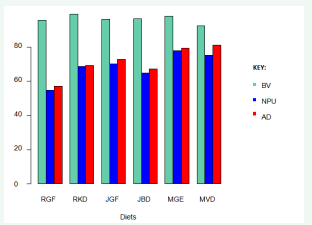
Figure 1: Protein quality of all legume mixed diets fed to rats.
MATERIALS AND METHODS
Source of materials
Phaseolus vulgaris (red kidney bean) and Canavalia ensiformis (jackbean) were obtained from a farmer at Uburu in Oru East LGA, Imo State. Mucuna vulgaris was purchased at Edem market in Nsukka, Enugu State. Vitamin/mineral premix and corn starch were purchased at Gufon Veterinary Centre, Police shopping complex (fire service roundabout area), Owerri, Imo State. Oil (Sonuola soya oil brand) was purchased from Ekeukwu Market, Owerri, and Imo State. Albino rats were purchased from the Department of Veterinary Medicine, University of Nigeria, Nsukka, and Enugu State, Nigeria.
Preparation of the legume seeds
Phaseolus vulgaris (red kidney bean) and Canavalia ensiformis (jackbean) were cleaned and sorted to remove all foreign materials. After cleaning, they were soaked in distilled water for 12h and 6h respectively at room temperatures of 25°C. Mucuna vulgaris was soaked in distilled water for 24h at room temperature of 25°C and then stratified in hot water for 2-5min before being germinated.
Germination and fermentation of legume seeds
The hydrated legume seeds were placed separately in wetted jute bags and germinated at different time intervals of 12 – 104.0h (Tables 1 and 2).
|
Table 1: The coded values of the independent variables for Canavalia ensiformis (Jackbean) and Mucuna vulgaris. |
|||||
|
Codes |
|||||
|
Variables |
-1.682 |
-1 |
0 |
1 |
1.682 |
|
X1 (h) |
19.9552 |
37 |
62 |
87.1 |
104.45 |
|
X2(h) |
19.9552 |
37 |
62 |
87.1 |
104.45 |
|
X3(0C) |
52.3866 |
57.5 |
65 |
72.5 |
77.6134 |
|
Table 2: The coded values of the independent variables for Phaseolus vulgaris (Red Kidney bean). |
|||||
|
|
Codes |
||||
|
Variables |
-2 |
-1 |
0 |
1 |
2 |
|
X1 (h) |
12 |
24 |
36 |
48 |
60 |
|
X2 (h) |
12 |
27 |
42 |
57 |
72 |
|
X3 (0C) |
50 |
57.5 |
65 |
72.5 |
80 |
The seeds were washed every 12h to prevent mould growth [14]. The germinated seeds were dehulled manually by rubbing the seeds multiple times with the palms to get them ready for fermentation.
The dehulled germinated seeds were later placed in deionised water in ratio of 1:3 (w/v) grams to water in covered labeled plastic containers of the same sizes. The seeds were allowed to ferment at varied time intervals of 12h to 104.0h using natural fermentation process (Tables 1 and 2). The fermented seeds were dried at different temperatures of 50°C to 80°C in a Hot Air Oven (Model AV-160) for 50mins. The dried seeds were respectively ground using Moulinex blender and sieved with 60mm mesh size to separate the fine sample flours from coarse particles. The flours were separately put in labeled plastic containers and stored in the refrigerator.
Experimental design
A central composite rotatable design (CCRD) for three variables germination, fermentation and drying was used to examine the response pattern in which twenty (20) variable combinations were obtained and used as experimental runs. The procedure described by Snedecor and Cochran (1980) was used. The combination runs of jackbean germinated (87h), fermented (87h) and dried at 57.5°C (JGF 57.5), jackbean dried at 65°C (JBD 65), Mucuna vulgaris germinated (62h), fermented (62h) and dried at 65°C (MGF 65), Mucuna vulgaris dried at 65°C (MVD 65), red kidney bean germinated (48h), fermented (27h) and dried at 57.5°C (RGF 57.5) and red kidney bean dried at 65°C (RKD 65) were used.
Diet formulation
The diets (6) were formulated from processed and unprocessed (raw) seed flours of Canavalia ensiformis (jackbean), Mucuna vulgaris and Phaseolus vulgaris (red kidney bean) respectively. The following combination runs of JGF 57.5, JBD 65, MGF 65, MVD 65, RGF 57.5 and RKD 65, which were used as the codes for the respective diets, were based on the fact that they had the highest protein values of 23.16%, 21.24%, 23.75%, 22.75%, 21.70% and 21.85% (Tables 1-4).
|
Table 3: The results of response surface analysis of the variation of proximate composition of Canavalia ensiformis flour with germination time, fermentation time, and drying temperature. |
|||||||||
|
Runs |
GT (h) |
FT (h) |
DT (0C) |
Protein (%) |
Fat (%) |
Fibre (%) |
Ash (%) |
Moisture (%) |
CHO (%) |
|
1 |
37 |
37 |
57.5 |
12.473 |
3.126 |
4.744 |
3.382 |
6.93 |
69.345 |
|
2 |
87 |
37 |
57.5 |
23.120 |
3.606 |
5.725 |
3.489 |
6.51 |
57.35 |
|
3 |
37 |
87 |
57.5 |
12.488 |
3.445 |
5.376 |
3.405 |
5.585 |
69.701 |
|
4 |
87 |
87 |
57.5 |
23.160 |
2.772 |
5.907 |
4.607 |
6.174 |
57.184 |
|
5 |
37 |
37 |
72.5 |
12.504 |
3.279 |
4.816 |
3.311 |
6.512 |
69.578 |
|
6 |
87 |
37 |
72.5 |
23.13 |
3.492 |
5.915 |
3.684 |
5.23 |
58.349 |
|
7 |
37 |
87 |
72.5 |
12.484 |
3.39 |
5.37 |
3.476 |
5.594 |
69.686 |
|
8 |
87 |
87 |
72.5 |
23.051 |
2.446 |
5.934 |
4.629 |
5.49 |
58.164 |
|
9 |
19.95518 |
62 |
65 |
16.742 |
3.109 |
5.322 |
3.482 |
6.19 |
75.155 |
|
10 |
104.0448 |
62 |
65 |
23.087 |
2.351 |
6.499 |
4.714 |
6.136 |
58.213 |
|
11 |
62 |
19.95518 |
65 |
20.908 |
3.125 |
5.335 |
3.372 |
6.905 |
60.355 |
|
12 |
62 |
104.0448 |
65 |
20.905 |
2.464 |
5.958 |
4.613 |
5.855 |
60.205 |
|
13 |
62 |
62 |
52.38655 |
20.876 |
4.094 |
5.235 |
3.294 |
5.953 |
60.548 |
|
14 |
62 |
62 |
77.61345 |
20.909 |
3.721 |
5.103 |
3.681 |
5.051 |
61.535 |
|
15 |
62 |
62 |
65 |
20.912 |
4.119 |
5.125 |
3.582 |
6.025 |
60.237 |
|
16 |
62 |
62 |
65 |
20.909 |
4.124 |
5.033 |
3.618 |
6.016 |
60.3 |
|
17 |
62 |
62 |
65 |
20.894 |
4.111 |
5.102 |
3.507 |
6.174 |
60.212 |
|
18 |
62 |
62 |
65 |
20.901 |
4.13 |
5.111 |
3.592 |
6.043 |
60.223 |
|
19 |
62 |
62 |
65 |
20.897 |
4.106 |
5.109 |
3.601 |
6.076 |
60.211 |
|
20 |
62 |
62 |
65 |
20.910 |
4.127 |
5.133 |
3.424 |
6.064 |
60.342 |
|
The protein, fat, fibre, ash, moisture and carbohydrate contents of Canavalia ensiformis flour dried at 650C (JBD 65) and used for the study prior to processing treatment were 21.24%, 4.19%, 5.74%, 4.0%, 6.15% and 58.62% respectively. CHO = Carbohydrate GT = Germination time FT = Fermentation time DT = Drying time |
|||||||||
|
Table 4: The results of response surface analysis of the variation of proximate composition of Mucuna vulgaris flour with germination time, fermentation time and drying temperature. |
|||||||||
|
Runs |
GT (h) |
FT (h) |
DT (0C) |
Protein (%) |
Fat (%) |
Fibre (%) |
Ash (%) |
Moisture (%) |
CHO (%) |
|
1 |
37 |
37 |
57.5 |
18.856 |
1.870 |
3.309 |
2.785 |
10.029 |
63.152 |
|
2 |
87 |
37 |
57.5 |
20.676 |
1.455 |
3.278 |
3.886 |
9.739 |
60.965 |
|
3 |
37 |
87 |
57.5 |
21.398 |
1.450 |
3.603 |
3.816 |
10.434 |
59.298 |
|
4 |
87 |
87 |
57.5 |
21.687 |
1.306 |
4.290 |
3.781 |
9.976 |
58.960 |
|
5 |
37 |
37 |
72.5 |
19.358 |
1.896 |
4.642 |
2.405 |
12.984 |
58.715 |
|
6 |
87 |
37 |
72.5 |
21.396 |
1.693 |
3.036 |
4.050 |
12.253 |
57.572 |
|
7 |
37 |
87 |
72.5 |
21.593 |
1.621 |
5.659 |
4.070 |
13.534 |
53.523 |
|
8 |
87 |
87 |
72.5 |
21.865 |
1.622 |
4.793 |
4.023 |
12.826 |
54.872 |
|
9 |
19.95518 |
62 |
65 |
20.112 |
1.752 |
4.209 |
2.918 |
11.583 |
59.426 |
|
10 |
104.0448 |
62 |
65 |
22.209 |
1.433 |
4.101 |
4.282 |
10.878 |
57.098 |
|
11 |
62 |
19.95518 |
65 |
20.149 |
1.749 |
4.167 |
2.896 |
10.472 |
60.567 |
|
12 |
62 |
104.0448 |
65 |
22.987 |
1.418 |
5.642 |
4.361 |
12.098 |
53.494 |
|
13 |
62 |
62 |
52.38655 |
20.777 |
1.414 |
2.045 |
3.352 |
8.756 |
63.656 |
|
14 |
62 |
62 |
77.61345 |
20.989 |
1.790 |
4.040 |
3.865 |
13.508 |
55.809 |
|
15 |
62 |
62 |
65 |
21.009 |
1.551 |
3.209 |
3.693 |
10.488 |
60.050 |
|
16 |
62 |
62 |
65 |
21.061 |
1.582 |
3.538 |
3.688 |
10.113 |
60.017 |
|
17 |
62 |
62 |
65 |
21.030 |
1.486 |
3.716 |
3.711 |
10.512 |
59.545 |
|
18 |
62 |
62 |
65 |
23.750 |
1.590 |
3.663 |
3.662 |
10.475 |
59.561 |
|
19 |
62 |
62 |
65 |
21.026 |
1.468 |
3.366 |
3.611 |
10.216 |
60.313 |
|
20 |
62 |
62 |
65 |
21.201 |
1.495 |
3.605 |
3.444 |
10.518 |
59.738 |
|
The protein, fat, fibre, ash, moisture and carbohydrate contents of Mucuna vulgaris flour dried at 650C (MVD 65) and used for the study prior to processing treatment were 22.75%, 1.87%, 4.06%, 3.91%, 11.47% and 55.94% respectively. CHO = Carbohydrate GT = Germination time FT = Fermentation time DT = Drying time |
|||||||||
Corn starch, vitamin/ mineral premix and 5% oil were added to the legume flours and thoroughly mixed differently in a dough mixer (Hobert 2000, England) for 30min (Okaka, 1997) to obtain six all-legume mixed protein diets of fine consistency. The corn starch was added to dilute the protein. The diets provided 10% dietary protein for the entire period of the nitrogen balance study. The diets were each put in labeled plastic containers and stored in a freezer until required for feeding (Table 5,6).
|
Table 5: The results of response surface analysis of the variation of proximate composition of Phaseolus vulgaris flour with germination time, fermentation time and drying temperature. |
|||||||||
|
Runs |
GT (h) |
FT (h) |
DT (0C) |
Protein (%) |
Fat (%) |
Fibre (%) |
Ash (%) |
Moisture (%) |
CHO (%) |
|
1 |
24 |
27 |
57.5 |
20.65 |
2.75 |
4.38 |
3.17 |
9.24 |
59.81 |
|
2 |
48 |
27 |
57.5 |
21.70 |
3.16 |
4.20 |
3.14 |
8.40 |
61.37 |
|
3 |
24 |
57 |
57.5 |
19.45 |
2.90 |
4.21 |
3.20 |
9.96 |
60.28 |
|
4 |
48 |
57 |
57.5 |
20.16 |
3.02 |
4.09 |
3.06 |
9.24 |
60.43 |
|
5 |
24 |
27 |
72.5 |
19.70 |
3.08 |
4.15 |
3.17 |
9.46 |
60.44 |
|
6 |
48 |
27 |
72.5 |
20.44 |
2.84 |
4.24 |
3.14 |
8.16 |
61.18 |
|
7 |
24 |
57 |
72.5 |
19.78 |
3.05 |
4.21 |
3.20 |
9.40 |
60.36 |
|
8 |
48 |
57 |
72.5 |
21.31 |
3.08 |
3.92 |
3.18 |
8.28 |
60.23 |
|
9 |
12 |
42 |
65 |
21.44 |
2.76 |
4.23 |
2.97 |
11.21 |
57.39 |
|
10 |
60 |
42 |
65 |
21.29 |
2.82 |
4.17 |
3.23 |
10.87 |
57.62 |
|
11 |
36 |
12 |
65 |
21.03 |
2.60 |
4.09 |
3.13 |
10.17 |
58.98 |
|
12 |
36 |
72 |
65 |
21.56 |
2.86 |
3.91 |
3.17 |
9.80 |
58.70 |
|
13 |
36 |
42 |
50 |
21.27 |
2.70 |
4.11 |
2.97 |
11.23 |
57.72 |
|
14 |
36 |
42 |
80 |
20.44 |
2.82 |
4.17 |
2.92 |
10.30 |
59.35 |
|
15 |
36 |
42 |
65 |
21.59 |
2.91 |
4.96 |
3.07 |
10.80 |
56.67 |
|
16 |
36 |
42 |
65 |
20.56 |
2.92 |
4.13 |
3.11 |
9.29 |
59.99 |
|
17 |
36 |
42 |
65 |
21.01 |
2.84 |
4.19 |
3.09 |
10.72 |
58.15 |
|
18 |
36 |
42 |
65 |
21.03 |
2.96 |
4.17 |
3.03 |
10.23 |
58.58 |
|
19 |
36 |
42 |
65 |
21.03 |
2.98 |
4.17 |
3.03 |
10.20 |
58.59 |
|
20 |
36 |
42 |
65 |
21.00 |
2.89 |
4.15 |
3.02 |
10.22 |
58.58 |
|
The protein, fat, fibre, ash, moisture and carbohydrate contents of Phaseolus vulgaris flour dried at 650C (RKD 65) and used for the study prior to processing treatment were 21.85%, 2.78%, 4.26%, 3.20%, 8.77% and 59.10% respectively. CHO = Carbohydrate GT = Germination time FT = Fermentation time DT = Drying time |
|||||||||
|
Table 6: Composition of the formulated diets. |
||||||
|
Ingredient (g/kg) |
JGF 57.5 |
JBD 65 |
MGF 65 |
MVD 65 |
RGF 57.5 |
RKD 65 |
|
Corn starch |
740.48 |
684.77 |
755.92 |
729.27 |
698.65 |
703.20 |
|
Fat (5%) |
72.00 |
72.00 |
72.00 |
72.00 |
72.00 |
72.00 |
|
Protein (10%) |
621.76 |
677.67 |
606.32 |
632.97 |
663.50 |
659.04 |
|
Vitamin/mineral premix |
5.76 |
5.76 |
5.76 |
5.76 |
5.76 |
5.76 |
|
Total |
1440 |
1440 |
1440 |
1440 |
1440 |
1440 |
Calculation of the recipe for diet JGF 57.5
To obtain the total grams of diet to be consumed daily by the rats, assume that 20g of diet will be consumed daily by rats in a cage and for 12 days.
∴ 20g X 12 days X 6 rats = 1440g of diet.
1. The value of processed Jackbean (JGF 57.5- that is Jackbean germinated for 87h, fermented for 87h and dried at 57.5°C) (Table 3) used for the diet formulation = 23.16%
The gram of diet JGF 57.5 was obtained based on 10% dietary protein level.
Let x = the gram of Jackbean’s protein
Using % protein of processed Jackbean = 10% dietary protein level
100% Unknown gram (x) of jackbean’s protein
∴ 23.16 = 10%
100 x
x = 1000 = 43.18g
23.16
If 100g of protein in JGF 57.5 is required for the production of 1440g of the diet
∴ 1440 X 43.18 = 621.76g of the protein of diet JGF 57.5
100 1
2) Let the percentage of fat (Oil) used be 5%
If 100% of the oil was required by 1440g of diet
∴ 5% of the oil will be required by 1440 X 5g
100 1 = 72g of oil
3) Vitamin/Mineral Premix
If 250g of the diet was required by 1g of vitamin/mineral premix
∴ 1440g of diet will require 1440g of vitamin/mineral premix 250 =5.76g of vitamin/mineral premix
4) Corn starch was obtained by subtracting the total values of the ingredients from the total value of the diet per day by the six rats.
∴Corn starch = [1440 – (621.76 + 72 + 5.76)]
= [1440 – 694.336]
= 740.48
Experimental feeding of rats
The 36 rats, 6 per a labeled stainless metabolic cage were divided into 6 groups. Each group of rats was fed a particular formulated diet from the 3 different legumes. The metabolism cage was to separate the urine from the faeces. The rats were weighed prior to access to their respective diets and everyday to evaluate the body weight change. The feeding was daily with water ad-libitum for the entire 9-day nitrogen (N) balance study period. At the end of feeding on the 9th day, the rats were sacrificed and on evacuation of the internal organs, the liver was carefully removed, weighed and dried in a hot air oven drier (70- 75°C) for 14 – 16h and the weight taken again. One (1) gram of the liver was mixed with 10ml Tris-HCL buffer solution pH 7.5, crushed with mortar and pestle and the paste filtered for 15 min [14]. The supernatant was stored at room temperature (27°C) for analysis. A 0.05g of carmine red powder was introduced into the diets and fed the rats on the mornings of day 1 as well as day 9. Coloured faeces appeared on day 2 and day 10 and other procedures followed were according to Obizoba (1983) [16].
The experimental rats were fed equal weights (20g) of their respective diets and water ad-libitum. Reminants of diets, urine and faeces were collected daily throughout the entire 9-day period and recorded. The daily food intakes mean weight gains were also recorded and data generated were used to estimate protein quality such as Nitrogen (N) intake and Biological Value (BV), Net Protein Utilization (NPU), Apparent Digestibility (AD) and nitrogen retention.
Analysis of nitrogen
Urinary nitrogen, faecal nitrogen and liver nitrogen were analyzed according to the method of AOAC (2005) [17].
Statistical analysis
The data obtained for the protein quality indices and performance characteristics were analyzed using analysis of variance (ANOVA) at 5% level. The test for significant differences between the means was carried out using the multiple range tests [18].
RESULTS AND DISCUSSION
Performance characteristics
The result from the work on the all-legume protein mixed diets is shown in Table 2. The group diet Mucuna vulgaris dried at 65°C (MVD 65) was highly (12.25g) consumed by the rats (Table 7). The diet least (5.039g) consumed was red kidney bean germinated 48h, fermented 27h and dried at 57.5°C (RGF 57.5). Chikwendu and Obizoba (2003) [19] reported that food intake is associated with nitrogen source, palatability, flavor and essential amino acids rather than the level of nitrogen [20] also maintained that growth rate in experimental rats is influenced by the amount of diet consumed. The fact that there were higher food intakes, showed that the food had the necessary nutrients required by the rats for growth or that the nitrogen balance study revealed the food growth – promoting quality of the diets without minding if germination or fermentation treatment was given to the legumes (Table 7).
|
Table 7: Performance characteristics of rats fed all legume mixed protein diets. |
|||||||
|
Parameters |
RGF 57.5 |
RKD 65 |
JGF 57.5 |
JBD 65 |
MGF 65 |
MVD 65 |
LSD |
|
Food intake (g) |
5.02e + 0.173 |
7.11d + 0.981 |
8.27c + 0.236 |
7.03d + 0.288 |
11.31b + 0.271 |
12.17a + 0.144 |
0.134 |
|
Weight gain (g) |
10.62f + 0.536 |
23.20d + 0.173 |
28.48c + 0.421 |
16.28e + 0.248 |
33.32b + 0.560 |
43.14a + 0.121 |
0.314 |
|
Faecal Nitrogen (g) |
0.2064 |
0.2112 |
0.219 |
0.2220 |
0.2290 |
0.2208 |
- |
|
N intake (g) |
0.483d + 0.058 |
0.688c + 0.0081 |
0.808b + 0.0035 |
0.677c + 0.045 |
1.108a + 0.0078 |
1.176a + 0.013 |
0.094 |
|
Urinary N (g) |
0.0113 |
0.004 |
0.022 |
0.0150 |
0.0157 |
0.071 |
- |
|
Absorbed N/ digested N (g) |
0.2766 + 0.012 |
0.4768 + 0.058 |
0.589 + 0.0098 |
0.455 + 0.008 |
0.879 + 0.043 |
0.955 + 0.015 |
0.145 |
|
Retained N/N balance (g) |
0.2653c + 0.072 |
0.473bc + 0.052 |
0.567b + 0.058 |
0.440bc + 0.017 |
0.8633a + 0.05 |
0.884a + 0.09 |
0.288 |
|
Liver Nitrogen (%) |
9.57c ± 0.172 |
10.24bc ± 0.471 |
12.21a ± 0.513 |
12.47a ± 0.135 |
12.72a ± 0.134 |
11.33bc ± 0.246 |
1.394 |
|
Liver weight (dry) (g) |
0.64b ± 0.040 |
0.90 ± 0.084 |
1.16ab ± 0.150 |
1.20a ± 0.164 |
1.30a ± 0.084 |
1.20a ± 0.173 |
0.550 |
|
Mean + SEM of 3 replications Means with different superscript within the same row differ significantly (p < 0.05) RGF 57.5 = Red Kidney bean germinated for 48h, fermented for 27h and dried at 57.5oC RKD 65 = Red kidney bean dried at 650C JGF 57.5 – Jackbean germinated for 87h, fermented for 87h and dried at 57.50C JBD 65 = Jackbean dried at 650C MGF 65 = Mucuna vulgaris germinated for 62h. Fermented for 62h and dried at 650C MVD 65 = Mucuna vulgaris dried at 650C |
|||||||
Food intake from the result showed a varied influence on the weight gain. The rats that consumed more had increased weight gain as the values varied form 10.96 – 43.42g in diets RGF 57.5 to MVD 65 while rats that consumed the least diet also significantly (p<0.05) gained the least weight [21,22]. The gain in weight in rats fed the group diets showed that the diets contained good quality amino acids which the rats utilized. Food intake determines the level of nitrogen intake in the body. Increased food intake as a result of feeding the rats with diets MGF 65 and MVD 65 was an indication of increased nitrogen intake and nitrogen balance/ retained nitrogen as reflected in the values of 1.108g and 1.176g and 0.8633g and 0.884g respectively.
The lower digested/absorbed nitrogen of 0.2766g by the rats that consumed diet red kidney bean germinated 48h, fermented 27h and dried at 57.5°C (RGF 57.5) was due to the fact that the nitrogen intake was lower when compared to the other test diets. However, the lower digested nitrogen of RGF 57.5 may be attributed to lower apparent digestibility (AD) value of 57.27% obtained by rats that consumed the group diet. In other words, the lower nitrogen intake influenced absorbed/digested nitrogen which made it to be lower.
The lower (0.2653g, 0.473g and 0.440g) values of retained nitrogen/nitrogen balance of rats that consumed diets RGF 57.5, RKD 65 and JBD 65 were expected since the rats had lower nitrogen intake values than the other diets. However, the retained nitrogen/nitrogen balance and the absorbed nitrogen/digested nitrogen were comparable (p>0.05) in values in all the diets fed the rats (Table 7). The rats that consumed diets RGF 57.5 and RKD 65 also had lower (9.57% and 10.24%) liver nitrogen.
The liver weight was highest (1.30g) and significant (p0.05) in values of liver weight. The low liver weight of rats fed diet RGF 57.5 was comparable to the works of Anyika (1988) [23] who compared the supplementary effect of soaked bambara groundnut and sorghum and Obizoba (1985) [24] who also compared the supplementary effect of crayfish and brown bean to rice protein. The low liver weight value might be attributed to low food intake, low weight gain, low nitrogen (N) intake and apparent digestibility (AD), poor nitrogen absorption and utilization.
Protein quality
The measurement of the efficiency of the absorbed nitrogen/ nitrogen balance is known as Biological value (BV) [25]. The biological value (BV) of 92.56% - 99.21% for the rats was higher than the recommended value of 75% for children [26]. The higher BV was affected by higher food intake and higher nitrogen intake. The BV of a protein is related to the amount of the protein that is retained. This quantity accounts for growth and the healthy maintenance of the animal [27]. The decreased urinary excretion even reduced Net Protein Utilization (NPU) as well as AD and Nitrogen balance of rats that consumed diet RGF 57.5. The discussion was further depicted in Fig 1. The highest (92.21%) BV was in diet RKD65 and the lowest (92.56%) in diet MVD65. Diet MGF65 had the highest (77.92%) NPU value while diet RGF 57.5 had the lowest (54.93%) value. The highest (81.22%) AD value was in diet MVD65 and the lowest (57.27%) in diet RGF57.5. Biological value (BV) is always greater than NPU as indicated by the rats that consumed the group diets. The higher values of food intake, nitrogen intake, weight gain, nitrogen balance, apparent digestibility, NPU and biological value were significantly (p<0.05) influenced by the dietary treatments (protein intake) given to the rats during the 9-day nitrogen balance study. A protein material is regarded as nutritionally good in quality when its biological value (BV) is high (70 – 100%) [28,29].
REFERENCES
2. Duranti M. Grain Legume proteins and nutraceutical properties. Fitoterapia. 2006; 77: 67 - 82.
3. Osho SM. Soybean processing for house use in food crops production, utilization and nutrition. BN Mbah, DO Nnanyelugo (eds). Dotam Publ Ltd Ibadan. 1989; 68-78.
8. Altschul A M. New Protein Foods. Academic Press 1st Edn. 1974; 20- 23.
9. Bamiro FO, Tairu AO, Oderinde RA. The nutritive values of Nigerian Jackbeans (Canavalia ensiformis). La rivisita Heliana Delle Sastance citrasse. 1994; LXXI: 421- 424.
12. Bressani R. Factors influencing nutritive value in food grain legumes: Mucuna in comparison to other grain legumes. In: Flores, editors. Mucuna as a Food and Feed: Current uses and the way forward. Proc. International Workshop held April 26- 29, 2000. Tegucigalpa, Houndras. 2002; 164- 188.
15. Nwachukwu N, Nwite IN. Effect of diet formulated with two local spices on serum and hepatocyte of Wister rats. Nigeria J Nutri Sci. 2009; 30: 84-89.
17. AOAC. Official methods of Analysis. Association of Official Analytical Chemists. 17th Edn. Washington DC. 2005.
19. Chikwendu NJ, Obizoba IC. Nutritional evaluation of protein quality of ground bean (Kershingiella geocarpa) based diets. Nigeria J Nutri Sci. 2003; 24: 64- 68.
21. Ugwu FM, Ekwu FC, Okoye IC. Protein quality indices and Food intake pattern of parboiled and roasted breadfruit-corn diets. J Sci Agri Food Tech Envir. 2002; 2: 97- 100.
22. Oke DB, Oke MO, Adeyemi OA. Prediction of cowpea seed protein quality through total sulphur determination. In contributory role of animal production in national development (AO Fanimo and JA Olanite editors. Proc 7th Annual Conf of Animal Science of Nigeria, 16th19th Sept. University of Agriculture, Abeokuta, Nigeria. 2002.
23. Anyika JU. The nutritive value of legume proteins supplemented with sorghum or crayfish. Unpublished B.Sc Project. Department of Home Science and Nutrition, University of Nigeria, Nsukka, Nigeria. 1988.
26. PAG. Protein Advisory Group guideline. No. 8 Protein-rich mixtures for use as weaning foods. New York. FAO/WHO/UNICEF. 1971.
27. Pallet PL, Yeong VR. Nutritional evaluation of protein foods. The United Nation University, Tokyo. 1980.