Effect of Malted Fermented Sorghum Flour Addition on the Functional, Pasting and Sensory Properties of Danwake: a Cowpea-cassava Indigenous Food product
- 1. Department of Food Science and Technology, University of Agriculture, Nigeria
Abstract
The effects of malted fermented sorghum on the quality characteristics of cowpea-cassava danwake were investigated as technological strategies for improving the quality of danwake flour. Separate preliminary sensory evaluation was conducted to determine the acceptable level of sorghum in cowpeacassava mixture. The preliminary sensory evaluation showed 30% level of sorghum in 50:50 cowpea-cassava mixtures. Five samples- non sorghum sample (NSS), non-malted non fermented sorghum sample (NMNFSS), fermented sorghum sample (FSS), malted sorghum sample (MSS) and malted fermented sorghum sample (MFSS) were prepared for the studies. The samples were subjected to functional, pasting and sensory properties using standard methods. The functional properties shows significant (p<0.05) increases for water absorption capacity (1.175-1.900g/g), Swelling capacity (36.00-39.00%) gelation concentration (16.00-18.00%) and decrease in bulk density (0. 725-0.574g/cm3 ). The pasting properties showed peak viscosity (PV) ranged from 1231 RVU in malted sample (MSS) to 1248 in non-sorghum sample (NSS). The trough viscosity (TV) ranged from 1167 in malted sorghum danwake to 1374 in non-sorghum danwake. Final viscosity (FV) of danwake samples ranged from 1853 in (MSS) to 2050RVA in fermented sorghum sample ((FSS).The breakdown viscosity (BDV) ranged from 30RVA in NMNFS to 64RVA in MFSS. The MFSS had the next lowest value of 40RVA. The setback viscosity ranged from 666RVA in non-sorghum sample (NSS) to 797 RVA in non-malted non fermented sample (NMNFS). The pasting temperatures (80.65-86.40°C) were generally low in all the samples and significant differences observed among the samples. The NSS had the lowest pasting temperature 80.65°C. The pasting time in this study ranged from 5.20min in MFS-5.60 min in MSS and significant differences were observed among the samples. Sensory evaluation shows that substitution of malted fermented sorghum in cowpea-cassava mixture improves the appearance, taste, flavor and overall acceptability of cowpea-cassava danwake. The study indicates that addition of malted fermented sorghum improves the functional and pasting properties and sensory quality of cowpea-cassava danwake.
Keywords
• Malted fermented sorghum
• Quality characteristics
• Sensory quality
• Danwake
Citation
Yusufu MI, Onu EA, Ahure D (2018) Effect of Malted Fermented Sorghum Flour Addition on the Functional, Pasting and Sensory Properties of Danwake: a Cowpea-cassava Indigenous Food product. J Hum Nutr Food Sci 6(2): 1124.
INTRODUCTION
Danwake, an indigenous, stiff dumpling food of the people in the northern part of Nigeria is traced to be of the Nupe origin in Niger and Kogi States. The product which is known to haveshort cooking time and provides satiety for a long timeis prepared mainly from equal proportions of cowpea and cassava flour with the addition of dry baobab leave flour and potash as ingredients [1,2,3]. The danwake flour is mixed with water to obtain dough. The dough is cooked in boiling water 15-30minutes. The cooked foods are therefore remove from the cooking pan and placed in cold water to remove mucilaginous foam which is drained off. The product is rinsed with cold water and eaten with any other vegetable soup [4].
Danwake produced from instant flour blends by indigenous company in Kano Nigeria is already being marketed and consumed in many West Africa countries. However the level of ingredients and nutritional composition are not known. Nkama [2], investigated mineral and vitamin contents of danwake from sorghum, wheat and cassava blends. Diarra et al. [1], investigated the proximate compositions of danwake from sorghum, wheat, and cassava danwake flour. Today, there are danwake without the original ingredients such as cowpea and cassava which ultimately affects the chemical properties of the product is becoming a great concern with regard to preserving danwake quality and originality.
Danwake from cowpea -cassava lack essential amino acids such as Methionine and cysteine therefore; addition of cereals such as sorghum will complement these amino acids. Cereals are low in essential amino acid such as lysine and tryptophan which are high in legumes. Legumes on the other hand are deficient in methionine and cysteine so therefore cowpea-cassava danwake flour blended with sorghum could produce a good balance of essential amino acids. Malting and fermentation is known to reduce anti-nutritional factors in sorghum by significantly increases the nutritive value of this grain and also improvement in functional properties [5]. It is possible to improve the quality of danwake by combination with fermented and malted sorghum.
Physicochemical properties and starch functionalities are known to be influenced by processing practices [6]. To the best of the authors’ knowledge, there are no published works on the functional and pasting characteristics of danwake particularly the influence of malted fermented sorghum substitution. The current study was carried out to investigate the effect of malted fermented sorghum on the functional, pasting and sensory properties of cowpea-cassava danwake.
MATERIALS AND METHODS
Source of raw materials
Sorghum (sorghum bicolour L) cultivar and cassava species TMS 30575 (Manihot esculenta Crantz) cultivar were obtained from Agronomy Department of University of Agriculture Makurdi, Benue State.
Cowpea (vignaunguiculata or vignasinensis) commonly called beans; baobab leaf (kuka) and potash (Kanwa) were purchased from Wurukum Market in Makurdi, Benue State.
Sample preparation
The cassava tubers were washed, peeled and washed chipped and crushed. The crushed cassavas were de watered to obtain dehydrated pulp. The pulp was then dried in hot air oven. The dried product was milled in roller mill and sieved to obtain fine flour as shown Figure 1.
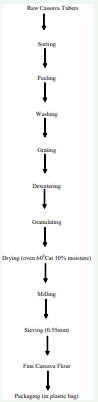
Figure 1: Production of High Quality Cassava Flour Source: FIIRO (7).
The cowpea seed were washed soaked in tap water for 2hr and the seed coat are removed by hand. The decorticated seed are then dried in hot air oven, the dried products was milled in roller mill and sieved to obtain fine flour as shown in Figure 2.
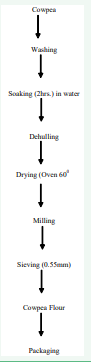
Figure 2
:A chart for the production of cowpea flour.
The preparation of sorghum is shown in Figure 3.
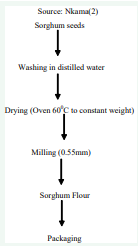
Figure 3: A flow chart for the production of Sorghum Flour Source: Kolawale et al.(8).
Preliminary sensory evaluation
Preliminary sensory evaluation was conducted to determine the acceptable level of sorghum in cowpea/cassava mixture. Danwake samples were prepared from 100:0, 90:10, 80:20, 70; 30, 60; 40 and 50:50cassava-cowpeas: sorghum respectively. The overall acceptability of the samples was determined using panelist made up of Twenty (20) students of the College of Food Technology, University of Agriculture, Makurdi. The scale used was nine (9) point hedonic scales (1-dislike extremely, 5-neither like nor dislike, 9-like extremely.
Malting
Three kilograms of raw sorghum were washed in 5% (w/v) NaCl solution to disinfect the grains. The grains were then stepped in tap water at room temperature (30±2°C) at ratio of 1:3(w/v grain: water) in a plastic bucket. In other to minimize natural fermentation, the steep water was changed every 4 hours for a total steeping time of 12 hr. After steeping, the grains were divided into 2 sub lots. One sub lot was malted while the second sub lot was not malted. Malting was achieved by spreading the grains in a single layer on moist sterilized jute bag at prevailing (ambient) temperature (30±2°C) for 72hr.Tap water sprinkled on the grains at 12hr interval. The germinated and non-germinated grains were each dried in an air draft oven (Genlab Widnes, UK model T12H) at 100°C to constant weights. The rootlets of the dried germinated grains were detached followed by winnowing to obtain malted grains.
Fermentation
Fermented sorghum flour was obtained by natural lactic acid fermentation using the back-sloping method. Essentially, 120.0g each of malted and non-malted sorghum flours were respectively mixed with 80 ml of distilled water and subjected to natural fermentation in a covered 500 ml glass beaker at prevailing temperature (30±2°C) for 2hr. At the end of the period, 50% of the fermented mixture was used as starter culture for a new fermentation cycle. During this process, the pH (an index of lactic acid bacteria activity) was monitored at 24hr interval. The fermentation process was continued until the pH of the medium stabilized and remained constant. The fermented concentrates were dried at 80°C in an electric oven (Genlab Widnes U.K. model T12H) to constant weight and milled (Asiko Al, Addis Nigeria) to pass through a 0.5 mm mesh. All the prepared sorghum flour, Non malted non- fermented sorghum sample (NMNFSS Figure 3), Malted sorghum sample (MSS) fermented sorghum sample (FSS) and malted fermented sorghum sample (MFSS) were then packaged in low density dark polyethylene bags and stored in 500 ml plastic containers with airtight lids at a prevailing temperature(30±2°C).
Danwake sample preparation
Danwake samples were produced as described by Bamaga [4]. The procedure involves missing flour blends with water to form dough and rolled into small ball. The balls were cooked in boiling water for 30 min. and removed from the cooking pat and placed in cold water to remove mucilaginous foam which was drained off and rinsed again with cold water and served with locally prepared spices. The formulation is shown in Table 1.
|
Table 1: Recipe for Dawake. |
|||||
|
Ingredient |
Danwake Samples |
|
|
|
|
|
NSS |
NMNFSS |
MSS |
FSS |
MFSS |
|
|
Cowpea |
50 |
35 |
35 |
35 |
35 |
|
Cassava |
50 |
35 |
35 |
35 |
35 |
|
Fermented sorghum sample |
- |
- |
- |
30 |
- |
|
Malted sorghum sample |
- |
- |
30 |
- |
- |
|
Malted fermented sorghum sample |
- |
- |
- |
- |
30 |
|
Non malted Non fermented sorghum sample |
- |
30 |
- |
- |
- |
|
Potash |
5 |
5 |
4.55 |
5 |
5 |
|
Kuka |
5 |
5 |
4.55 |
5 |
5 |
|
Abbreviation: NSS: Non sorghum Sample; NMNFSS: Non malted Non Fermented Sorghum Sample; MSS: Sorghum Sample; FSS: Fermented Sorghum Sample; MFSS: Malted Fermented Sorghum Sample |
|||||
ANALYTICAL METHODS
Functional properties
Determination of water absorption capacity: The water absorption capacity (WAC) was determined as described by Onwuka [9]. One gram (1g) of each sample was weighed out into a dry, clean centrifugal tube and both weight noted (W1). 10ml of distilled water was poured into the tube and properly mixed with the sample to form a suspension. It was then centrifuged at speed of 3500rpm for 15mins. After which the supernatant was discarded then the tube and its content was re-weighed and noted (W2). The gain in weight is the water absorption capacity of the test sample in g/g.
Determination of gelation concentration: The method described by Onwuka [9] was used to determine the gelation concentration. Sample concentrations 2-20% in water (w/v) were prepared respectively in a boiling tube test tube containing 5ml of distilled water and heated for 1 hour in a boiling water bath. The heated dispersion were cooled rapidly under running cooled water and then cooled further at 4°C for 2 hrs. Gelation concentration was recorded as sample concentrationthat did not slip or flow in the test tube when slanted.
Determination of bulk density: This was determined as described by Onwuka [9], by calculating the weight of sample per its volume. A 10% Capacity graduated measuring cylinder was weighed and gently filled with the sample. The bottom of the cylinder was tapped gently on the laboratory bench several times until there was no further diminution of the sample level after filling to the 10ml mark.
Determination of swelling capacity: This was carried out as described by Ijarotimi and Keshinro [10]. One gram of flour was added with 10ml of distilled water in a centrifuge tube and heated at 80°C for 30 min. this was continually shaken during the heating period. After heating, the suspension was centrifuged at 1000xg for 15min, the supernatant decanted and the weight of the paste taken. The swelling capacity was calculated as weight of the paste divide by weight of dry flour. The value was multiplied by 100 to express in percentage.
Determination of pasting properties: Pasting properties of danwake samples were studied using Rapid Visco Analyzer (RVA-S4, Newport scientific, Australia)) according to the AACC Method [11].Three grams of the samples were weighed into a dried empty canister and 25ml of distilled water was dispensed into the canister containing the sample. The solution was thoroughly mixed and the canister was well fitted into the RVA. The slurry was heated from 50-95°C and cools back to 50°C within 12 min. rotating the can at a speed of 160rpm with continuous stirring. The rate of heating and cooling were at a constant rate of 11.25°C per min. peak viscosity (PV), trough viscosity (TV), final viscosity (FV), breakdown viscosity (BDV=PV-TV), setback viscosity (SBV=FV-TV) pasting temperature and time recorded.
Sensory evaluation: The samples were randomly coded and presented to fifteen (15) trained panelist who were students of the College of Food Technology, University of Agriculture, Makurdi. A 9-point hedonic scale (1-dislike extremely, 5-neither like nor dislike, 9-like extremely) as described by Ihekoronye and Ngoddy [12] was used to assess the sensory attributes of appearance, taste, texture, flavour and general acceptability.
Statistical analysis: Analyses were conducted in triplicates and data collected were subjected to Analysis of Variance using SPSS software version 20. Turkey’s test was used to compare means. Significance was accepted at p < 0.05.
RESULTS AND DISCUSSION
Functional properties of danwake flour samples
The results of functional properties of danwake flour samples from cowpea/cassava supplemented with malted and fermented sorghum are presented in Table 2.
|
Table 2: Functional properties of danwake flour samples. |
||||
|
Sample
|
Parameters |
|
|
|
|
Water Absorption (g/g) |
Bulk Density (g/ml) |
Swelling Capacity (%) |
Gelation Concentration (%) |
|
|
NSS
NMNFSS
MSS
FSS
MFSS
LSD |
1.050d±
1.175c±
1.300b±
1.950a±
1.900a±
0.115 |
0.765a±
0.725a±
0.684b±
0.680b±
0.574c±
0,105 |
36.000c±
31.000d±
38.500c±
39.500a±
38.500b±
1.000 |
12.000d±
14.00c±
18.000a±
18.000a±
16.000b±
0.050 |
|
Values are means of ± standard deviation of triplicate determination Any two means in a column not followed by the same superscript are significantly different at 5% level of significance. Abbreviation: NSS: Non sorghum danwake flour sample; NMNFSS: Non malted non fermented sorghum sample; MSS: Malted sorghum sample; FSS: Fermented sorghum sample; MFSS: Malted fermented sorghum sample |
||||
 0.071
The results shows that the water absorption capacity (WAC) for non-sorghum (NSS) danwake and non-malted non-fermented sorghum sample were 1.050g/g and 1.175g/g and a range of 1.300g/g-1.950g/g for malted and fermented sorghum samples. The WAC decreases with malting and fermentation of sorghum. The malted fermented sorghum sample (MSS) had significantly lower WAC. The bulk density of non-sorghum sample (NSS) was 0.765g/ml, the non-malted non fermented sample had 0.725g/ml and a range of 0.574 – 0.684g/ ml for the malted and fermented samples. The bulk density was higher for non-sorghum samples. The malted fermented sorghum sample (MSS) had the least bulk density value. The swelling capacity (SC) for non-sorghum sample (NSS) was 36.00% and a range 39.50 -31.00% for sorghum samples. The non-malted non-fermented sorghum sample had significantly lower swelling capacity. The gelation concentration of non-sorghum samples was 12.00% and a range of 18 -14.00% for sorghum danwake flour samples.
The significantly higher water absorption of 1.90-1.95g/ml for fermented; fermented malted samples are advantageous in foods that require hydration [13]. The water absorption capacity (WAC) of 1.26g/ml was reported for whole sorghum flour. An increase in WAC reported for fermented sorghum sample (FSS) and malted fermented sorghum (MFSS) suggest more hydrophilic constituents in the samples. Water absorption capacity in flour is mainly dependent on protein, carbohydrate, their interaction and nature [14].
There was significantly lower WAC of non-sorghum sample (NSS) which might be due to less availability of polar amino acids and due to the association of amylose and amylopectin in the starch [15]. It was revealed that WAC could affect the flour thickness, viscosity, maintenance of freshness and handling characteristic [16].
The ability to hold water is not mainly dependent on the amount of hydrophilic constituents but on the nature of the constituents. WAC is important function of foods. The higher WAC of the flours shows that the flours will perform better in food requiring paste preparation [14].
The bulk density of non-malted non fermented sorghum (NMNFS) was 0.725g/ml and a range of 0.574-0.684g/ml for malted fermented samples. Ojhaet al. [16], reported a reduction in bulk density of sorghum when fermented. Breakdown of starch during fermentation reduces starch content and decrease the bulk density [17]. Higher value of bulk density (2.45 and 2.45g/ ml) were reported by Agunbiade and Ojezele [18] for breakfast cereals made from maize, sorghum, African yam beans and soybeans. The low bulk density of the flour is advantageous in infants’ formulation and baked products [19].The bulk densities suggest that the samples may require different package space and material. The less the bulk density, the more packaging space is required [19]. However, Rao [20] observed that considerable variation in magnitudes of bulk densities can result due to vibration, different particle sizes and other factors.
The swelling capacity results for non-sorghum sample and non-malted non fermented sorghum sample (NMNFSS) were 36.500-39.500% for malted and non-fermented sorghum samples. The lower values recorded in non-malted non-fermented sorghum sample (NMNFSS) is indicative of soluble protein and also indicative of low gas/volume ratio. Also raw grain contain more starch required for swelling capacity is also related to the water absorption index of starch-based flour during heating [21]. The gelation capacity value for non-sorghum sample (NSS) and non-malted non fermented sorghum sample (NMNFSS) were 12% and 14.00% and a range of 16-18% for malted and fermented sorghum samples. High value gelation capacity means less thickening capacity of food products [21].
Pasting properties of Danwake samples
The results of pasting properties of danwake flour samples from cowpea-cassava substitutedwith malted and fermented sorghum are presented in Figures 4-8 and Table 3.
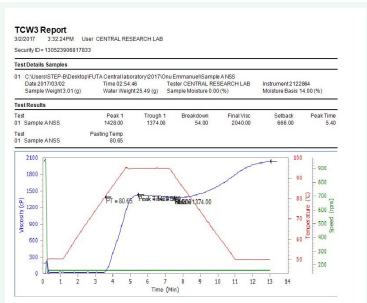
Figure 4: Viscosity profile of non-sorghum cowpea-cassava danwake flour.
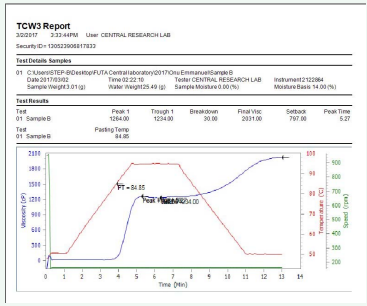
Figure 5: Viscosity profile of non-malted non fermented sorghum cowpea-cassava danwake flour.
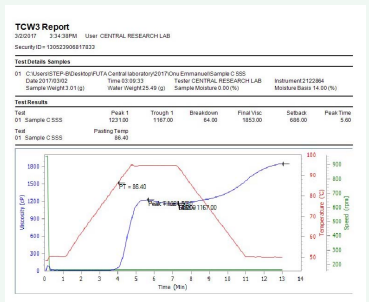
Figure 6: Viscosity profile of malted sorghum cowpea-cassava danwake flour.
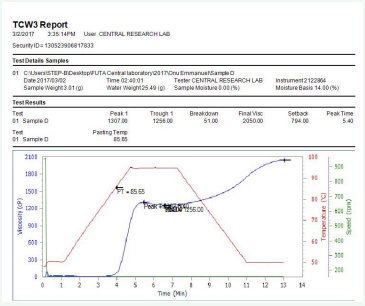
Figure 7: Viscosity profile of fermented sorghum cowpea-cassava danwake flour.
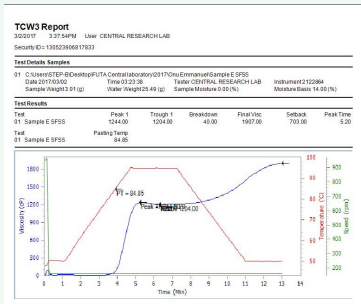
Figure 8: Viscosity profile of malted fermented sorghum cowpea-cassava danwake flour.
|
Table 3: Pasting properties of danwake flour samples b bn. |
|||||||
|
Sample |
Peak (RVU) |
Trough (RVU) |
Breakdown (RVU) |
Final (RVU) |
Setback (RVU) |
Peak time (mm) |
Pasting temp (0C) |
|
NSS (A) |
1428.00a±2.83 |
1374.00a±2.83 |
54.00b±2.82 |
2040.00b±0.00 |
666.00e±0.00 |
5.40b±0.00 |
80.65bc±0.042 |
|
NMNFSS(B) |
1264.00c±0.00 |
1234.00c±8.48 |
30.00e±2.82 |
2031.00c±5.65 |
797.00a±1.41 |
5.27c±0.042 |
84.85b±0.00 |
|
MSS (C) |
1231.00e±0.00 |
1167.00e±0. 00 |
64.00a±0.00 |
1853.00e±4.24 |
686.00d±1.41 |
5.60a±0.028 |
86.40a±0.282 |
|
FSS (D) |
1307.00b±0.00 |
1256.00 b±0.00 |
51.00c±0.00 |
2050.00a±0.00 |
794.00b±5.65 |
5.40b±0.028 |
85.65a±0.000 |
|
MFSS (E) |
1244.00d±5.65 |
1204.00d±2.82 |
40.00d±5.65 |
1907.00d±0.00 |
703.00c±2.83 |
5.20d±0.028 |
84.85b±0.014 |
|
LSD |
1.00 |
1.00 |
0.107 |
0.115 |
0.841 |
0.188 |
1.00 |
|
Abbreviation: NSS: Non sorghum danwake flour sample (control); NMNFSS: Non malted non fermented sorghum sample; MSS: Malted sorghum sample; FSS: Fermented sorghum sample: MFSS: Malted fermented sorghum sample |
|||||||
Pasting properties are regarded as one of the mostimportant indices in the evaluation of starch. Paste viscosity profile or gelatinization pattern recorded showed a significant (p<0.05) variation for all the pasting parameters (Table 3). According to Amoo et al. [22], pasting occur when an aqueous suspension of starch is heated above a critical temperature, granules swell irrepressibly and amylases leaches out into the aqueous phase, resulting to increased viscosity. Gani et al. [23], reported that pasting properties are dependent on the rigidity of starch granule, swelling potential and amount of amylase leaching out in the solution.
Peak viscosity (PV) indicates the highest viscosity yield by starch during the gelatinization under given conditions [24]. The PV ranged from 1231 RVU in malted sample (MSS) to 1248 in non-sorghum sample (NSS0. The high PV of non-sorghum danwake reflects the ability of starch granules to swell freely before their physical breakdown. Malted sorghum sample, which had the lowest PV, indicates lower tendency for swelling of starch granules.
Trough or hot paste viscosity (TV) is viscosity measured at the end of holding time at 95°C. It gives an indication of the stability of hot paste (24). Trough viscosity is influenced by the rate of amylose exudation, amylose-lipid complex formation; granule swelling and competition between exudate amylose and remaining granules for free water [25]. TV ranged from 1167 in malted sorghum danwake to 1374 in non-sorghum danwake.
Final viscosity (FV) or cold paste viscosity describes retrogradation tendency of soluble amylose upon cooling [25]. FV increases upon cooling, which may be due to the aggregation of elements present in the hot paste such as swollen granules, fragments of swollen granules and starch molecules dispersed as colloids [26,24]. FV of danwake samples ranged from 1853 in (MSS) to 2050RVA in fermented sorghum sample ((FSS). Low final viscosity indicates low eating quality. According to Oke et al. [27], it indicates stability of the cooked paste when in actual use; it also shows the ability of starch to form various paste or gel after cooking. Amoo et al. [22], stated that, starches that have high viscosities (final viscosities) are better for production of foods that require thick past.
Low peak viscosity is an indication of low water binding capacity of the starch or mixture and is often related to the final product quality, giving an indication of the viscous load likely to be encountered by a mixing cooker [26,27].
Breakdown viscosity (BDV) is the measure of the susceptibility of cooked starch granules for disintegration [28]. The breakdown viscosities (BDV) were generally low for all the samples (30- 64RVA) an indication of low susceptibility to disintegration. The BDV ranged from 30RVA in NMNFS to 64RVA in MFSS. The MFSS had the next lowest value of 40RVA.The low value of BDV in malted fermented samples suggested that the samples could withstand heat and high mechanical shear conditions and less prove to loss the viscosity up shearing and holding during the reassociation of starch [28].
Setback (SBV) viscosity is an essentially derived tool that describes the difference between FV and TV. SB value indicates the recovery of the viscosity during cooling of heated starch suspension [25,28]. Setback viscosity (SBV) has been correlated with the texture of various products. The set back viscosity ranged from 666RVA in non-sorghum sample (NSS) to 797 RVA in non-malted non fermented sample (NMNFS). Higher the setback viscosity, the lower the re-ordering of the paste during cooling and the lower the staling rate of the product made from the flour [28]. Amoo et al. [22], reported that, low setback values are useful for weaning food products which require low viscosity and paste stability at low temperature such as, fermented sorghum sample will be suitable for such products. Nadia et al. [29], also stated that, in food processing, the lower the setback values the more preferable character of the starch paste. Lowest SBV value for NSS (666RVA) is an indication that this variety is softer after cooking.
The pasting temperatures (80.65-86.40°C) were generally low all the samples. The NSS had the lowest pasting temperature 80.65°C.Pasting temperature provides an indication of the minimum temperature required for cooking, energy cost involved and other component stability. It is a pasting property that gives an indication of the gelatinization temperature of the sample [25] pasting time in this study, ranged from 5.20-5.60 min and were considered high, an indication of long cooking time. However, Oke et al. [27], states that for economic reasons starches with lower pasting time and pasting temperature may be more preferred when all other properties are equal.
Mean sensory scores of danwake flour samples
The sensory results of sample of danwake is shown in Table 4.
|
Table 4: Sensory result of danwake flour samples. |
||||||
|
Parameters |
Sample |
|||||
|
NSS |
NMNFSS |
MSS |
FSS |
MFSS |
LSD |
|
|
|
|
|
|
|
|
|
|
Appearance |
7.13b |
7.46a |
7.40a |
7.40a |
7.60a |
0.402 |
|
Flavour |
7.40c |
7.47c |
7.67b |
7.73b |
8.13a |
0.143 |
|
Taste |
6.60d |
7.20c |
7.40b |
8.06a |
8.13a |
0.026 |
|
Texture |
8.13a |
6.93c |
7.40b |
7.20b |
7.20b |
0.213 |
|
General Acceptability |
7.27c |
7.13d |
8.20a |
7.80b |
8.26a |
0.094 |
|
Values are means ± standard deviation of triplicate determination. Any two means in a row not followed by the sample alphabets are significantly different at 5% level of significance. Abbreviation: NSS: Non Sorghum danwake flour sample (control); NMNFSS: Non malted non fermented sorghum sample; MSS: Malted Sorghum sample; FSS: Fermented Sorghum sample; MFSS: Malted fermented sorghum sample |
||||||
The results showed that appearance rating for non-sorghum danwake was significantly (p<0.5) lower. There was significant difference in appearance among the sorghum samples. The results of flavor rating shows that malted fermented danwake had significantly higher rating among the samples. The taste rating showed that there was no significant difference between the fermented sorghum sample (FSS) and malted fermented sorghum sample (MFSS) and were significantly (P<0.05) higher. The texture rating shows that the non-sorghum sample (NSS) scored highest (8.13) and the non-malted non fermented sample scored least (6.93). There were no significant differences among the malted, fermented and malted fermented samples. The overall acceptability rating shows that the non-malted non fermented sample was least acceptable while malted fermented sample scored highest. There were no significant differences between malted and malted fermented samples with respect to general acceptability. The sensory results (Table 2) indicates that sorghum supplemented danwake had higher appearance rating than non-sorghum danwake. The results suggest that sorghum impacted appealing colour to danwake flour. It appears that malting and fermentation did not impact significantly on the appearance rating. The combined malting and fermentation significantly improved the flavour of danwake flour. This finding is in agreement with the report by Enwere, [30] who reported improved flavour quality of fermented food. The significantly high values for fermented samples and malted fermented samples could be attributed to the effect of malting and fermentation. The result for texture rating indicated significantly higher value for non-sorghum danwake than the sorghum samples. The results suggest that addition of sorghum is distorted the ordered structure of cowpea/cassava danwake. The malted, fermented and combined malted fermented sorghum danwake had statistically similar value for texture rating lower than the non-malted none fermented sample. This result again suggests that malting and fermentation negatively affects the texture of the cowpea/cassava danwake. The overall acceptability rating indicates malted fermented sorghum danwake was most acceptable and this indicates that taste, flavour and appearance were the most determinant factors for acceptability of sorghum supplemented cowpea - cassava danwake.
CONCLUSION
Malting and fermentation of sorghum and substitution in cowpea-cassava danwake resulted increased in water absorption capacity, swelling capacity and pasting characteristics. The high final viscosity (2050RVA) in fermented sorghum sample ((FSS) which indicates stability of the cooked paste when in actual use and also the ability of starch to form various paste or gel after cooking suggests that the sample is better for production of foods that require thick past. The lower value of BDV (40RVA) for malted fermented sample compared to malted sorghum(64RVA0 and fermented sorghum(51RVA) samples suggested that the sample could withstand heat and high mechanical shear conditions thereby lower rate of starch retro gradation required for danwake production. The malted fermented sorghum sample ((FSS) also resulted in improved sensory characteristics of cowpea-cassava danwake samples.
REFERENCES
2. Nkama I. Proximate Composition of Danwake Traditional methods of production of high protein energy foods from grain legumes in the North eastern state of Nigeria”. Annals of borno. 1993; 10: 138-148.
3. Alkali B. Studies on the production and acceptability of ‘danwake’ from cowpea, Bambara groundnut, groundnut, sorghum and cassava. M.Sc. Thesis, University of Maiduguri, Nigeria. 2004.
4. Bamanga AD. Survey on traditional methods of production, physical, chemical and nutritional evaluation of some high protein-energy foods. B.Sc. Dissertation, University of Maiduguri, Nigeria. 1992.
7. FIIRO. A publication by Federal Institute of Industrial Research, Oshodi Nigeria. 2012.
11. AACC. 1995. American Association of Cereal Chemists (AACC). Approved Methods of the AACC, 9th edition. American Association of Cereal Chemists, Minnesota, USA. 1995.
20. Rao MA. Transport and storage of food products. In: Heldmen DR and Lund DB, Edn. Hand book of food engineering. Boca raton, FL: CRC Press Taylor and Francis Group LLB. 2007; 353-395.
24. Shuey WC, Tipples KH. The Amylograph Handbook, 3rd edn. American Association of Cereal Chemists, Minnesota, USA.1994.
30. Enwere NJ. Food of plants origin, 1st edn. Afro Orbis Publ Nig. 1998; 301.