Journaling about Diet and GI Symptoms Increases GI Symptom Severity, Visceral Hypervigilance and Perceived Food Intolerance
- 1. Department of Psychology, University of Pennsylvania, USA
Abstract
Food and GI symptom journaling to identify trigger foods, followed by exclusion diets is standard of care for patients with IBS. However, this may cause iatrogenic increases in hypervigilance towards and distress about GI sensations, as well as perceived food intolerance and fear of food. We randomized healthy participants to journal about either food and GI symptoms or sleep and exercise. Food/GI journaling led to significant increases in self-reported GI symptoms, visceral hypervigilance, perceived food intolerance and fear of food. While food journaling is widely recommended in GI symptom management, its use may carry unintended psychological risks.
Citation
Hunt MG, Chen J, Guan Z, Webster S (2026) Journaling about Diet and GI Symptoms Increases GI Symptom Severity, Visceral Hypervigilance and Perceived Food Intolerance. J Hum Nutr Food Sci 14(2): 1208.
INTRODUCTION
Food journaling is part of the standard of care to help individuals with Irritable Bowel Syndrome (IBS) identify and reduce exposure to dietary triggers of Gastrointestinal (GI) distress p [1]. This gut focused approach, however, ignores the importance of brain-based processes like visceral hypersensitivity and central enteric pain processing [2]. Heightened awareness of and attention to bodily sensations through symptom-focused tracking may subsequently increase anxiety, hypervigilance, distress over GI symptoms, and perceived food intolerance. This is especially true when the exercise is framed as being intended to identify “trigger” foods that the patient cannot “tolerate” [3]. GI-symptom anxiety, hyper attentiveness and hypervigilance towards symptoms actually amplify the central processes that maintain and exacerbate IBS symptom severity [4].
In contrast, brain-gut approaches to IBS like Cognitive Behavioral Therapy (CBT) encourage exposure to and reinterpretation of feared sensations and reintroduction of all feared foods [5]. Interoceptive exposure, intentionally consuming “trigger” foods, mindful acceptance and reinterpretation of GI sensations all lead directly to reductions in visceral hypersensitivity and abdominal pain and improvements in health related quality of life [6-8]. Indeed, GI symptom journaling and restrictive diets are contraindicated in CBT for IBS [9]. However, no studies that we know of have directly tested the potential iatrogenic effects of food and GI symptom journaling on visceral hypervigilance and fear of food. This study used an experimental design to test the impact of food journaling on self-reported GI symptoms, visceral hypervigilance, perceived food intolerance and fear of food in healthy undergraduate students.
METHODS
Seventy-six participants (62 women, 14 men; mean age 20 (SD 1.3); 29% white, 25% East Asian, 11% South Asian, 8% Latino/a/x, 9 % Black and 18% other or multi racial were randomly assigned to either a food journaling group or a sleep/exercise journaling control group. The control group was asked to fill out a survey to report their daily sleep and exercise records each day for 3 weeks, while the experimental group was asked to report their daily food intake and gastrointestinal sensations each day for 3 weeks. All participants received a weekly summary, with visual charts, giving them feedback on the content of their journal and suggesting changes to improve well-being, such as setting an earlier bedtime to improve daytime energy (sleep group) or avoiding food from a particular vendor to reduce gas and bloating that seemed to occur regularly after consuming that vendor’s products (food group).
Measures included some that were intended as cover to ensure the credibility of the control group (daytime sleepiness, general vitality and vigor) as well as a number of GI specific validated measures. These included the Fear of Food Questionnaire [10], the Gastrointestinal Symptom Rating Scale [11], a modified version of the Esophageal Hypervigilance and Anxiety Scale [12] in which the language was changed from esophageal sensations to more general GI sensations, and a Food Tolerance Inventory based on common elimination diet practices. Participants completed all the measures at baseline, prior to randomization, and at follow-up after the 3 weeks of the study were complete.
RESULTS
All analyses were completed in SPSS V29. There were no between group differences at baseline. We ran a series of ANCOVAs examining between group differences in all outcome measures controlling for baseline levels of each variable. Participants in the food journaling group reported significantly greater increases in GI symptom severity [F(1,75) = 4.715, p = .03, Cohen’s d = .51], visceral hypervigilance [F(1,75) = 7.5, p = .008, Cohen’s d = .64], and perceived food intolerance [F(1,75) = 4.001, p = .049, Cohen’s d = .47] compared to controls. Although the food journaling group did not increase their fear of food significantly more than the control group, paired samples t-tests showed that the control group did not change significantly from their own baseline, while the food journaling group showed a significant increase in fear of food from their own baseline. See Figure 1 for a visual summary of these results. A significant interaction was also observed between condition and baseline hypervigilance (p = .050), with food journaling having the strongest impact on increasing hypervigilance among those with initially low baseline hypervigilance.
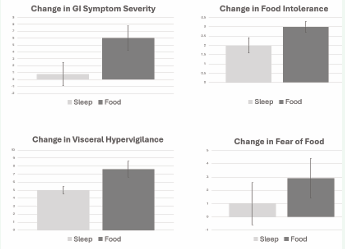
Figure 1: Changes in all outcome measures by condition
DISCUSSION
These findings suggest that food journaling may inadvertently heighten vigilance towards and distress about GI sensations and may foster maladaptive beliefs about food in otherwise healthy individuals. While food journaling is widely recommended in GI symptom management, its use in non-clinical populations may carry unintended psychological risks. These findings also highlight the importance of exploring any possible iatrogenic effects of food and GI symptom journaling in patients with GI disorders like irritable bowel syndrome. While we did find a significant interaction effect such that the iatrogenic effects of food journaling were worse in individuals with fairly low levels of baseline hyper vigilance, it is quite possible that journaling may also amplify underlying factors that maintain and worsen IBS in clinically distressed individuals.
One of the main problems with implementing the low FODMAP diet is that many patients never undertake the re-introduction phase and very few complete the full personalization phase of the diet with the guidance of a dietician [13]. This is a shame, because the reintroduction and personalization phases are crucial to reducing the level of restriction and restoring nutrient adequacy (including pre-biotics) and gut microbiota [14,15]. It may be that the language and symptom observation approach typically utilized during phase 2 (with its focus on increasing “doses” of specific potential “trigger” foods with close attention to any subsequent GI sensations that might arise) might be inadvertently increasing fear of food and hypervigilance towards and sensitivity to visceral sensations, despite the fact that most foods do not end up triggering significant GI distress and are in fact well tolerated [15]. We call for collaborative research between dieticians and behavioral health professionals to test whether any such iatrogenic effects exist and to explore how to minimize them in ways consistent with the overall CBT approach.
REFERENCES
- Singh P, Tuck C, Gibson PR, Chey WD. The role of food in the treatment of bowel disorders: Focus on irritable bowel syndrome and functional constipation. Am J Gastroenterol. 2022; 117: 947-957.
- Tian S, Zhang H, Chen S, Wu P, Chen M. Global research progress of visceral hypersensitivity and irritable bowel syndrome: Bibliometrics and visualized analysis. Front Pharmacol. 2023; 14: 1175057.
- Liu J, Chey WD, Haller E, Eswaran S. Low-FODMAP diet for irritable bowel syndrome: What we know and what we have yet to learn. Annu Rev Med. 2020; 71: 303-314.
- Chang L. How to Approach a Patient with Difficult-to-Treat IBS.Gastroenterology. 2021; 161: 1092-1098.
- Windgassen S, Moss-Morris R, Goldsmith K, Chalder T. Key mechanisms of cognitive behavioural therapy in irritable bowel syndrome: The importance of gastrointestinal related cognitions, behaviours and general anxiety. J Psychosom Res. 2019; 118: 73-82.
- Sugaya N, Shirotsuki K, Nakao M. Cognitive behavioral treatment for irritable bowel syndrome: A recent literature review. Biopsychosoc Med. 2021; 15:23.
- Orock A, Yuan T, Greenwood-Van Meerveld B. Importance of Non-pharmacological approaches for treating irritable bowel syndrome: Mechanisms and Clinical Relevance. Front Pain Res (Lausanne). 2021; 1: 609292.
- Goodoory VC, Khasawneh M, Thakur ER, Everitt HA, Gudleski GD, Lackner JM, M et al. Effect of brain-gut behavioral treatments on abdominal pain in irritable bowel syndrome: Systematic Review and Network Meta-Analysis. Gastroenterology. 2024; 167: 934-943.
- Biesiekierski JR, Manning LP, Murray HB, Vlaeyen JWS, Ljótsson B, Van Oudenhove L. Review article: Exclude or expose? The paradox of conceptually opposite treatments for irritable bowel syndrome. Aliment Pharmacol Ther. 2022; 56: 592-605.
- Zickgraf HF, Loftus P, Gibbons B, Cohen LC, Hunt MG. “If I could survive without eating, it would be a huge relief”: Development and initial validation of the Fear of Food Questionnaire. Appetite. 2022; 169: 105808.
- Wiklund IK, Fullerton S, Hawkey CJ, Jones RH, Longstreth GF, Mayer EA, et al. An irritable bowel syndrome-specific symptom questionnaire: Development and validation. Scand J Gastroenterol. 2003; 38: 947-954.
- Taft TH, Triggs JR, Carlson DA, Guadagnoli L, Tomasino KN, Keefer L, et al. Validation of the oesophageal hypervigilance and anxiety scale for chronic oesophageal disease. Aliment Pharmacol Ther.2018; 47: 1270-1277.
- Foulkes R, Shah P, Twomey A, Dami L, Jones D, Lomer MCE. A service evaluation of FODMAP restriction, FODMAP reintroduction and long-term follow-up in the dietary management of irritable bowel syndrome. J HumNutr Diet. 2025; 38: e13393.
- Lomer MCE. The low FODMAP diet in clinical practice: where are we and what are the long-term considerations? Proc Nutr Soc. 2024; 83: 17-27.
- Tuck C, Barrett J. Re-challenging FODMAPs: the low FODMAP diet phase two. J Gastroenterol Hepatol. 2017; 32: 11-15.