Antibacterial Potential of Essential Oils of the Leaves of Artemisia Annua and Aloe Vera against Staphylococcus Aureus
- 1. Department of Chemistry and Biochemistry, University of Eldoret, Kenya
Abstract
Artemisia annua and Aloe Vera have historically been used as medicinal plants through its extracts. Essential oils from Artemisia annua for decades have been used as mosquito repellants They have as well shown their potential to disrupt the biofilm formation of gram positive pathogens; staphylococcus aureus being one of deadly pathogen of focus in this study. Thus the study seeks to evaluate the activity of the essential oils present in both Artemisia annua and aloe vera against Staphylococcus aureus bacterium through extraction of essential oils obtained using steam distillation method. Antimicrobial effectiveness of the plant oils was assessed using the agar well diffusion test, and their Minimum Inhibitory Concentration (MIC) was determined by the serial dilution procedure. The study identifies that the essential oils of both Aloe Vera and Artemisia annua possess substantial antimicrobial activity against S. aureus. Artemisia annua essential oil demonstrated a zone of inhibition of 18.50 ± 0.50 mm at 100% concentration (MIC: 0.625 mg/ml), while Aloe vera essential oil – 13.40 ± 0.40 mm (MIC: 2.5 mg/ml). The results obtained indicate the high potential of these two plant oils as natural and affordable antibiotic substitutes for combating bacterial infections.
Keywords
• Essential oils; Artemisia annua; Aloe vera; Staphylococcus aureus; Antibacterial activity; MIC; Steam distillation; Hydro-distillation
Citation
Wechuli LN, Barasa SS, Ochieng DN (2026) Antibacterial Potential of Essential Oils of the Leaves of Artemisia Annua and Aloe Vera against Staphylococcus Aureus. J Pharmacol Clin Toxicol 14(1):1197.
INTRODUCTION
Medicinal plants have been a rich source of antimicrobial agents for decade years and up to date. From the recent report on estimates, a ratio of 8:2 of the developing world’s population uses herbal medicine to address their health needs [1]. A number of medicinal plants has its biological activity based on their secondary metabolites/ broad classes like, chromones, sesquiterpene lactone, flavonoids, essential oils etc. essential oils are known for its properties; like being volatile, water hating and aromatic liquids that are isolated from stems, leaves, shoots or roots of different parts of a plant. Essential oils consist a fragrant odor and unique biological activity due to the presence of ketone, esters aldehydes, terpenes and terpenoids as part of the plants composition. Natural products has always relied on medicinal plants for being a rich source of antimicrobial, antioxidant, anti-inflammatory and analgesic effects [2].
They are widely used in pharmaceuticals, cosmetics and preservation of foods. Moreover, essential oils are not characterized by the risks associated with synthetic medicines because they are less toxic and do not lead to development of resistance in microorganisms [3].
Artemisia annua is an annual aromatic plant belonging to the genus Asteraceae. Native to temperate Asia, this plant has a long history of use in traditional Chinese medicine as treatment for fever and infectious diseases, lasting for more than 2000 years [4]. Internationally known as the natural source of artemisinin (a strong antimalarial agent), the essential oil of Artemisia annua possesses bioactive compounds, such as artemisia ketone, 1,8-cineole, camphor and α-pinene, that demonstrate remarkable antibacterial and antifungal activity including the inhibition of Staphylococcus aureus [5,6].
Artemisia annua and some of its compounds Aloe vera is a succulent perennial plant belonging to the Asphodelaceae family, which is native to the Arabian Peninsula and nowadays is grown throughout the world. This plant is highly respected for a long time, being called “Plant of Immortality” by the Ancient Egyptians, and has been used in medicine by the Greek, Roman and Chinese civilizations for treatment of wounds, skin problems and digestive disorders [7]. Apart from its famous moisturizing effect of the inner gel, the oil obtained from the outer leaf surface contains phenolic compounds, anthraquinones (aloin, emodin), and polysaccharides with documented antimicrobial and anti-inflammatory effects [8]. It has been experimentally proved that A. vera extracts are able to inhibit the growth of S. aureus [9] (Figure 1 and Figure 2).
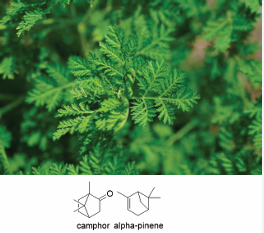
Figure 1: Artemisia annua and some of its compounds
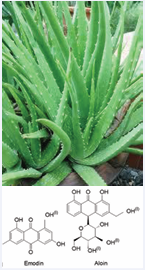
Figure 2: Aloe Vera and its compounds
Staphylococcus aureus is a Gram-positive, facultative anaerobic bacterium that commonly colonizes the mild skin and soft tissue to life threatening infectious such as endocarditis, bacteremia, sepsis etc. of healthy individuals [10]. The emergence of Methicillin-Resistant S. aureus (MRSA) has been classified by the World Health Organization (WHO) as a high-priority pathogen requiring for an urgent research into alternative antibiotics that may help in prevention or disruption of its formation [11].
Given the limitations of conventional antibiotics and the growing demand for natural therapeutic agents, this study focused on extracting essential oils from Artemisia annua and Aloe vera and evaluating their antibacterial potential against S. aureus. The combination of these two plant oils may also exhibit synergistic effects, offering a promising approach to antibiotic-resistant infections. The findings of this study will serve as baseline data for the development of novel pharmaceutical formulations such as topical ointments, creams or disinfectants. Additionally, the potential synergistic effect between both oils could lead to more potent combination therapies.
Genesis of the discussion
The global escalation of antibiotic resistance represents one of the most critical threats to public health in the 21st century. The ability of pathogenic bacteria to evade conventional therapeutic agents has necessitated the exploration of novel antimicrobial compounds from natural sources [11]. Medicinal plants have served as a reservoir of bioactive molecules for centuries, offering a promising avenue for drug discovery. This paper reviews existing scientific literature regarding the botanical characteristics, extraction methodologies and antibacterial properties of Artemisia annua and Aloe vera, alongside an analysis of the pathogenicity of Staphylococcus aureus.
The Pathogen: Staphylococcus aureus
Morphology and Pathogenicity: Staphylococcus aureus is a Gram-positive, catalase-positive, facultative anaerobic bacterium. It typically colonizes the skin and mucous membranes of approximately 20–30% of healthy humans [10]. As an opportunistic pathogen, it is implicated in a wide spectrum of infections — from superficial skin abscesses and wound infections to severe systemic conditions such as bacteremia, endocarditis and pneumonia.
The Crisis of Antimicrobial Resistance: The clinical management of S. aureus infections has become increasingly challenging due to the emergence and rapid dissemination of multi-drug-resistant strains. Following the widespread use of penicillin, resistant strains emerged rapidly. This was followed by the emergence of MRSA, which is currently resistant to nearly all β-lactam antibiotics [12]. More recently, strains with reduced susceptibility or complete resistance to vancomycin have also been reported. Consequently, the World Health Organization has categorized MRSA as a high-priority pathogen requiring urgent research into alternative therapeutic strategies [11].
Artemisia annua
Artemisia annua, commonly known as sweet wormwood, is an annual aromatic herb belonging to the
Asteraceae family. It is native to Asia but is now widely distributed across temperate and tropical regions globally. The plant is characterized by erect stems, finely divided leaves and small yellow capitula [4]. It has been utilized in traditional Chinese medicine for over two millennia majorly for the treatment of fevers and malaria.
Modern pharmacological research has validated its use as the primary source of artemisinin, an endoperoxide sesquiterpene lactone with potent antimalarial activity. Beyond antimalarial properties, the plant is also employed in folk medicine for the treatment of wounds, inflammation and infectious diseases [5,13,14].
Aloe vera
Aloe vera is a perennial succulent plant of the Asphodelaceae family. It possesses thick, fleshy, lanceolate leaves containing two distinct pharmacological materials: the clear mucilaginous gel in the inner parenchyma and the bitter yellow latex in the outer rind [8]. Aloe vera has been revered since ancient Egyptian, Greek and Roman civilizations, and is extensively used in cosmetic, pharmaceutical and food industries. Its antimicrobial properties make it a common ingredient in traditional remedies for infected wounds [9,15].
Antibacterial Activity and Mechanism of Action
Efficacy of Artemisia annua: Numerous scientific investigations have confirmed the broad-spectrum antimicrobial activity of A. annua. Ziaei et al. [5], reported that the essential oil of A. annua exhibited potent inhibitory effects against S. aureus, with MIC values as low as 0.02 mg/ml. The oil has also demonstrated efficacy against MRSA strains, suggesting its potential in combating resistant infections [16].
The mechanism of action involves the lipophilic nature of essential oils, which allows them to penetrate the bacterial cell wall and membrane. This leads to increased permeability, leakage of cellular contents, disruption of ion gradients and ultimately cell death [2].
Efficacy of Aloe vera: Reynolds and Dweck [8], reviewed that Aloe vera extracts are effective against various Gram-positive bacteria. Specific studies have demonstrated that methanol extracts produce significant zones of inhibition against S. aureus. The activity is primarily attributed to anthraquinones such as emodin, which interfere with nucleic acid synthesis and cell wall function [9].
METHODOLOGY
Materials and equipments
Distilled water, round bottomed flask, separating
funnel, heat source, complete retort stands, beakers, Artemisia annua leaves and aloe vera leaves.
Collection of Plant Material
Fresh leaves of Artemisia annua and Aloe vera were collected from outskirts of chepkoilelel Eldoret, Kenya. Collection was conducted during morning hours to ensure maximum potency of the phytochemicals present in the plant tissue.
Preparation of Plant Material For Artemisia annua
The fresh leaves were thoroughly washed under running tap water to remove dust, soil and debris, then rinsed with distilled water. Excess water was drained, and the leaves were chopped into small pieces to increase surface area for extraction. The leaves were used fresh, without drying, to preserve volatile constituents.
For Aloe vera
The outer green rind was carefully separated and the leaves were cut. were then washed thoroughly under running tap water and rinsed with distilled water. Later placed upright in a container and allowed to drain for 15–20 minutes to remove the yellowish latex sap, which may cause irritation. The spiky margins and outer green rind were peeled off with a sharp knife. Then a clear, transparent inner gel was collected, chopped into small pieces and used immediately for extraction.
Extraction of Essential Oils
Extraction of Artemisia annua Oil Steam Distillation Method: The 500 g of freshly chopped leaves were placed in a 2-litre round-bottom flask with 1,000 ml of distilled water. The mixture was heated and boiled for 4 hours. Steam carried the volatile components upward into the condenser, where they condensed into a liquid mixture. The essential oil separated and floated on top of the water in the graduated receiver. The oil was collected, dried over anhydrous sodium sulfate (Na SO ) to remove traces of
water, and stored in a dark amber glass bottle at 4°C until use.
Extraction of Aloe vera Oil Steam Distillation Method: 500 g of freshly prepared Aloe vera gel were placed in a round-bottom flask. Distilled water was added, and the apparatus was assembled. Heating was applied and distillation carried out continuously for 4 hours. The steam vaporized the active aromatic compounds, which were condensed back into liquid form. The collected oil
(0.7 ml, amber-coloured) was separated, dried and stored in a sterile amber bottle.
Calculation of Percentage Yield: The yield of the extracted oil was calculated using the formula:
Percentage yield (%) = [Volume of oil obtained (ml)
/ Weight of fresh sample (g)] × 100%
|
Plant |
Fresh Sample Weight (g) |
Oil Obtained (ml) |
Percentage Yield (%) |
|
|
500 |
1.8 |
0.36 |
|
Aloe vera |
500 |
0.7 |
0.14 |
Agar Well Diffusion Method: Mueller-Hinton Agar (MHA) plates were prepared by pouring 20 ml of molten media into sterile petri dishes and allowed to solidify. A standardized bacterial suspension was uniformly swabbed onto the agar surface using a sterile cotton swab. Wells of 6 mm diameter were bored into the agar using a sterile cork borer. The following concentrations of essential oils were prepared using DMSO as solvent:
? 100% (pure oil)
? 50% (1:1 v/v with DMSO)
? 25% (1:3 v/v with DMSO)
1.1 ml of each concentration was introduced into the respective wells. With the application of Controls; Positive control: Standard antibiotic disc ciprofloxacin (5 μg) placed on the agar surface. Negative control: Pure DMSO added to one well. Plates were allowed to stand for 30 minutes at room temperature for diffusion, then incubated at 37°C for 24 hours. After incubation, the diameter of the zone of inhibition (ZOI) was measured in millimeters (mm) using a ruler.

Determination of Minimum Inhibitory Concentration (MIC): The Minimum Inhibitory Concentration (MIC) is defined as the lowest concentration of an extract that prevents visible growth of the bacteria. Serial dilutions of the essential oils were prepared to obtain concentrations ranging from 10 mg/ml to 0.156 mg/ml. Each dilution was tested against a standardized bacterial suspension. The MIC was recorded as the lowest concentration showing a clear zone of inhibition.Observed MIC values:
• Artemisia annua: 0.625 mg/ml
• Aloe vera:
• Aloe vera: 2.5 mg/ml
Experimental Design and Data Analysis
The experiment was performed in triplicate (n = 3) to ensure accuracy and reproducibility. Results are presented as mean ± standard deviation (SD).
RESULTS AND DISCUSSION
Physical Characteristics and Percentage Yield
Table 1 below presents the physical characteristics and percentage yield of essential oils obtained from both plant species.
Table 1: Physical characteristics and percentage yield of essential oils
|
Parameter |
Artemisia annua Oil |
Aloe vera Oil |
|
Colour |
Pale yellow to green-yellow |
Pale yellow to amber |
|
Odour |
Strong, aromatic — characteristic complex smell |
Mild, slightly spicy |
|
Consistency |
Mobile, thin liquid |
Slightly viscous |
|
Weight of fresh sample (g) |
500 |
500 |
|
Volume of oil obtained (ml) |
1.8 |
0.7 |
|
Percentage yield (%) |
0.36 |
0.14 |
Discussion on Yield and Characteristics: For Artemisia annua: The percentage yield of 0.36% falls within the range reported in previous studies (0.2%–1.2%), which varies depending on geographical location, climate and harvest stage [5]. The greenish-yellow colour and strong aroma are attributed to the presence of volatile terpenoids and ketones particularly Artemisia ketone, 1,8-cineole and camphor which are the major constituents responsible for the oil’s biological activity [6]. The relatively high yield observed in this study indicates that fresh leaves are an excellent source of essential oil, as drying may cause some loss of volatile compounds.
For Aloe vera: The yield of 0.14% was lower than that of A. annua. This is expected because Aloe vera leaves are composed of approximately 95–98% water, with the essential oil fraction present in smaller quantities, primarily in the green rind rather than the clear gel [8]. Despite the low yield, the steam distillation process successfully extracted the volatile aromatic compounds. The amber colour and distinctive odour suggest the presence of active compounds such as phenolic and anthraquinone derivatives, confirming that steam distillation is a viable extraction method for Aloe vera [9].
Antibacterial Activity Assay
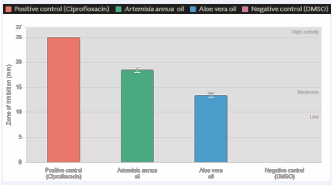
The antibacterial potential of the essential oils was evaluated using the agar well diffusion method against Staphylococcus aureus. The diameters of the zone of inhibition (ZOI) were measured in millimeters (mm). Results are presented in Table 2.
Table 2: Zone of inhibition (mm) for essential oils against S. aureus
|
Sample |
Concentration |
Zone of Inhibition (mm) Mean ± SD |
Activity Level |
|
|
100% 50% 25% |
18.50 ± 0.50 14.20 ± 0.30 10.00 ± 0.20 |
High Moderate Moderate |
|
Aloe vera oil |
100% 50% 25% |
13.40 ± 0.40 10.10 ± 0.30 7.10 ± 0.10 |
Moderate Moderate Low |
|
Positive control (Ciprofloxacin) |
Standard |
25.00 ± 0.00 |
Very High |
|
Negative control (DMSO) |
— |
0.00 ± 0.00 |
No Activity |
Activity Scale: >15 mm = High; 10–14 mm = Moderate; <9 mm = Low
Discussion on Antibacterial Activity
Efficacy of Artemisia annua oil: The results clearly demonstrate that Artemisia annua essential oil exhibited significant inhibitory activity against S. aureus. At 100% concentration, the oil produced a maximum zone of inhibition of 18.50 ± 0.50 mm, classified as high activity.
This high activity is attributed to the rich chemical composition of the oil particularly oxygenated monoterpenes such as 1,8-cineole, camphor and α-pinene [5]. According to Bakkali et al. [2], these lipophilic compounds act by disrupting the integrity of the bacterial cell membrane and cell wall, leading to increased permeability, leakage of cellular contents and ultimately cell death. The findings are consistent with those of Chou et al. [6], who observed strong antibacterial activity against Gram-positive bacteria. The low standard deviation values confirm that results were consistent and reproducible.
Efficacy of Aloe vera oil: Aloe vera oil also showed measurable antibacterial activity, producing a zone of inhibition of 13.40 ± 0.40 mm at full concentration classified
as moderate activity. The inhibitory effect is primarily attributed to anthraquinones such as aloin, emodin and chrysophanol, which interfere with bacterial cell wall synthesis [9]. These findings support the traditional use of Aloe vera for treating wounds and preventing infections.
Dose dependent relationship: A clear dose-response relationship was observed. As the concentration of the essential oil decreased, the diameter of the zone of inhibition also decreased. For example, A. annua dropped from 18.50 mm at 100% to 10.00 mm at 25%. This indicates that higher concentrations contain greater amounts of active ingredients, resulting in more effective bacterial inhibition.
Comparison with controls: The standard antibiotic ciprofloxacin showed the highest activity (25.00 mm), as expected. However, the substantial activity of A. annua at 18.50 mm suggests it is a potent natural alternative with considerable therapeutic potential.
Minimum Inhibitory Concentration (MIC)
The Minimum Inhibitory Concentration (MIC) represents the lowest concentration of an extract required to completely inhibit the visible growth of the target microorganism. Table 3 presents the MIC values for both plant oils.
Table 3: MIC values for essential oils against S. aureus
|
Plant Extract |
MIC Value (mg/ml) |
|
Artemisia annua |
0.625 |
|
Aloe vera |
2.5 |
The MIC of 0.625 mg/ml for A. annua indicates that this oil is a highly potent antibacterial agent, requiring only a very small amount to exert its effect. This is consistent with findings by Politi et al. [16], who reported MIC values of 0.5–1.0 mg/ml for similar essential oils against S. aureus.
For Aloe vera, the higher MIC of 2.5 mg/ml indicates that while effective, a greater concentration is needed to achieve the same level of inhibition compared to A. annua. Nevertheless, both values confirm the bacteriostatic potential of both oils.
CONCLUSION AND RECOMMENDATIONS
Conclusion
Essential oils have been effectively obtained from the fresh leaves of Artemisia annua and Aloe vera through the process of steam distillation and the antibacterial properties against S. aureus have been determined. From the results of this experiment, the following conclusions are made:
Steam distillation was found to be an efficient technique for extraction of essential oils from fresh material of both plants. The yield obtained was 0.36% for Artemisia annua compared to 0.14% for Aloe vera. This is due to higher water content and less amount of volatile compounds in Aloe vera.
Essential oil from Artemisia annua was very effective, with ZOI of 18.50 ± 0.50 mm at 100% concentration level. It is thus a very potent oil against S. aureus. Aloe Vera was moderately effective with ZOI of 13.40 ± 0.40 mm, hence it is effective although it is not as potent as Artemisia annua.
The MIC for A. annua (0.625 mg/ml) confirms it is effective even at very low concentrations.
The MIC for Aloe vera (2.5 mg/ml) confirms bacteriostatic potential but requires higher concentrations to achieve complete inhibition.
Although ciprofloxacin showed the highest activity, A. annua essential oil demonstrated considerable natural potential, suggesting that these plant extracts can serve as safe, effective and affordable alternatives for treating infections caused by S. aureus, particularly in regions where antibiotic resistance is a growing concern.
Recommendations
1. Medical and Pharmaceutical Applications
• Development of herbal medicines: Efforts should be made to formulate these essential oils into pharmaceutical products such as topical ointments, creams, lotions or disinfectants for treating skin infections, wounds and burns.
• Integration in healthcare: Community health workers and herbal practitioners should be educated on the proper use and dosage of these plants to treat common bacterial infections effectively. 2. Further Research • Chemical profiling: Advanced analytical techniques such as Gas Chromatography–Mass Spectrometry (GC-MS) should be employed to identify the specific chemical components responsible for the antibacterial activity observed in this study.
• Activity against resistant strains: Further studies should test these oils against clinically isolated resistant strains such as MRSA and Vancomycin Resistant S. aureus (VRSA). • Synergy studies: Studies are needed to analyze the synergy between the oils from A. annua and Aloe vera to see if they have a synergistic effect that increases their antibacterial activity.
3. Agricultural and Conservation Strategies
• Cultivation: Because of their medicinal properties, it is necessary to cultivate these plants in large numbers to make sure there is sufficient availability of their raw material for the drug manufacturing industries.
• Raising awareness: There must be awareness raised among the public about the medicinal significance of these plants in order to avoid their over-exploitation and preserve them.
Policy Implications
Governmental agencies and other health bodies should think of considering the natural plant products as authentic remedies, particularly in cases where conventional drugs are either expensive or unavailable.
REFERENCES
- Steenkamp V, Stewart MJ. Medicinal applications and toxicological activities of Aloe products. Pharmaceutical Biology. 2007; 45: 411-420.
- Bakkali F, Averbeck S, Averbeck D, Idaomar M. Biological effects of essential oils — A review. Food Chem Toxicol. 2008; 46: 446-475.
- Sivropoulou A. Essential oils as alternatives to conventional antibiotics: A review of mechanisms and applications. Phytomedicine Rev. 2024; 12: 45-67.
- Tu Y. The discovery of artemisinin (qinghaosu) and gifts from Chinese medicine. Nature Med. 2011; 17: 1217-1220.
- Ziaei A. Antibacterial and antifungal activities of Artemisia annua essential oil. J Ethnopharmacol. 2023; 305: 116-124.
- Chou ST. Antimicrobial and antioxidant properties of chemically analyzed essential oil of Artemisia annua L. native to Mediterranean area. Plants. 2023; 12: 807.
- Grindlay DJ, Reynolds T. The Aloe vera phenomenon: A review of the properties and modern uses of the leaf parenchyma gel. J Ethnopharmacol. 1986; 16: 117-151.
- Reynolds T, Dweck AC. Aloe vera gel: A review update. J Ethnopharmacol. 1999; 68: 3-37.
- Surveswaran S. Antibacterial activity of Aloe vera extracts against Staphylococcus aureus. J Natural Remedies. 2021; 21: 88-97.
- Tiri? J, Risti? M. Staphylococcus aureus: Pathogenesis and therapeutic challenges. J Clin Pathol. 2021; 74: 135-142.
- World Health Organization (WHO). Antimicrobial resistance: Global action plan. WHO Press. 2024.
- Lee AS. The Staphylococcus aureus complex in practice for the clinical microbiology laboratory. J Clin Microbiol. 2021; 63: e0127624.
- Wechuli LN, Barasa SS, Bisem N, Kituyi JL. In silico Identification of Multi-Target Phytochemicals from Artemisia annua and Aloe barbadensis Against Methicillin-Resistant Staphylococcus aureus. Afr J Empirical Res. 2026b; 7: 1557–1577
- Wechuli LN, Barasa SS, Bisem N, Kituyi JL. Flavonoids and chromones from Aloe barbadensis exhibit potent activity against Staphylococcus aureus: Validation of in silico predictions. SCIENCE MUNDI. 2026a; 6: 415-425.
- Wechuli LN, Barasa SS. Molecular Dynamics Simulation of Aloe Barbadensis Anthraquinones Targeting MRSA Peptidoglycan Biosynthesis Enzymes. J Vet Res Clin Care. 2026.
- Politi A. Antimicrobial activity of different Artemisia species extracts. J Med Plants. 2024; 18: 45-58.
- Balouiri M, Sadiki M, Ibnsouda SK. Methods for in vitro evaluating antimicrobial activity: A review. J Pharmaceutical Analysis. 2016; 6: 71-79.
- Clinical and Laboratory Standards Institute (CLSI). Performance Standards for Antimicrobial Susceptibility Testing (34th ed.). CLSI Document M100-Ed34. 2024.
- Martini MC, Zhang T, Williams JT. Artemisia annua and Artemisia afra extracts exhibit strong bactericidal activity against Mycobacterium tuberculosis. J Ethnopharmacol. 2020; 262: 113191.