Structure–Function–Safety Design of Biopolymer Gels: Bridging Seafood and Plant- Based Food Systems
- 1. University of Maine Cooperative Extension, USA
Abstract
Gel-based food systems, including plant-based and animal-derived formulations, are increasingly recognized as structure-driven platforms for controlling quality, safety, and functional stability. The growing demand for plant based foods has intensified the need to design gel networks capable of matching or exceeding the performance of conventional protein systems. A structure–function–safety framework is introduced to describe how processing conditions and network architecture regulate water mobility, mass transfer, oxidative stability, and microbial susceptibility. Gelation mechanisms in plant proteins (e.g., soy, pea, wheat gluten), myofibrillar proteins, gelatin, and protein–polysaccharide composites are discussed in relation to microstructure and rheological behavior. The influence of processing variables, including thermal history, ionic conditions, pH, and non-thermal technologies (e.g., high-pressure processing, ultrasound, pulsed electric fields), is evaluated for their ability to tailor network structure and performance.
Beyond conventional quality attributes, gel systems function as active matrices that control oxygen diffusion, modulate antimicrobial and antioxidant release, and influence microbial growth. This integrated perspective supports a design-oriented approach to food systems, enabling predictive control of functionality and safety, while highlighting current challenges and future directions in characterization, modeling, and material design.
Keywords
• Biopolymer Gels; Plant-Based Protein Gels; Gel Networks; Mass Transfer; Food Safety
Citation
Evrendilek GA (2026) Structure–Function–Safety Design of Biopolymer Gels: Bridging Seafood and Plant- Based Food Systems. Ann Food Process Preserv 9(1): 1044.
INTRODUCTION
Gels as Structure-Driven Design Platforms in Food Systems
Food systems are increasingly recognized as structured materials in which macroscopic properties emerge from hierarchical molecular and supramolecular organization. Within this context, gels represent a fundamental class of food structures, consisting of three-dimensional biopolymer networks capable of immobilizing large amounts of water while maintaining mechanical integrity. Their structural versatility has positioned gel systems as critical platforms for controlling texture, stability, and functionality in modern food applications [1-4]. The rapid expansion of plant-based foods has intensified interest in gel systems as structuring agents capable of replicating the sensory and functional attributes of animal-derived products. However, plant proteins often exhibit weaker gelation capacity, lower water-holding ability, and reduced network cohesion compared to myofibrillar proteins. These limitations necessitate advanced structuring strategies, including protein–polysaccharide interactions and composite gel design, to achieve desirable functional performance [5-7]. Food deterioration is governed by physicochemical and microbiological processes such as moisture migration, lipid oxidation, proteolysis, and microbial proliferation. Importantly, these processes are strongly influenced by the internal structure of the food matrix rather than composition alone. The spatial distribution of water, oxygen, and solutes within gel networks directly affects reaction kinetics and microbial accessibility, highlighting the importance of structural design in controlling food stability [8-11].
Gel networks can therefore be conceptualized as active matrices that regulate mass transfer and molecular interactions, rather than passive texturizing agents. Structural attributes such as pore size, crosslink density, and network connectivity define diffusion pathways and water-binding behavior, thereby influencing quality and safety outcomes [12-14].
The formation and performance of gel systems are highly dependent on both composition and processing conditions. Thermal treatment, ionic strength, pH, and emerging non-thermal technologies such as high- pressure processing and ultrasound can significantly alter network architecture and functionality [15-18]. These processing structure relationships provide opportunities to engineer gels with targeted properties.
Despite advances in gel science, the integration of structural design with food safety considerations remains limited. In particular, the role of gel microstructure in controlling microbial behavior, transport of reactive species, and delivery of bioactive compounds has not been systematically addressed. This gap is especially critical in plant-based systems, where balancing quality, stability, and safety is a major challenge [19-21].
A Structure–Function–Safety (SFS) framework is proposed to integrate gel structure, functional performance, and safety outcomes within a unified perspective. By connecting processing conditions with network architecture and transport phenomena, this approach supports a shift toward design-oriented food systems in which gels are engineered to control stability and safety across both seafood and plant-based applications.
Conceptual Framework: A Multiscale Structure Function–Safety Map
A comprehensive understanding of gel-based food systems requires a multiscale perspective in which molecular interactions, network architecture, and macroscopic properties are considered as an integrated continuum. Within this framework, gel functionality emerges from hierarchical organization spanning multiple length scales, and linking these levels is essential for predictive food design [22-27].
At the molecular level, gel formation is initiated by the unfolding and association of biopolymers through hydrogen bonding, hydrophobic interactions, electrostatic forces, and covalent crosslinking. These interactions lead to the formation of aggregates and junction zones that establish the foundation of the gel network. In plant protein systems, these processes are often less efficient due to structural differences in protein composition, resulting in weaker networks compared to animal-derived systems [28-30].
At the mesoscale, network topology governs system behavior. Parameters such as pore size, mesh size, crosslink density, and heterogeneity define how water and solutes are distributed and transported within the matrix. These structural features determine the internal environment of the gel and directly influence functional properties such as water retention and mechanical strength [31-34].
At the macroscopic level, these structural characteristics translate into measurable properties including rheological behavior, texture, and water-holding capacity. However, bulk measurements alone cannot fully explain system performance without linking them to underlying structural attributes.
To bridge these scales, a set of key structural descriptors can be defined:
-Porosity and mesh size → govern diffusion pathways
-Crosslink density → determines mechanical stability
-Interfacial area → influences multiphase interactions
-Water-binding states → control mobility and reactivity
These parameters collectively regulate transport phenomena and reaction kinetics within gel systems [35-38]. A critical extension of this framework is the recognition that structure also governs safety-related processes. Gel networks influence microbial growth by controlling water mobility and nutrient accessibility, while also affecting oxygen diffusion and oxidative stability. In addition, gels can act as carriers for antimicrobial and antioxidant compounds, where their effectiveness depends on controlled release and interaction with the network [39-42].
From this perspective, the proposed Structure Function–Safety (SFS) framework integrates:
-Structural attributes (multiscale organization)
-Functional outcomes (texture, stability, retention)
-Safety processes (microbial dynamics, oxidation)
Processing conditions serve as key inputs that define network architecture, while transport phenomena provide the mechanistic link between structure and system performance [43,44].
This framework enables a transition from empirical formulation toward predictive, design-oriented food engineering, where gel systems are intentionally structured to achieve targeted quality and safety outcomes
The relationships between key structural parameters, functional outcomes, and safety implications in gel-based systems are summarized in Table 1.
Table 1: Structure–Function–Safety Relationships in Gel-Based Food Systems
|
Structural Parameter |
Definition / Role in Gel Network |
Functional Outcome (Quality) |
Safety Implication |
Typical Measurement Techniques |
|
Pore size / Mesh size |
Defines spacing within the network and diffusion pathways |
Controlswater retention and texture uniformity |
Regulates microbial access and oxygen diffusion |
CLSM, SEM, micro-CT |
|
Crosslink density |
Degree of intermolecular bonding within the network |
Influencesgel strength, elasticity, and stability |
Limits solute and oxygen transport, affecting microbial growth |
Rheology (G′), FTIR, SDS-PAGE |
|
Network connectivity |
Degree of structural continuity across the gel matrix |
Enhances mechanical integrity and moisture retention |
Reduces localized niches for microbial colonization |
CLSM, rheology |
|
Water distribution (bound vs free) |
Distribution of water states within the gel |
Determines juiciness, yield, and freeze– thaw stability |
Influences microbial growth potential beyond bulk a_w |
LF-NMR, MRI |
|
Interfacial area (multiphase systems) |
Surface area between phases (e.g., oil–water interfaces) |
Stabilizes lipids and bioactive compounds |
Affects oxidation and microbial interaction zones |
CLSM, particle size analysis |
|
Porosity / Tortuosity |
Complexity of internal diffusion pathways |
Controls release of flavors and bioactives |
Governs diffusion of oxygen, nutrients, antimicrobials |
Micro-CT, diffusion assays |
|
Network homogeneity |
Uniformity of structural distribution |
Improves texture consistency and reduces syneresis |
Limits formation of microbial hotspots |
CLSM, SEM |
|
Hydrophobic/hydrophilic balance |
Interaction profile with water and lipids |
Affects retention of volatile and lipid compounds |
Influences localization of antimicrobial agents |
FTIR, fluorescence spectroscopy |
|
Matrix–compound interactions |
Binding between gel matrix and encapsulated compounds |
Enables controlled release and functional stability |
Determines antimicrobial release kinetics |
Release studies, diffusion models |
PROTEIN GEL SYSTEMS: FORMATION MECHANISMS AND STRUCTURE DETERMINANTS
Protein-based gel systems represent one of the most important structural platforms in food design, where network formation governs not only texture but also stability and safety-related behavior. While seafood- derived proteins have historically served as model systems for studying gelation, similar principles increasingly guide the development of plant-based gels. Within the SFS framework, these systems illustrate how molecular interactions translate into network architecture, which in turn defines transport behavior and system performance [75-77].
Protein gelation is driven by a sequence of structural transformations, including unfolding, aggregation, and crosslinking. The nature and extent of these transformations depend on protein type, composition, and processing conditions, leading to a wide range of network structures with distinct functional properties [28-79]. Importantly, differences between animal and plant proteins such as globular structure, amino acid composition, and reactivity result in fundamentally different gelation behaviors, necessitating tailored design strategies.
Myofibrillar Protein Gels: Network Formation and Functional Implications
Myofibrillar proteins, particularly myosin, form the structural basis of many seafood gel systems. Upon salt- induced solubilization, these proteins can be extracted and reorganized into viscoelastic networks during thermal processing. Gelation involves controlled unfolding and exposure of reactive groups, followed by the formation of intermolecular interactions that stabilize the network [80 82].
From an SFS perspective, the resulting network topology plays a central role in defining system behavior. Fine-stranded and homogeneous networks exhibit high connectivity and reduced pore size, which enhances water retention and mechanical strength while limiting diffusion of oxygen and solutes. In contrast, coarse or heterogeneous networks exhibit greater permeability, which can accelerate moisture loss and chemical degradation [83,84].
Salt concentration is a key factor influencing these outcomes. Adequate ionic strength promotes protein solubilization and facilitates network formation, whereas reduced salt conditions weaken intermolecular interactions and lead to less cohesive structures. Strategies such as enzymatic crosslinking and polysaccharide incorporation are therefore used to compensate for reduced functionality under low-salt formulations [85-87].
Collagen and Gelatin Systems: Thermo reversible Networks and Stability
Collagen-derived systems, including gelatin, form a distinct class of gels characterized by thermos reversible network formation. Gelatin gels are formed through the partial renaturation of collagen triple helices upon cooling, resulting in junction zones that stabilize the network structure [88-90].
These systems exhibit unique structural and functional properties, including elasticity, melt-in-mouth behavior, and temperature-dependent reversibility. From a structural standpoint, the density and distribution of junction zones determine network strength and water binding capacity, which directly influence texture and stability. In addition to their functional roles, collagen and gelatin systems contribute to sustainable food production through the valorization of seafood by-products. However, replacing these systems in plant-based formulations remains challenging, as plant-derived hydrocolloids lack equivalent thermos reversible behavior and network elasticity. This limitation highlights the importance of understanding structure–function relationships when designing alternative gel systems [91-93].
Protein–Polysaccharide Composite Gels: Tailoring Structure and Function
Composite gel systems formed through protein polysaccharide interactions provide a versatile approach to engineering network structure and functionality. Depending on interaction conditions, these systems may exhibit associative or segregative behavior, resulting in a range of microstructures from homogeneous networks to phase-separated domains [94,95].
Within the SFS framework, composite gels are particularly important because they allow fine-tuning of transport properties and mechanical behavior. The incorporation of polysaccharides such as carrageenan, alginate, or pectin can enhance network connectivity, improve water retention, and reduce syneresis. These effects are especially valuable in plant-based systems, where protein networks alone may be insufficient to achieve desired performance [96-98].
Interpenetrating polymer networks (IPNs) represent a specific class of composite systems in which multiple networks coexist and interact physically without covalent bonding. These systems exhibit enhanced mechanical stability and resistance to structural collapse. Similarly, emulsion-filled gels where lipid droplets are embedded within the network can reduce oxygen diffusion and improve oxidative stability by modifying internal transport pathways [99,100].
Implications for Plant-Based Gel Design
The design of plant-based gel systems presents unique challenges due to the inherent limitations of plant proteins, including lower solubility, reduced flexibility, and weaker intermolecular interactions. As a result, achieving desirable texture, water retention, and stability requires the integration of multiple structuring strategies. Protein polysaccharide interactions, enzymatic crosslinking, and controlled processing conditions are commonly used to enhance network formation in plant-based systems. Within the SFS framework, these strategies can be viewed as approaches to engineer network architecture in order to control transport behavior and improve system performance [27-101].
Importantly, plant-based gels often exhibit greater structural heterogeneity, which can influence both functional and safety outcomes. Designing more uniform and interconnected networks is therefore critical for improving moisture stability, reducing oxidation, and limiting microbial accessibility [102-104].
PROCESSING LEVERS THAT REPROGRAM GEL NETWORKS
Processing conditions define how biopolymers transition from dispersed molecules into structured gel networks, with processing acting as a key design variable governing network topology and transport behavior [105-107]. Processing parameters such as temperature, ionic environment, and mechanical forces control protein unfolding, aggregation kinetics, and crosslinking, thereby determining gel structure and quality/safety outcomes [108-110].
Thermal Profiles and Time–Temperature Pathways
Thermal processing remains the most widely used approach for inducing gelation in protein systems. Heat promotes protein unfolding and exposure of reactive groups, enabling aggregation and network formation. However, the final structure is highly dependent on the thermal pathway rather than temperature alone. Controlled heating profiles can produce more uniform and interconnected networks by allowing gradual aggregation and alignment of protein chains. In contrast, rapid heating often results in localized aggregation and structural heterogeneity, leading to weaker gels with reduced water holding capacity [111,112].
In seafood systems, multi-stage heating strategies such as setting followed by cooking are commonly used to enhance gel strength and homogeneity [113,114]. The initial low-temperature phase facilitates partial unfolding and alignment, while subsequent heating stabilizes the network through stronger intermolecular interactions [115,116]. Plant-based protein systems exhibit greater sensitivity to thermal conditions due to their inherently weaker gelation behavior. Precise control of heating rate and temperature is therefore critical to achieving cohesive and stable networks [117,118].
Ionic Strength, pH, and Water Structuring
The ionic environment and pH of a system strongly influence protein solubility, charge distribution, and intermolecular interactions. These factors determine the ability of proteins to form continuous networks and control water-binding behavior within the gel [119,120].
Salt plays a central role in seafood protein systems by promoting protein extraction and facilitating network formation. However, reducing salt content can disrupt these interactions, leading to weaker structures and increased water mobility. Alternative strategies—such as the use of divalent ions, pH adjustment, and incorporation of hydrocolloids—can partially compensate by enhancing electrostatic interactions and stabilizing the network [121,122].
Changes in ionic conditions also affect the distribution of water within the gel matrix. By altering the balance between bound and free water, these parameters influence moisture retention, diffusion of solutes, and susceptibility to microbial growth [123,124].
Crosslinking Pathways and Network Stability
Crosslinking determines the connectivity and resilience of gel networks. Different crosslinking mechanisms produce distinct structural configurations, which influence both mechanical properties and internal transport behavior.
Enzymatic crosslinking, particularly via transglutaminase, introduces covalent bonds that strengthen network integrity and improve elasticity. Ionic crosslinking in polysaccharide systems, such as calcium-mediated alginate gels, creates junction zones that contribute to network rigidity. Additional mechanisms, including Maillard-type interactions and phenolic crosslinking, further modify network structure and functionality [125,126].
The density of crosslinks directly affects permeability. Highly crosslinked networks restrict molecular diffusion, enhancing stability by limiting oxygen transport and solute mobility. Less dense networks allow greater diffusion but may compromise structural integrity. Balancing these effects is essential for optimizing both quality and safety [127,128].
Non-Thermal Processing as Network Engineering Tools
Emerging non-thermal technologies provide alternative routes for modifying gel structure while minimizing thermal damage. Techniques such as high-pressure processing (HHP), ultrasound, and pulsed electric fields (PEF) can alter protein conformation and aggregation behavior, leading to distinct network architectures. HHP induces protein denaturation and aggregation under controlled conditions, often resulting in more compact and homogeneous networks. Ultrasound treatment enhances molecular interactions through cavitation effects, improving dispersion and facilitating network formation. PEF can influence protein functionality by modifying molecular structure and interaction potential [129-132].
A key advantage of these approaches is their ability to combine structural modification with microbial inactivation, enabling integrated processing strategies. Within the SFS framework, non-thermal technologies serve as dual-function tools that simultaneously influence network design and safety outcomes.
The relationships between processing variables, network architecture, transport phenomena, functional attributes, and safety outcomes are summarized in Figure 1 and 2.
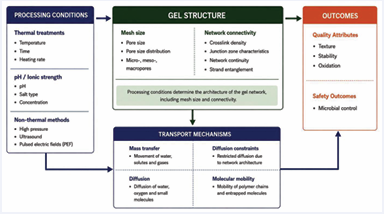
Figure 1: Structure–Function–Safety framework showing how processing conditions determine gel network architecture, which controls transport phenomena and thereby defines quality attributes and microbial safety in biopolymer gel systems.
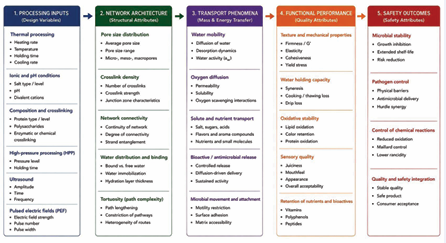
Figure 2: Processing–Structure–Transport–Function–Safety design map for biopolymer gel systems.
MICROSTRUCTURAL CHARACTERIZATION TOOLKIT: QUANTIFYING GEL ARCHITECTURE AND TRANSPORT RELEVANT PROPERTIES
A central requirement of structure-driven food design is the ability to quantify gel architecture in a way that explains and predicts system performance. While bulk measurements such as texture or moisture content are routinely reported, they do not directly resolve the internal organization that governs transport, stability, and microbial behavior. Within the SFS framework, characterization tools are most valuable when they capture structural features that can be linked to diffusion pathways, water mobility, and network integrity.
Modern analytical approaches therefore combine imaging, molecular spectroscopy, rheology, and transport measurements to provide a multiscale description of gel systems. The goal is not simply to describe structure, but to identify parameters that explain functional and safety outcomes.
Imaging Techniques: Resolving Network Topology and Heterogeneity
Microscopy-based methods provide direct insight into the spatial organization of gel networks. Confocal laser scanning microscopy (CLSM) is particularly useful for multiphase systems, enabling visualization of protein, polysaccharide, and lipid distributions through selective staining. This approach reveals network continuity, phase separation, and structural heterogeneity that cannot be inferred from bulk measurements [4-133].
Scanning electron microscopy (SEM) offers higher resolution imaging of network morphology, including pore structure and connectivity. Cryogenic SEM (cryo-SEM) is especially valuable for preserving hydrated structures, allowing observation of gels in a state closer to their native configuration [134,135].
Three-dimensional techniques such as micro-computed tomography (micro-CT) extend this analysis by enabling non-destructive visualization of internal architecture.These methods are particularly useful for quantifying porosity and spatial connectivity, which are directly related to diffusion behavior [136,137].
Molecular and Spectroscopic Analysis of Network Formation
Spectroscopic techniques provide insight into the molecular interactions that underpin gel formation. Fourier- transform infrared (FTIR) spectroscopy is widely used to monitor protein secondary structure transitions during gelation, particularly changes in α-helix and β-sheet content. These transitions reflect unfolding and aggregation processes that define network formation [138,139].
Raman spectroscopy offers complementary information on molecular vibrations and chemical interactions, while fluorescence spectroscopy provides sensitive indicators of protein unfolding and hydrophobic exposure. These methods are particularly valuable for capturing early stage structural changes that precede network formation [140,141].
Electrophoretic techniques such as SDS-PAGE can be used to assess protein aggregation and crosslinking. Changes in molecular weight distribution provide evidence of covalent and non-covalent interactions, linking molecular events to macroscopic gel behavior [142,143].
Rheological Measurements as Structural Proxies
Rheological analysis remains one of the most effective approaches for linking microstructure to macroscopic behavior. Oscillatory rheology provides key parameters such as storage modulus (G′) and loss modulus (G″), which reflect network elasticity and energy dissipation. These parameters serve as indirect indicators of network density and connectivity [144,145].
Beyond linear measurements, Large Amplitude Oscillatory Shear (LAOS) techniques capture nonlinear behavior associated with structural breakdown and recovery. These measurements provide insight into network resilience under deformation, which is critical for processing and sensory performance [146,147]. When interpreted alongside imaging data, rheological measurements enable a more complete understanding of how structural features influence mechanical properties.
Water Distribution and Mobility: Linking Structure to Transport
Water distribution within gel systems is a key determinant of both functional and safety outcomes. Low field nuclear magnetic resonance (LF-NMR) is widely used to characterize water mobility by measuring relaxation times (T?), which distinguish between bound, immobilized, and free water fractions [148,149].
Magnetic resonance imaging (MRI) extends this analysis by providing spatial mapping of water distribution, enabling visualization of moisture gradients and migration. These techniques are particularly valuable for studying processes such as freeze–thaw damage and dehydration [150,151].
From a transport perspective, diffusion coefficients and permeability measurements provide direct information on the movement of oxygen and solutes within the gel matrix. These parameters are essential for understanding oxidation kinetics and microbial growth potential, as they define the accessibility of reactive species and nutrients [152,153].
Chemical Stability Indicators and Their Structural Context
Chemical degradation processes, particularly protein and lipid oxidation, are closely linked to gel structure. Analytical methods such as carbonyl content and thiol loss are used to assess protein oxidation, while TBARS assays quantify lipid oxidation [154,155].
Advanced techniques such as gas chromatography mass spectrometry (GC–MS) allow identification of volatile oxidation products, providing detailed insight into degradation pathways. When combined with structural characterization, these measurements enable a mechanistic understanding of how network architecture influences chemical stability [156,157].
STRUCTURE-DRIVEN QUALITY PRESERVATION IN GEL-BASED SYSTEMS
Quality preservation in gel-based systems is governed by the ability of the three-dimensional network to regulate mass transport, molecular mobility, and structural integrity during storage. Network architecture defines the spatial distribution of water and solutes, thereby controlling diffusion pathways and the kinetics of physicochemical transformations. From this perspective, quality attributes should not be considered independent endpoints but rather as emergent properties resulting from structure-mediated transport constraints and dynamic rearrangements within the gel matrix [158-160].
Within this framework, key quality parameters, including moisture retention, oxidative stability, and textural integrity, are intrinsically linked to the ability of the network to maintain a stable internal microenvironment under processing and storage conditions. Recent studies emphasize that mesoscale structural features, such as pore size distribution, connectivity, and interfacial interactions, play a central role in determining the extent to which gels can suppress mobility-driven degradation phenomena [3-160].
Water Retention and Structural Stability during Storage
Water retention is a primary determinant of product yield, juiciness, and visual quality in gel-based foods. In these systems, water exists in multiple physicochemical states, ranging from tightly bound to bulk-like phases, with transitions governed by network topology and polymer–water interactions. Advanced analytical approaches, including LF-NMR, have demonstrated that the distribution of water mobility is strongly influenced by crosslink density and network connectivity [161,162]. Highly interconnected networks with reduced mesh size effectively immobilize water through steric confinement and enhanced intermolecular interactions. In contrast, heterogeneous matrices with broader pore size distributions facilitate water migration, leading to syneresis, drip loss, and progressive structural weakening. These effects become more pronounced during storage due to network relaxation and partial rearrangement, which increase permeability over time [108-164].
Freeze–thaw cycling introduces additional mechanical stress through ice crystal formation, which disrupts network integrity and promotes phase separation. Recent studies have shown that composite and double- network gels exhibit improved resistance to freeze–thaw damage due to synergistic reinforcement mechanisms that enhance structural resilience and limit moisture loss [165].
In plant-based gel systems, achieving stable water retention remains challenging due to the limited functionality of plant proteins, which typically exhibit weaker intermolecular interactions. Consequently, current approaches focus on structural reinforcement through protein–polysaccharide interactions, enzymatic crosslinking, and phase-separated network design to improve water-holding capacity and long-term stability [166,167].
Oxidative Stability Controlled by Network Architecture
oxidation stability in gel-based system is fundamentally governed by oxygen transport and the spatial distribution of reactive species within the matrix. Network architecture determines the effective diffusivity of oxygen and pro-oxidants, thereby modulating the rate and extent of oxidative reactions.
Densely crosslinked and homogeneous networks act as physical diffusion barriers, limiting oxygen ingress and reducing lipid and protein oxidation. In contrast, loosely connected structures exhibit higher permeability, facilitating oxygen transport and accelerating oxidative degradation [23-168].
Recent developments in emulsion-filled gel systems have demonstrated that spatial confinement of lipid droplets within a continuous biopolymer network enhances oxidative stability. This effect is attributed to reduced interfacial exposure, restricted mobility of pro oxidants, and the formation of protective interfacial layers [169,170].
Protein oxidation further contributes to quality deterioration by inducing structural modifications, including carbonyl formation and disulfide bond rearrangement, which alter intermolecular interactions and weaken the gel network. As structural integrity declines, increased permeability further accelerates oxidation, highlighting the strong coupling between chemical stability and network structure [171,172].
Texture Retention and Structural Integrity
Textural properties represent a macroscopic manifestation of gel network architecture and are highly sensitive to structural evolution during storage. Mechanical behavior, including elasticity, cohesiveness, and firmness, is governed by crosslink density, network connectivity, and the uniformity of stress distribution.
Homogeneous networks with well-defined junction zones exhibit stable viscoelastic properties and maintain structural integrity over time. In contrast, heterogeneous systems are more prone to localized failure, resulting in brittle fracture and reduced cohesiveness [173,174].
Storage-induced phenomena, such as water redistribution, protein denaturation, and partial network degradation, further compromise mechanical stability. These changes are often associated with reductions in effective crosslink density and increased molecular mobility, leading to softening and structural collapse. In plant-based systems, texture development remains a major challenge due to the intrinsic limitations of plant proteins, including lower solubility and reduced gelation capacity. Recent advances have focused on structuring technologies such as extrusion, shear-induced alignment, and the design of anisotropic networks to improve mechanical performance and better replicate the texture of animal-derived products [175,176].
FOOD SAFETY THROUGH STRUCTURE: FROM PASSIVE BARRIERS TO ACTIVE GEL MATRICES
Food safety in gel-based systems is traditionally controlled through external factors such as temperature, preservatives, and water activity. However, the internal structure of gel networks introduces an additional level of control by shaping microenvironments that govern microbial accessibility, nutrient transport, and antimicrobial efficacy.
Within this perspective, gels function not only as structural matrices but as active safety systems, where network architecture influences both the likelihood of microbial growth and the effectiveness of preservation strategies [177,178].
Structural Control of Mass Transfer and Microbial Access
The internal geometry of gel networks plays a decisive role in governing mass transfer phenomena, including the diffusion of gases, water, and solutes within the matrix. Structural parameters such as pore size distribution, connectivity, and tortuosity define diffusion pathways and regulate the availability of oxygen and nutrients required for microbial growth. Densely crosslinked and homogeneous networks impose resistance to mass transfer, thereby limiting substrate accessibility and suppressing microbial activity, whereas heterogeneous and loosely connected structures facilitate diffusion and may accelerate spoilage processes [106,158].
Importantly, these structure-dependent effects are not fully captured by bulk parameters such as water activity. Systems with similar water activity values may exhibit markedly different microbial behaviors due to differences in localized water mobility and diffusion constraints, emphasizing the importance of microstructural considerations in safety assessment [179].
Microbial Behavior within Structured Matrices
Microbial attachment, localization, and growth in gel systems are strongly influenced by both surface characteristics and internal network architecture. Surface roughness and porosity govern initial microbial adhesion, with irregular and heterogeneous structures providing protective niches that facilitate colonization and biofilm formation [180].
Within the matrix, network connectivity and pore accessibility determine the extent of microbial migration and nutrient acquisition. Restricted diffusion environments can confine microorganisms to localized regions, whereas more open and interconnected structures enable deeper penetration and broader distribution. These mechanisms are particularly relevant in seafood systems, where microorganisms such as Listeria monocytogenes and Pseudomonas spp. interact with protein-based gel matrices. Similar structure-dependent microbial dynamics are observed in plant-based systems [181].
Active Gel Systems for Antimicrobial Delivery
Gel networks can function as carriers for antimicrobial compounds, enabling controlled release and localized activity within food matrices. Biopolymers such as chitosan, alginate, and protein-based gels are commonly used to incorporate organic acids, essential oils, bacteriocins, and bioactive peptides. The release kinetics of these compounds depend on their interactions with the polymer network, including binding affinity and diffusion resistance.
Strong interactions between antimicrobial agents and the matrix promote sustained release, whereas weaker interactions allow more rapid diffusion. Consequently, network density and porosity directly influence antimicrobial effectiveness and duration of activity [182,183].
Surface Applications: Coatings, Films, and Interfaces
Gel-based materials are widely used as edible coatings and films to enhance food safety, particularly at product interfaces. These systems act as semipermeable barriers that reduce moisture loss, limit oxygen exposure, and inhibit microbial contamination. Their effectiveness is governed by structural properties such as thickness, permeability, and mechanical integrity.
Polysaccharide-based coatings, including alginate- and chitosan-based systems, can also serve as carriers for antimicrobial and antioxidant agents. Their performance depends on microstructural characteristics that control mass transfer and the release of active compounds [184,185].
FUNCTIONAL STABILITY: PROTECTING SENSITIVE COMPONENTS AND ENABLING DELIVERY
In addition to structural and safety roles, gel networks provide a functional platform for stabilizing sensitive components and enabling controlled delivery of bioactive compounds. These include polyunsaturated lipids, pigments, volatile molecules, and nutraceutical ingredients, all of which are prone to degradation during processing and storage [106].
Within the SFS framework, functional stability is governed by how effectively the gel network isolates, immobilizes, or regulates the release of these components. Structural parameters such as network density, interfacial properties, and compatibility between phases determine the extent of protection and the kinetics of release [99].
Stabilization of Lipid Phases in Structured Gel Systems
Polyunsaturated fatty acids (PUFAs), particularly omega-3 lipids, are highly susceptible to oxidation due to their chemical structure. Embedding these lipids within gel matrices, often as emulsion-filled gels, provides a strategy to improve stability by modifying their exposure to oxygen [186].
In these systems, lipid droplets are dispersed within a continuous network that acts as a physical barrier. The effectiveness of this barrier depends on network compactness and droplet distribution. Smaller droplet sizes and more homogeneous networks reduce oxygen diffusion and limit interfacial oxidation reactions [23].
Composite gels combining proteins and polysaccharides are particularly effective, as they provide both interfacial stabilization and structural reinforcement [99]. This approach is applicable in seafood systems as well as plant based formulations incorporating algal or plant-derived lipid sources.
Retention of Pigments and Volatile Compounds
Pigments and volatile compounds are critical to sensory quality but are often unstable under environmental stress conditions such as oxygen exposure, light, and temperature fluctuations [187]. Gel networks enhance their stability by reducing molecular mobility and limiting exposure to reactive species.
Encapsulation within gel matrices can improve the stability of pigments such as carotenoids and anthocyanins by slowing degradation reactions. Similarly, volatile compounds can be retained within the network, reducing evaporation and preserving aroma profiles during storage [188].
The effectiveness of these mechanisms depends on the compatibility between the encapsulated compounds and the gel matrix. Interactions such as hydrophobic association and hydrogen bonding contribute to retention and stabilization [189,190].
Controlled Release of Functional Ingredients
Gel systems also serve as delivery platforms for functional ingredients, including bioactive peptides, antioxidants, vitamins, and nutraceutical compounds. These compounds often exhibit limited stability or bioavailability when directly incorporated into food systems [191,192].
Controlled release from gel matrices is governed by diffusion and matrix–compound interactions. By adjusting network density and crosslinking, it is possible to regulate release rates and achieve sustained delivery [193]. This allows for prolonged functional activity and improved effectiveness of incorporated ingredients. In both seafood and plant-based systems, this approach enables the development of multifunctional products that combine structural, sensory, and health-promoting attributes [160].
TRANSLATIONAL AND INDUSTRIAL IMPLEMENTATION
While significant progress has been made in understanding gel structure and functionality at the laboratory scale, translating these insights into industrial applications remains a major challenge. The performance of gel-based systems in real production environments is influenced not only by formulation but also by processing constraints, raw material variability, and economic considerations.
Within the SFS framework, successful translation requires aligning network design with process feasibility, ensuring that structural attributes responsible for functionality and safety can be consistently reproduced at scale.
Integration into Processing Systems
Gel-based structures are already central to a range of food manufacturing processes, particularly in seafood products such as surimi and restructured fish, where controlled gelation determines final product quality. In these systems, processing steps such as mixing, heating, and shaping must be carefully coordinated to achieve consistent network formation.
In plant-based products, gel systems play a critical role in replicating the texture of meat and dairy analogues. Processing techniques such as extrusion and shear-induced structuring are often combined with gelation mechanisms to generate cohesive and fibrous structures. However, these processes introduce additional complexity, as structural formation must occur under dynamic conditions rather than static gelation environments [21-117].
Compatibility with emerging processing technologies, including high-pressure processing and ultrasound, further expands the design space but requires careful control to avoid unintended structural changes.
Scale-Up and Process Variability
Scaling up gel systems introduces challenges related to heat transfer, mixing efficiency, and shear distribution, all of which can affect network formation. Conditions that produce uniform gels at laboratory scale may lead to structural heterogeneity under industrial processing due to uneven temperature profiles or inconsistent mechanical forces.
Raw material variability adds another layer of complexity. Differences in protein composition arising from species, seasonal variation, or plant source can significantly influence gelation behavior. This variability is particularly pronounced in plant-based systems, where protein functionality is inherently less consistent [105]. To address these challenges, industrial implementation requires robust process control strategies and standardized ingredient specifications. Designing systems that are less sensitive to variability is therefore a key priority.
Economic and Adoption Considerations
The adoption of advanced gel systems is strongly influenced by cost, scalability, and compatibility with existing infrastructure. While novel ingredients and processing technologies can enhance product performance, they often require additional investment in equipment and formulation development.
For example, non-thermal technologies such as high pressure processing offer benefits in terms of safety and structural control but involve high capital costs. Similarly, specialized biopolymers or functional additives may increase formulation expenses.
However, these costs may be offset by improvements in product quality, shelf-life, and consumer acceptance. As demand for clean-label and plant-based products continues to grow, the economic feasibility of advanced gel systems is likely to improve, particularly when they enable differentiation and added value.
REGULATORY AND RISK-BASED FRAMING: INTEGRATING STRUCTURE INTO FOOD SAFETY SYSTEMS
Regulatory frameworks in food systems have traditionally relied on measurable process and compositional parameters such as temperature, pH, and water activity to ensure safety. While these factors remain foundational, they do not fully capture the influence of microstructural organization on microbial behavior, transport phenomena, and system stability. Increasing evidence indicates that food microstructure modulates diffusion, microbial accessibility, and localized environmental conditions, thereby influencing hazard development in ways not reflected by bulk measurements [106-191].Within the SFS framework, gel network architecture can be conceptualized as an implicit control variable that governs the spatial distribution of water, nutrients, and antimicrobial agents. This structural perspective enables a shift from purely empirical safety assessment toward a more mechanistic and predictive understanding of risk in complex food systems. Integrating structural considerations into regulatory thinking therefore represents a critical step toward next-generation, risk-based food safety management.
Structural Factors in HACCP-Based Systems
Hazard Analysis and Critical Control Point (HACCP) systems are designed to identify, evaluate, and control hazards at defined stages of food production. In gel-based systems, however, several formulation and processing variables act as structure-mediated control points, even though they are not explicitly defined within conventional HACCP frameworks.
Parameters such as protein concentration, ionic strength, crosslinking conditions, and water-binding capacity directly influence gel network formation and the development of localized microenvironments. These microenvironments can significantly affect microbial growth potential independently of bulk water activity or pH by altering water mobility, nutrient diffusion, and oxygen availability [106-179].
Processing operations including thermal treatment, high-pressure processing, and mechanical structuring further modify gel architecture, with lasting effects on post-process microbial behavior. Structural modifications can alter diffusion pathways and microbial accessibility, thereby influencing recovery, growth, and survival kinetics of microorganisms. Incorporating these structure dependent effects into hazard analysis enhances the predictive accuracy of HACCP systems and supports more targeted control strategies [194,195].
Ingredient Selection, Labeling, and Compliance
The selection of gel-forming agents and functional additives must comply with regulatory frameworks governing food ingredients, labeling, and safety claims. Biopolymers such as alginate, carrageenan, gelatin, and modified starches are widely approved; however, their classification, permitted uses, and labeling requirements vary across regulatory jurisdictions, including those defined by European Food Safety Authority and U.S. Food and Drug Administration.
The incorporation of antimicrobial compounds or bioactive ingredients within gel matrices introduces additional regulatory complexity, particularly when functional or preservation claims are made. In such cases, regulatory evaluation must consider not only the safety of the ingredient itself but also its release behavior, bioavailability, and interaction with the food matrix.
In plant-based systems, clean-label trends impose further constraints on ingredient selection, driving the demand for minimally processed, recognizable components while maintaining functional performance. This creates a formulation challenge in which structural design must reconcile regulatory compliance, technological functionality, and consumer expectations [196,197].
Toward Predictive, Risk-Based Validation
Validation of food safety in gel-based systems is traditionally conducted through challenge testing, where microbial growth or inactivation is assessed under controlled conditions. While effective, these approaches are resource-intensive and often fail to account for structural heterogeneity within complex matrices.
Predictive microbiology offers an alternative approach by modeling microbial behavior as a function of environmental parameters. However, most existing models are based on homogeneous systems and do not incorporate structural descriptors such as diffusion limitations, spatial heterogeneity, or microenvironmental gradients. As a result, their applicability to structured gel systems remains limited.
Recent advances advocate for the integration of structure-dependent parameters into predictive models, including effective diffusivity, water mobility, and matrix heterogeneity. Incorporating these factors would enable more accurate simulation of microbial dynamics in structured foods and support the development of risk based, structure-informed safety frameworks [198,199].
This approach aligns with the concept of safety-by design, where product structure is intentionally engineered to mitigate risk by limiting microbial access, controlling transport phenomena, and enhancing the effectiveness of preservation strategies. Such integration represents a paradigm shift from reactive to proactive food safety management in complex gel-based systems.
FUTURE DIRECTIONS AND RESEARCH GAPS: TOWARD PREDICTIVE GEL DESIGN
Despite advances in gel science, current approaches remain largely empirical, with limited integration of structure, function, and safety into predictive design frameworks. Bridging this gap requires coordinated progress in characterization, modeling, and material innovation.
Standardization of Structural Metrics
A major limitation in current research is the lack of standardized methods for quantifying gel structure. Differences in measurement techniques and reported parameters make it difficult to compare results across studies.
Establishing a core set of structural descriptors— including network connectivity, water mobility, and diffusion properties—would improve reproducibility and support model development. Standardization is a critical step toward translating experimental findings into practical design rules.
Predictive Modeling and Data-Driven Design
Future progress depends on the development of models that link structural attributes to functional and safety outcomes. Incorporating parameters such as porosity, tortuosity, and diffusion coefficients into predictive frameworks would enable more accurate simulation of real systems. Machine learning approaches offer additional opportunities by identifying relationships between formulation, processing, and performance. These tools can accelerate optimization and support the development of targeted gel systems for specific applications [200,201].
Advanced and Responsive Gel Systems
Emerging materials such as interpenetrating networks and stimuli-responsive gels provide new possibilities for food applications. These systems can adapt to environmental conditions, enabling controlled release or signaling changes in product quality.
In addition, the use of by-product-derived biopolymers supports sustainable material development, aligning with circular economy principles and reducing resource waste [202,203].
Integration with Processing Technologies
Future research should focus on combining gel design with advanced processing methods to achieve simultaneous control of structure and safety. Understanding how non thermal technologies interact with different biopolymers will be essential for optimizing these systems in industrial applications.
CONCLUSIONS
Gel-based systems provide a versatile platform for controlling the quality, safety, and functional performance of food products. This review has demonstrated that these outcomes are fundamentally governed by network architecture, which determines how water, oxygen, and solutes move within the system.
The proposed SFS framework integrates these relationships by linking processing conditions to structural organization and, ultimately, to system behavior. Within this framework, gels are repositioned as active design elements capable of regulating both functional and safety related processes.
Applications in both seafood and plant-based systems highlight the importance of structural design in achieving desirable texture, stability, and microbial control. While seafood gels provide well-established models, plant- based systems require more advanced strategies to overcome limitations in protein functionality and network formation.
Despite significant progress, challenges remain in standardization, predictive modeling, and industrial scalability. Addressing these gaps will require interdisciplinary approaches and the integration of advanced analytical and computational tools.
A design-oriented perspective can guide the development of gel systems tailored to specific objectives with quality-focused design: optimize network connectivity and water retention, safety-focused design: control diffusion pathways and antimicrobial delivery, and function-focused design: stabilize and release sensitive compounds.
Gel networks represent enabling materials for next generation food systems, where structure is intentionally engineered to deliver performance across multiple dimensions.
REFERENCES
- Abdullah, Liu L, Javed HU, Xiao J. Engineering emulsion gels as functional colloids emphasizing food applications: A Review. Front Nutr. 2022; 9: 890188.
- Liu B, Yang H, Zhu C, Xiao J, Cao H, Simal-Gandara J, et al. A comprehensive review of food gels: Formation mechanisms, functions, applications, and challenges. Crit Rev Food Sci Nutr. 2024; 64: 760-782.
- McClements DJ. Recent Advances in the production and application of nano-enabled bioactive food ingredients. Curr Opinion in Food Sci. 2020; 33: 85-90.
- Nath PC, Debnath S, Sridhar K, Inbaraj BS, Nayak PK, Sharma M. A Comprehensive Review of Food Hydrogels: Principles, Formation Mechanisms, Microstructure, and Its Applications. Gels. 2022; 9: 1.
- Akharume FU, Aluko RE, Adedeji AA. Modification of plant proteins for improved functionality: A review. Compr Rev Food Sci Food Saf. 2021; 20: 198-224.
- Hui D, Liang W, Wang R, Feng X, Tang X. A Review of gelation of plant proteins and their influencing factors. Sustainable Food Proteins. 2025; 3: e70037.
- Tang Q, Roos YH, Miao S. Structure, Gelation Mechanism of plant proteins versus dairy proteins and evolving modification strategies. Trend Food Sci Technol. 2024; 147: 104464.
- Geng L, Liu K, Zhang H. Lipid oxidation in foods and its implications on proteins. Front Nutr. 2023; 10: 1192199.
- Ghelichi S, Hajfathalian M, Yesiltas B, Sørensen AM, García-Moreno PJ, Jacobsen C. Oxidation and oxidative stability in emulsions. Compr Rev Food Sci Food Saf. 2023; 22: 1864-1901.
- Kumar M. Food Spoilage and Preservation; Manoj Kumar, 2025; ISBN 9798279057993.
- Waraho T, McClements DJ, Decker EA. Mechanisms of Lipid Oxidation in Food Dispersions. Trend Food Sci Technology. 2011; 22: 3-13.
- Alrosan M, Tan TC, Easa AM, Gammoh S, Alu’datt MH. Molecular forces governing protein-protein interaction: Structure-function relationship of complexes protein in the food industry. Crit Rev Food Sci Nutr. 2022; 62: 4036-4052.
- Lu Z, Sheng Z, Zhou H, He J, Zhang X, Zhang Y, et al. Improvement of Casein / κ- Carrageenan Composite Gel Properties: Role of Locust Bean Gum Concentration. Food Hydrocolloids. 2025; 158: 110547.
- Romero-Rosales M, Romero-Luna HE, Cantú-Lozano D, Andrade-González I, Luna-Solano G. Functionality and Modifications of Food Hydrocolloids: An Approach to Starch. Starch – Stärke. 2025; 77: e70083.
- Florowska A, Florowski T, Go?dzik P, Hilal A, Florowska H, Janiszewska-Turak E. The Effect of High Hydrostatic Pressure (HHP) induction parameters on the formation and properties of inulin-soy protein hydrogels. Gels. 2024; 10: 570.
- Gravelle AJ, Marangoni AG. Effect of Matrix Architecture on the Elastic Behavior of an Emulsion- Filled Polymer Gel. Food Hydrocolloids. 2021; 119: 106875.
- Roca-Arroyo AF, Gutierrez-Rivera JA, Morton LD, Castilla-Casadiego DA. Hydrogel Network Architecture Design Space: Impact on Mechanical and Viscoelastic Properties. Gels. 2025; 11: 588.
- Weeber R, Hermes M, Schmidt AM, Holm C. Polymer Architecture of Magnetic Gels: A Review. J Phys Condens Matter. 2018; 30: 063002.
- Boukid F. Plant-Based Meat Analogues: From Niche to Mainstream. Eur Food Res Technol. 2021; 247: 297-308.
- Hettiarachchy N, Kannan A, Schäfer C, Wagner G. Gelling of Plant Based Proteins. In Product Design and Engineering; John Wiley & Sons, Ltd, 2013; 221-245.
- Kyriakopoulou K, Keppler JK, van der Goot AJ. Functionality of Ingredients and Additives in Plant-Based Meat Analogues. Foods. 2021; 10: 600.
- Chen L, Lin S, Sun N. Food gel-based systems for efficient delivery of bioactive ingredients: design to application. Crit Rev Food Sci Nutr. 2024; 64: 13193-13211.
- Dai W, Xiong H, Sun W, Zhou C, Tan CP, Li B, et al. Emulsion Gels in Food Systems: Advances, Oxidative Stability Challenges, and Mitigation. Food Reviews Int. 2025; 41: 3345-3366.
- Guo Y, Ma C, Xu Y, Du L, Yang X. Food Gels Based on Polysaccharide and Protein: Preparation, Formation Mechanisms, and Delivery of Bioactive Substances. Gels. 2024; 10: 735.
- Li K, Liu X, Jiang F, Zhang B, Qiao D, Xie F. In the process of polysaccharide gel formation: A review of the role of competitive relationship between water and alcohol molecules. Int J Biol Macromol. 2024; 281: 136398.
- Machado M, Costa EMA da, Silva S. Soft Gels in Food Systems: Recent Advances, Applications, and Technological Innovations. Gels. 2025; 11: 667.
- Yiu CC, Liang SW, Mukhtar K, Kim W, Wang Y, Selomulya C. Food emulsion gels from plant-based ingredients: Formulation, Processing, and Potential Applications. Gels. 2023; 9: 366.
- Li Y, Li F, Liu G, Sun J, Guo L, Zhu Y, et al. The Characteristics of Gelation of Myofibrillar Proteins Combined with Salt Soluble Rhodotorula Glutinis Proteins by Enzymatic Crosslinking. Food Chem. 2020; 343: 128505.
- Marudova M, MacDougall AJ, Ring SG. Pectin-chitosan interactions and gel formation. Carbohydr Res. 2004; 339: 1933-1939.
- Suzuki M, Nakajima Y, Yumoto M, Kimura M, Shirai H, Hanabusa K. Effects of hydrogen bonding and van der waals interactions on organogelation using designed low-molecular-weight gelators and gel formation at room temperature. Langmuir. 2003; 19: 8622-8624.
- Pinthong T, Yooyod M, Mahasaranon S, Viyoch J, Jongjitwimol J, Ross S, et al. Designing stable macroporous hydrogels: Effects of Single and Dual Surfactant Systems on Porous Architecture, Absorption Capacity, and Mechanical Strength. ACS Appl Polym Mater. 2025; 7: 2497-2507.
- Gun’ko VM, Savina IN, Mikhalovsky SV. Properties of Water Bound in Hydrogels. Gels. 2017; 3: 37.
- Chelu M. Hydrogels with Essential Oils: Recent advances in designs and applications. Gels. 2024; 10: 636.
- Nikolov S, Fernandez-Nieves A, Alexeev A. Mesoscale modeling of microgel mechanics and kinetics through the swelling transition. Appl Math Mech-Eng Ed. 2018; 39: 47-62.
- Duan S, Hua M, Zhang CW, Hong W, Yan Y, Jazzar A, et al. Noncovalent aggregation for diverse properties in hydrogels: A Comprehensive Review. Chem Rev. 2025; 125: 7918-7964.
- Malkin AYa, Derkach SR. Gelation of Polymer Solutions as a Rheological Phenomenon (Mechanisms and Kinetics). Curr Opin Colloid Interface Sci. 2024; 73: 101844.
- Pokusaev BG, Karlov S, Vyaz’min A, Nekrasov DA. Diffusion Phenomena in Gels. Chemical Engineering Transactions. 2015; 43: 1681-1686.
- Zhong Y, Zhang L, Li X, El Fil B, Díaz-Marín CD, Li AC, et al. Bridging Materials Innovations to Sorption-Based Atmospheric Water Harvesting Devices. Nat Rev Mater. 2024; 9: 681-698.
- Startek K, Marczak J, Lukowiak A. Oxygen Barrier Enhancement of Polymeric Foil by Sol-Gel-Derived Hybrid Silica Layers. Polymer. 2020; 195: 122437.
- Stoica D, Bichescu CI, B?l?nic?-Dragomir MC, Stoica M, Stuparu-Cre?u M. Protein-Polysaccharide gel systems for antioxidant and antimicrobial delivery in sustainable food packaging: A Review. Gels. 2026; 12: 297.
- Ubhale YS, More AP. Antimicrobial Sol–Gel Coating: A Review. J Coat Technol Res. 2024; 22: 527-548.
- Yang X, Li A, Li D, Guo Y, Sun L. Applications of Mixed Polysaccharide-Protein systems in fabricating multi-structures of binary food gels—A Review. Trends Food Sci Technol. 2021; 109: 197-210.
- Djabourov M. Architecture of Gelatin Gels. Contemporary Physics.1988; 29: 273-297.
- Xiong JY, Liu XY, Li JL, Vallon MW. Architecture of macromolecular network of soft functional materials: From structure to function. J Phys Chem B. 2007; 111: 5558-5563.
- Udenni Gunathilake TMS, Ching YC, Ching KY, Chuah CH, Abdullah LC. Biomedical and Microbiological applications of bio-based porous materials: A Review. Polymers (Basel). 2017; 9: 160.
- Wang L, Fogliano V, Heising J, Dekker M. The effect of pore size on the diffusion of volatile antimicrobials is a key factor to preserve gelled foods. Food Chem. 2021; 351: 129316.
- Yañez F, Gomez-Amoza JL, Magariños B, Concheiro A, Alvarez-Lorenzo C. Hydrogels Porosity and Bacteria Penetration: Where Is the Pore Size Threshold? J Membrane Sci. 2010; 365: 248-255.
- Elsayed Y, Lekakou C, Tomlins P. Monitoring and Modelling of oxygen transport through un- crosslinked and crosslinked gelatine gels. Polymer Testing. 2014; 40: 106-115.
- Lin S, Gu L. Influence of crosslink density and stiffness on mechanical properties of Type I Collagen Gel. Materials (Basel). 2015; 8: 551-560.
- Sandol C, Matricardi P, Alhaique F, Coviello T. Effect of temperature and cross-linking density on rheology of chemical cross-linked guar gum at the gel point. Food Hydrocolloids. 2009; 23: 210-220.
- Kim JY, Song JY, Lee EJ, Park SK. Rheological Properties and Microstructures of Carbopol Gel Network System. Colloid Polym Sci. 2003; 281: 614-623.
- Ramya KA, Reddy SMM, Shanmugam G, Deshpande AP. Fibrillar network dynamics during oscillatory rheology of supramolecular gels. Langmuir. 2020; 36: 13342-13355.
- Renkema JMS. Relations between rheological properties and network structure of soy protein gels. Food Hydrocolloids. 2004; 18: 39-47.
- Bertasa M, Poli T, Riedo C, Di Tullio V, Capitani D, Proietti N, et al. A study of non-bounded/bounded water and water mobility in different agar gels. Microchemical J. 2018; 139: 306-314.
- Addo EO, Fahmy AR, Jekle M. Rethinking rheology–printability relationships in protein-based food inks: Critical insights into gaps and inconsistencies in correlations. Trend Food Sci Technol. 2026; 172: 105695.
- Hu Y, Li C, Tan Y, McClements DJ, Wang L. Insight of Rheology, Water distribution and in vitro digestive behavior of starch based-emulsion gel: Impact of potato starch concentration. Food Hydrocolloids. 2022; 132: 107859.
- Wang XY, Xie J, Chen XJ. Applications of non-invasive and novel methods of low-field nuclear magnetic resonance and magnetic resonance imaging in aquatic products. Front Nutr. 2021; 8: 651804.
- Boudenne A, Ibos L, Candau Y, Thomas S. Handbook of Multiphase Polymer Systems; John Wiley & Sons. 2011.
- Yanagisawa M, Nigorikawa S, Sakaue T, Fujiwara K, Tokita M. Multiple patterns of polymer gels in microspheres due to the interplay among phase separation, wetting, and gelation. Proc Natl Acad Sci U S A. 2014; 111: 15894-15899.
- Holzer L, Marmet P, Fingerle M, Wiegmann A, Neumann M, Schmidt V. Image based methodologies, workflows, and calculation approaches for tortuosity. In Tortuosity and Microstructure Effects in Porous Media: Classical Theories, Empirical Data and Modern Methods; Holzer L, Marmet P, Fingerle M, Wiegmann A, Neumann M, Schmidt V, Eds. Springer International Publishing: Cham. 2023; 91-159.
- Lofgreen JE, Ozin GA. Controlling morphology and porosity to improve performance of molecularly imprinted sol-gel silica. Chem Soc Rev. 2014; 43: 911-933.
- Savina IN, Tomlins PE, Mikhalovsky SV, Galaev, and IY. Characterization of Macroporous Gels. In Macroporous Polymers; CRC Press, 2009.
- Bouzid M, Del Gado E. Network topology in soft gels: Hardening and Softening Materials. Langmuir. 2018; 34: 773-781.
- Hu X, Liang R, Li J, Liu Z, Sun G. Mechanically strong hydrogels achieved by designing homogeneous network structure. Materials Design. 2019; 163: 107547.
- Ong L, Dagastine RR, Kentish SE, Gras SL. Microstructure of milk gel and cheese curd observed using cryo scanning electron microscopy and confocal microscopy. LWT - Food Science and Technology. 2011; 44: 1291-1300.
- Sakai T. Experimental verification of homogeneity in polymer gels. Polym J. 2014; 46: 517-523.
- Ahmad D, van den Boogaert I, Miller J, Presswell R, Jouhara H. Hydrophilic and Hydrophobic Materials and Their Applications. Energy Sources, Part A: Recovery, Utilization, and Environmental Effects. 2018; 40: 2686-2725.
- Cao Y, Mezzenga R. Design principles of food gels. Nat Food. 2020; 1: 106-118.
- Espejo J, O Zellmann-Parrotta C, Sarkar D, Che A, K Michaelis V, C Sutherland T, et al. Balancing Hydrophilic vs. Hydrophobic Volumes: A New Approach to Enhancing the Ionic Conductivity of Amphiphilic Cyclodextrins. J Materials Chemistry C. 2026.
- Liu J, Wang M, Feng F, Tang A, Le Q, Zhu B. Hydrophobic and Hydrophilic Solid-Fluid Interaction. ACM Transactions on Graphics. 2022; 41.
- Varghese S, Lele A.K, Mashelkar RA. Designing new thermoreversible gels by molecular tailoring of hydrophilic-hydrophobic interactions. J Chem Phys. 2000; 112: 3063-3070.
- Bhattacharjee B, Ghosh S, Patra D, Haldar J. Advancements in release-active antimicrobial biomaterials: A journey from release to relief. Wiley Interdiscip Rev Nanomed Nanobiotechnol. 2022; 14: e1745.
- Stancu AI, Oprea E, Di?u LM, Ficai A, Ilie CI, Badea IA, et al. Development, Optimization, and Evaluation of new gel formulations with cyclodextrin complexes and volatile oils with antimicrobial activity. Gels. 2024; 10: 645.
- Wang L, Fogliano V, Heising J, Meulenbroeks E, Dekker M. Volatile antimicrobial absorption in food gel depends on the food matrix characteristics. Food Hydrocolloids. 2020; 107: 105933.
- Gravelle AJ, Marangoni AG, Barbut S. Insight into the mechanism of myofibrillar protein gel stability: Influencing texture and microstructure using a model hydrophilic filler. Food Hydrocolloids. 2016; 60: 415-424.
- Totosaus A, Montejano JG, Salazar JA, Guerrero I. A review of physical and chemical protein-gel induction. Int J Food Sci Tech. 2002; 37: 589-601.
- Zhao X, Xu X, Zhou G. Covalent chemical modification of myofibrillar proteins to improve their gelation properties: A systematic review. Compr Rev Food Sci Food Saf. 2021; 20: 924-959.
- Sun X.D, Holley RA. Factors influencing gel formation by myofibrillar proteins in muscle foods. Comprehensive reviews in food science and food safety. 2011; 10: 33-51.
- Zhang Y, Bai G, Jin G, Wang Y, Wang J, Puolanne E, et al. Role of low molecular additives in the myofibrillar protein gelation: underlying mechanisms and recent applications. Crit Rev Food Sci Nutr. 2024; 64: 3604-3622.
- Liu G, Xiong Yl, Butterfield DA. Chemical, Physical, and Gel-Forming Properties of Oxidized Myofibrils and Whey- and Soy-Protein Isolates. J Food Sci. 2000; 65: 811-818.
- Wang F, Gu X, Lü M, Huang Y, Zhu Y, Sun Y, et al. Structural analysis and study of gel properties of Thermally-Induced Soybean Isolate–Potato Protein Gel System. Foods. 2022; 11: 3562.
- Sadeghian M.H, Faraji M, Kazemipour N, Shekarforoush SS. Impact of Long-Term mild heat on nisin structure and function: Formation and effects of maillard reaction products with carbohydrates. Eur Food Res Technol. 2025; 252: 22.
- Dellatolas I, Divoux T, Del Gado E, Bischofberger I. Nonlinear elasticity and transition to macroscopic irreversibility in composite hydrogels. Soft Matter. 2026; 22: 2290-2300.
- Xiong JY, Narayanan J, Liu XY, Chong TK, Chen SB, Chung TS. Topology evolution and gelation mechanism of agarose gel. J Phys Chem B. 2005; 109: 5638-5643.
- Hebishy E, Du H, Brito-Oliveira TC, Pinho SC, Miao S. Saltiness perception in gel-based food systems (gels and emulsion-filled gels). Crit Rev Food Sci Nutr. 2025; 65: 457-474.
- Košovan P, Richter T, Holm C. Modeling of polyelectrolyte gels in equilibrium with salt solutions. Macromolecules. 2015; 48: 7698-7708.
- Xu Y, Wang C, Tam KC, Li L. Salt-assisted and salt-suppressed sol-gel transitions of methylcellulose in water. Langmuir. 2004; 20: 646-652.
- Gómez-Guillén MC, Giménez B, López-Caballero M.E, Montero MP. Functional and Bioactive Properties of collagen and gelatin from alternative sources: A Review. Food Hydrocolloids. 2011; 25: 1813-1827.
- Karim AA, Bhat R. Fish Gelatin: Properties, Challenges, and Prospects as an Alternative to Mammalian Gelatins. Food Hydrocolloids. 2009; 23: 563-576.
- Wallace DG, Rosenblatt J. Collagen gel systems for sustained delivery and tissue engineering. Adv Drug Deliv Rev. 2003; 55: 1631-1649.
- Guo W, Wang H, Bai Y, Tan M. Global patent landscape of marine functional foods: Technological Trends, Hotspots, and Future Challenges. Trend Food Sci Technol. 2026; 169: 105555.
- Lou L, Chen H. Functional modification of gelatin-based biodegradable composite films: a review. Food Addit Contam Part A Chem Anal Control Expo Risk Assess. 2023; 40: 928-949.
- Ying Q, Zhan S, Yu H, Li J, Jia R, Wei H, et al. Gelatin based preservation technologies on the quality of food: A comprehensive review. Crit Rev Food Sci Nutr. 2025; 65: 3223-3240.
- Schmitt C, Turgeon SL. Protein/polysaccharide complexes and coacervates in food systems. Adv Colloid Interface Sci. 2011; 167: 63-70.
- Turgeon SL, Schmitt C, Sanchez C. Protein–Polysaccharide complexes and coacervates. Curr Opin colloid interface science. 2007; 12: 166-178.
- Bonde S, Chandarana C, Prajapati P, Vashi V. A comprehensive review on recent progress in chitosan composite gels for biomedical uses. Int J Biol Macromol. 2024; 272: 132723.
- Ramdhan T, Ching S.H, Prakash S, Bhandari B. Physical and Mechanical properties of alginate based composite gels. Trend Food Sci Technol. 2020; 106: 150-159.
- Yang J, Xiong YL. Comparative time-course of lipid and myofibrillar protein oxidation in different biphasic systems under hydroxyl radical stress. Food Chem. 2018; 243: 231-238.
- Dickinson E. Emulsion Gels: The structuring of soft solids with protein-stabilized oil droplets. Food Hydrocolloids. 2012; 28: 224-241.
- Lin D, Kelly AL, Miao S. Preparation, Structure-Property relationships and applications of different emulsion gels: Bulk Emulsion Gels, Emulsion Gel Particles, and Fluid Emulsion Gels. Trend Food Sci Technology. 2020; 102: 123-137.
- Kawee-Ai A. Advancing gel systems with natural extracts: Antioxidant, Antimicrobial Applications, and Sustainable Innovations. Gels. 2025; 11: 125.
- Baydin T, Arntsen SW, Hattrem M.N, Draget KI. Physical and Functional Properties of plant- based pre-emulsified chewable gels for the oral delivery of nutraceuticals. Appl Food Res. 2022; 2: 100225.
- Huang Y, Li C, McClements DJ. Recent advances in plant-based emulsion gels: Preparation, Characterization, Applications, and Future Perspectives. Gels. 2025; 11: 641.
- Kothuri V, Han JH, Keum DH, Kwon HC, Kim D.H, Han SG. Utilization of emulsion gels in plant-based meat analog formulations: A Review. Food Hydrocolloids. 2025; 158: 110499.
- Loveday SM. Food Proteins: Technological, Nutritional, and Sustainability Attributes of Traditional and Emerging Proteins. Annu Rev Food Sci Technol. 2019; 10:311-339.
- McClements DJ. Development of next-generation nutritionally fortified plant-based milk substitutes: Structural Design Principles. Foods. 2020; 9: 421.
- van der Sman, RGM. Biopolymer gel swelling analysed with scaling laws and flory–rehner theory. Food Hydrocolloids. 2015; 48: 94-101.
- Cao C, Liang X, Xu Y, Kong B, Sun F, Liu H, et al, Wang H. Effects and mechanisms of different κ-carrageenan incorporation forms and ionic strength on the physicochemical and gelling properties of myofibrillar protein. Int J Biol Macromol. 2024; 257: 128659.
- Ma Y, Chen F. Plant protein heat-induced gels: Formation mechanisms and regulatory strategies. Coatings. 2023; 13: 189.
- Sha L, Xiong YL. Plant protein-based alternatives of reconstructed meat: Science, Technology, and Challenges. Trend Food Sci Technology. 2020; 102: 51-61.
- Renkema JM, van Vliet T. Heat-induced gel formation by soy proteins at neutral pH. J Agric Food Chem. 2002; 50: 1569-1573.
- Zhang H, Li X, Zhang Z, Jiang A, Bai Q. Effect of chitosan on thermal gelling properties of pork myofibrillar protein and its mechanism. J Sci Food and Agriculture. 2025; 105: 1546-1555.
- Xiong Z, Shi T, Jin W, Bao Y, Monto AR, Yuan L, et al. Gel performance of surimi induced by various thermal technologies: A review. Crit Rev Food Sci Nutr. 2024; 64: 3075-3090.
- Yin T, Park JW. Comprehensive review: By-products from surimi production and better utilization. Food Sci Biotechnol. 2023; 32: 1957-1980.
- Xiong YL. Structure-Function Relationships of Muscle Proteins. In Food Proteins and Their Applications; CRC Press, 1997.
- Gautam AR, Benjakul S, Surasani VKR, Singh A. 3D Food printing of surimi gels: Optimization of printing parameters and textural properties for dysphagia-friendly applications. J Food Sci. 2026; 91: e71049.
- Dekkers BL, Boom RM, van der Goot AJ. Structuring processes for meat analogues. Trend Food Science Technology. 2018; 81: 25-36.
- Yu M, Wu J, Zhao C, Qiu JL. Exploring plant protein functions through structure-based clustering. Trend Plant Sci. 2025; 30: 1111-1118.
- Franco LFM, Pessôa Filho P de A. On the Solubility of Proteins as a Function of pH: Mathematical Development and Application. Fluid Phase Equilibria 2011; 306: 242-250.
- Trevino SR, Scholtz JM, Pace CN. Measuring and increasing protein solubility. J Pharm Sci. 2008; 97: 4155-4166.
- Inguglia ES, Zhang Z, Tiwari BK, Kerry JP, Burgess CM. Salt reduction strategies in processed meat products – A Review. Trend Food Sci Technol. 2017; 59: 70-78.
- Zhang Y, Guo X, Peng Z, Jamali MA. A Review of recent progress in reducing NaCl content in meat and fish products using basic amino acids. Trend Food Sci Technol. 2022; 119: 215-226.
- Klingshirn MA, Spear SK, Subramanian R, Holbrey JD, Huddleston JG, Rogers RD. Gelation of ionic liquids using a cross-linked poly(Ethylene Glycol) Gel Matrix. Chem Mater. 2004; 16: 3091-3097.
- Xu Y, Sun L, Zhuang Y, Gu Y, Cheng G, Fan X, et al. Protein-Stabilized emulsion gels with improved emulsifying and gelling properties for the delivery of bioactive ingredients: A Review. Foods. 2023; 12: 2703.
- Isaschar-Ovdat S, Fishman A. Crosslinking of food proteins mediated by oxidative enzymes – A Review. Trend Food Sci Technol. 2018; 72: 134-143.
- Zhao Y, Xue S, Zhang X, Zhang T, Shen X. Improved gel properties of whey protein-stabilized emulsions by ultrasound and enzymatic cross-linking. Gels. 2021; 7: 135.
- Gao Y, Cho HJ. Quantifying the trade-off between stiffness and permeability in hydrogels. Soft Matter. 2022; 18: 7735-7740.
- Yang X, Cui H, Wang Z, Wang W, Guo H, Wang X. Influence of crosslink on the formation of hydrophobic hydrogels. Polymer Testing. 2023; 124: 108103.
- Chen X, Tume RK, Xiong Y, Xu X, Zhou G, Chen C, et al. Structural modification of myofibrillar proteins by high-pressure processing for functionally improved, value-added, and healthy muscle gelled foods. Crit Rev Food Sci Nutr. 2018; 58: 2981-3003.
- Mehta N, Kantale RA, Malav OP, Kumar P, Verma AK, Umaraw P, et al. Application of ultrasound techniques for meat, fish, and poultry processing industries. In Non-Thermal processing technologies for the meat, fish, and poultry industries; CRC Press, 2023.
- Ojha KS, Kerry JP, Tiwari BK. Emerging technologies for the meat processing industry. In advanced technologies for meat processing; CRC Press, 2017.
- Zhu S, Gong Y, Bao C, Yang F, Zhu H, Liu S, et al. Effects of pulsed electric field (PEF) on the gel and protein structural properties of surimi and the underlying mechanisms. Int J Biol Macromol. 2025; 312: 144176.
- Bhuiyan Md.HR, Yeasmen N, Orsat V. Assessment of food component distribution and structure by confocal laser scanning microscopy: A Review. J Cereal Sci. 2025; 125: 104256.
- Chen C, Liu P, Wang C, Xie Y, Wang W, Kang X. A comprehensive study on application and prospect of hydrogel detection methods. J Polymer Materials. 2025; 42: 621.
- Siddiqui SA, Alvi T, Biswas A, Shityakov S, Gusinskaia T, Lavrentev F, et al. Food gels: Principles, interaction mechanisms and its microstructure. Crit Rev Food Sci Nutr. 2023; 63: 12530-12551.
- Crica LE, Wengenroth J, Tiainen H, Ionita M, Haugen HJ. Enhanced X-ray absorption for micro-CT analysis of low density polymers. J Biomater Sci Polym Ed. 2016; 27: 805-823.
- Hildebrand T, Novak J, Nogueira LP, Boccaccini AR, Haugen HJ. Durability assessment of hydrogel mountings for contrast-enhanced micro-CT. Micron. 2023; 174: 103533.
- Gurusamy S, Rao MV, Shanmugam A. Protein: Application in Structuring of Food Systems. In Structured Foods; CRC Press, 2024.
- Shao Y, Ma Y, Shao B, Stevens MM. Harnessing phase separation for the development of high-performance hydrogels. Adv Sci (Weinh). 2026: e00032.
- Islam MT, Rodríguez-Hornedo N, Ciotti S, Ackermann C. The potential of Raman spectroscopy as a process analytical technique during formulations of topical gels and emulsions. Pharm Res. 2004; 21: 1844-1851.
- Lambrecht S, Biermann M, Kara S, Jopp S, Meyer J. A novel characterization technique for hydrogels – in Situ rheology-raman spectroscopy for gelation and polymerization tracking. Materials Adv. 2024; 5: 6957-6966.
- Goldenberg DP, Creighton TE. Gel electrophoresis in studies of protein conformation and folding. Anal Biochem. 1984; 138: 1-18.
- Sakuma C, Tomioka Y, Li C, Shibata T, Nakagawa M, Kurosawa Y, et al. Analysis of protein denaturation, aggregation and post-translational modification by agarose native gel electrophoresis. Int J Biol Macromol. 2021; 172: 589-596.
- Moreno HM, Domínguez-Timón F, Díaz MT, Pedrosa MM, Borderías A.J, Tovar CA. Evaluation of gels made with different commercial pea protein isolate: rheological, structural and functional properties. Food Hydrocolloids. 2020; 99: 105375.
- van Vliet T, Lakemond CMM, Visschers RW. Rheology and Structure of milk protein gels. Curr Opi Colloid Interface Science. 2004; 9: 298-304.
- Yazar G, Caglar Duvarci O, Yildirim Erturk M, Kokini JL. LAOS (Large Amplitude Oscillatory Shear) applications for semisolid foods. In rheology of semisolid foods; Joyner, H.S., Ed.; Springer International Publishing: Cham. 2019; 97-113.
- Yoon WB, Jung H, Oyinloye TM. Synergistic effects of pea protein on the viscoelastic properties of sodium alginate gels: Findings from fourier transform infrared and large-amplitude oscillatory shear analysis. Processes. 2024; 12: 1638.
- Liu L, Hu X, Zou L. Wheat polysaccharides and gluten effect on water migration and structure in noodle doughs: An 1H LF-NMR Study. J Cereal Sci. 2023; 110: 103628.
- Wang S, Lin R, Cheng S, Wang Z, Tan M. Assessment of water mobility in surf clam and soy protein system during gelation using LF-NMR Technique. Foods. 2020; 9: 213.
- Le Bihan D, Iima M. Diffusion magnetic resonance imaging: What water tells us about biological tissues. PLoS Biol. 2015; 13: e1002203.
- Monod R, Clerjon S, Sicard J, Pagés G, Bonny JM. Spatiotemporal quantification of sodium concentration in food using magnetic resonance imaging. Food Res Int. 2025; 210: 116416.
- Alvarez GS, Foglia ML, Copello GJ, Desimone MF, Diaz LE. Effect of various parameters on viability and growth of bacteria immobilized in sol-gel-derived silica matrices. Appl Microbiol Biotechnol. 2009; 82: 639-646.
- Khanum R, Satthiyasilan N, Tharumen N, Kee T.P, Mayer C, Menon PS, et al. Prebiotic Gels as the Cradle of Life. Chem Systems Chem. 2026; 8: e00038.
- Boontheekul T, Kong HJ, Mooney DJ. Controlling alginate gel degradation utilizing partial oxidation and bimodal molecular weight distribution. Biomaterials. 2005; 26: 2455-2465.
- Gao X, Yao Y, Wu N, Xu M, Zhao Y, Tu Y. The underlying mechanism of alkali-induced ovalbumin gel transforms to sol: Physicochemical properties, structure and quantitative protein degradation analysis. Food Hydrocolloids. 2021; 120: 106954.
- Hemvichian K, Kim H.D, Ishida H. Identification of volatile products and determination of thermal degradation mechanisms of polybenzoxazine model oligomers by GC–MS. Polymer degradation and stability. 2005; 87: 213-224.
- Maji SR, Roy C, Sinha SK. Gas Chromatography–Mass Spectrometry (GC-MS): A comprehensive review of synergistic combinations and their applications in the past two decades. J Analytical Sci Appl Biotechnol. 2023; 5: 72-85.
- Aguilera JM. Why Food Microstructure? J Food Engineering. 2005; 67: 3-11.
- Kasapis S. Phase separation in biopolymer gels: A low- to high-solid exploration of structural morphology and functionality. Crit Rev Food Sci Nutr. 2008; 48: 341-359.
- McClements DJ, Grossmann L. Next-Generation plant-based foods: Challenges and Opportunities. Ann Rev Food Sci Technol. 2024; 15: 79-101.
- Alkanan ZT, Altemimi AB, Awlqadr FH, Alkaisy QH, Hashemi SMB, Pratap-Singh A. Exploring the Frontiers of food science: A comprehensive review of advanced magnetic resonance applications in food analysis, quality analysis, and safety assessment. Food Sci Nutr. 2025; 13: e70643.
- Yang H, Zhang W, Li T, Zheng H, Khan MA, Xu X, et al. Effect of protein structure on water and fat distribution during meat gelling. Food Chem. 2016; 204: 239-245.
- Tofanica BM, Mikhailidi A, Samuil C, Ungureanu OC, Fortun? ME, Ungureanu E. Advances in cellulose-based hydrogels: Current trends and challenges. Gels. 2024; 10: 842.
- Juchniewicz S, Harasym J. Rheological and Bioactive Profile of Gelatin-Hemp Protein Hydrogels. Molecules. 2026; 31: 885.
- Nishinari K, Zhang H, Ikeda S. Hydrocolloid Gels of Polysaccharides and Proteins. Curr Opinion Colloid Interface Sci. 2000; 5: 195-201.
- Brito-Oliveira TC, Comunian TA, Pinho SC. Plant Proteins as Emulsifiers in the Food Industry: Research Progress, Current Challenges and Future Trends. J Am Oil Chemists’ Society. 2026; 103: 99-121.
- Sim SYJ, Srv A, Chiang JH, Henry CJ. Plant proteins for future foods: A Roadmap. Foods. 2021; 10: 196.
- Damodaran S. Protein stabilization of emulsions and foams. J Food Sci. 2005; 70: R54-R66.
- Geremias-Andrade IM, Souki NPBG, Moraes ICF, Pinho SC. Rheology of emulsion-filled gels applied to the development of food materials. Gels. 2016; 2: 22.
- Wan C, Cheng Q, Zeng M, Huang C. Recent progress in emulsion gels: from fundamentals to applications. Soft Matter. 2023; 19: 1282-1292.
- Bisht A, Hussain M, Murugan G, Benjakul S, Viškelis J. Emerging strategies for polysaccharide modification and functional enhancement in food systems. Carbohydr Polym. 2026; 375: 124770.
- Xiong YL, Guo A. Animal and Plant protein oxidation: Chemical and functional property significance. Foods. 2020; 10: 40.
- Aguilera JM, Lillford PJ. Structure–Property relationships in foods. In food materials science: Principles and Practice; Aguilera, J.M., Lillford, P.J., Eds.; Springer: New York, NY, 2008; 229-253.
- Zou Y, Lu Q, Jia R, Li H, Liao J, Zhao S, et al. Design and characterization of soy protein isolate-chitosan-dietary fiber ternary composite gels: Effects on water holding capacity, texture and structure. J Sci Food Agric. 2026; 106: 3310-3321.
- Christiaens S, Van Buggenhout S, Houben K, Jamsazzadeh Kermani Z, Moelants KR, Ngouémazong ED, et al. Process-Structure-Function Relations of Pectin in Food. Crit Rev Food Sci Nutr. 2016; 56: 1021-1042.
- Sagis LM, Yang J. Protein-Stabilized interfaces in multiphase food: Comparing structure-function relations of plant-based and animal-based proteins. Curr Opin Food Sci. 2022; 43: 53-60.
- Campos CA, Gerschenson LN, Flores SK. Development of edible films and coatings with antimicrobial activity. Food Bioprocess Technol. 2011; 4: 849-875.
- Mastromatteo M, Mastromatteo M, Conte A, Del Nobile MA. Advances in controlled release devices for food packaging applications. Trend Food Sci Technol. 2010; 21: 591-598.
- Slade L, Levine H. Beyond water activity: recent advances based on an alternative approach to the assessment of food quality and safety. Crit Rev Food Sci Nutr. 1991; 30: 115-360.
- Srey S, Jahid I.K, Ha SD. Biofilm Formation in Food Industries: A Food Safety Concern. Food Control. 2013; 31: 572–585.
- Skandamis PN, Nychas GJ. Quorum sensing in the context of food microbiology. Appl Environ Microbiol. 2012; 78: 5473-5482.
- Appendini P, Hotchkiss JH. Review of antimicrobial food packaging.Innovative Food Sci Emerging technologies. 2002; 3: 113-126.
- Arshad MT, Hassan S, Shehzadi R, Sani MA, Ikram A, Maqsood S, et al. Emerging trends in sustainable packaging of food products: An updated review. J Natural Fibers. 2025; 22: 2505608.
- Falguera V, Quintero JP, Jiménez A, Muñoz JA, Ibarz A. Edible films and coatings: Structures, Active Functions and Trends in Their Use. Trend Food Sci Technol. 2011; 22: 292-303.
- Sánchez-González L, Vargas M, González-Martínez C, Chiralt A, Cháfer M. Use of essential oils in bioactive edible coatings: A Review. Food Eng Rev. 2011; 3: 1-16.
- Berton-Carabin CC, Ropers MH, Genot C. Lipid oxidation in oil-in-water emulsions: Involvement of the Interfacial Layer. Comprehensive reviews in food science and food safety. 2014; 13: 945-977.
- Zabot GL, Schaefer Rodrigues F, Polano Ody L, Vinícius Tres M, Herrera E, Palacin H, et al. Encapsulation of bioactive compounds for food and agricultural applications. Polymers (Basel). 2022; 14: 4194.
- Guo Z, Teng F, Huang Z, Lv B, Lv X, Babich O, et al. Effects of material characteristics on the structural characteristics and flavor substances retention of meat analogs. Food Hydrocolloids. 2020; 105: 105752.
- Arroyo-Maya IJ, McClements DJ. Biopolymer nanoparticles as potential delivery systems for anthocyanins: Fabrication and Properties. Food Res Int. 2015; 69: 1-8.
- Song J, Yu Y, Chen M, Ren Z, Chen L, Fu C, et al. Advancement of protein- and polysaccharide-based biopolymers for anthocyanin encapsulation. Front Nutr. 2022; 9: 938829.
- Aguilera JM. Food matrices as delivery units of nutrients in processed foods. J Food Sci. 2025; 90: e70049.
- Sagalowicz L, Leser ME. Delivery systems for liquid food products. Curr Opin Colloid Interface Sci. 2010; 15: 61-72.
- Peppas NA, Bures P, Leobandung W, Ichikawa H. Hydrogels in pharmaceutical formulations. Eur J Pharm Biopharm. 2000; 50: 27-46.
- Committee ES, More S, Bampidis V, Benford D, Bragard C, Halldorsson T, et al. Guidance on risk assessment of nanomaterials to be applied in the food and feed chain: Human and Animal Health. EFSA J. 2021; 19: e06768.
- Tyagi E, Sachan A, Kumari P. Role of bioinformatics tools in the food processing industry. In Nonthermal Food Processing, Safety, and Preservation; John Wiley & Sons, Ltd, 2024; 479-507.
- Chen A, Kayrala N, Trapeau M, Aoun M, Bordenave N. The clean label trend: An ineffective heuristic that disserves both consumers and the food industry? Compr Rev Food Sci Food Saf. 2022; 21: 4921-4938.
- Grant KR, Gallardo RK, McCluskey JJ. Consumer preferences for foods with clean labels and new food technologies. Agribusiness. 2021; 37: 764-781.
- Altaf QS, Ksouri R. Application of machine learning in the food industry. In artificial intelligence in the food industry; CRC Press, 2025.
- Rosiak E, Kajak-Siemaszko K, Trz?skowska M, Ko?o?yn-Krajewska D. Predictive Microbiology of Food. AM 2022; 57: 229-243.
- Hutchinson M, Antono E, Paradiso S. Machine Learning Techniques for Predicting Properties of Formulations. In The Digital Transformation of Product Formulation; CRC Press, 2024.
- Khan MIH, Sablani SS, Nayak R, Gu Y. Machine learning-based modeling in food processing applications: State of the art. Compr Rev Food Sci Food Saf. 2022; 21: 1409-1438.
- Li Y, Liao J, Li S, Xiao Z, Gao Z, Fan J, et al. Marine Materials: New hope for biomedical applications. Cell Biomaterials. 2026.
- Nessiani RK, Sabzehali S, Naseri M. Bionanocomposites for biomedical applications: Fabrication and Properties. In bionanocomposites for biomedical applications; CRC Press, 2025; 6-60.